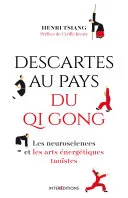
Descartes au pays du QI Gong
 75
75

Descartes au pays du QI Gong
Henri Tsiang’s Descartes au pays du QI Gong offers a compelling, if at times dense, exploration of the Cartesian divide through the lens of Qi Gong. Tsiang’s strength lies in his meticulous comparison of philosophical frameworks, particularly how the 17th-century concept of mind-body separation clashes with the holistic energetic understanding inherent in Qi Gong. A standout section details the practical application of Qi Gong as an investigative tool for the self, moving beyond mere physical exercise to a form of embodied phenomenology. However, the work occasionally strains under the weight of its academic ambition; some passages could benefit from more direct engagement with contemporary scientific research on consciousness, rather than relying solely on philosophical juxtaposition. The book’s ultimate value is its persistent effort to build a bridge between seemingly disparate worldviews, suggesting a more integrated understanding of human experience. It is a valuable text for those seeking to deepen their philosophical appreciation of embodied practices.
📝 Description
75
Henri Tsiang's 2022 book, Descartes au pays du QI Gong, connects Western philosophy to Eastern energetic practices.
Published in 2022, Henri Tsiang's Descartes au pays du QI Gong is a comparative study that bridges Western philosophical thought with Eastern energetic practices. Tsiang spent over a decade contemplating and synthesizing his dual cultural background for this work. The book illuminates the interconnectedness of mind and body, drawing on Cartesian dualism and the holistic principles of Qi Gong. It aims to expand Western understanding by integrating concepts often separated into physical and metaphysical categories.
This book is for individuals interested in the confluence of philosophy and embodied practice. Readers who consider the mind-body problem, especially from a Western philosophical viewpoint, will find Tsiang's analysis valuable. It is also suited for Qi Gong practitioners seeking an intellectual framework or for those curious about how Eastern disciplines can inform modern existential questions. The work addresses the intellectually curious and the experientially inclined.
The book appears at a time of renewed interest in somatic practices and Eastern philosophies in Western culture. It follows figures like Alan Watts who introduced Eastern thought to Western audiences mid-20th century, and contemporary researchers exploring the neurobiological benefits of practices like Qi Gong. Tsiang directly confronts the Cartesian legacy with the experiential realities of Qi Gong.
This work situates itself within a growing body of literature that seeks to reconcile Western philosophical traditions with Eastern esoteric practices. It follows a trajectory set by earlier figures who introduced concepts like Qi to Western audiences, aiming to bridge perceived divides between rational thought and embodied experience. By directly engaging with the mind-body split articulated by Descartes, Tsiang's book offers a contemporary perspective on how ancient energetic disciplines can inform modern understandings of consciousness and well-being.
💡 Why Read This Book?
• Learn how Qi Gong, as detailed in the book's exploration of energetic self-discovery, can serve as a practical counterpoint to René Descartes' 17th-century philosophical dualism. • Gain insight into the author's 12 years of reflection, understanding how a dual-cultural perspective enriches the comprehension of the living organism and the mind-body relationship. • Discover concrete benefits of Qi Gong practice, as explained through Tsiang's synthesis of Eastern energetic principles and Western analytical thought, enhancing your appreciation of its holistic effects.
⭐ Reader Reviews
Honest opinions from readers who have explored this book.
❓ Frequently Asked Questions
What is the central philosophical conflict addressed in Descartes au pays du QI Gong?
The book addresses the core conflict between René Descartes' 17th-century philosophical dualism, which posits a strict separation between mind and body, and the holistic, energetic view of life found in Eastern traditions like Qi Gong.
Who is Henri Tsiang and what is his background?
Henri Tsiang is the author of Descartes au pays du QI Gong, a work that draws upon his 12 years of reflection and his experience with a dual culture, enabling him to compare Western and Asian perspectives on the living being.
When was Descartes au pays du QI Gong first published?
The book was first published on February 2, 2022, reflecting a contemporary engagement with long-standing philosophical and energetic concepts.
What is the primary benefit of Qi Gong practice as presented in the book?
The book presents Qi Gong as an 'tool for self-exploration,' offering a tangible method to investigate the body-mind connection and understand the living organism holistically, moving beyond abstract philosophical discourse.
Does the book primarily focus on the physical aspects of Qi Gong?
No, while acknowledging the physical benefits, the book's primary focus is on the philosophical and metaphysical implications of Qi Gong, exploring its capacity to inform our understanding of consciousness and the relationship between the energetic and material realms.
What does the title 'Descartes au pays du QI Gong' literally translate to?
The title translates literally to 'Descartes in the Land of Qi Gong,' signifying the book's core project: bringing the foundational figure of Western rationalism into dialogue with a key practice of Eastern energetic cultivation.
🔮 Key Themes & Symbolism
Mind-Body Reconciliation
The book confronts the Cartesian dichotomy, the 17th-century philosophical stance separating the thinking substance (mind) from the extended substance (body). Tsiang argues that Qi Gong offers a practical, embodied method to overcome this separation. By focusing on the flow of Qi, practitioners can experience a unity of being that transcends abstract intellectualization. This theme explores how energetic cultivation can inform and perhaps even resolve long-standing Western philosophical dilemmas regarding consciousness and embodiment.
Qi Gong as Self-Exploration
Central to Tsiang's thesis is the idea that Qi Gong is more than just physical exercise; it is a literal tool for exploring the self. The work details how the practice allows individuals to investigate their internal energetic landscape, understand the subtle interplay between physical sensations and mental states, and gain a more profound self-awareness. This concept challenges the Western tendency to view the self primarily through cognitive or psychological frameworks, offering an energetic and somatic dimension.
Comparative Cultural Understanding
Drawing on 12 years of reflection and the author's dual cultural background, this theme highlights the value of juxtaposing Western and Asian visions of the living organism. Tsiang demonstrates how a dialogue between these traditions can enrich our apprehension of life, moving beyond ethnocentric perspectives. The book posits that integrating the holistic energetic principles of the East with the analytical rigor of the West leads to a more complete and nuanced understanding of existence.
The Energetic Body
The work examines the concept of the energetic body, a fundamental aspect of many Eastern traditions, including Qi Gong. It explains Qi (vital energy) not as a metaphor but as a tangible force that influences health, consciousness, and overall well-being. This theme contrasts with the purely materialist or mechanistic views prevalent in some Western scientific and philosophical circles, proposing that understanding Qi is crucial for a complete view of the human being.
💬 Memorable Quotes
Direct passages from the work, attributed to the author.
“Le Qi Gong est littéralement l'outil qui permet de partir à l'exploration de soi”
— This powerful statement expresses the book's core message: Qi Gong is presented not just as a practice for health, but as a direct methodology for profound self-discovery and investigation.
“Fruit de 12 ans de réflexion et de la double culture de l’auteur”
— This phrase highlights the deep, considered nature of the work, emphasizing the author's extensive contemplation and the unique perspective gained from navigating two distinct cultural frameworks.
“confronte les visions occidentales et asiatiques dans leur compréhension du vivant”
— This points to the book's central project: a direct comparison and juxtaposition of how Western philosophy and Asian energetic practices perceive and understand life itself.
“enrichit notre appréhension des relations corps/esprit”
— This suggests that the synthesis offered by the book moves beyond simple comparison, actively enhancing our understanding of the intricate and often debated connection between physical and mental states.
“explicite les effets bénéfiques de sa pratique”
— This indicates that the book provides clear explanations for the positive outcomes associated with practicing Qi Gong, grounding its philosophical arguments in observable benefits.
🌙 Esoteric Significance
Tradition
While not explicitly aligning with a single esoteric lineage like Hermeticism or Kabbalah, the work draws heavily on Taoist principles inherent in Qi Gong. It engages with the concept of Qi (vital energy) and energetic cultivation, central to Taoist alchemy and internal arts. Tsiang's approach can be seen as a modern attempt to integrate these Eastern energetic philosophies with Western rationalism, offering a bridge for those interested in embodied spiritual practices.
Symbolism
The primary symbolic element is 'Qi' itself, representing the vital life force that animates all things. In the context of Qi Gong, Qi symbolizes the dynamic, flowing essence of existence, connecting the physical body, mind, and spirit. The act of practicing Qi Gong can be seen as a symbolic engagement with this flow, aiming for harmony and balance, a recurring motif in many esoteric traditions that seek alignment with cosmic principles.
Modern Relevance
This work is highly relevant to contemporary thinkers and practitioners exploring embodied cognition, mindfulness, and integrated approaches to well-being. It speaks to modern schools of thought that seek to move beyond the limitations of purely materialist science, such as certain branches of transpersonal psychology and contemplative neuroscience. Practitioners of Qi Gong, Tai Chi, and other mind-body disciplines find in Tsiang's analysis a valuable intellectual framework for their practice.
👥 Who Should Read This Book
• Students of Western philosophy, particularly those grappling with René Descartes' mind-body problem, seeking an alternative perspective informed by Eastern energetic practices. • Practitioners of Qi Gong or similar somatic disciplines who wish to deepen their intellectual understanding of their practice and its philosophical underpinnings. • Readers interested in comparative religion and philosophy, looking for works that bridge distinct cultural worldviews and offer a more holistic understanding of life.
📜 Historical Context
Published in 2022, Descartes au pays du QI Gong emerges in a period where Western culture shows increasing interest in somatic practices and Eastern philosophies, a trend amplified since the mid-20th century, notably through figures like Alan Watts who popularized Eastern thought. Tsiang's work directly confronts the legacy of René Descartes, whose dualistic philosophy established a dominant paradigm in Western thought since the 17th century. While contemporary research in psychosomatic medicine and neuroscience explores mind-body connections, Tsiang’s specific approach of using Qi Gong as a philosophical counterpoint to Cartesian thought is distinctive. The book engages with a long-standing intellectual current seeking to bridge the perceived gap between the material and the immaterial, offering an alternative to purely mechanistic or reductionist views of human existence that have been prevalent in scientific discourse.
📔 Journal Prompts
The Cartesian legacy of mind-body separation, its influence on your self-perception.
Qi Gong as a tool for self-exploration: initial observations and potential inquiries.
The concept of Qi: how does this energetic view contrast with your current understanding of vitality?
Bridging Western analytical thought and Eastern holistic practice: areas of potential synergy.
The apprehension of the living: how your dual-cultural perspective might inform your view.
🗂️ Glossary
Qi Gong
An ancient Chinese practice involving coordinated body posture, movement, breathing, and meditation for the purpose of health, spirituality, and martial arts training. It is based on the principle of cultivating and balancing Qi (vital life force).
Qi
A fundamental concept in traditional Chinese culture, often translated as 'vital energy' or 'life force.' It is believed to animate all living things and is central to the practices of Qi Gong and Traditional Chinese Medicine.
Cartesian Dualism
The philosophical theory proposed by René Descartes in the 17th century that the mind (res cogitans) and body (res extensa) are two distinct and separable substances, forming the basis of mind-body dualism.
Vivant
French for 'living' or 'the living being.' In the context of the book, it refers to the complex phenomenon of life, encompassing biological, psychological, and energetic dimensions.
Apprehension
In this context, it refers to the understanding, perception, or grasp of something. The book aims to enrich our apprehension of the mind-body relationship and the nature of life.
Energetic Body
A concept found in many esoteric and Eastern traditions, referring to a subtle body composed of energy fields or channels (like meridians) that interpenetrates and surrounds the physical body.
Self-Exploration
The process of investigating one's own inner world, thoughts, feelings, and physical sensations. The book positions Qi Gong as a specific methodology for this introspective pursuit.