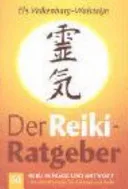
Der Reiki-Ratgeber
 79
79

Der Reiki-Ratgeber
Els Valkenburg-Walsteijn's Der Reiki-Ratgeber offers a straightforward, Q&A-driven approach to understanding Reiki. Its strength lies in its sheer comprehensiveness; the 817 questions cover a remarkable breadth of topics, from the historical roots of Mikao Usui's system to practical application and ethical considerations. This format is excellent for clarifying specific doubts a beginner might have. However, the sheer volume of questions can sometimes lead to a somewhat fragmented learning experience, lacking the narrative flow that a more essay-based introduction might provide. A particularly effective section addresses common misconceptions about energy healing, grounding the practice in accessible language. While not offering radical new interpretations, it serves as a solid, encyclopedic primer for those entering the world of Reiki.
📝 Description
79
Els Valkenburg-Walsteijn's Der Reiki-Ratgeber, published in 2005, uses a question-and-answer format to explain Reiki.
First released in 2005, Der Reiki-Ratgeber by Els Valkenburg-Walsteijn functions as a thorough introduction to the Reiki system. The book is structured around an extensive series of questions and answers. This approach aims to clarify the practice for those new to it and to provide further understanding for those already practicing.
The guide covers the origins, basic principles, and methods of applying Reiki. It addresses fundamental aspects of the practice directly and informatively. This book is primarily for individuals seeking to grasp the core elements of Reiki, especially those new to energy healing or interested in Mikao Usui's specific system. Its question-and-answer format also makes it suitable for self-study, allowing readers to find specific information without wading through dense theory.
Published in 2005, Der Reiki-Ratgeber appeared during a time of growing global attention to complementary and alternative medicine, including energy healing. Reiki, which began in Japan in the early 20th century, had become a known practice in Western esoteric circles by the early 2000s. Valkenburg-Walsteijn's book supports the spread of Usui Reiki Ryoho by offering a structured resource within the expanding literature on the subject.
💡 Why Read This Book?
• Gain clarity on the core tenets of Usui Reiki Ryoho through 817 specific questions, addressing foundational principles like the five Reiki principles that guide daily practice. • Understand the practical application of energy transfer in healing, detailed across various hand positions and treatment scenarios discussed within the book. • Explore the different stages of Reiki learning, from Shoden to Shinpiden, and the significance of the attunement process as explained in the guide.
⭐ Reader Reviews
Honest opinions from readers who have explored this book.
❓ Frequently Asked Questions
What is the primary purpose of Der Reiki-Ratgeber by Els Valkenburg-Walsteijn?
The primary purpose of Der Reiki-Ratgeber is to serve as an introductory guide to the Reiki system, specifically through an extensive question-and-answer format. It aims to make the complex principles and practices of Reiki accessible to beginners and offer detailed clarifications.
How does the book explain the origins of Reiki?
The book explains the origins of Reiki by detailing the life and experiences of Mikao Usui, the founder of the system. It covers his search for enlightenment and the development of Reiki as a healing art in early 20th century Japan.
What are the 'five Reiki principles' mentioned in the book?
The five Reiki principles, as presented in the book, are ethical guidelines intended to foster well-being and spiritual growth. They typically focus on living in the present moment, managing anger, practicing gratitude, and extending compassion to oneself and others.
Does Der Reiki-Ratgeber cover different Reiki levels?
Yes, Der Reiki-Ratgeber covers the different levels of Reiki, typically referred to as Shoden (first degree), Okuden (second degree), and Shinpiden (master/teacher degree). It explains the content and focus of each level.
Is the book suitable for someone completely new to energy healing?
Absolutely. The question-and-answer format is designed for clarity and ease of understanding. It breaks down complex concepts into digestible parts, making it ideal for individuals with no prior knowledge of energy healing or Reiki.
What kind of practical advice can one expect from this guide?
Readers can expect practical advice on performing self-treatments, treating others, and understanding the significance of hand positions. The book guides users through the process of applying Reiki energy in various situations.
🔮 Key Themes & Symbolism
Reiki Principles and Ethics
The work meticulously details the five core principles of Reiki, often translated as 'Just for today...'. These guidelines, such as 'Do not anger' and 'Be grateful', are presented not merely as affirmations but as practical frameworks for cultivating mental and emotional balance. Valkenburg-Walsteijn emphasizes how adhering to these principles supports the energetic flow and enhances the effectiveness of Reiki practice, grounding the spiritual discipline in daily ethical living and personal development.
Energy Channels and Hands-On Healing
A significant portion of Der Reiki-Ratgeber is dedicated to explaining the concept of Ki (or Chi), the universal life force energy, and how it flows through specific channels in the body, known as meridians or nadis in other traditions. The book provides detailed descriptions of hand positions, outlining where to place hands on oneself and others to channel this energy for healing, balancing, and promoting well-being, making the abstract concept of energy palpable.
Levels of Reiki Training
The book systematically outlines the progression through the traditional levels of Reiki training: Shoden (first degree), Okuden (second degree), and Shinpiden (master/teacher degree). It clarifies the distinct learning objectives, techniques, and attunements associated with each level. Valkenburg-Walsteijn explains that each stage builds upon the last, deepening the practitioner's connection to the Reiki energy and their ability to channel it effectively, preparing them for greater responsibility.
The Attunement Process
Central to the Reiki system is the attunement, a sacred ceremony performed by a Reiki master to initiate a student into the practice. Der Reiki-Ratgeber explains the nature and importance of this process, describing it as a way to open and activate the energy channels, enabling the practitioner to receive and transmit Reiki. The book clarifies that attunements are essential for formal Reiki training and are considered a vital step in becoming a conduit for healing energy.
💬 Memorable Quotes
Direct passages from the work, attributed to the author.
“What is Reiki?”
— This fundamental question, posed as a heading, frames the entire book as an exhaustive exploration of Reiki's definition and essence. It signals the author's intent to provide a thorough, question-driven answer to every conceivable query about the practice.
“The five principles are the foundation of a Reiki practitioner's daily life.”
— This interpretation highlights the ethical and spiritual underpinnings of Reiki practice, suggesting that the principles are not just theoretical concepts but actionable guides for personal conduct and well-being.
“Attunement opens the channels for Reiki energy.”
— This statement captures the essence of the initiation process in Reiki, portraying it as a crucial step for enabling practitioners to channel universal life force energy effectively for healing purposes.
“How does one treat oneself with Reiki?”
— This question, representative of many within the text, points to the book's focus on empowering individuals to use Reiki for their own well-being, offering self-healing techniques.
💡 Key Ideas
Editorial paraphrase of the work's core concepts — not direct quotes.
Understanding the hand positions allows for targeted energy application.
This paraphrase emphasizes the practical aspect of Reiki, indicating that the book provides specific instructions on where to place hands to facilitate healing and balance, making the energy work tangible.
🌙 Esoteric Significance
Tradition
Der Reiki-Ratgeber fits within the broad tradition of modern esoteric healing and spiritual practices that emerged in the late 19th and early 20th centuries, influenced by movements like Theosophy and the broader interest in Eastern philosophies. While Usui Reiki Ryoho has distinct Japanese roots, its global dissemination and integration into Western esoteric frameworks align with the cross-cultural syncretism characteristic of these traditions. The work emphasizes the channeling of universal life force energy, a concept found in various esoteric systems.
Symbolism
The primary symbolism in Reiki, as explored in the book, revolves around the Kanji characters used in its name (Rei and Ki), representing universal consciousness and life force energy, respectively. Another key symbolic element is the use of specific hand positions, which can be seen as symbolic representations of energy flow and focused intention for healing specific areas of the body or addressing particular imbalances.
Modern Relevance
This work remains relevant for contemporary practitioners and students of energy healing, particularly within the vast network of Reiki practitioners worldwide. Its detailed Q&A format continues to serve as a foundational resource for those exploring modalities like Pranic Healing or Therapeutic Touch, which share conceptual ground in the manipulation of subtle energies for wellness. The emphasis on self-healing and stress reduction appeals to modern mindfulness and holistic health movements.
👥 Who Should Read This Book
• Aspiring Reiki practitioners seeking a foundational understanding of the system's principles, history, and practical applications before or during their initial training. • Individuals curious about energy healing modalities who prefer a structured, question-and-answer format for learning about Reiki's core concepts and techniques. • Current Reiki practitioners looking for a comprehensive reference guide to clarify specific aspects of their practice or deepen their knowledge of the system's various elements.
📜 Historical Context
Published in 2005, Der Reiki-Ratgeber emerged during a period of widespread fascination with Eastern spiritual practices and alternative healing methods in the West. Reiki, systematized by Mikao Usui in Japan in the early 20th century, had gained significant traction globally, moving beyond its Japanese roots to become a popular modality in Europe and North America. The book's Q&A format reflects a pedagogical trend in esoteric literature, aiming for accessibility and directness for a growing audience eager to learn practical spiritual techniques. Contemporaries like Diane Stein were also publishing influential works on Reiki during this era, contributing to its popularization. While Usui Reiki Ryoho faced some initial skepticism from traditional medical circles, by the early 2000s, it had largely established itself within the New Age and holistic health movements, with books like Valkenburg-Walsteijn's serving as accessible entry points.
📔 Journal Prompts
The concept of 'Ki' as universal life force energy.
Mikao Usui's journey to discover Reiki.
The meaning and application of the five Reiki principles.
Personal reflections on the attunement process.
Exploring the significance of specific hand positions for self-treatment.
🗂️ Glossary
Reiki
A Japanese form of alternative medicine called energy healing, developed in 1922 by Mikao Usui. Practitioners use their hands to deliver energy through passes over the body, from which it is believed to take effect.
Ki (or Chi)
The universal life force energy that flows through all living things. In Reiki, practitioners channel Ki to promote healing and balance in the recipient.
Shoden
The first level of Reiki training, typically focusing on introducing the basic principles, history, and hand positions for self-treatment and basic healing.
Okuden
The second level of Reiki training, which introduces more advanced techniques, symbols, and distance healing methods, deepening the practitioner's connection to Reiki energy.
Shinpiden
The highest level of Reiki training, often referred to as the Master or Teacher level. It involves learning advanced spiritual aspects and the ability to attune others.
Attunement
A sacred ceremony performed by a Reiki master to initiate a student into the practice of Reiki, opening and activating their energy channels to receive and transmit healing energy.
Hand Positions
Specific placements of the hands on or above the body used in Reiki to direct the flow of healing energy to different areas, addressing physical, emotional, and mental well-being.