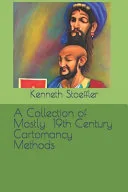
A Collection of Mostly 19th Century Cartomancy Methods
 82
82

A Collection of Mostly 19th Century Cartomancy Methods
Kenneth Stoeffler's "A Collection of Mostly 19th Century Cartomancy Methods" offers a welcome antidote to the often-sanitized versions of card reading prevalent today. By excavating and clarifying 19th-century sources, Stoeffler brings a much-needed historical grounding to playing card divination. The editing is generally clear, making complex historical systems more digestible. A particular strength is the inclusion of Stoeffler's own synthesized system in the appendix, which serves as a practical bridge from archaic methods to current use. However, the sheer variety of historical sources, while valuable, can sometimes feel fragmented, and a more robust comparative analysis between the presented methods might have further enriched the scholarly aspect. The emphasis remains on direct utility, a choice that serves practitioners well. The section on the symbolism of the Court Cards, while brief, provides a solid foundation for understanding their traditional significance. Stoeffler's work effectively revitalizes a neglected branch of cartomancy, encouraging readers to connect with its lineage. It succeeds in its stated goal of keeping these historical methods alive outside of academia.
📝 Description
82
Kenneth Stoeffler's 2023 collection gathers 19th-century European cartomancy methods using standard playing cards.
This volume compiles 19th-century European methods for divining with standard playing cards, meticulously edited by Kenneth Stoeffler. The goal is to clarify the meanings and practical application of these historical sources, making older cartomancy systems more accessible to contemporary practitioners. Stoeffler also includes his own divinatory system, developed from this historical research, as a supplementary guide.
The book appeals to those interested in the historical development of cartomancy, especially those who use playing cards for divination. It is for practitioners looking to engage with historical techniques and symbolic languages rather than solely modern interpretations. Scholars of esoteric traditions and divination history will also find value in its curated selection of primary source material.
This work focuses on the systematization of playing card meanings for divination. It shows how specific suits, ranks, and combinations were interpreted for personal, financial, and spiritual matters. The book emphasizes practical methods, detailing layout patterns and the sequential interpretation of cards. Stoeffler's appendix demonstrates how historical principles can be synthesized into a usable system.
The 19th century saw a surge in occultism and divination across Europe and America, fueled by movements like Spiritualism and the growth of esoteric societies. Playing cards, already a cultural staple, became increasingly codified into formal divinatory practices during this era. This book situates itself within that historical moment, a period when card reading transitioned from folk custom to a more structured esoteric discipline, drawing on various practitioners and publications of the time.
💡 Why Read This Book?
• Learn specific 19th-century playing card meanings and divinatory layouts, moving beyond generalized modern interpretations, as detailed in the edited historical sources. • Understand the evolution of cartomancy by engaging with primary texts from a period of occult revival, offering a historical perspective absent in many contemporary guides. • Practice Stoeffler's synthesized system, which bridges historical methods with modern application, providing a concrete pathway to integrating classic techniques into your personal readings.
⭐ Reader Reviews
Honest opinions from readers who have explored this book.
❓ Frequently Asked Questions
What specific historical period does "A Collection of Mostly 19th Century Cartomancy Methods" focus on for its card reading techniques?
The book specifically concentrates on cartomancy methods from the 19th century, a significant era for the codification of occult practices and divination in Europe and America.
Who is the author, Kenneth Stoeffler, and what is his background?
Kenneth Stoeffler is the author and editor of this collection, focusing on making historical cartomancy methods accessible. His personal system is included, based on his extensive research into 19th-century esoteric literature.
Does the book teach modern tarot card reading or standard playing cards?
This collection exclusively focuses on divination using standard 52-card playing card decks, drawing from historical methods rather than modern tarot traditions.
What is the primary goal of Kenneth Stoeffler in editing these historical texts?
Stoeffler's primary goal is to edit and clarify 19th-century playing card divination methods, making them easier for contemporary readers to learn and practice, thereby preserving this historical legacy.
Is the author's personal cartomancy system presented in the book?
Yes, Kenneth Stoeffler includes his own divinatory system in the appendix, which is based on the 19th-century sources presented in the book and his own further research.
Where can I find information about the historical context of playing card divination?
The book provides historical context by presenting actual 19th-century methods, situating them within the broader revival of occultism and esoteric studies during that period.
🔮 Key Themes & Symbolism
Revival of Historical Cartomancy
This work centers on the active revival of 19th-century playing card divination practices. Stoeffler's editorial approach aims to bridge the gap between dusty historical texts and contemporary practitioners. By selecting and clarifying methods from this specific era, the book emphasizes the importance of understanding the lineage of divination systems. It argues that these older techniques, often overlooked in favor of modern approaches, offer unique insights and a connection to a rich esoteric past. The goal is not merely academic study but the practical application and continuation of these methods.
Systematization of Playing Card Meanings
A core theme is the systematization of meanings and methods for playing card divination as developed in the 19th century. The book examines how specific suits (Hearts, Diamonds, Clubs, Spades) and card ranks were assigned divinatory significance, often influenced by earlier Lenormand or other cartomantic traditions. Stoeffler's editing clarifies these often-complex associations, presenting them in a more accessible format. This systematic approach allows readers to build a coherent understanding of how cards interact within a spread, moving beyond isolated interpretations.
Bridging Past and Present Practice
The collection explicitly aims to connect historical cartomancy with modern divination practices. Stoeffler's personal system, presented in the appendix, serves as a practical demonstration of this bridge. It shows how principles derived from 19th-century sources can be synthesized and adapted for contemporary use. This theme highlights the enduring relevance of older esoteric knowledge and encourages readers to integrate these historical methods into their own spiritual or divinatory work, fostering continuity and evolution within the practice.
The Esoteric Undercurrent of the 19th Century
The book implicitly explores the broader esoteric range of the 19th century, a period marked by significant interest in spiritualism, occultism, and the re-examination of ancient traditions. The methods presented are products of this intellectual milieu, where playing cards became a tool for exploring hidden knowledge. By focusing on cartomancy, the work touches upon the societal fascination with prediction and self-discovery that characterized the era, offering a glimpse into the spiritual currents that shaped these divinatory systems.
💬 Memorable Quotes
Direct passages from the work, attributed to the author.
“My hope is that card readers will embrace the legacy of these historical methods provide so they continue to live outside of dusty books.”
— This statement captures the author's driving motivation: to rescue and revitalize neglected historical divinatory practices. It underscores a desire to see these systems actively used and appreciated in the present day, rather than remaining confined to academic archives or forgotten texts.
“This book is selection of 19th century sources for playing card divination. I've edited them to make the meanings and methods easier to learn.”
— This clearly outlines the book's core function: presenting edited historical playing card divination techniques. It emphasizes accessibility and practical learning, indicating that the content has been refined for a contemporary audience unfamiliar with archaic language or structures.
“I've included my personal system, based on these sources and other sources, in the appendix.”
— This highlights the inclusion of contemporary application. The author provides his own synthesized system, demonstrating how the historical material can be practically applied and adapted, serving as a direct bridge from the past to the reader's own practice.
💡 Key Ideas
Editorial paraphrase of the work's core concepts — not direct quotes.
The meanings and methods are easier to learn.
This paraphrased concept from the blurb emphasizes the editorial effort focused on clarity and ease of use. It suggests that the original 19th-century texts may have been obscure or difficult to decipher, and Stoeffler's work actively addresses this barrier.
Embrace the legacy of these historical methods.
This paraphrased call to action encourages readers to connect with the historical roots of cartomancy. It suggests that understanding and utilizing these older systems provides a valuable connection to the past and the evolution of divination practices.
🌙 Esoteric Significance
Tradition
This work primarily engages with the Western Esoteric Tradition, specifically focusing on divinatory practices that flourished during the 19th-century occult revival. While not explicitly tied to a single lineage like Kabbalah or Hermeticism, the methods presented align with the broader Hermetic principle of 'As Above, So Below,' using earthly tools (cards) to understand celestial or hidden influences. It departs from purely magical or alchemical texts by focusing on cartomancy, a more accessible and portable form of divination popular among a wider range of practitioners seeking personal insight.
Symbolism
The symbolism in 19th-century cartomancy often draws from established European iconographic traditions. The four suits (Hearts, Diamonds, Clubs, Spades) are frequently linked to the four classical elements and cardinal directions, representing different spheres of life: emotions and relationships (Hearts), material world and finances (Diamonds), communication and intellect (Clubs), and challenges or endings (Spades). Court cards (Kings, Queens, Knights, Jacks) typically represent people or specific personality types, often influenced by societal roles and archetypes prevalent in the 19th century.
Modern Relevance
Contemporary practitioners of divination, particularly those interested in playing card readings or historical esoteric methods, draw upon works like Stoeffler's. Modern occultists and Wiccans seeking to expand their divinatory toolkit beyond tarot find value in these foundational playing card systems. The emphasis on practical, accessible methods also appeals to self-help and mindfulness communities looking for structured tools for self-reflection and insight, demonstrating the enduring appeal of divination as a means of personal exploration.
👥 Who Should Read This Book
• Practitioners of divination seeking to expand their repertoire beyond tarot, particularly those interested in historical playing card reading techniques. • Students of esoteric history and the 19th-century occult revival looking for primary source material on divination practices. • Individuals interested in practical, systematized methods for self-reflection and insight using readily available playing cards.
📜 Historical Context
The 19th century witnessed a profound resurgence of interest in esoteric traditions, occultism, and divination, a period often termed the 'Occult Revival'. This era saw the formalization of many practices that had previously existed in more folk or fragmented forms. Spiritualism gained widespread traction, encouraging mediums and seekers to explore communication with the unseen. Esoteric societies like the Hermetic Order of the Golden Dawn began to emerge, synthesizing various mystical traditions. Within this climate, playing cards, a common element of European life, were increasingly codified into systematic divinatory tools. Authors and practitioners drew upon existing folklore, Kabbalistic ideas, and even early cartomantic systems like Etteilla or Lenormand to develop structured methods. This book taps directly into that milieu, presenting methods that reflect the intellectual currents of the time, moving card reading from informal parlor games towards a more structured esoteric discipline, influenced by figures and movements seeking hidden knowledge.
📔 Journal Prompts
The specific meanings assigned to the Court Cards in 19th-century cartomancy.
Stoeffler's synthesized system for practical application.
The historical context of playing card divination during the 19th-century occult revival.
Interpreting the suit of Spades within a divinatory spread.
The transition from folk practice to codified methods in cartomancy.
🗂️ Glossary
Cartomancy
The practice of divination using a standard deck of playing cards. It involves interpreting the meaning and position of cards drawn in a specific layout or spread to gain insight into questions or situations.
Divination
The practice of seeking knowledge of the future or the unknown by supernatural means. In this context, it refers specifically to using playing cards as a tool for divination.
Esoteric
Intended for or likely to be understood by only a small number of people with a specialized knowledge or interest. In this context, it refers to occult or mystical traditions and practices.
19th Century Occult Revival
A period in the 19th century characterized by a widespread resurgence of interest in spiritualism, magic, mysticism, and esoteric traditions across Europe and America.
Spread
A specific arrangement or layout of cards used in divination. Different spreads are designed to answer different types of questions or provide various perspectives.
Suit
One of the four divisions of a standard deck of playing cards: Hearts, Diamonds, Clubs, and Spades. Each suit is often associated with specific meanings or areas of life in cartomancy.
Court Cards
The face cards in a deck of playing cards: King, Queen, and Jack (or Knave). In cartomancy, they often represent people, personalities, or specific roles.