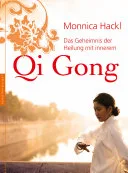
Das Geheimnis der Heilung mit innerem Qi Gong
 71
71

Das Geheimnis der Heilung mit innerem Qi Gong
Monnica Hackl’s 'Das Geheimnis der Heilung mit innerem Qi Gong' offers a practical entry point into the energetic arts, focusing on the internal cultivation of Qi. Its primary strength lies in its clear, actionable instruction, particularly Hackl’s emphasis on using imagination to direct energy. This approach demystifies Qi Gong for Western audiences, moving beyond rote physical forms. For instance, the detailed exercises for visualizing Qi flow provide a tangible method for practitioners. However, the book's brevity in exploring the deeper philosophical underpinnings of Qi Gong, while making it accessible, may leave seasoned practitioners wanting more historical or theoretical context. It presents a functional, rather than deeply scholarly, exploration. Despite this, the concrete guidance for self-healing makes it a valuable resource for those seeking immediate, practical application of internal energy work. It succeeds in making the core principles of inner Qi Gong understandable and actionable for the everyday individual.
📝 Description
71
Monnica Hackl's 2016 book explains healing through cultivating and directing 'Qi'.
Das Geheimnis der Heilung mit innerem Qi Gong defines Qi Gong as more than exercise; it is an active art for cultivating and directing life energy, or 'Qi'. The central idea Hackl details is harmonizing this internal energy within oneself. This internal harmony, she explains, is the basis for addressing illness and achieving overall well-being, covering both physical health and mental balance. The book moves past simple postures to consider how the mind influences energy.
This work is for anyone seeking practical ways to improve their health and inner peace, especially those interested in mind-body methods. It welcomes beginners to Qi Gong and also helps those with some practice deepen their knowledge of its healing uses. Readers interested in self-healing, the energetic body, and the connection between imagination and physical health will find Hackl's advice useful. Because it stresses accessibility, the practice is available to anyone, anywhere, fitting into busy lives.
Published in 2016, Hackl's work enters a landscape where Eastern wellness practices are increasingly recognized. Qi Gong, with roots in centuries of Chinese medicine and philosophy, views illness as a disruption of Qi flow. Hackl's focus on 'inner' cultivation and the use of imagination connects to modern ideas about the mind's impact on physical health, aligning with psychosomatic medicine and energy psychology.
💡 Why Read This Book?
• Learn to actively direct your internal life force (Qi) through visualization techniques described by Monnica Hackl, a method distinct from purely physical exercises. • Discover how to harmonize your physical and psychological states by understanding the interplay between imagination and energetic flow, as detailed in the book's practical exercise sections. • Gain accessible methods for self-healing and well-being, suitable for anyone regardless of prior experience, drawing from the book's emphasis on practice anytime, anywhere.
⭐ Reader Reviews
Honest opinions from readers who have explored this book.
❓ Frequently Asked Questions
What is the core principle of inner Qi Gong as presented in Monnica Hackl's book?
The core principle is the art of moving and working with your internal life energy, or Qi, to achieve harmony with oneself. This internal balance is key to eliminating illness and fostering physical and psychological well-being.
Does 'Das Geheimnis der Heilung mit innerem Qi Gong' require prior experience?
No, Monnica Hackl explicitly states that practicing inner Qi Gong requires no special prerequisites. The book is designed for beginners and emphasizes accessibility, allowing practice anywhere.
How does the book explain the process of healing with Qi Gong?
The book explains healing through Qi Gong by detailing exercises that utilize imagination to guide the Qi. This directed energy flow is presented as a method to resolve imbalances and promote recovery.
What role does imagination play in Monnica Hackl's Qi Gong method?
Imagination is a central tool. Hackl's method involves using visualization to consciously direct and work with the Qi within the body, making the practice an active engagement of the mind.
When was 'Das Geheimnis der Heilung mit innerem Qi Gong' first published?
The book by Monnica Hackl was first published on September 26, 2016, making it a contemporary guide to inner Qi Gong practices.
Can this Qi Gong practice be done anywhere?
Yes, the book emphasizes that inner Qi Gong requires no special conditions or equipment, making it possible to practice effectively in any location, fitting into daily life.
🔮 Key Themes & Symbolism
Qi Cultivation and Direction
The central theme revolves around the active cultivation and directed movement of 'Qi', or vital life force, within the practitioner's body. Monnica Hackl details specific techniques, emphasizing the use of imagination as a primary tool for guiding this energy. This isn't passive breathing; it's an intentional manipulation of internal resources to promote healing and balance, moving beyond simple physical exercises to engage the mind's potent influence on energetic states.
Holistic Harmony and Well-being
The book posits that harmonizing one's internal Qi is the direct pathway to eliminating illness and achieving comprehensive well-being. This harmony extends to both the physical body and the psychological state, suggesting a deep interconnectedness. By balancing energetic flow, practitioners can address the root causes of discomfort, leading to a state of equilibrium that supports sustained health and vitality.
The Power of Imagination in Healing
A significant focus is placed on the role of imagination and visualization in the healing process. Hackl's methodology leverages the mind's ability to influence the body's energetic field. By consciously picturing the movement and transformation of Qi, practitioners can actively participate in their own recovery, demonstrating a psychosomatic approach to health that empowers the individual.
Accessible Self-Healing Practice
The book champions the idea that inner Qi Gong is an accessible practice for everyone, regardless of prior experience or physical condition. Its emphasis on practicing 'anywhere' underscores its integration into daily life. This theme highlights personal empowerment through self-directed healing, offering practical tools that do not require specialized environments or equipment.
💬 Memorable Quotes
Direct passages from the work, attributed to the author.
“Die Kunst, Lebensenergie im Körper zu bewegen, mit ihr zu arbeiten und dadurch mit sich selbst in Einklang zu kommen – das ist Qi Gong.”
— This foundational statement defines Qi Gong as an active art of manipulating life energy for self-alignment. It emphasizes movement and interaction with Qi, positioning it as a path to internal harmony rather than mere physical exercise.
“Diese Harmonie hilft dabei, Krankheiten zu beseitigen und zu physischem und psychischem Wohlbefinden zu kommen.”
— This highlights the direct correlation between internal energetic harmony and holistic health. It suggests that achieving balance through Qi Gong is a direct method for eradicating illness and fostering both physical vitality and mental peace.
“Die Bestsellerautorin Monnica Hackl gibt konkrete Übungsvorschläge, die mit der Vorstellungskraft arbeiten und das Qi lenken.”
— This points to Hackl's practical approach, emphasizing the use of imagination as a key mechanism in her Qi Gong exercises. It underscores that the book provides actionable steps for guiding one's internal energy towards healing.
“So wird Heilung erreicht.”
— A concise statement linking the preceding elements (Qi movement, imagination) directly to the outcome of healing. It underscores the efficacy and directness of the methods presented in the book.
“Für das Üben des inneren Qi Gong bedarf es keinerlei besonderer Voraussetzungen: Es kann überall und”
— This emphasizes the universal accessibility of inner Qi Gong. The lack of prerequisites and the ability to practice anywhere makes it an inclusive practice, removing common barriers to entry for self-healing techniques.
🌙 Esoteric Significance
Tradition
This work draws heavily from the Taoist tradition within Chinese Esotericism, specifically its focus on cultivating and circulating vital energy (Qi). While not strictly adhering to the complex rituals or cosmological frameworks of some Western esoteric lineages like Hermeticism or Kabbalah, it shares the core esoteric principle of understanding and manipulating subtle energies for personal transformation and healing. It represents a practical, accessible branch of Taoist internal alchemy aimed at health and longevity.
Symbolism
The primary symbol is 'Qi' itself, representing the invisible, animating force that permeates all existence, akin to the Western concept of 'spirit' or 'life force.' The practice of moving Qi with imagination evokes the alchemical principle of 'As Above, So Below,' suggesting that focused internal states can influence the physical body. The concept of 'harmony' or 'balance' is also symbolic, representing the ideal state of integration between mind, body, and spirit, which the practice aims to restore.
Modern Relevance
Hackl's approach to inner Qi Gong is highly relevant to contemporary somatic therapies, energy psychology, and mindfulness-based stress reduction (MBSR) programs. Thinkers and practitioners in fields like Somatic Experiencing or those exploring embodied cognition may find resonance in her emphasis on the body's innate healing capacity and the power of directed awareness. The book’s focus on accessible self-healing techniques also speaks to the modern desire for personal empowerment in managing health and well-being.
👥 Who Should Read This Book
• Individuals new to mind-body practices: Those seeking an accessible introduction to energy work and self-healing techniques will find Hackl's clear instructions and emphasis on imagination a welcoming starting point. • Practitioners of complementary therapies: Anyone interested in expanding their understanding of energy cultivation, including those familiar with yoga or meditation, can gain a new perspective on directed internal movement. • Those seeking stress reduction and physical vitality: Readers looking for practical methods to alleviate physical discomfort, reduce stress, and enhance their overall sense of well-being will benefit from the book's actionable exercises.
📜 Historical Context
Monnica Hackl's 'Das Geheimnis der Heilung mit innerem Qi Gong' (2016) arrived during a period of burgeoning interest in mind-body practices within Western wellness culture. While Qi Gong's roots are ancient, its widespread introduction to the West accelerated significantly from the 1970s onwards, influenced by figures like Yang Jwing-Ming and the broader Qigong Institute. Hackl’s work, focusing on the internal and imaginative aspects, aligns with contemporary trends in psychosomatic medicine and energy psychology, which explore the mind’s influence on physical health. It emerged as practices like yoga and meditation became mainstream, offering a distinct yet complementary approach. Unlike purely physical disciplines, Hackl’s method emphasizes internal energy cultivation. The book contributes to a growing body of literature making traditional Chinese practices accessible to a global audience, reflecting a societal shift towards self-directed health and holistic approaches, moving beyond conventional Western medical paradigms.
📔 Journal Prompts
The feeling of Qi moving within your energetic channels.
Visualizing your Qi guiding healing energy.
The experience of achieving physical and psychological harmony.
Your personal definition of 'inner Qi Gong' after reading.
How imagination aids your physical sensations.
🗂️ Glossary
Qi (Chi)
The fundamental concept of vital life force or energy believed in traditional Chinese culture to animate all living things. In Qi Gong, it is cultivated and directed for health and well-being.
Qi Gong (Chi Kung)
A traditional Chinese practice that combines movement, breathing techniques, and meditation to cultivate and balance Qi, aiming to improve physical health, mental clarity, and spiritual well-being.
Inner Qi Gong
A specific focus within Qi Gong that emphasizes the internal cultivation, visualization, and direction of Qi, often through mental focus and imagination, rather than solely external movements.
Harmony (Einklang)
In the context of Qi Gong, this refers to the balanced and unobstructed flow of Qi within the body and the alignment of physical, mental, and energetic states.
Imagination (Vorstellungskraft)
The mental faculty of forming new images or concepts of external objects not present to the senses. In Hackl's work, it is a key tool for directing and working with Qi.
Healing (Heilung)
The process of recovery from illness or injury. In inner Qi Gong, it is approached through the restoration of energetic balance and harmony within the body.
Well-being (Wohlbefinden)
A state of being comfortable, healthy, or happy. This encompasses both physical health and psychological equilibrium, achieved through practices like inner Qi Gong.