Choice centered astrology
 79
79

Choice centered astrology
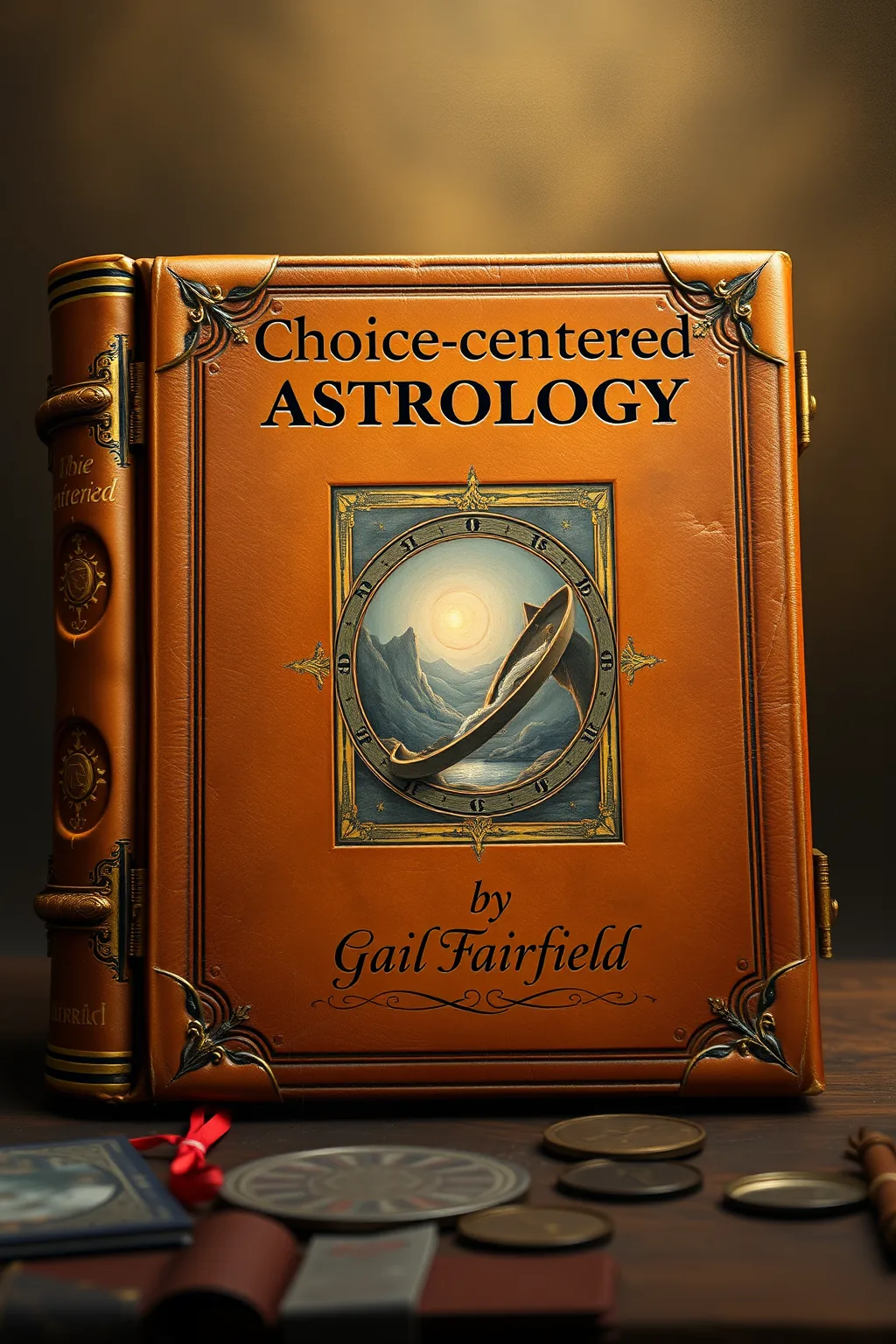
Gail Fairfield’s Choice-Centered Astrology, from its 1998 debut, carves out a distinct niche by reframing the natal chart as a landscape of potential rather than a preordained script. The work's strength lies in its consistent emphasis on agency. Fairfield avoids the common pitfall of astrological literature that can inadvertently foster a sense of fatalism. Her discussion of the Midheaven, for instance, moves beyond simple career prediction to explore the conscious cultivation of one's public role and life direction. A notable limitation, however, is that the book presumes a certain baseline understanding of astrological terminology, which may leave absolute beginners feeling somewhat adrift without supplementary resources. Despite this, the core argument for conscious engagement with one's astrological configuration is persuasive and well-articulated. Fairfield's contribution offers a valuable corrective to more deterministic astrological paradigms, encouraging a proactive engagement with self.
📝 Description
79
Gail Fairfield's Choice-Centered Astrology, published in 1998, reframes natal charts as guides for conscious decision-making.
This book presents an alternative to deterministic astrological interpretations, focusing instead on individual agency. Fairfield argues that the natal chart is not a fixed destiny but a symbolic map of potentials and tendencies. Readers are encouraged to use these insights as tools for greater self-awareness and personal development. The approach aims to empower individuals to actively engage with their astrological blueprint.
The book is well-suited for those seeking a more empowering and less fatalistic understanding of astrology. It will appeal to readers interested in the psychological and spiritual aspects of self-discovery, particularly those engaged in personal growth. Fairfield's work is also beneficial for individuals with some basic astrological knowledge who wish to apply it in a more depthful way to their lives and choices.
Choice-Centered Astrology emerged in 1998, a time when psychological and humanistic perspectives increasingly influenced esoteric thought. This period saw a growing emphasis on personal responsibility and self-actualization, moving away from purely predictive models in astrology. Fairfield's work aligns with a trend that sought to integrate astrological symbolism with inner growth and conscious living, mirroring broader shifts in New Age and spiritual philosophies of the late 20th century.
💡 Why Read This Book?
• Gain a framework for understanding your birth chart as a guide to conscious decision-making, not a fixed destiny, as exemplified by Fairfield's interpretation of planetary aspects as energetic choices. • Learn to identify 'choice points' within your astrological makeup, empowering you to actively shape your life path rather than passively accepting it, a concept central to the book's philosophy. • Develop a more empowered relationship with astrological symbolism, moving beyond predictive interpretations to utilize your chart for personal growth and self-awareness, directly addressing the book's core thesis.
⭐ Reader Reviews
Honest opinions from readers who have explored this book.
❓ Frequently Asked Questions
What is the main difference between Choice-Centered Astrology and traditional astrology?
Choice-Centered Astrology, as presented by Gail Fairfield in her 1998 work, emphasizes individual agency and conscious choice. Unlike traditional approaches that might focus on deterministic fate, this method views the birth chart as a map of potentials and tendencies that can be actively shaped by the individual's awareness and decisions.
Who is Gail Fairfield and when was Choice-Centered Astrology first published?
Gail Fairfield is the author of Choice-Centered Astrology, which was first published in 1998. The book represents her approach to astrological interpretation, focusing on empowerment and personal responsibility.
Does Choice-Centered Astrology deny the influence of celestial bodies?
No, Choice-Centered Astrology does not deny the influence of celestial bodies. Instead, it reframes these influences as symbolic representations of potentials and internal dynamics that an individual can consciously engage with and direct, rather than as unalterable external forces.
Is this book suitable for complete beginners in astrology?
While the book offers a unique perspective, it assumes some familiarity with basic astrological concepts like planets, signs, and houses. Beginners might benefit from consulting introductory astrological resources alongside Fairfield's work to fully grasp the concepts.
What are some key concepts explored in Choice-Centered Astrology?
Key concepts include understanding the birth chart as a map of potentials, identifying 'choice points' for conscious engagement, and interpreting planetary aspects and placements as dynamic energies rather than fixed outcomes. The emphasis is always on the individual's role in their own life.
How does Choice-Centered Astrology relate to psychological astrology?
Choice-Centered Astrology aligns with psychological astrology by focusing on inner dynamics and self-understanding. However, it adds a distinct layer by emphasizing the active role of conscious choice in navigating these psychological landscapes as mapped by the birth chart.
🔮 Key Themes & Symbolism
Natal Chart as Potential Map
Fairfield's work reinterprets the natal chart not as a deterministic blueprint of fate, but as a symbolic map of inherent potentials and tendencies. This perspective shifts the focus from what *will* happen to what *can* be consciously cultivated. The book details how planetary placements, aspects, and house significations represent energetic patterns and predispositions. The core idea is that understanding these patterns provides individuals with the awareness needed to make informed choices, fostering a proactive rather than reactive relationship with their astrological makeup. This approach is central to empowering individuals in their personal development journey.
The Role of Conscious Choice
Central to Choice-Centered Astrology is the concept of individual agency. Fairfield posits that while the birth chart outlines specific energetic configurations, the individual possesses the capacity to consciously choose how these energies are expressed and integrated. This involves recognizing 'choice points' within the chart—moments or aspects where awareness can alter an outcome. The book encourages readers to actively engage with their astrological symbols, using them as tools for self-reflection and decision-making, thereby taking ownership of their life's direction rather than feeling subject to external forces.
Astrology for Personal Growth
This book frames astrological study as a potent avenue for personal and spiritual growth. Rather than seeking predictive answers about future events, Fairfield guides readers to use their natal chart for deep self-understanding and psychological exploration. By examining the archetypal energies represented in the chart, individuals can gain insight into their core motivations, challenges, and strengths. This self-awareness, facilitated by the choice-centered approach, becomes a catalyst for transformation, enabling individuals to align their actions with their authentic selves and navigate life's complexities with greater intention and clarity.
Beyond Deterministic Interpretation
Choice-Centered Astrology actively challenges deterministic views prevalent in some astrological traditions. Fairfield's 1998 publication emerged as a counterpoint to interpretations that suggest an unchangeable destiny dictated by celestial alignments. Instead, the work champions a nuanced understanding where cosmic influences provide context and potential, but human consciousness and free will play a decisive role in shaping individual experience. This perspective aims to clarify astrology, making it a practical tool for empowerment and self-mastery rather than a source of anxiety about predetermined outcomes.
💬 Memorable Quotes
Direct passages from the work, attributed to the author.
“Recognize the aspects not as forces acting upon you, but as energies available for your direction.”
— This interpretation stresses the active role of the individual. Rather than passively experiencing astrological configurations, the reader is encouraged to see them as dynamic forces that can be consciously wielded and integrated through awareness and choice.
“The Ascendant marks a threshold; what you choose to bring across that threshold defines your presentation.”
— This interpretation focuses on the Ascendant as a point of entry into the world. It suggests that while the Ascendant indicates a particular style or approach, the individual consciously decides what qualities and intentions they project outwardly.
💡 Key Ideas
Editorial paraphrase of the work's core concepts — not direct quotes.
The birth chart is not a prison sentence, but a set of available tools.
This paraphrased concept highlights Fairfield's core philosophy: astrology provides resources and potentials, not inescapable fate. It frames the natal chart as a toolbox for self-understanding and conscious action, emphasizing empowerment over predestination.
Your Moon sign describes a potential emotional need, but *how* you meet that need is a matter of conscious choice.
This paraphrased concept illustrates the book's practical application. It acknowledges the astrological placement (Moon sign) but firmly places the power of expression and fulfillment in the hands of the individual, emphasizing agency in emotional well-being.
Understanding your Sun sign's core drive allows you to consciously align your actions with your essential purpose.
This paraphrased concept underscores the self-awareness aspect. Knowing one's Sun sign's fundamental energy enables individuals to make deliberate choices that support their true path, fostering authenticity and alignment in their life's pursuits.
🌙 Esoteric Significance
Tradition
Choice-Centered Astrology aligns with the modern psychological branch of Western Esotericism, particularly drawing from Jungian archetypal psychology. While not strictly Hermetic or Kabbalistic, it shares with these traditions an emphasis on symbolic language and the inner world. It departs from purely predictive or fatalistic systems by foregrounding the alchemical process of conscious transformation, where the individual actively works with their given 'prima materia'—the natal chart—to achieve a higher state of self-awareness and integration.
Symbolism
The book utilizes core astrological symbols such as the planets (representing archetypal energies), signs (modes of expression), and houses (arenas of life). Fairfield interprets these not as fixed fates but as dynamic potentials. For instance, the Sun symbolizes core identity and conscious will, which the book frames as the primary agent of choice. Planetary aspects are viewed as energetic dialogues within the psyche, offering opportunities for conscious integration rather than deterministic clashes or harmonies.
Modern Relevance
Fairfield's choice-centered approach continues to influence contemporary astrological practice, particularly among those focused on psychological and humanistic applications. Modern coaches, therapists, and astrologers who prioritize empowerment and self-authorship often draw upon this perspective. The emphasis on agency speaks to current trends in personal development, mindfulness, and self-help, making the work relevant for those seeking practical tools for navigating life's challenges with greater intention and self-awareness.
👥 Who Should Read This Book
• Individuals interested in psychological astrology who wish to move beyond predictive interpretations and focus on self-understanding and personal agency. • Those feeling constrained by deterministic astrological readings and seeking an empowering framework that emphasizes conscious choice and personal responsibility. • Students of esoteric traditions who are exploring how symbolic systems like astrology can be used as tools for active personal transformation and self-development.
📜 Historical Context
Gail Fairfield's Choice-Centered Astrology, published in 1998, arrived during a significant period of evolution within Western esotericism and psychology. The late 20th century witnessed a surge in interest in humanistic and transpersonal psychology, which emphasized personal growth, self-actualization, and individual responsibility. This intellectual climate fostered a growing demand for spiritual and self-help tools that empowered rather than dictated. While some astrological circles continued to grapple with deterministic interpretations, figures like Fairfield were part of a broader movement, influenced by psychological pioneers like Carl Jung, advocating for astrology as a symbolic language of the psyche rather than a predictive science. Contemporaries like Liz Greene were also exploring the psychological depths of astrology, contributing to a discourse that valued introspection and personal agency. Fairfield's work offered a clear, accessible articulation of this choice-oriented paradigm, contributing to the ongoing redefinition of astrology as a tool for conscious self-development.
📔 Journal Prompts
Reflect on your natal chart's Sun placement and how you consciously choose to express its core drive.
Consider a challenging planetary aspect in your chart; what 'choice points' does it present for integration?
Explore how your Ascendant symbol offers a threshold for conscious self-presentation.
Identify an emotional pattern linked to your Moon sign and how you can consciously choose to meet that need.
How can understanding your chart's house significations empower your decision-making in those life areas?
🗂️ Glossary
Natal Chart
A snapshot of the celestial positions at the moment of an individual's birth, used in astrology to represent a symbolic map of potentials, tendencies, and life themes.
Planetary Aspects
The angular relationships between planets in a natal chart, interpreted as symbolic interactions or dialogues between the energies represented by those planets.
Choice Points
Specific configurations or placements within a natal chart that highlight moments or dynamics where an individual's conscious awareness and decision-making can significantly influence their life path.
Ascendant (Rising Sign)
The zodiac sign that was rising on the eastern horizon at the moment of birth; it symbolizes one's outward persona, initial approach to life, and physical appearance.
Sun Sign
The zodiac sign in which the Sun was located at the time of birth, representing one's core identity, conscious ego, and fundamental life force or purpose.
Moon Sign
The zodiac sign in which the Moon was located at the time of birth, representing one's emotional nature, subconscious responses, and inner needs.
Houses
The twelve divisions of the astrological chart, each representing a different area or domain of life experience, such as career, relationships, or personal finances.
🔮 Readers Also Liked
Browse all →








More by Gail Fairfield
All books →



More Free Astrology & Cosmology Books
View all →