Chinese astrology
 61
61

Chinese astrology


Celeste Moreau (Divination & Symbolism Reviewer) — Tianxiang Dai's 'Chinese Astrology' is a masterful unveiling of an esoteric tradition that transcends mere fortune-telling. Dai delves into the philosophical underpinnings, illuminating the dynamic interplay of Yin and Yang and the Five Elements as the foundational architecture of cosmic influence. The text offers profound insights into the subtle energies that govern our lives, presented with an authoritative yet accessible voice. Its strength lies in its ability to connect ancient wisdom with personal revelation, making it an invaluable resource for seasoned practitioners and curious seekers alike who wish to understand the deeper currents of destiny. This book is a gateway to a richer, more symbolic understanding of existence.
📝 Description
61
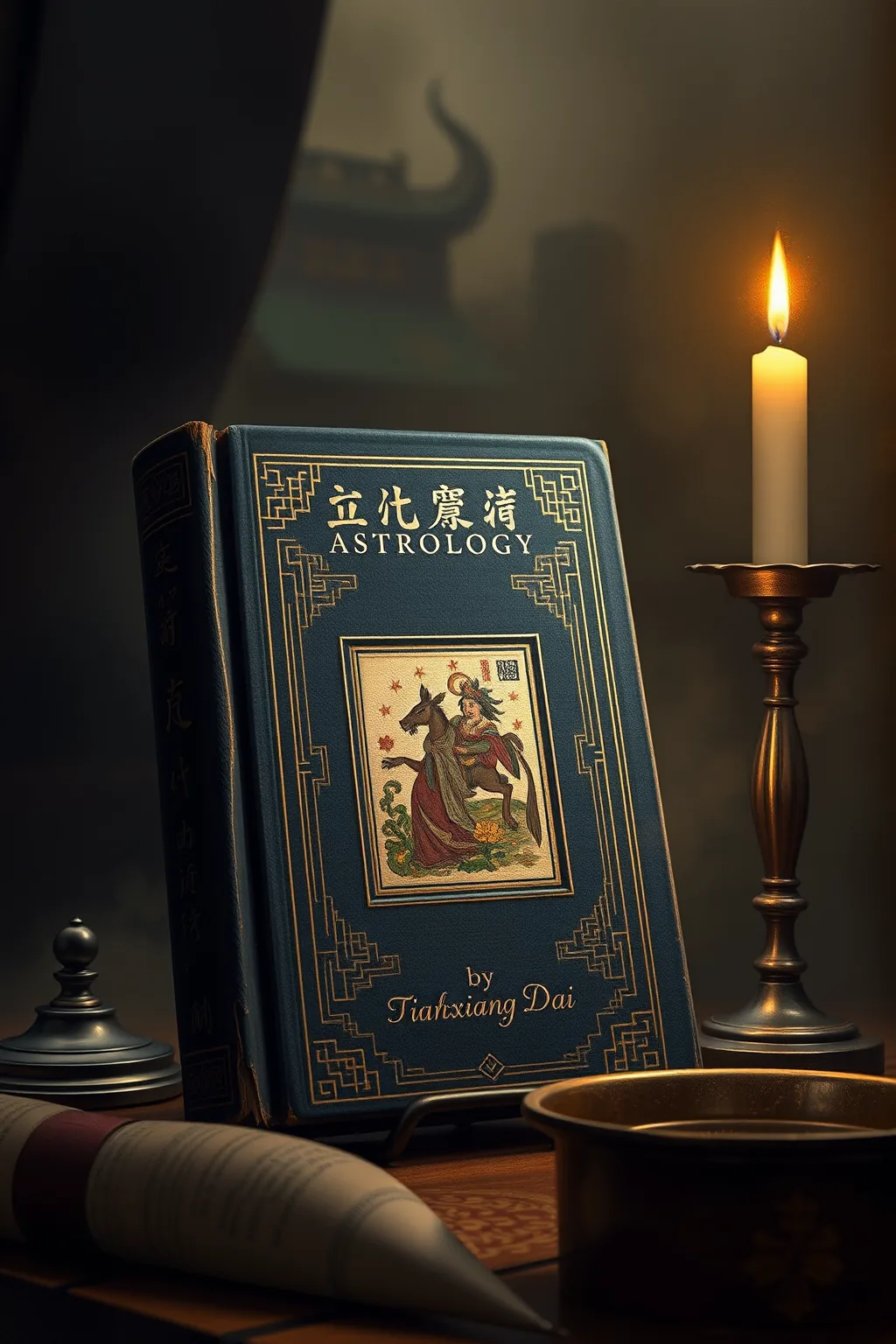
Tianxiang Dai's 'Chinese Astrology' was published to detail the connections between celestial events and human lives.
Tianxiang Dai's 'Chinese Astrology' presents the principles of this ancient system. It moves beyond simple zodiac assignments to explain how Taoist philosophy, Yin and Yang, and the Five Elements inform astrological interpretations. The book details how celestial energies are believed to influence destiny, using symbolic language that has historically guided individuals. Readers learn about the relationship between humanity and the cosmos, and how to interpret astrological signs associated with different years. It aims to help readers understand their life's patterns and gain clarity in approaching future events. The text emphasizes the symbolic depth of Chinese astrology, where earthly and celestial events are seen as connected.
This book is situated within the esoteric tradition of Chinese metaphysics, which views the universe as an interconnected system of energies. Chinese astrology, or *Bazi* (Eight Characters), is a key component of this tradition. It uses birth date and time to construct a unique astrological chart, believed to reveal an individual's innate characteristics, potential challenges, and opportunities. This system is not merely predictive but is used for self-understanding, optimizing life choices, and harmonizing with natural cycles, drawing upon principles found in the *I Ching* and Feng Shui.
💡 Why Read This Book?
Unravel the ancient cosmic blueprint of your life. 'Chinese Astrology' offers a profound, philosophical lens into destiny, revealing the symbolic language of the universe. Ideal for spiritual seekers, practitioners of esoteric arts, and scholars of ancient wisdom, this book provides actionable insights for self-discovery and harmonious living by understanding the subtle energies that shape our existence.
⭐ Reader Reviews
Honest opinions from readers who have explored this book.
❓ Frequently Asked Questions
What are the core components of Chinese Astrology?
Chinese Astrology is built upon the 12 zodiac animals, the Yin and Yang principles, and the Five Elements (Wood, Fire, Earth, Metal, Water), which interact in complex cycles to influence personality, relationships, and destiny.
How does the Five Elements theory influence Chinese Astrology?
The Five Elements are crucial, as their interactions (creation and destruction cycles) modify the inherent characteristics of each animal sign and create unique astrological profiles for individuals based on their birth year, month, day, and hour.
Can Chinese Astrology predict future events?
While it offers insights into potential trajectories and challenges, Chinese Astrology is primarily a tool for understanding karmic patterns and inherent potentials, empowering individuals to navigate their path with wisdom rather than dictating a fixed future.
What is the significance of the lunar calendar in Chinese Astrology?
The Chinese astrological system is fundamentally lunar-based, with each animal sign and its associated elemental influences tied to specific lunar cycles, making the precise date and time of birth according to the lunisolar calendar essential for accurate readings.
Is Chinese Astrology compatible with Western Astrology?
While distinct in their origins and methodologies, both systems explore cosmic influences on human life. They can offer complementary perspectives, revealing different facets of an individual's energetic blueprint and potential.
🔮 Key Themes & Symbolism
The Cosmic Dance of Yin and Yang
This theme explores the fundamental Taoist principle of Yin and Yang as the primeval forces that govern the universe and, by extension, Chinese Astrology. It explores how these opposing yet complementary energies manifest within each animal sign and the elemental cycles, shaping personality traits, relationship dynamics, and life's ebb and flow. Understanding this duality is key to deciphering the balanced or imbalanced energies present in an individual's astrological chart, offering a useful insights into the inherent tensions and harmonies that define their existence.
The Five Elements: Architects of Destiny
Central to Chinese Astrology is the profound influence of the Five Elements: Wood, Fire, Earth, Metal, and Water. This theme unpacks their intricate relationships, including the generative and destructive cycles that dictate the interactions between signs and influence the unfolding of events. Dai meticulously illustrates how these elemental energies, associated with specific years, months, days, and hours, imbue individuals with unique characteristics, strengths, and challenges, serving as the primary architects of their destiny and the underlying forces shaping their life's journey.
The Twelve Animal Signs: Archetypal Journeys
The iconic Twelve Animal Signs of the Chinese Zodiac are more than just symbols; they represent archetypal energies and life paths. This theme explores the distinct personalities, strengths, weaknesses, and natural inclinations associated with each animal, from the ambitious Rat to the introspective Pig. Dai reveals how these archetypes interact with each other and with the elemental forces, creating complex familial and societal dynamics. Understanding these animal influences provides a rich framework for self-awareness, interpersonal relationships, and reading through the cyclical nature of life's experiences.
💬 Memorable Quotes
Direct passages from the work, attributed to the author.
“Within the cycle of the Dragon, power and transformation intertwine.”
— This highlights the symbolic power of the Dragon sign in Chinese Astrology, suggesting a potent blend of authority, ambition, and radical change inherent in its influence.
“The whispers of the Five Elements guide the turning of fate's wheel.”
— This poetic phrase underscores the subtle yet pervasive influence of the Five Elements in shaping an individual's destiny, portraying them as unseen forces that direct life's unfolding narrative.
“To know the stars is to know the deepest currents of the soul.”
— This connects the practice of astrology to introspection and self-understanding, positing that celestial patterns are a reflection of our inner landscape and spiritual essence.
💡 Key Ideas
Editorial paraphrase of the work's core concepts — not direct quotes.
The stars are not mere distant lights, but conduits of ancient wisdom.
This quote emphasizes the esoteric view that celestial bodies hold profound knowledge and influence, acting as channels for cosmic energies and guidance rather than passive astronomical phenomena.
Balance is the eternal quest, mirrored in the heavens and within.
This quote captures a core philosophical tenet of Chinese thought, emphasizing the pursuit of equilibrium in all aspects of life, a principle directly reflected and taught through the study of astrological harmony.
🌙 Esoteric Significance
Tradition
Chinese Astrology is deeply embedded within the Taoist tradition, drawing heavily from its principles of cosmic harmony, balance, and the interconnectedness of all things. It reflects a worldview where the macrocosm (universe) is a mirror of the microcosm (human being), and celestial patterns are seen as divine instructions. This esoteric lineage views the astrological chart not as a deterministic fate, but as a map of energetic potentials and karmic predispositions, offering guidance for spiritual cultivation and alignment with the Tao.
Symbolism
The symbolism in Chinese Astrology is rich and many-sided. The Twelve Animal Signs represent archetypal energies and stages of the life cycle. The Five Elements (Wood, Fire, Earth, Metal, Water) symbolize fundamental forces of nature and transformation, their interactions creating dynamic energetic patterns. Yin and Yang represent the interplay of opposing yet complementary forces. The concept of 'Qi' (life force) is paramount, with astrological configurations indicating the flow and blockage of this vital energy, influencing health, fortune, and spiritual well-being.
Modern Relevance
In the modern era, Chinese Astrology offers a powerful framework for self-discovery and personal empowerment in a rapidly changing world. It provides ancient wisdom for navigating contemporary challenges, fostering resilience, and cultivating inner peace. Its emphasis on balance, cyclical understanding, and interconnectedness appeals to contemporary interests in mindfulness, holistic well-being, and finding meaning. For many, it serves as a profound spiritual tool for understanding their life's purpose, improving relationships, and making conscious choices aligned with their innate potential.
👥 Who Should Read This Book
This comprehensive exploration of Chinese Astrology is a treasure for a diverse audience. **Beginners** will find a clear and insightful introduction to the foundational principles and animal signs, explaining a rich tradition. **Spiritual seekers** will discover a profound path to self-understanding, cosmic connection, and purposeful living. **Practitioners of esoteric arts** will gain deeper insights into a time-honored system, enriching their existing knowledge. **Scholars of ancient cultures and philosophies** will appreciate the historical depth and philosophical nuances presented. Ultimately, anyone seeking to understand the subtle energies that shape their life and unlock their inherent potential will find immense value within these pages.
📜 Historical Context
Chinese Astrology, with roots stretching back over 4,000 years, emerged from ancient Chinese cosmology, astronomy, and philosophy. Its development was intertwined with agricultural cycles, imperial governance, and the evolving understanding of celestial influences on earthly affairs. Early forms were likely tied to calendrical systems and divination practices used by shamans and astronomers. Over centuries, it became a sophisticated system influenced by Taoism, Yin-Yang philosophy, and the Five Elements theory, solidifying its structure during the Han Dynasty. It served not only as a tool for personal guidance and understanding character but also played a significant role in state affairs, influencing decisions on warfare, marriage, and auspicious dates for major undertakings. Its enduring legacy lies in its integration of empirical observation with profound philosophical inquiry, making it a central to Chinese cultural heritage.
📔 Journal Prompts
Reflect on the dominant elemental influences in your birth chart. How do these manifest in your personality and life experiences?
Consider the archetypal qualities of your birth animal sign. In what ways do you embody these traits, and where do you see opportunities for growth?
How does the concept of Yin and Yang play out in your daily life and relationships? Where do you seek more balance?
Identify a significant cycle or transformation in your life that might be understood through the lens of Chinese Astrology's elemental interactions.
What personal insights or guidance have you gained from exploring the symbolic language of Chinese Astrology? How can you apply this wisdom moving forward?
🗂️ Glossary
Yin and Yang
The fundamental Taoist concept representing complementary opposites and the interconnected forces that govern the universe, such as passive/active, dark/light, feminine/masculine.
Five Elements (Wu Xing)
The five fundamental elements—Wood, Fire, Earth, Metal, and Water—that are believed to interact and transform, forming the basis of much of Chinese philosophy, medicine, and astrology.
Qi (Chi)
The vital life force or energy that flows through all living things and the universe, central to many Chinese philosophies and practices like acupuncture and martial arts.
Animal Signs (Sheng Xiao)
The twelve zodiac animals—Rat, Ox, Tiger, Rabbit, Dragon, Snake, Horse, Goat, Monkey, Rooster, Dog, Pig—each associated with a year in a 12-year cycle and possessing distinct characteristics.
Lunisolar Calendar
A calendar that is based on both the cycles of the moon and the sun, used in traditional Chinese astrology to determine the timing of zodiac years and their associated energies.
This book appears in 2 collections
🔮 Readers Also Liked
Browse all →








More by Tianxiang Dai
All books →
From the “Astrology” Collection
View all →






More Free Astrology & Cosmology Books
View all →