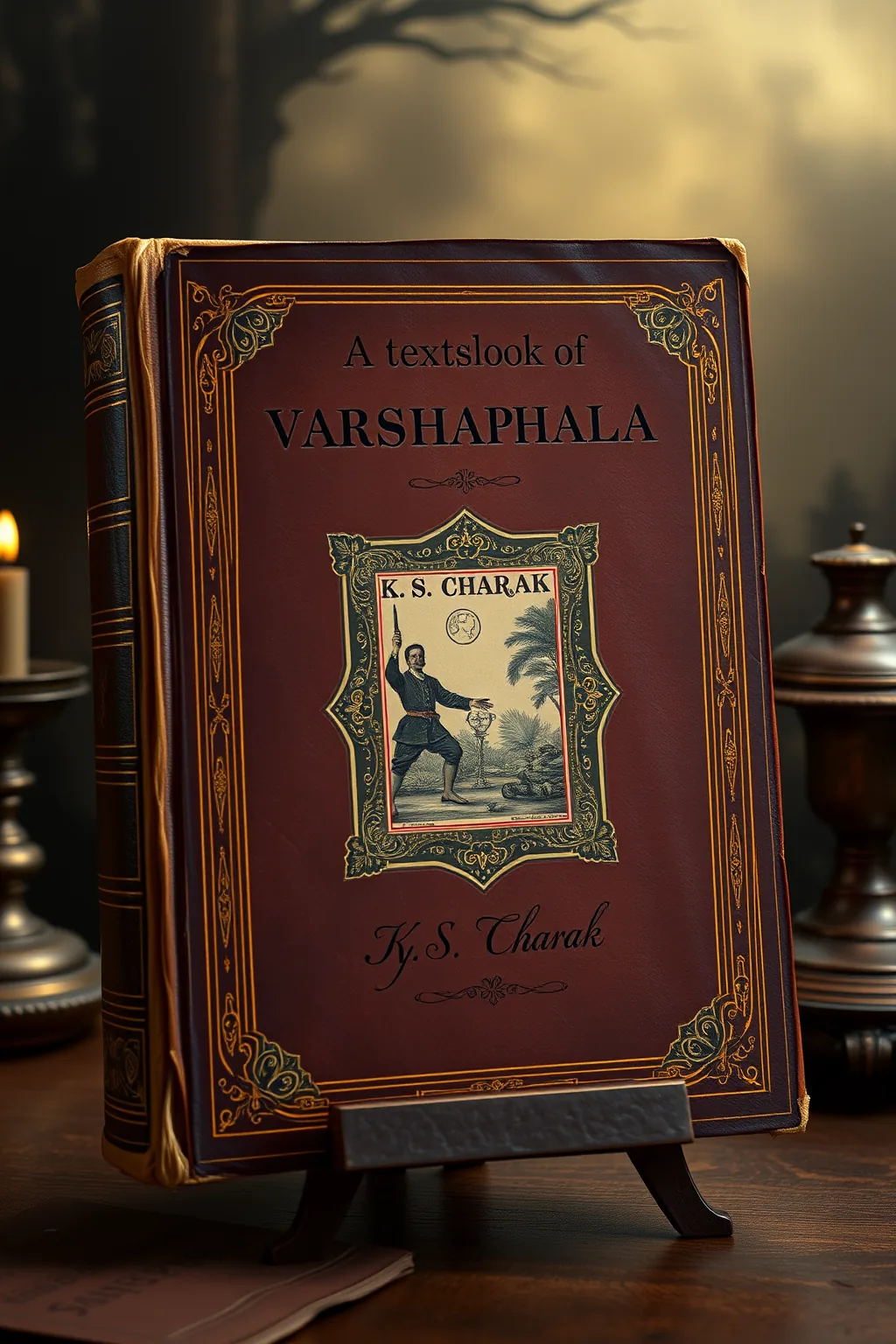
A textbook of varshaphala
 61
61

A textbook of varshaphala



Silas Hawthorne (Hermetic Studies Editor) — K. S. Charak's 'A Textbook of Varshaphala' stands as a monumental achievement in the study of Hindu predictive astrology. Charak's meticulous scholarship and profound understanding of esoteric principles breathe life into the complex art of annual horary charts. He masterfully elucidates the nuanced interplay of planetary cycles, dasha systems, and yogas, offering insights that transcend mere technical application. This work is an essential companion for serious students and practitioners of Vedic astrology seeking to refine their interpretive skills and access a deeper layer of cosmic wisdom. It is a testament to the enduring power of ancient astrological traditions.
📝 Description
61
K. S. Charak's 1999 textbook offers a detailed study of the Varshaphala astrological system.
This book presents K. S. Charak's approach to Varshaphala, the Hindu system of annual horary astrology. It moves beyond simple instruction, aiming to explain how yearly astrological cycles connect to individual destiny. Charak examines the symbols and knowledge within this predictive art, showing how planetary movements and karma interact.
The text encourages serious students and experienced astrologers to learn the techniques of temporal divination. It provides a way to understand the astrological meaning behind yearly life events. The book describes a cosmic order that influences both everyday life and spiritual matters. It serves as a resource for mastering this advanced astrological method and understanding how time and awareness are linked.
Varshaphala, or Tajika astrology, is a specialized branch within Vedic astrology focusing on annual predictions. It draws from both classical Indian astrological principles and influences from Persian astrology, particularly the Tajika system. This method uses the "year lord" and specific planetary configurations at the moment of a person's birthday to forecast the events of the coming year. It is considered a more dynamic and immediate form of astrological interpretation compared to natal chart analysis alone, offering insights into the unfolding of destiny on a yearly basis.
💡 Why Read This Book?
Unlock the secrets of annual predictive astrology with K. S. Charak's definitive guide to Varshaphala. This book offers a profound exploration of cyclical time, cosmic influences, and karmic unfoldment. Ideal for dedicated students of Hindu astrology, spiritual seekers interested in destiny, and practitioners aiming to enhance their predictive accuracy and deepen their understanding of life's yearly ebb and flow. Gain timeless wisdom for navigating future potentials.
⭐ Reader Reviews
Honest opinions from readers who have explored this book.
❓ Frequently Asked Questions
What is Varshaphala astrology?
Varshaphala, also known as Tajika, is a sophisticated system of Hindu astrology focused on annual horary charts. It predicts events and influences for a specific year, starting from the individual's birthday, offering a unique yearly forecast.
Who is K. S. Charak?
K. S. Charak is a highly respected and prolific author in the field of Vedic astrology, known for his deep scholarship, clear explanations, and insightful interpretations of complex astrological principles and techniques.
What are the key techniques covered in this book?
The book covers essential Varshaphala techniques including the construction of the annual chart, the role of the year lord, planetary aspects, dasha systems, and various yogas specifically applied to yearly predictions.
Is this book suitable for beginners?
While thorough, the book is best suited for those with a foundational understanding of Vedic astrology. Beginners might find it challenging without prior knowledge of planetary significations and basic chart interpretation.
How does Varshaphala differ from natal astrology?
Natal astrology describes inherent potentials and personality traits based on the birth chart. Varshaphala focuses on the specific influences and events that are likely to manifest during a particular solar year, acting as a dynamic forecast.
🔮 Key Themes & Symbolism
The Art of Temporal Divination
This theme explores Varshaphala as a sophisticated method of reading the unfolding narrative of time. It examines how the cyclical nature of planetary movements creates unique energetic signatures each year, offering insights into destiny's currents. The book illuminates the esoteric principle that time is not linear but cyclical, and that specific yearly configurations hold the key to understanding upcoming challenges, opportunities, and karmic lessons. This section reveals the profound connection between celestial rhythms and the human experience, empowering readers to navigate their personal timeline with greater awareness and foresight.
Cosmic Symbolism in Annual Charts
Central to Varshaphala is the body of symbolism embedded within its charts. This theme unpacks the esoteric meanings behind the planets, houses, and zodiacal signs as they reconfigure each year. It highlights how the 'Muntha' (annual progress lord) acts as a focal point, influencing the year's themes, and how the interplay of planetary strengths and weaknesses within the annual chart reveals specific destinies. Readers will learn to interpret the subtle language of the cosmos, understanding how celestial archetypes manifest in earthly events and personal growth throughout the year.
Karma and Yearly Manifestation
This theme examines the profound connection between Varshaphala and the law of karma. It explains how the annual chart acts as a mirror reflecting the karmic seeds sown in previous lives and the current life, and how they are poised to ripen within the year. Charak guides readers to understand that the yearly predictions are not deterministic but reveal the karmic landscape, offering opportunities for conscious evolution and spiritual progress. The focus is on understanding how to work with these energies, mitigate challenges, and harness auspicious influences for personal transformation.
💬 Memorable Quotes
Direct passages from the work, attributed to the author.
“The year is a canvas painted by the stars.”
— This evocative phrase suggests that each year's astrological configuration is a unique cosmic artwork, holding specific potentials and influences that shape our life's experiences.
“The Muntha guides the year's unfolding narrative.”
— This highlights the critical role of the 'Muntha' (year lord) as the primary indicator of the year's dominant themes, challenges, and opportunities.
“Transits are whispers of the cosmos.”
— This metaphorical quote suggests that planetary movements throughout the year are subtle yet significant messages from the universe, guiding us toward specific lessons or events.
“Wisdom lies in understanding the celestial clock.”
— This emphasizes that true insight comes from comprehending the intricate workings of astrological cycles and their impact on human life.
💡 Key Ideas
Editorial paraphrase of the work's core concepts — not direct quotes.
Destiny unfolds in predictable cycles.
This quote emphasizes the core principle of Varshaphala, asserting that recurring astrological patterns offer a framework for understanding the ebb and flow of our predetermined path.
🌙 Esoteric Significance
Tradition
Varshaphala is deeply rooted in the Vedic astrological tradition, which views the cosmos as a divinely ordered system reflecting the principles of karma and dharma. Its esoteric significance lies in its ability to reveal the cyclical unfolding of destiny, acting as a spiritual roadmap for the year ahead. It is considered a sacred science, offering insights into the subtle energetic influences that guide human experience and provide opportunities for spiritual growth and conscious evolution.
Symbolism
The symbolism in Varshaphala is rich and layered. The annual chart, or 'Varsha Kundali,' is constructed based on the Sun's ingress into Aries, symbolizing a new solar year. Key symbols include the 'Muntha' (annual lord), which dictates the year's themes, and the 'Yogini Dashas,' which offer a temporal framework for understanding the unfolding of events. Planetary dignities, aspects, and house placements within this yearly chart are interpreted to reveal the karmic lessons and potentials for the individual.
Modern Relevance
In an era often characterized by uncertainty, Varshaphala offers a profound tool for understanding and navigating life's temporal currents. Its modern relevance lies in its ability to provide clarity and a sense of agency amidst change. By understanding the astrological influences of the coming year, individuals can approach challenges with greater preparedness, seize opportunities more effectively, and engage in self-reflection that fosters personal growth and spiritual awareness. It bridges ancient wisdom with contemporary needs for guidance and foresight.
👥 Who Should Read This Book
This comprehensive textbook on Varshaphala is an essential read for serious students of Vedic astrology seeking to master advanced predictive techniques. Astrologers looking to enhance their forecasting abilities and offer more precise yearly readings will find immense value. Spiritual seekers interested in understanding the cyclical nature of destiny and their personal karmic journey will discover useful insights. Furthermore, practitioners who wish to deepen their understanding of Hindu cosmological principles and their application to daily life will find this book an indispensable resource for nuanced interpretation and practical application.
📜 Historical Context
Varshaphala, or Tajika astrology, emerged in India as a sophisticated system of annual prediction, deeply influenced by Persian and Arabian astrological traditions that were introduced during periods of cultural exchange. While Vedic astrology traditionally focuses on natal charts and longer-term predictions, Varshaphala offered a more granular, year-by-year forecasting method. Its development, particularly in the medieval period, allowed practitioners to provide timely guidance and address the specific concerns of individuals regarding their immediate future. K. S. Charak's work contextualizes this tradition within the broader scope of Hindu astrology, preserving and clear its unique techniques for contemporary readers.
📔 Journal Prompts
Reflect on the dominant themes of the past year as suggested by your previous Varshaphala chart. Were they accurate?
Consider the 'Muntha' of your current Varshaphala chart. What are its significations, and how might they manifest in your life this year?
How do the planetary transits in your current Varshaphala chart speak to your ongoing karmic lessons or opportunities for growth?
Identify any planetary conjunctions or aspects in your current yearly chart that seem particularly potent. Journal about their potential impact.
How can you proactively engage with the energies indicated by your current Varshaphala chart to foster personal transformation and spiritual progress?
🗂️ Glossary
Varshaphala
Literally 'fruit of the year,' this refers to the Hindu system of annual horary astrology, also known as Tajika astrology, which predicts events for a specific solar year.
Tajika
An alternative name for Varshaphala astrology, often used to denote its historical influences from Persian and Arabian astrological traditions integrated into Hindu astrology.
Muntha
The 'year lord' or 'progressed lord' in Varshaphala, determined by the Sun's position at the start of the astrological year and indicating the primary themes and influences of that year.
Varsha Kundali
The annual horoscope chart constructed for a specific year, typically starting from the individual's birthday or the Sun's ingress into Aries, used for yearly predictions.
Dasha
A system of planetary periods in Vedic astrology that indicates the timing of events. Varshaphala often utilizes specific Dasha systems like Yogini Dasha for yearly predictions.
This book appears in 2 collections
🔮 Readers Also Liked
Browse all →








More by K. S. Charak
All books →


From the “Astrology” Collection
View all →








More Free Astrology & Cosmology Books
View all →