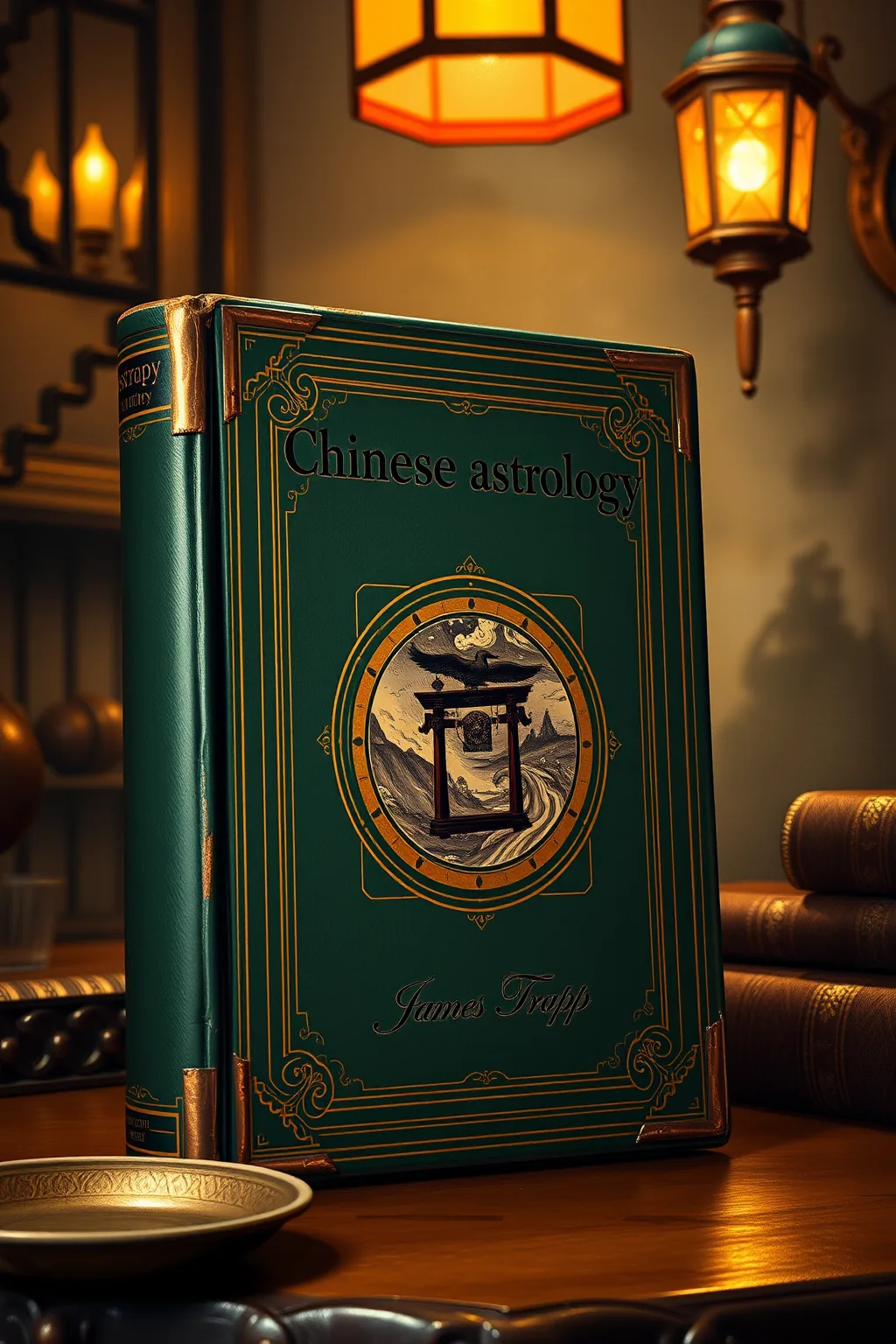
Chinese astrology
 75
75

Chinese astrology
James Trapp and Amy Zhaoyue's "Chinese Astrology" offers a structured entry into a system often perceived as esoteric shorthand. The authors’ approach is commendably direct, sidestepping the typical mystification that can surround Eastern astrological traditions. A particular strength lies in the detailed explanation of the Five Elements (Wu Xing) and their interactions, moving beyond mere listing to illustrate their practical application in character analysis. However, the book occasionally struggles to fully convey the philosophical depth that underpins these concepts, sometimes presenting them more as tools than as integral parts of a worldview. The section on compatibility, while useful, could benefit from more nuanced discussion of interpersonal dynamics beyond simple sign pairings. Ultimately, "Chinese Astrology" provides a solid, accessible foundation for understanding this ancient practice.
📝 Description
75
James Trapp and Amy Zhaoyue's 2006 volume details the principles of Chinese astrology.
This book examines Chinese astrology, a system tied to Chinese philosophy and cosmology. It explains the zodiac's cycles, the Five Elements, and Yin and Yang principles. These concepts are used to understand personality, destiny, and relationships.
The work traces the origins of Chinese astrology to the Han Dynasty, showing its evolution with astronomy and philosophy. It highlights how this practice became central to Chinese culture, affecting decisions from marriage to state affairs. The authors place the system within its historical development.
Key concepts covered include the 12 animal signs of the zodiac, each linked to a year in a 12-year cycle. The book also explains the interaction of the Five Elements—Wood, Fire, Earth, Metal, and Water—and the forces of Yin and Yang. It shows how these elements combine to form an individual's astrological profile.
Chinese astrology is part of a larger tradition of cosmology and divination that developed in East Asia. It is not merely a predictive system but a framework for understanding the patterns of the cosmos and their correspondence with human life. This book situates it within that context, showing how its principles, like the Five Elements and Yin/Yang, are used to map out a person's character and potential life path, reflecting a worldview where celestial movements and earthly events are interconnected.
💡 Why Read This Book?
• Gain practical insights into the 12 animal signs and their associated personality traits, learning how to identify your own and others' zodiac animals. • Understand the foundational principles of the Five Elements (Wu Xing) and their cyclical interactions, a core component absent in Western astrology. • Explore the concept of Yin and Yang as applied to astrological interpretation, discovering how these opposing forces shape individual characteristics and relationships.
⭐ Reader Reviews
Honest opinions from readers who have explored this book.
❓ Frequently Asked Questions
When was "Chinese Astrology" by James Trapp and Amy Zhaoyue first published?
The book "Chinese Astrology" by James Trapp and Amy Zhaoyue was first published in 2019, making it a relatively contemporary guide to this ancient practice.
What are the 12 animals in the Chinese zodiac?
The 12 animals in the Chinese zodiac are the Rat, Ox, Tiger, Rabbit, Dragon, Snake, Horse, Goat, Monkey, Rooster, Dog, and Pig, each representing a year in a 12-year cycle.
What are the Five Elements in Chinese astrology?
The Five Elements are Wood, Fire, Earth, Metal, and Water. These elements are believed to interact cyclically, influencing the characteristics of the zodiac animals and individuals.
How does Chinese astrology differ from Western astrology?
Chinese astrology is based on a 12-year lunar cycle with animal signs and the Five Elements, while Western astrology typically uses a solar-based system with 12 zodiac constellations.
Is "Chinese Astrology" suitable for beginners?
Yes, the book is designed to be accessible to beginners, providing clear explanations of core concepts like the zodiac animals and the Five Elements.
What is the significance of Yin and Yang in Chinese astrology?
Yin and Yang represent complementary opposing forces. In Chinese astrology, they are used to describe the characteristics of the zodiac animals and the balance within an individual's astrological profile.
🔮 Key Themes & Symbolism
The 12 Animal Zodiac Cycle
This book meticulously details the 12 animals of the Chinese zodiac: Rat, Ox, Tiger, Rabbit, Dragon, Snake, Horse, Goat, Monkey, Rooster, Dog, and Pig. Each animal is linked to a specific year within a 12-year cycle, embodying distinct personality traits, strengths, and potential challenges. Understanding your birth animal is presented as the foundational step in deciphering one's astrological blueprint, offering insights into character and life path based on centuries of observation.
The Five Elements (Wu Xing)
Central to the system are the Five Elements: Wood, Fire, Earth, Metal, and Water. The work explains their dynamic relationships – the productive cycle (e.g., Wood fuels Fire) and the destructive cycle (e.g., Fire melts Metal). This elemental interplay is shown to modify the inherent qualities of each zodiac animal, creating a nuanced astrological profile far more complex than a simple animal sign assignment.
Yin and Yang Principles
The complementary forces of Yin (passive, dark, feminine) and Yang (active, light, masculine) are explored as fundamental to understanding the balance within individuals and their interactions. Each zodiac animal and element possesses Yin or Yang characteristics, influencing temperament and compatibility. The book illustrates how achieving balance between these forces is key to harmony and well-being.
Astrological Compatibility
Drawing upon the animal signs, elements, and Yin/Yang dynamics, the book offers guidance on interpersonal compatibility. It examines which animal signs tend to harmonize well, which may face challenges, and how elemental interactions can foster or hinder relationships. This section provides practical advice for understanding partnerships in both personal and professional contexts.
💬 Memorable Quotes
Direct passages from the work, attributed to the author.
“The 12 animals of the zodiac are Rat, Ox, Tiger, Rabbit, Dragon, Snake, Horse, Goat, Monkey, Rooster, Dog, Pig.”
— This direct enumeration serves as a foundational reference point, grounding the reader in the core components of the Chinese zodiac system before exploring deeper interpretations.
“Wood fuels Fire, Fire creates Earth (ash), Earth bears Metal, Metal collects Water (condensation), Water nourishes Wood.”
— This describes the productive cycle of the Five Elements. It highlights the interconnectedness and generative flow within the cosmos, demonstrating how each element supports the next in a perpetual cycle.
“Fire melts Metal, Metal cuts Wood, Wood penetrates Earth, Earth dams Water, Water extinguishes Fire.”
— This outlines the destructive cycle of the Five Elements. It illustrates the concept of control and opposition, showing how each element can overcome another, reflecting the natural processes of restraint and balance.
“Each animal sign has inherent qualities influenced by both its elemental composition and its Yin or Yang nature.”
— This statement synthesizes the core astrological principles, emphasizing that an individual's profile is a complex interplay of animal, element, and energetic force, not just a single label.
“Understanding the interactions between the Five Elements is key to interpreting the nuances of an astrological chart.”
— This underscores the sophisticated nature of Chinese astrology, pointing out that true comprehension lies not in isolated symbols but in the dynamic relationships between them.
🌙 Esoteric Significance
Tradition
Chinese astrology belongs to a vast East Asian esoteric lineage deeply rooted in Taoist philosophy and cosmology. It is not a singular doctrine but a synthesis of astronomical observation, numerology, and philosophical principles aimed at understanding cosmic harmony and its reflection in human affairs. This work fits within this tradition by presenting the core mechanics of the system, emphasizing its cyclical nature and the interconnectedness of all phenomena, a hallmark of Taoist thought.
Symbolism
Key symbols include the 12 animals of the zodiac (e.g., the Dragon representing power and good fortune, the Snake symbolizing wisdom and intuition) and the Five Elements (Wood, Fire, Earth, Metal, Water). The animals represent archetypal energies, while the elements symbolize fundamental forces of creation and transformation. Their dynamic interplay, governed by Yin and Yang, forms the symbolic language through which destiny and personality are interpreted.
Modern Relevance
Contemporary thinkers and practitioners in fields like comparative psychology, transpersonal studies, and holistic wellness draw upon Chinese astrological principles. Its emphasis on cyclical patterns, elemental balance, and interconnectedness offers a valuable counterpoint to more linear Western frameworks. Modern interpretations often focus on self-awareness, relationship dynamics, and aligning personal energy with natural rhythms, finding resonance with current trends in mindfulness and personal development.
👥 Who Should Read This Book
• Aspiring astrologers seeking to broaden their knowledge beyond Western systems, offering a clear introduction to the unique 12-animal cycle and Five Elements. • Individuals interested in East Asian philosophy and culture, providing context for how astrology is integrated into daily life and belief systems. • Seekers of self-understanding interested in alternative personality frameworks, offering a distinct lens through which to explore character traits and life patterns.
📜 Historical Context
The practice of Chinese astrology, as explored in this work, traces its lineage back over two millennia, solidifying its place during the Han Dynasty (206 BCE – 220 CE). It developed concurrently with advancements in Chinese astronomy and philosophy, integrating concepts like Yin and Yang and the Five Elements (Wu Xing) into a coherent cosmological system. Unlike the Western astrological tradition that relies on solar and sidereal zodiacs, Chinese astrology is fundamentally lunisolar and cyclical, emphasizing the 12-year animal cycle. This book emerges in a contemporary landscape where interest in comparative spiritual systems is high, offering a structured approach to a tradition that has profoundly shaped East Asian culture, influencing governance, social customs, and personal decisions for centuries. Its initial reception would have been within a globalizing world eager to understand diverse cultural practices.
📔 Journal Prompts
The Rat's cunning and the Ox's diligence: Reflect on which animal traits you most embody.
Consider the productive cycle of the Five Elements (Wood, Fire, Earth, Metal, Water). How do these elements manifest in your daily life?
Analyze the balance of Yin and Yang within your personal relationships.
Map out the interactions between your birth animal and the animals of three close friends or family members.
The Dragon's charisma and the Pig's sincerity: Which archetypal energy do you feel most drawn to explore further?
🗂️ Glossary
Wu Xing
The Chinese concept of the Five Elements: Wood, Fire, Earth, Metal, and Water. These are not static substances but represent phases and energies that interact in cyclical patterns of creation and destruction.
Yin
The feminine, passive, dark, and receptive principle in Chinese philosophy. In astrology, it represents qualities like introspection, gentleness, and intuition.
Yang
The masculine, active, light, and assertive principle in Chinese philosophy. In astrology, it signifies qualities such as dynamism, outward expression, and logic.
Zodiac Animals
The 12 animals (Rat, Ox, Tiger, Rabbit, Dragon, Snake, Horse, Goat, Monkey, Rooster, Dog, Pig) that represent each year in the 12-year cycle of the Chinese lunar calendar, each with associated characteristics.
Lunar Calendar
A calendar based on the cycles of the moon. The Chinese calendar is lunisolar, meaning it incorporates both lunar phases and solar year adjustments to maintain seasonal alignment.
Destructive Cycle
One of the two primary interaction cycles of the Five Elements, illustrating how each element can control or overcome another (e.g., Water extinguishes Fire).
Productive Cycle
The other primary interaction cycle of the Five Elements, demonstrating how each element generates or supports the next (e.g., Wood fuels Fire).
🔮 Readers Also Liked
Browse all →





More by James Trapp, Amy Zhaoyue
All books →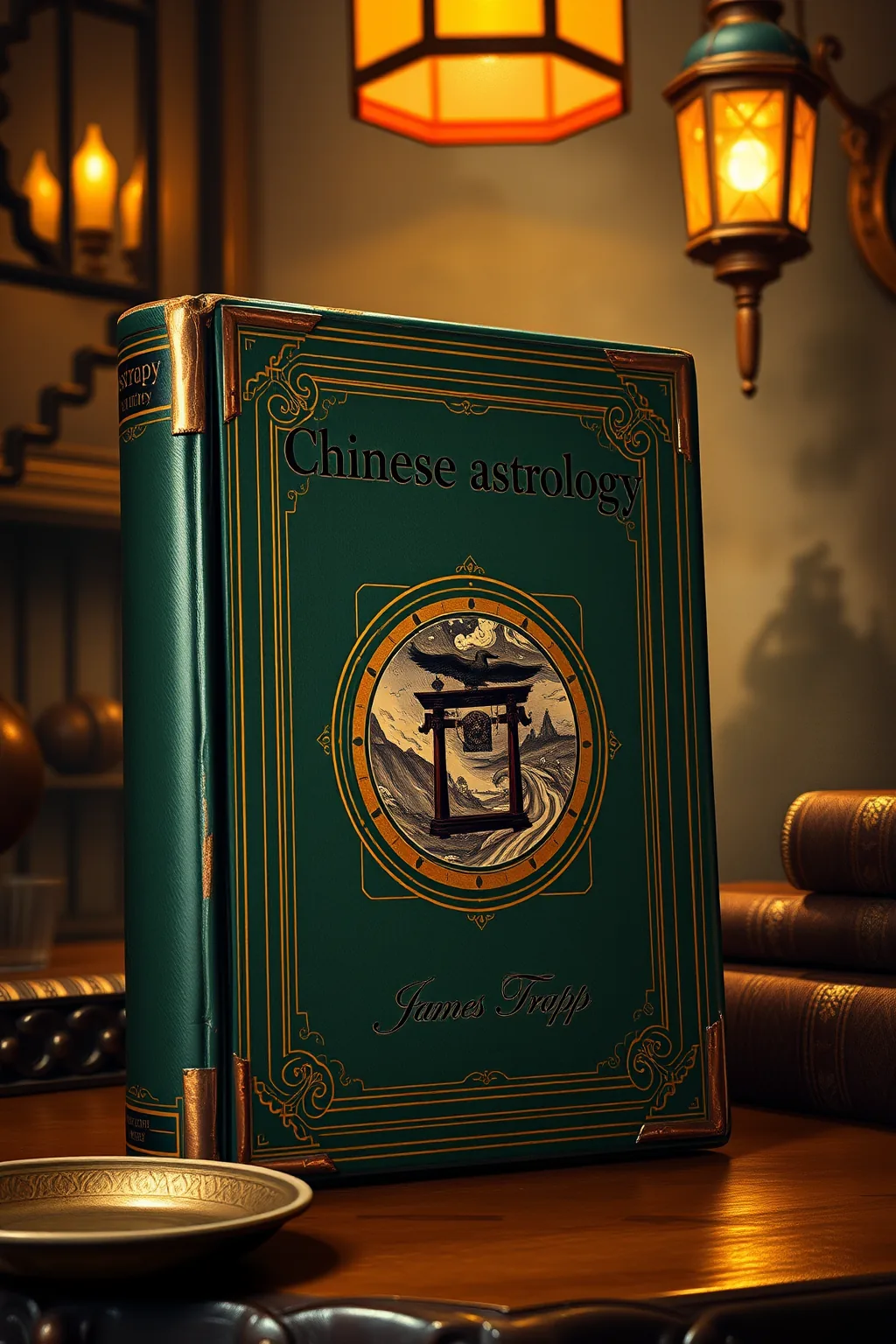
More Free Astrology & Cosmology Books
View all →