Chi gong
 78
78

Chi gong
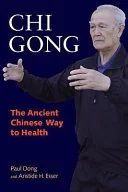
Paul Dong and Aristide H. Esser's 'Chi Gong' offers a welcome antidote to the often oversimplified popular presentations of this profound practice. The work’s strength lies in its careful articulation of the energetic principles, particularly the nuanced discussion of 'qi' and its pathways. Esser's background in psychiatry, combined with Dong's deep knowledge of Chinese traditions, creates a unique bridge between Western scientific inquiry and Eastern energetic philosophy. A limitation, however, is that the text can occasionally feel dense for absolute beginners, demanding focused attention to grasp the finer points. The section detailing the energetic effects of specific postures, while informative, could benefit from more explicit visual aids for clarity. Despite this, the book provides a robust intellectual foundation for understanding qigong's deeper dimensions.
📝 Description
78
Paul Dong and Aristide H. Esser's 1988 book 'Chi Gong' examines the principles behind cultivating vital energy.
This volume by Paul Dong and Aristide H. Esser examines qigong, a practice originating in ancient China for health and spiritual development. The book details how to cultivate the vital energy known as 'qi' or 'chi.' It goes beyond simple exercises to discuss the energetic and philosophical foundations of this ancient art.
The authors place qigong within its historical and cultural context, tracing its roots in Daoist and Buddhist traditions. They show how these energy cultivation techniques became integrated into Chinese martial arts, medicine, and spiritual disciplines. The book acknowledges the long history of these practices, noting their preservation through monastic traditions and lineage transmission.
Central to the work are the concepts of 'qi' itself and its movement through the body's meridians. The text draws connections to Traditional Chinese Medicine, explaining the role of intention and breath in directing this energy. Cultivating a calm and focused mind is presented as crucial for effective practice.
Qigong, as presented in this book, is a practice deeply embedded in the esoteric traditions of China. It draws from millennia of Daoist and Buddhist contemplative practices aimed at harmonizing the body's internal energies with the cosmos. The focus on cultivating 'qi' through specific movements, breathwork, and mental focus aligns with broader alchemical and spiritual disciplines that seek to refine the practitioner's vital force for longevity, health, and spiritual attainment. This work situates qigong as more than mere physical exercise; it is a path of internal alchemy.
💡 Why Read This Book?
• Gain a structured understanding of 'qi' and its energetic pathways, moving beyond simplistic physical movements to grasp the underlying principles of energy cultivation as detailed in the book’s exploration of meridians. • Explore the historical roots of qigong within ancient Chinese traditions, appreciating its lineage and integration into medicine and philosophy, as illuminated by the book’s historical context. • Learn about the crucial role of intention ('yi') and breath in directing vital energy, a core concept elucidated in the text’s practical applications for practitioners.
⭐ Reader Reviews
Honest opinions from readers who have explored this book.
❓ Frequently Asked Questions
When was the book 'Chi Gong' first published?
The book 'Chi Gong' by Paul Dong and Aristide H. Esser was first published in 2008, offering a comprehensive look at the ancient Chinese practice.
What is the core concept discussed in 'Chi Gong'?
The core concept is 'qi' (or 'chi'), the vital energy in Traditional Chinese Medicine, and how to cultivate and direct it through specific practices for health and well-being.
Who are the authors of 'Chi Gong'?
The authors are Paul Dong, a scholar of Chinese traditions, and Aristide H. Esser, a psychiatrist, who collaborated to present a detailed view of qigong.
Does the book explain the physical exercises of qigong?
Yes, while focusing on the energetic and philosophical aspects, the book also describes the physical movements and postures associated with qigong practice.
Is 'Chi Gong' suitable for complete beginners?
It is suitable for motivated beginners interested in the theoretical and historical depth, though its scholarly approach may require focused study.
What is the connection between qigong and Traditional Chinese Medicine (TCM)?
The book highlights the deep connection, explaining how qigong principles, like the flow of qi through meridians, are fundamental to TCM diagnostics and treatments.
🔮 Key Themes & Symbolism
Cultivation of Vital Energy (Qi)
The central theme revolves around 'qi,' the vital life force that animates all beings. Dong and Esser meticulously explain the concept of qi as it is understood in traditional Chinese cosmology and medicine. The book details how qigong practices are designed to gather, circulate, and harmonize this energy within the body. It emphasizes that qigong is not merely physical exercise but a sophisticated method of energetic cultivation aimed at promoting physical health, emotional balance, and spiritual awareness, by working with the body's intrinsic energetic field.
Meridians and Energetic Pathways
A significant portion of the work is dedicated to the intricate network of meridians, often referred to as energetic channels, that traverse the body. These pathways are crucial for the flow of qi. The authors map out these channels, drawing parallels to the acupoints used in acupuncture. Understanding this system is presented as key to comprehending how qigong movements, breath control, and intention influence the body's energetic landscape, facilitating healing and maintaining equilibrium. The book explores how blockages in these meridians can lead to illness.
The Role of Mind and Breath
Beyond physical postures, 'Chi Gong' underscores the paramount importance of the mind ('yi') and breath ('qi') in the practice. The authors explain that focused intention directs the flow of vital energy, while specific breathing techniques regulate its quality and quantity. This synergistic interplay between mind, breath, and body movement is presented as the core mechanism through which qigong achieves its therapeutic and developmental effects. Cultivating a calm, concentrated state of mind is depicted as essential for effective energy work.
Integration of Body, Mind, and Spirit
The book presents qigong as a holistic discipline that unifies physical, mental, and spiritual aspects of an individual. It moves beyond a purely physiological or mechanical understanding to explore the lasting impact of these practices on one's overall well-being and consciousness. By harmonizing the body's energy, practitioners are said to achieve greater clarity of mind, emotional stability, and a deeper connection to their inner selves and the universal life force, fostering a sense of integrated vitality.
💬 Memorable Quotes
Direct passages from the work, attributed to the author.
“Qi is the fundamental substance of the universe, the vital force that flows through all living things.”
— This statement captures the expansive cosmological view of 'qi' presented in the book, positioning it not just as a biological energy but as a universal principle underlying existence.
“The meridians are the rivers through which qi flows, nourishing the body.”
— This metaphor vividly illustrates the concept of the meridian system, likening it to a circulatory network that is essential for distributing vital energy throughout the organism.
“Intention (yi) acts as the conductor, guiding the flow of qi.”
— This highlights the mental aspect of qigong practice, emphasizing how focused thought and will are crucial for directing and manipulating the body's energetic currents effectively.
“Breath is the vehicle that transports and refines qi.”
— This interpretation underscores the critical role of respiratory techniques in qigong, suggesting that controlled breathing is instrumental in the management and enhancement of vital energy.
“The practice aims for a state of dynamic equilibrium, not static stillness.”
— This clarifies that qigong is about achieving a balanced, flowing state of energy, rather than a complete cessation of movement or activity, reflecting a principle of vibrant health.
🌙 Esoteric Significance
Tradition
The work aligns with the Daoist tradition, specifically its emphasis on cultivating internal alchemy through 'qi' manipulation for longevity and spiritual attainment. It also touches upon principles found in Traditional Chinese Medicine (TCM), which, while a medical system, carries esoteric undertones regarding the flow of vital forces. The book fits within a broader lineage of internal arts that seek to refine the body's energies for higher states of consciousness, a common thread in many esoteric paths that focus on inner transformation.
Symbolism
Key symbols include 'qi' itself, representing the fundamental life-breath of the cosmos, and the concept of the 'meridians' as energetic pathways, analogous to the subtle body's nervous or circulatory systems in other traditions. The 'dantian' (energy centers, often located in the lower abdomen) are also implicitly or explicitly referenced as focal points for qi cultivation and storage, acting as energetic reservoirs within the practitioner's being.
Modern Relevance
Contemporary practitioners of internal martial arts, somatic therapies, and mindfulness-based stress reduction (MBSR) draw heavily on the principles detailed in works like 'Chi Gong.' Thinkers exploring embodied cognition and the science of consciousness often reference the sophisticated mind-body integration inherent in qigong. Furthermore, the book's approach to energy cultivation remains relevant for those in the fields of complementary and alternative medicine seeking to understand the energetic underpinnings of health and healing.
👥 Who Should Read This Book
• Individuals interested in the philosophical and energetic underpinnings of qigong, moving beyond basic exercises to understand the 'why' and 'how' of qi cultivation, as explained by Dong and Esser. • Students of Traditional Chinese Medicine (TCM) or comparative spiritual practices, seeking to grasp the foundational concepts of vital energy flow and its role in health and consciousness. • Practitioners of internal martial arts or energy work who wish to deepen their theoretical knowledge and refine their understanding of intention, breath, and energetic circulation.
📜 Historical Context
Published in 2008, 'Chi Gong' emerged at a time when qigong was gaining significant global recognition, albeit often through simplified or commercialized forms. Paul Dong and Aristide H. Esser’s work sought to provide a more scholarly and culturally grounded perspective, situating qigong within its ancient Daoist and medical lineage. This contrasted with the more purely therapeutic or martial applications that were becoming prevalent. The book's publication also coincided with ongoing academic interest in mind-body practices and traditional healing systems, a field influenced by thinkers like Herbert Benson who explored the relaxation response. While not facing direct censorship, the promotion of qigong in China itself had seen periods of state control and scientific scrutiny following the Cultural Revolution, making works that offered deeper historical and philosophical context valuable for serious students.
📔 Journal Prompts
The concept of qi as the universe's fundamental substance, as presented in 'Chi Gong'.
The role of meridians in circulating vital energy, and how blockages might manifest.
The synergy between intention (yi) and breath (qi) in directing energetic flow.
Reflecting on the dynamic equilibrium achieved through qigong practice.
Personal insights into the integration of body, mind, and spirit through energy cultivation.
🗂️ Glossary
Qi (Chi)
The fundamental vital life force or energy believed to permeate the universe and animate all living beings, central to qigong and Traditional Chinese Medicine.
Meridians
A network of channels or pathways throughout the body through which qi is believed to flow, analogous to blood vessels but for energetic circulation.
Yi (Intention)
Mental focus or will, considered a crucial element in qigong practice for directing and guiding the flow of qi within the body.
Dantian
Energy centers or reservoirs within the body, typically located in the lower abdomen, where qi is said to be stored, refined, and generated.
Qigong
An ancient Chinese practice that combines specific postures, movement, breath regulation, and focused intention to cultivate and balance vital energy (qi).
Acupoints
Specific points along the meridians that are sensitive to the flow of qi and are targeted in practices like acupuncture and qigong.
Dynamic Equilibrium
A state of balance and harmony within the body's energetic system that is fluid and responsive, rather than rigidly static, as cultivated in qigong.
🔮 Readers Also Liked
Browse all →








More by Paul Dong, Aristide H. Esser
All books →
More Free Occult Philosophy Books
View all →