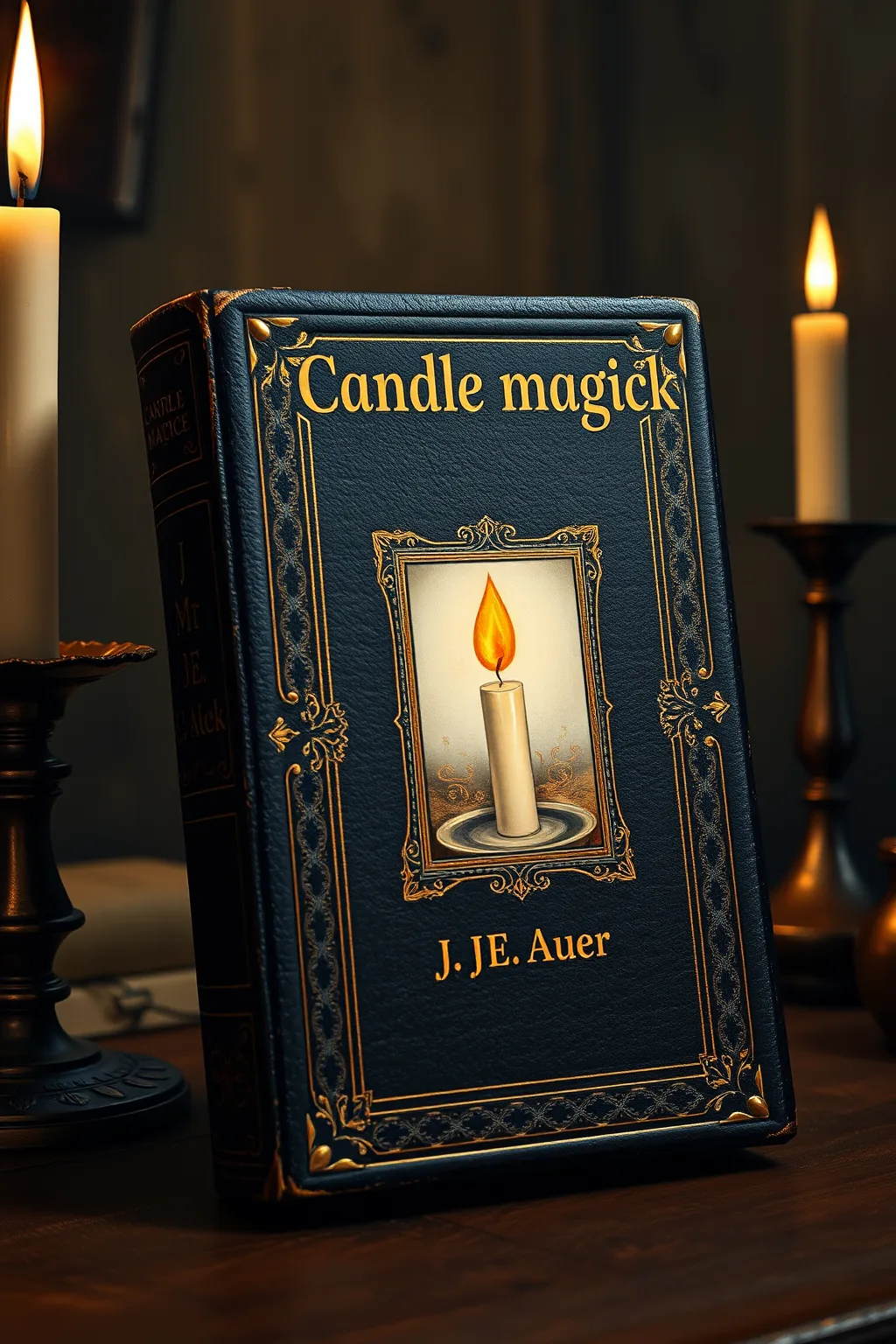
Candle magick
 72
72

Candle magick
J. E. Auer’s "Candle Magick" provides a surprisingly thorough examination of a deceptively simple subject. The 1996 publication date places it within a wave of accessible esoteric texts, yet Auer avoids the superficiality that often plagued similar works. The strength lies in its systematic approach; it treats the candle not merely as a prop but as a complex component of magical architecture, detailing color, form, and flame with a practitioner's eye. The section on color correspondences, for instance, offers a practical, if somewhat conventional, framework for selection based on intent. However, the text occasionally feels constrained by its singular focus. While it excels at detailing *how* to use a candle, it offers less on the deeper philosophical underpinnings that might inform *why* certain correspondences are chosen across various traditions. A passage detailing the carving of intentions into the wax, a practical step, highlights this – it’s clear instruction, but could benefit from more context on the sympathetic principles at play. Ultimately, "Candle Magick" serves as a competent, workmanlike guide for those seeking to enhance their ritual efficacy through focused elemental work.
📝 Description
72
J. E. Auer's 1996 book examines candles as primary tools for magical intent and energetic work.
Candle Magick by J. E. Auer, published in 1996, serves as a practical guide to using candles in occult and esoteric practices. The book treats the candle not merely as a light source, but as a central element in ritual construction and manifestation. Auer details how the flame, wax, color, and form of the candle can be integrated into magical work. The text aims to give practitioners a systematic understanding of candle symbolism and its application. It draws from common Western esoteric traditions while remaining accessible to practitioners of any path.
This book is best suited for individuals already involved in magical or occult practices. It offers methods to refine techniques using a specific, accessible tool. Solitary practitioners and those in small groups may find value in its approach to ritual mechanics. Students of Western Esotericism, particularly those interested in elemental correspondences and sympathetic magic, will discover practical applications for their studies. Auer's instruction-oriented style benefits those who prefer methodical guidance over purely theoretical discussion.
Published in 1996, Candle Magick entered a field of renewed interest in occultism and spirituality. It emerged alongside many practical magic guides that drew from traditions like Wicca and ceremonial magic. Auer's work stands out for its dedicated focus on the candle as a singular, versatile magical implement. Unlike broader guides, it concentrates on the specific correspondences and applications of flame, wax, and color within ritual contexts.
💡 Why Read This Book?
• Gain a structured methodology for candle rituals, learning how to select colors and prepare candles for specific intentions, as detailed in the book's practical sections on wax manipulation. • Understand the symbolic language of flame and color within a magical context, moving beyond simple association to grasp their energetic functions as presented by Auer. • Develop a more focused approach to magical working by treating the candle as a primary tool for channeling intent, a concept explored throughout the text's practical exercises.
⭐ Reader Reviews
Honest opinions from readers who have explored this book.
❓ Frequently Asked Questions
What is the primary focus of J. E. Auer's Candle Magick?
The book focuses on the practical and symbolic application of candles within esoteric and occult practices, treating the candle as a key tool for focused intent and ritual work, rather than just illumination.
When was Candle Magick first published?
Candle Magick by J. E. Auer was first published in 1996, placing it within a period of renewed interest in practical occultism.
Does the book require adherence to a specific magical tradition?
No, while it draws from common Western esoteric currents, the work aims to provide a framework applicable across various magical practices, emphasizing a methodical approach to ritual mechanics.
What aspects of candles does the book explore?
It explores the energetic properties of the flame, the extensive symbolism of candle colors, the physical manipulation of wax for imprinting intent, and the strategic placement and timing of candle rituals.
Who would benefit most from reading Candle Magick?
Practitioners of magic, students of Western Esotericism, and those seeking a structured, instruction-oriented guide to enhancing their ritual work with elemental tools will find it most beneficial.
Is Candle Magick a theoretical or practical guide?
The book is primarily a practical guide, offering detailed instructions and techniques for using candles in magical practices, supported by explanations of underlying symbolic principles.
🔮 Key Themes & Symbolism
The Candle as a Magical Conduit
This theme posits the candle as more than a mere light source; it is an active participant in magical workings. The flame is presented as a conduit, a point of energetic exchange between the practitioner and the subtle realms, capable of carrying intentions. Auer details how the focused gaze upon the flame can induce trance states and how the visual representation of the flame itself embodies transformation and purification. The act of lighting the candle becomes a ritualistic opening, a declaration of focused intent that sets the stage for deeper magical operations.
Color Symbolism and Correspondences
The work extensively maps colors to specific intentions, emotions, and even planetary influences, providing a practical lexicon for practitioners. This isn't arbitrary; Auer links these associations to established esoteric traditions where colors carry inherent energetic signatures. For example, selecting a red candle is not just for passion but for invoking specific forces associated with that hue in magical theory. The book guides the reader in choosing colors that align with the desired outcome, whether for protection, prosperity, healing, or spiritual connection.
Intent Imprinting and Wax Craft
Auer emphasizes the physical manipulation of the candle, particularly the wax, as a direct method of imprinting magical intent. This includes carving symbols, runes, sigils, or written prayers onto the candle's surface before burning. The process is described as a form of sympathetic magic, where the physical alteration of the object directly corresponds to the desired change in reality. The burning of the candle then serves to consume the imprint, releasing the energy and carrying the intention into manifestation.
Ritual Structure and Timing
Beyond the candle itself, the book addresses the broader context of ritual construction. This involves understanding the significance of candle placement within a sacred space and the potential benefits of timing rituals according to astrological phases or lunar cycles. The consistent, unwavering burn of a candle can symbolize endurance and focus, while its eventual consumption represents the completion of the magical act. Auer provides guidance on how to structure these elements to maximize the efficacy and symbolic resonance of the working.
💬 Memorable Quotes
Direct passages from the work, attributed to the author.
“The flame is a bridge between worlds.”
— This concise statement captures the book's view of the candle flame as a primary energetic tool, facilitating communication and action across the material and spiritual planes.
“Color choice dictates the energetic signature of the working.”
— This highlights the importance Auer places on chromatic symbolism, suggesting that selecting the correct candle color is crucial for aligning the ritual's energy with its intended purpose.
“Carve your will into the wax.”
— This points to the practical technique of inscribing intentions directly onto the candle, treating the wax as a medium for physically manifesting desires before the flame releases them.
“Observe the flame's dance for focused meditation.”
— This suggests using the visual aspect of the burning candle, its flickering and movement, as a focal point for meditative states and deepening concentration during ritual.
“The candle's consumption signifies the release of intent.”
— This interpretation focuses on the end-stage of the candle ritual, where the complete burning of the candle symbolizes the successful transference and activation of the magical working.
🌙 Esoteric Significance
Tradition
While not strictly adhering to a single lineage, "Candle Magick" draws heavily from the common currents of Western Esotericism, particularly its practical applications. It aligns with the Hermetic principles of "As Above, So Below" by linking celestial correspondences (colors, timing) to terrestrial outcomes through the manipulation of a physical element (the candle). It echoes aspects of sympathetic magic found in folk traditions and ceremonial magic, treating the candle as a miniature representation or focal point for larger magical workings. The emphasis on focused intent and visualization also aligns with meditative practices found in various contemplative traditions.
Symbolism
The primary symbols explored are the **Flame** and **Color**. The flame itself is a potent symbol of transformation, purification, divine inspiration, and the bridge between the material and spiritual realms. Its upward movement signifies aspiration and ascension. Candle **Colors** are treated as carriers of specific energetic frequencies and symbolic meanings, linked to deities, planets, emotions, and desired outcomes – for instance, green for prosperity, blue for healing or peace, red for passion or courage. The **Wax** itself symbolizes the malleable nature of reality, capable of being shaped and imprinted with intent.
Modern Relevance
In contemporary practice, Auer's work remains relevant for its clear, actionable guidance on using candles, a universally accessible magical tool. Modern practitioners, whether engaged in Wicca, chaos magic, or eclectic witchcraft, continue to utilize the color correspondences and intent-imprinting techniques detailed in the book. Thinkers and practitioners focusing on elemental magic, ritual efficacy, and the psychology of ritual will find its systematic approach valuable. It serves as a foundational text for those seeking to understand the mechanics of focused magical work through a single, potent symbol.
👥 Who Should Read This Book
• Beginning practitioners of magic and witchcraft seeking a foundational understanding of ritual tools and techniques, specifically how to effectively utilize candles. • Intermediate occult students interested in deepening their knowledge of color symbolism and elemental correspondences within a practical, hands-on framework. • Solitary practitioners looking for structured methods to enhance their personal workings and focus their intent through simple yet potent ritual components.
📜 Historical Context
Published in 1996, J. E. Auer's "Candle Magick" arrived during a period when interest in practical occultism and esotericism was experiencing a significant revival, fueled by accessible literature and the burgeoning internet. This era saw a proliferation of how-to guides for various magical practices, often drawing from established Western traditions. Auer’s work distinguished itself through its singular focus on the candle, treating it as a sophisticated tool rather than a mere accessory. While popular authors like Scott Cunningham were simplifying Wiccan practices for a mass audience, Auer's approach appears more grounded in a methodical, perhaps hermetic-influenced, understanding of elemental correspondences and sympathetic magic. The book's publication predates the widespread digital saturation that would later influence esoteric discourse, positioning it as a tangible resource for practitioners seeking structured guidance in an increasingly eclectic spiritual landscape. Its methodical nature offered a counterpoint to more generalized or purely theoretical occult texts.
📔 Journal Prompts
The energetic signature of candle colors: How does the author's suggested color correspondence for [desired outcome] align with your personal understanding?
Reflecting on the flame: Describe a time you felt drawn to or mesmerized by a candle flame and what it symbolized for you.
Intent imprinting: If you were to carve your primary magical goal onto a candle, what symbol or word would you choose and why?
The candle as a conduit: Consider a recent ritual; how could incorporating a candle have amplified or focused the intended energy?
Wax and reality: How does the concept of shaping wax to manifest intent relate to other areas where you actively shape your reality?
🗂️ Glossary
Esotericism
A broad category of spiritual or philosophical traditions that propose secret knowledge or understanding, often accessible only to initiates, concerning the fundamental nature of reality, the divine, and the human condition.
Occultism
Practices, beliefs, or traditions concerned with the supernatural, hidden, or secret, often involving magic, alchemy, astrology, and divination, aimed at understanding or influencing the forces of nature and the cosmos.
Sympathetic Magic
A type of magic based on the principle that like produces like (the Law of Similarity) or that, once having been in contact, things continue to act on each other at a distance (the Law of Contact).
Hermeticism
A religious, philosophical, and esoteric tradition based on writings attributed to Hermes Trismegistus, emphasizing the unity of all things, the correspondence between macrocosm and microcosm, and the path to spiritual enlightenment.
Correspondences
In esoteric traditions, relationships or associations between different elements (e.g., planets, colors, herbs, deities) believed to share a common energetic or symbolic quality, used to structure magical workings.
Sigil
A symbol or magical sign, often created by combining letters or abstract shapes, believed to hold a specific magical intent or power, typically used in ritual magic.
Elemental Magic
A system of magic that works with the fundamental forces or spirits of the four classical elements: Earth, Air, Fire, and Water, often seen as the building blocks of the manifest world.
🔮 Readers Also Liked
Browse all →









More by J. E. Auer
All books →
More Free Magic & Ritual Books
View all →