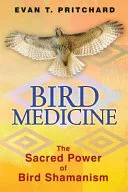
Bird Medicine
 81
81

Bird Medicine
Evan T. Pritchard’s Bird Medicine offers a much-needed scholarly yet deeply respectful look at avian spirituality in Native American traditions. Unlike many superficial treatments, Pritchard grounds his study in extensive fieldwork, presenting over 200 firsthand accounts that lend the work significant authenticity. The categorization of birds as gatekeepers of the four directions—Eagle, Hawk, Crow, and Owl—provides a clear framework for understanding their distinct roles and symbolic weight. A notable strength is the detailed examination of bird sign interpretation, offering concrete examples of how these messages were perceived and acted upon. However, the sheer volume of accounts, while valuable, occasionally leads to a density that might challenge readers less familiar with ethnographic methods. The work’s primary limitation is perhaps its academic tone, which, while ensuring rigor, may keep it at a distance for some seeking purely devotional or shamanic texts. Pritchard’s meticulous research, particularly his engagement with the specific legends of the Crow, stands as a testament to the depth of knowledge accessible when primary sources are prioritized. It is a significant contribution to the study of indigenous cosmologies.
📝 Description
81
Evan T. Pritchard's 2013 book, Bird Medicine, examines avian spiritual significance in Native American cultures.
Published in 2013, Bird Medicine by Evan T. Pritchard offers a detailed look at the spiritual role of birds in Native American traditions. The book goes beyond simple symbolism, presenting these beliefs as living practices. Pritchard bases his work on extensive research and over 200 firsthand accounts from indigenous people and their descendants. The text carefully documents how birds are seen as messengers, guides, and holders of sacred knowledge within these cultures.
This book is for anyone interested in comparative mythology, indigenous spirituality, and the connections between nature and the sacred. It aims to show Native American worldviews without resorting to common stereotypes. Readers drawn to animal symbolism and shamanic practices will find it particularly relevant. Anthropologists, folklorists, and those curious about cross-cultural interactions with the natural world will also discover value in Pritchard's research.
Bird Medicine situates itself within the study of indigenous cosmologies, focusing on the deep spiritual relationship between humans and the avian world. It engages with a long history of oral traditions that predate written records, countering the tendency to exoticize or oversimplify these complex belief systems. The book emphasizes direct testimony and scholarly rigor to present the spiritual traditions surrounding birds within their specific cultural and historical contexts, moving beyond superficial interpretations of animal symbolism.
💡 Why Read This Book?
• Gain practical insights into interpreting 'bird signs' from over 200 firsthand accounts, a method deeply embedded in Native American traditions, allowing for a more nuanced understanding of your own encounters with birds. • Understand the specific spiritual roles of the 'gatekeepers of the four directions'—Eagle, Hawk, Crow, and Owl—as detailed in chapter four, providing a structured framework for avian symbolism beyond generalized interpretations. • Appreciate the living spiritual tradition surrounding birds in Native American culture, as presented through scholarly research and direct testimony since 2013, offering a perspective grounded in authentic indigenous knowledge.
⭐ Reader Reviews
Honest opinions from readers who have explored this book.
❓ Frequently Asked Questions
What is the primary focus of Evan T. Pritchard's Bird Medicine?
The book primarily explores the living spiritual traditions surrounding birds in Native American cultures, examining their role as messengers, guides, and keepers of wisdom, supported by extensive firsthand accounts.
Which specific birds are highlighted as significant in Bird Medicine?
The work particularly focuses on the Eagle, Hawk, Crow, and Owl, identifying them as the 'gatekeepers of the four directions' and detailing their associated legends, wisdom, and powers.
How does Bird Medicine incorporate indigenous perspectives?
It integrates over 200 firsthand accounts from traditional Native Americans and their descendants, pairing scholarly research with direct testimony to represent the spiritual traditions accurately.
What does 'bird medicine' refer to in the context of the book?
'Bird medicine' refers to the spiritual power, wisdom, and guidance attributed to various avian species within Native American belief systems, as explored throughout the book's examination of their significance.
When was Bird Medicine first published?
Bird Medicine was first published on May 23, 2013, by University of New Mexico Press.
Does the book offer practical applications for readers?
Yes, it provides examples of bird sign interpretations and human-bird communication that readers can apply to their own encounters with birds, fostering a deeper connection with the natural world.
🔮 Key Themes & Symbolism
Avian Gatekeepers
The book identifies key bird species—Eagle, Hawk, Crow, and Owl—as 'gatekeepers of the four directions.' This concept assigns specific spiritual roles and symbolic meanings to each bird within the broader Native American cosmology. Pritchard details the legends and wisdom associated with each, illustrating how these powerful avian figures are believed to mediate between the human and spiritual realms, offering guidance and protection based on their directional affiliations and inherent characteristics.
Bird Sign Interpretation
Central to the work is the practice of interpreting 'bird signs.' These are understood as omens, messages, or communications from the spirit world, conveyed through the behavior, calls, or presence of birds. Pritchard meticulously documents numerous examples of these interpretations, drawn from over 200 firsthand accounts. This theme explores how individuals and communities historically understood and responded to these signs, fostering a unique form of interspecies communication and spiritual awareness.
Living Spiritual Tradition
Pritchard emphasizes that the beliefs and practices surrounding bird medicine are not relics of the past but part of a living spiritual tradition. The inclusion of contemporary firsthand accounts from descendants of traditional practitioners underscores this point. The book aims to present an authentic and nuanced understanding of these traditions, countering stereotypes and highlighting the ongoing relevance of avian symbolism and spirituality in Native American cultures.
Interspecies Communication
The concept of communication between humans and birds is a recurring motif. The book explores how birds are perceived not merely as animals but as sentient beings capable of conveying profound spiritual information. Through the interpretation of bird signs and the understanding of bird medicine, individuals can learn to listen to and engage with the natural world on a deeper, more spiritual level, recognizing the inherent wisdom present in all life forms.
💬 Memorable Quotes
Direct passages from the work, attributed to the author.
“Birds are our relatives and can communicate with us.”
— This statement expresses the core belief that birds are not simply fauna but integral members of the spiritual community, possessing the ability to share knowledge and insights with humans.
“Eagle represents the East, Hawk the South, Crow the West, and Owl the North.”
— This designates specific avian species as symbolic guardians of the cardinal directions, imbuing them with distinct powers and responsibilities within the sacred geography of Native American worldviews.
“The wisdom of the birds is ancient and ever-present.”
— This highlights the enduring nature of avian spiritual knowledge, suggesting it is a timeless source of guidance accessible to those who are attentive and receptive to its messages.
“Interpreting bird signs requires careful observation and cultural understanding.”
— This points to the nuanced skill involved in discerning spiritual messages from bird behavior, emphasizing the need for context and traditional knowledge to correctly understand the omens presented.
“Crow medicine teaches us about transformation and adaptability.”
— This illustrates how specific bird 'medicines' are associated with particular life lessons or spiritual qualities, with the Crow embodying principles of change and resilience.
🌙 Esoteric Significance
Tradition
While not strictly aligned with a single Western esoteric lineage like Hermeticism or Kabbalah, Bird Medicine engages with universal shamanic principles found across many indigenous traditions. It explores animistic beliefs where nature, particularly animal spirits, holds significant spiritual power and communicative ability. The work fits within a broader esoteric interest in interspecies communication and the sacredness of the natural world, often overlapping with neo-shamanic practices and earth-centered spirituality that emerged prominently in the late 20th century.
Symbolism
The book prominently features the symbolism of the Eagle, Hawk, Crow, and Owl as 'gatekeepers of the four directions.' The Eagle, often representing the East, symbolizes vision, spirit, and divine connection. The Hawk, associated with the South, embodies clarity, focus, and direct action. The Crow, representing the West, signifies transformation, mystery, and adaptation. The Owl, linked to the North, embodies wisdom, intuition, and the unseen.
Modern Relevance
Contemporary practitioners of animism, eco-spirituality, and neo-shamanism draw upon the principles articulated in Bird Medicine. Thinkers and writers who advocate for deeper connections with the natural world, and those exploring animal communication or totemic relationships, find valuable frameworks within Pritchard's research. The book's emphasis on living traditions and firsthand accounts appeals to modern movements seeking authentic, earth-based spiritual practices beyond Western institutionalized religions.
👥 Who Should Read This Book
• Indigenous studies scholars and students seeking rigorous research grounded in firsthand accounts of Native American avian spirituality. • Practitioners of animism and eco-spirituality interested in understanding animal symbolism and developing interspecies communication skills. • General readers curious about comparative mythology and the diverse ways human cultures perceive and interact with the natural world's spiritual dimensions.
📜 Historical Context
Evan T. Pritchard's Bird Medicine, published in 2013, emerged during a period of increasing academic and public interest in indigenous epistemologies. The work sought to provide an authentic representation of Native American spiritual traditions concerning birds, moving beyond romanticized or stereotypical portrayals. It engaged with a long history of oral traditions, predating written records, and offered a counterpoint to anthropological studies that sometimes objectified or detached indigenous knowledge from its living practitioners. While the field of religious studies and anthropology had long documented aspects of Native American spirituality, Pritchard's emphasis on firsthand accounts from descendants of traditional peoples, and his specific focus on avian symbolism, offered a distinct contribution. His work implicitly addressed the ongoing challenges of cultural appropriation and misrepresentation by grounding its exploration in direct testimony and scholarly rigor, aligning with movements that sought to center indigenous voices.
📔 Journal Prompts
The role of the Crow as a gatekeeper of the West.
Your personal interpretation of a specific bird sign encountered recently.
The concept of 'bird medicine' as applied to your own life.
Parallels between indigenous bird lore and other cultural mythologies.
The Eagle's representation of vision and spiritual connection.
🗂️ Glossary
Bird Medicine
The spiritual power, wisdom, guidance, or healing attributed to specific bird species within Native American cultures, viewed as integral to their cosmology and daily life.
Bird Signs
Omens, messages, or communications perceived from the behavior, calls, or presence of birds, interpreted within a specific cultural and spiritual context.
Gatekeepers of the Four Directions
Specific bird species (Eagle, Hawk, Crow, Owl) recognized as holding spiritual dominion and symbolic significance over the cardinal directions (East, South, West, North).
Interspecies Communication
The perceived ability of humans to receive spiritual or practical information from birds, often through the interpretation of bird signs and an understanding of bird medicine.
Oral Tradition
The transmission of knowledge, beliefs, and stories from one generation to the next through spoken word, crucial for preserving indigenous spiritual practices.
Shamanic Practices
Spiritual traditions involving a practitioner who acts as an intermediary between the human and spirit worlds, often utilizing animal spirits and altered states of consciousness.
Totem
A natural object or animal believed by a particular society to have a spiritual significance and the ability to protect or guide them; often a symbol of kinship or identity.