Beowulf
 71
71

Beowulf
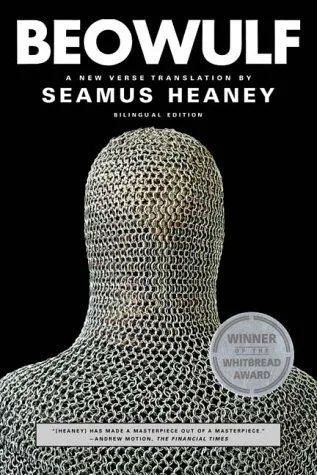
Seamus Heaney's translation of *Beowulf* is a remarkable feat, rendering the Anglo-Saxon epic with a palpable physicality that often eludes other versions. Heaney, a Nobel laureate poet himself, imbues the ancient verse with a muscularity and gravitas that feels both authentic and immediate. His focus on the guttural sounds and stark imagery of the original comes through vibrantly, particularly in passages describing the grotesque battles. The translation excels in conveying the poem's somber mood and its exploration of the warrior's stoic confrontation with fate and monstrous forces. However, while Heaney’s rendition is powerfully evocative, it occasionally prioritizes a modern poetic sensibility over strict adherence to the Old English meter and alliteration, which might be a point of contention for purists. The strength of this translation lies in its ability to make the ancient hero's struggles feel intensely present, transforming a historical artifact into a living, breathing narrative. It is a translation that demands to be heard as much as read.
📝 Description
71
Seamus Heaney's 2000 translation brings the 8th-11th century epic *Beowulf* to life.
This version of the Old English poem *Beowulf*, translated by Seamus Heaney and published in 2000, makes a seminal work of Western literature accessible. The poem recounts the deeds of the Geatish hero Beowulf as he battles monstrous foes threatening the Danes. Its narrative explores themes of loyalty, the cycle of revenge, and the inevitability of death. Heaney's translation captures the original's stark power and somber tone, reanimating its ancient story for contemporary audiences while preserving its visceral impact.
The work is suited for readers interested in the origins of English poetry and its heroic traditions. Those drawn to the concepts of courage, destiny, and the struggle against destructive forces will find rich material. It is especially valuable for students of literature, history, and mythology seeking a direct engagement with a text that has influenced later narratives. Readers who appreciate the art of translation, specifically how modern language can revitalize old verse, will also find merit. It offers insight into the archetypal hero predating the age of chivalry.
The poem *Beowulf* emerged from a culture where pagan Germanic warrior codes intersected with early Christian beliefs. Its composition, estimated between the 8th and 11th centuries, reflects a society grappling with both external threats like Viking raids and internal shifts in religious and social structures. The surviving manuscript itself, the Nowell Codex, dates to around 1000 CE. This period saw the rise of vernacular literature across Europe, and *Beowulf* stands as a prime example of early medieval England's complex cultural milieu, blending heroic ideals with nascent Christian morality.
💡 Why Read This Book?
• Gain visceral understanding of the warrior ethos through Heaney's rendering of Beowulf's battles, particularly his confrontation with Grendel in the early sections. • Explore the Anglo-Saxon concept of *wyrd* (fate) as it shapes the hero’s destiny and the poem’s somber atmosphere, evident in the descriptions of inevitable conflict. • Appreciate the nuanced interplay between pagan heroism and emerging Christian morality, as reflected in the societal structures of Heorot and the poem’s broader worldview.
⭐ Reader Reviews
Honest opinions from readers who have explored this book.
❓ Frequently Asked Questions
Is Seamus Heaney's translation of Beowulf considered difficult to read?
Heaney's translation, published in 2000, is renowned for its accessibility. While the subject matter is ancient and the themes are weighty, his poetic skill ensures a fluid and engaging reading experience for modern audiences.
What is the significance of the mead-hall Heorot in Beowulf?
Heorot serves as the central symbol of Danish civilization, prosperity, and communal life. Its repeated attacks by Grendel represent the encroachment of chaos and monstrous forces upon human society.
When was the original Beowulf poem likely composed?
Scholarly consensus places the composition of the original Old English poem *Beowulf* somewhere between the 8th and early 11th centuries CE, with the surviving manuscript dating to around 1000 CE.
Does Heaney's Beowulf include scholarly commentary?
While Heaney's translation is celebrated for its poetic merit, it primarily focuses on the narrative itself. Supplementary scholarly editions may offer additional context and analysis.
What is the role of fate or 'wyrd' in the epic?
Wyrd, or fate, is a pervasive concept in *Beowulf*. It suggests that destiny is predetermined, and characters often act with a stoic acceptance of their fated outcomes, even in the face of peril.
How does Beowulf's final battle differ from his earlier fights?
Beowulf's final battle against the dragon occurs when he is an aging king. Unlike his younger, more physically assured fights against Grendel, this confrontation highlights his mortality and the ultimate triumph of death over even the mightiest hero.
🔮 Key Themes & Symbolism
The Heroic Code
The epic meticulously details the warrior's ethos prevalent in early Germanic societies. This code emphasizes loyalty to one's lord, the pursuit of glory through combat, and the acceptance of a fated death. Beowulf embodies this ideal, driven by a need to prove his valor and secure his reputation. The narrative explores the societal importance of such figures, whose strength and courage protect the community from external threats, be they human rivals or supernatural beasts. The consequences of failing to uphold this code, such as cowardice or betrayal, are shown to be dire, leading to shame and societal disruption.
Civilization vs. Chaos
A central tension in *Beowulf* is the struggle between ordered human society and the forces of untamed, monstrous chaos. The mead-hall Heorot, a symbol of Danish culture, feasting, and governance, is repeatedly assailed by Grendel and his mother, creatures dwelling in desolate, liminal spaces. This conflict highlights the fragility of civilization and the constant need for vigilance and heroic intervention. The poem suggests that the boundary between the human and the monstrous is precarious, and that the maintenance of order requires immense effort and sacrifice.
Fate and Mortality
The concept of *wyrd*, or fate, permeates the narrative, suggesting that lives are guided by an inexorable destiny. Beowulf, despite his immense strength, is ultimately subject to this force, particularly in his final confrontation with the dragon. The poem confronts the inevitability of death, even for the greatest of heroes, and explores the human response to this ultimate limitation. The elders' lamentations and the community's fear in the face of Beowulf's demise underscore the lasting impact of mortality on the heroic ideal.
The Nature of Monsters
The monstrous antagonists in *Beowulf* are more than mere beasts; they represent primal forces that threaten the very existence of human society. Grendel, an outcast descendant of Cain, embodies malice and alienation, attacking Heorot out of envy and a desire for destruction. His mother represents a vengeful, primal maternal rage, while the dragon symbolizes avarice and the destructive potential of ancient power. These figures serve as foils to the human heroes, highlighting the virtues of courage, community, and order through their embodiment of chaos and destruction.
💬 Memorable Quotes
Direct passages from the work, attributed to the author.
“So. The Spear-Danes in days gone by / and the kings who ruled them had courage and greatness...”
— This opening immediately establishes the poem's focus on heroic lineage and past glories, setting the stage for the recounting of legendary deeds and the introduction of the Geatish hero, Beowulf.
“My hands are too small / to hold him, to grapple him, to wrestle him / to the ground.”
— This is an interpretation of Beowulf's initial assessment of Grendel's immense strength, highlighting the sheer physical power required for the impending conflict. It underscores the monstrous nature of the foe.
“He was spawned in a dark / nest, that monstrous hell-bride / a violent she-devil, living deep / in the monster-ridden hills.”
— This description of Grendel's mother emphasizes her primal, terrifying origins and her connection to the desolate, chaotic forces that lie outside the bounds of human civilization.
“They bewailed his going, / his fate, his death. / The men of the Geats / had put up his pyre.”
— This reflects the somber aftermath of Beowulf's death, emphasizing the collective grief and the ritualistic finality of his funeral pyre, marking the end of a heroic era.
💡 Key Ideas
Editorial paraphrase of the work's core concepts — not direct quotes.
The dragon… came on them / suddenly, savagely, on the third night.
This paraphrase captures the swift, brutal nature of the dragon's attack, signaling the final, fatal confrontation for Beowulf and the dire threat to his kingdom.
🌙 Esoteric Significance
Tradition
While not directly aligned with a specific esoteric tradition like Hermeticism or Kabbalah, *Beowulf* appeals to archetypal themes found across many mystical and occult lineages. Its exploration of the hero's journey, the battle against shadow aspects (monsters), and the confrontation with fate and mortality aligns with Gnostic narratives of the soul's struggle against material corruption and demonic forces. The poem's depiction of courage in the face of overwhelming odds and the pursuit of renown can be interpreted through the lens of the will's development, a concept central to many magical disciplines.
Symbolism
The mead-hall Heorot symbolizes the fragile bastion of human civilization, order, and consciousness against the encroaching darkness and chaos represented by Grendel and his mother. These monsters, dwelling in desolate fens, can be seen as embodiments of primal fears, ancestral curses, or the shadow self. The dragon, in Beowulf's final battle, often symbolizes greed, destructive elemental forces, or the ultimate, inescapable aspect of mortality that even the greatest hero must face.
Modern Relevance
Contemporary thinkers and practitioners in fields like Jungian psychology and archetypal studies frequently draw upon *Beowulf* to understand the enduring patterns of the heroic journey and the confrontation with the shadow. Modern fantasy literature, a genre deeply influenced by this epic, continues to explore its core themes of heroism, monstrous adversaries, and the struggle for community. Its emphasis on courage, duty, and the acceptance of fate continues to be relevant for those seeking to understand the human condition and the psychological underpinnings of societal resilience.
👥 Who Should Read This Book
• Students of comparative mythology and ancient literature seeking to understand the roots of Western heroic narratives and their thematic evolution. • Individuals interested in the development of the English language and the rich poetic traditions of the Anglo-Saxon period, appreciating a translation that prioritizes visceral impact. • Those drawn to explorations of archetypal psychology and the hero's journey, who can analyze Beowulf's battles with Grendel and the dragon as symbolic confrontations with inner and outer darkness.
📜 Historical Context
The poem *Beowulf* emerged from a vibrant, albeit turbulent, Anglo-Saxon culture that existed between the 5th and 11th centuries. This era witnessed the migration of Germanic tribes to Britain, the gradual adoption of Christianity, and the development of vernacular literature. Likely composed orally and later written down around the turn of the first millennium (the manuscript dates to circa 1000 CE), it reflects a complex synthesis of pagan warrior traditions and Christian moral frameworks. Its contemporaries included scribes and poets working on texts like the *Exeter Book*, which also preserved Old English poetry. The poem’s survival is remarkable; it is preserved in a single manuscript, the Nowell Codex, which itself survived the 1731 fire at Ashburnham House. Its narrative of a heroic warrior battling monsters and dragons taps into widespread European folklore, yet its specific cultural milieu and linguistic form are distinctly Anglo-Saxon, offering a unique window into the period's worldview and anxieties.
📔 Journal Prompts
Beowulf's reputation as a hero and the societal expectations placed upon him.
The symbolic range of Heorot versus the monster's lair.
The concept of *wyrd* and its influence on Beowulf's actions.
The qualities that define monstrousness in the epic.
The personal cost of upholding the heroic code.
🗂️ Glossary
Geats
An ancient Germanic people inhabiting what is now southern Sweden. Beowulf is a prince of the Geats, and much of the poem details his heroic deeds for the Danes and his eventual return and reign among his own people.
Danes
The inhabitants of Denmark, specifically the kingdom ruled by King Hrothgar. They are the primary recipients of Beowulf's aid in his early battles against Grendel and his mother.
Heorot
The magnificent mead-hall built by King Hrothgar for his warriors. It symbolizes Danish prosperity, community, and civilization, but becomes the target of Grendel's attacks.
Grendel
A monstrous descendant of Cain, Grendel is a powerful and malicious creature who terrorizes Heorot, attacking and devouring Hrothgar's warriors. He represents chaos and evil.
Wyrd
An Old English concept referring to fate or destiny. It suggests a predetermined course of events that individuals are bound to follow, often accepted with stoic resignation.
Dragon
In the final part of the epic, an ancient dragon guards a hoard of treasure. Beowulf, now an aged king, fights and slays the dragon, but is mortally wounded in the process.
Hrunting
The sword lent to Beowulf by Unferth for his battle against Grendel's mother. It proves ineffective against her, highlighting the unique nature of the threat.
🔮 Readers Also Liked
Browse all →









More Free Witchcraft & Paganism Books
View all →