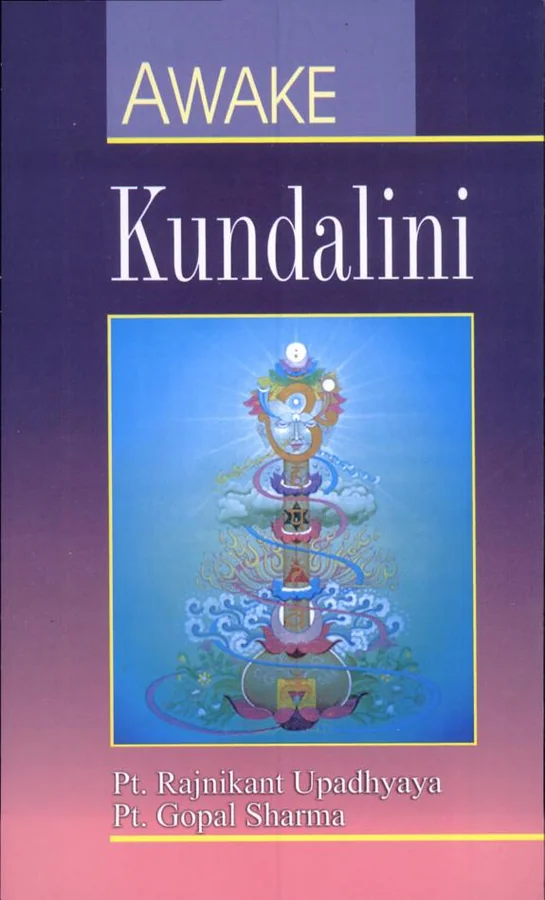
Awake Kundalini
 82
82

Awake Kundalini
The initial publication of 'Awake Kundalini' in 2006 by Pt. Rajnikant Upadhyaya & Pt. Gopal Sharma offers a structured perspective on a notoriously complex subject. The authors’ approach, rooted in traditional Asian religious discourse, attempts to demystify the concept of Kundalini. Its strength lies in its detailed conceptual mapping, providing a framework for understanding this potent energy. However, the book's primary limitation is its density; the theoretical explanations, while thorough, can become abstract for readers lacking prior exposure to yogic philosophy. A passage detailing the interaction between Kundalini and the *prana vayus* (life force currents) exemplifies this, offering intricate explanations that demand careful study. Ultimately, 'Awake Kundalini' serves as a dense, scholarly primer for the dedicated student of esoteric physiology.
📝 Description
82
Published in 2006, Awake Kundalini details the serpentine energy at the base of the spine.
Awake Kundalini serves as a guide to understanding and potentially accessing the coiled energy believed to reside at the base of the spine in many Asian spiritual traditions. The authors frame this force as a key to unlocking an individual's full potential, describing its motion as mirroring that of energy and consciousness. This work is for individuals seeking to deepen their knowledge of esoteric anatomy and subtle energies, especially those interested in Eastern spiritual philosophies like chakras and yogic practices. It offers a textual resource for meditation or energy work, providing a detailed conceptual framework for readers ready to move beyond introductory material. The book addresses the theoretical underpinnings of this potent, dormant energy and its connection to the subtle body.
The concept of Kundalini has ancient roots in Indian texts, with detailed descriptions appearing in Tantric literature. By 2006, when this book was released, these ideas had gained wider dissemination in the West, though often in fragmented forms. Upadhyaya and Sharma offer a structured approach to the subject. The text likely discusses the energy's relationship with the chakras, or energy centers, and nadis, or energy channels, which are integral to its activation and flow. It also likely addresses the process of awakening this energy, which traditionally involves disciplined practice and ethical conduct.
The concept of Kundalini originates in ancient Indian spiritual traditions, notably appearing in texts like the Upanishads and gaining extensive description within Tantric literature. Its popularization in the West grew in the 20th century, influenced by scholars and various spiritual movements. This book, published in 2006, enters a landscape where Kundalini concepts were more accessible but frequently lacked depth or clarity. It aims to provide a structured understanding of this dormant, powerful energy and its integral role within the subtle body systems, including chakras and nadis.
💡 Why Read This Book?
• Learn about the historical and philosophical underpinnings of Kundalini, as presented in the book's exploration of its origins in Asian religions, providing context beyond modern interpretations. • Understand the mechanics of energy flow within the subtle body, specifically how the book explains the 'coiling' nature of Kundalini and its relation to consciousness. • Gain practical conceptual tools for personal energy work by engaging with the book's detailed descriptions of Kundalini's potential to unlock latent human capabilities.
⭐ Reader Reviews
Honest opinions from readers who have explored this book.
❓ Frequently Asked Questions
When was 'Awake Kundalini' first published?
'Awake Kundalini' by Pt. Rajnikant Upadhyaya & Pt. Gopal Sharma was first published in 2006. This edition provides a contemporary look at ancient concepts of serpentine energy.
What does the term 'Kundalini' literally mean according to the book?
The book explains that 'Kundalini' literally means 'coiling'. This refers to the powerful, dormant energy believed to reside at the base of the spine, often likened to a coiled serpent.
What is the primary aim of the book 'Awake Kundalini'?
The primary aim is to help readers realize their 'enormous reserve of your true potential' by understanding and potentially awakening the Kundalini energy within them.
Which religious traditions are most associated with the concept of Kundalini discussed in the book?
The book explicitly links the concept of Kundalini to 'Asian religions', with its description of energy and consciousness moving in spiraling motion aligning with yogic and Tantric traditions.
What metaphor does the book use to describe Kundalini's energy and movement?
The book uses the metaphor of a snake, describing Kundalini as a 'huge reservoir of energy like a snake' because both energy and consciousness are said to move in a spiraling, coiling motion.
Who are the authors of 'Awake Kundalini'?
The authors are Pt. Rajnikant Upadhyaya and Pt. Gopal Sharma. They collaborated on this work, first published in 2006.
🔮 Key Themes & Symbolism
The Serpent Power
Central to the book is the concept of Kundalini, referred to as the 'serpent power'. This potent, dormant energy is described as residing at the base of the spine, likened to a coiled snake. Its awakening is portrayed not merely as a physical phenomenon but as a pathway to accessing vast reserves of personal potential and consciousness, mirroring the spiraling movement inherent in both energy and awareness.
Energy and Consciousness
The work connects the activation of Kundalini directly to the nature of consciousness. It posits that energy and awareness move in similar, spiraling patterns, suggesting that awakening Kundalini can lead to profound shifts in perception and understanding. This interconnectedness is presented as fundamental to realizing one's true capabilities, moving beyond ordinary states of being.
Unlocking Potential
A core theme is the idea that Kundalini represents a vast, untapped reservoir of human potential. The book functions as a guide to understanding this energy, implying that through knowledge and perhaps practice, individuals can tap into this source. This awakening is framed as a means to achieve greater self-realization and access latent abilities, moving towards a fuller expression of self.
Spiral Motion
The recurring motif of spiral motion is crucial. It's used to illustrate how both energy and consciousness operate, drawing parallels to the coiling nature of the Kundalini. This dynamic imagery underscores the book's perspective on the interconnectedness of the physical, energetic, and conscious realms, presenting a unified model of spiritual and personal development.
💬 Memorable Quotes
Direct passages from the work, attributed to the author.
“Kundalini... literally means 'coiling'”
— This concise definition anchors the book's central concept, emphasizing the serpentine, coiled nature of the energy that is the focus of the text.
“a huge reservoir of energy like a snake”
— This powerful metaphor vividly illustrates the immense, latent power associated with Kundalini, portraying it as a fundamental force waiting to be understood and potentially unleashed.
“Energy and consciousness moves in spiraling motion coils loops like the snake”
— This statement articulates the dynamic interplay between energy and awareness, suggesting their parallel, cyclical movement as a key principle in understanding spiritual forces.
“This book helps you realize the enormous reserve of your true potential”
— This sentence clearly states the book's practical objective: to guide the reader toward accessing and understanding their inherent capabilities through the lens of Kundalini study.
“Stretching back into the corridors of time, Asian religions have spoken of a mystical force called the 'Kundalini'”
— This highlights the ancient origins and widespread presence of the Kundalini concept within various Asian spiritual traditions, establishing its historical and cross-cultural significance.
🌙 Esoteric Significance
Tradition
This work fits within the broad lineage of Indian yogic and Tantric traditions, which have extensively detailed the nature and awakening of Kundalini. While drawing from these ancient sources, the book aims to present the concepts in a manner accessible to a contemporary audience, potentially bridging classical understanding with modern esoteric interests that might otherwise engage with Western Hermeticism or Neoplatonic philosophies.
Symbolism
The primary symbol is the coiled serpent, representing the dormant Kundalini energy at the base of the spine. This 'serpent power' symbolizes immense potential and primal creative force. The book likely also engages with the symbolism of the chakras, visualized as lotuses or wheels, representing energy centers through which Kundalini ascends, and the nadis (energy channels), symbolic conduits for this vital force.
Modern Relevance
Contemporary practices in yoga, meditation, and breathwork often implicitly or explicitly engage with Kundalini concepts, even if not always using the traditional terminology. Modern somatic therapies and consciousness studies also explore altered states and energetic phenomena that resonate with the descriptions found in texts like 'Awake Kundalini', making its foundational ideas relevant to current explorations of mind-body connection.
👥 Who Should Read This Book
• Students of Indian spiritual traditions: Those seeking a deeper, structured understanding of Kundalini beyond introductory yoga classes, particularly those interested in Tantra and yogic philosophy. • Esoteric practitioners: Individuals engaged in energy work, meditation, or subtle body exploration who wish to contextualize their practices within a traditional framework. • Comparative religion scholars: Researchers interested in the specific conceptualization and historical transmission of Kundalini energy within Asian religious and philosophical discourse.
📜 Historical Context
The concept of Kundalini, deeply embedded in Indian spiritual traditions for millennia, gained significant traction in Western esoteric circles during the late 19th and early 20th centuries. This period saw increased translation and interpretation of Sanskrit texts, notably Sir John Woodroffe's seminal 'The Serpent Power' in 1918, which brought Tantric concepts like Kundalini to a wider, albeit often specialized, audience. The Theosophical Society, founded in 1875, also played a role in disseminating these ideas. By 2006, when 'Awake Kundalini' was first published, the discourse around Kundalini had become more mainstream within New Age and alternative spirituality movements, yet it often existed alongside more simplistic or sensationalized portrayals. This book emerges in a landscape where scholars and practitioners grappled with how to present these complex ideas accurately, distinguishing them from Western occult traditions like Hermeticism or Kabbalah, which possess their own distinct energy models.
📔 Journal Prompts
The concept of Kundalini as a 'coiling' energy.
The relationship between spiraling motion in energy and consciousness.
Personal reserves of potential as described in the book.
The snake metaphor for Kundalini.
The role of Asian religions in articulating mystical forces.
🗂️ Glossary
Kundalini
A Sanskrit term literally meaning 'coiling', referring to a powerful, dormant spiritual energy believed to reside at the base of the spine in yogic and Tantric traditions.
Serpentine Energy
A description of Kundalini, emphasizing its coiled, snake-like nature and its potent, primal force, often associated with creative and spiritual potential.
Spiraling Motion
The characteristic movement described for both energy and consciousness in relation to Kundalini, suggesting a dynamic, cyclical pattern fundamental to its operation.
Reservoir of Energy
A metaphor used to describe Kundalini as a vast, untapped source of power within the individual, holding the key to unlocking one's full potential.
Asian Religions
Broad category encompassing spiritual and philosophical traditions originating in Asia, including Hinduism, Buddhism, and Jainism, many of which feature concepts similar to Kundalini.
Consciousness
The state or quality of awareness, or of being aware of an external object or something within oneself. In the context of Kundalini, it is seen as intrinsically linked to energy flow.
True Potential
The inherent capabilities and capacities of an individual, which the book suggests can be accessed and realized through the understanding and awakening of Kundalini.
This book appears in 1 collection
🔮 Readers Also Liked
Browse all →









From the “Kundalini Awakening” Collection
View all →








More Free Occult Philosophy Books
View all →