Astrology For Dummies
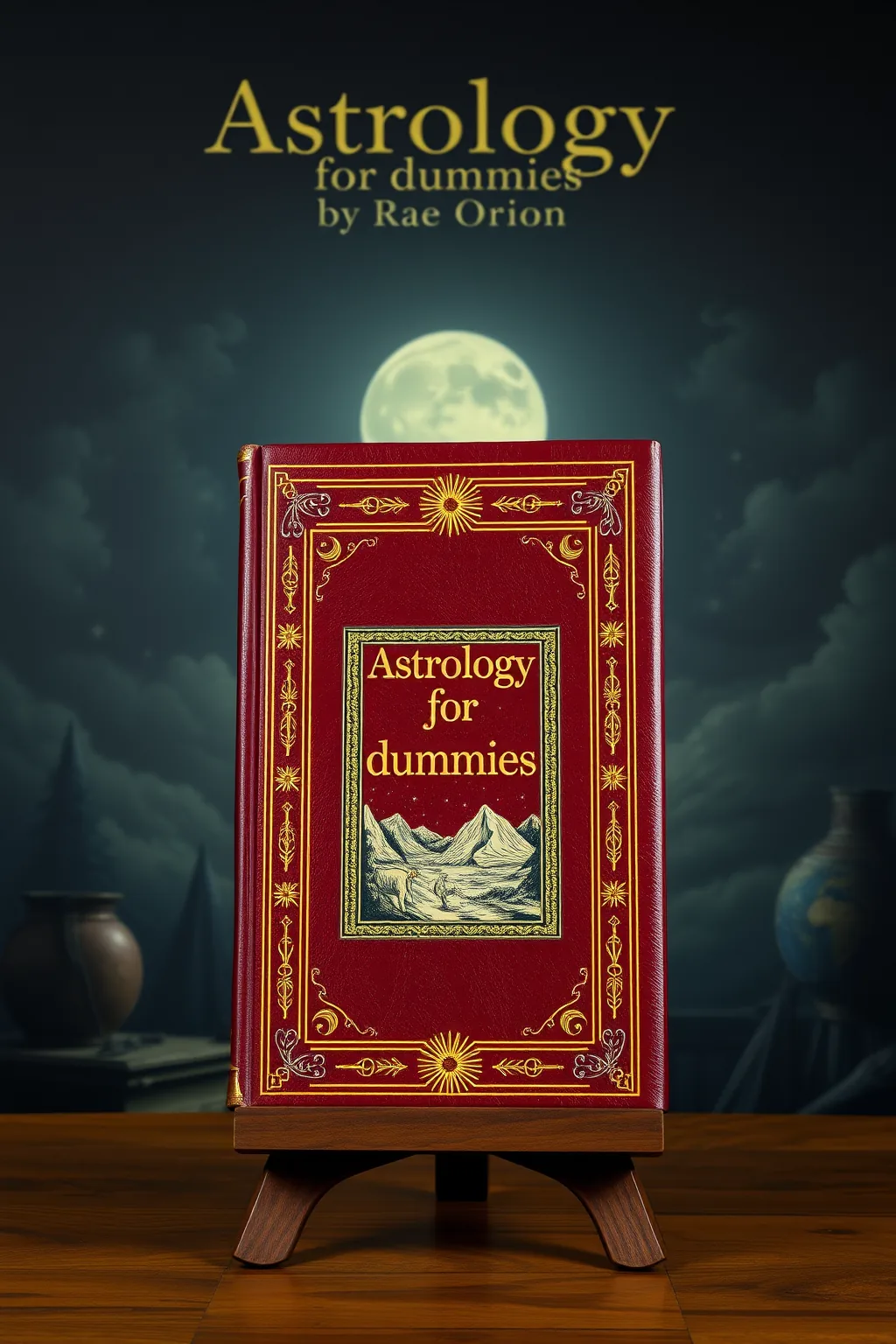
 77
77

Astrology For Dummies
Rae Orion's Astrology for Dummies offers a remarkably clear entry point into a field often shrouded in esoteric jargon. The author wisely begins with the foundational elements—the signs and planets—presenting them not as fixed destinies, but as archetypal energies that inform personality. Orion's strength lies in her ability to translate complex astrological mechanics into practical, relatable terms, avoiding the overly deterministic language that can alienate newcomers. The explanation of the Midheaven (MC) and its significance for career or public image, for instance, is particularly well-handled, offering concrete application.
However, the book's 'for dummies' approach, while accessible, sometimes sacrifices depth. The discussion of aspects, for example, while present, could benefit from more nuanced exploration of challenging configurations beyond simple interpretation. The sheer volume of information required to grasp even basic chart reading means some topics are necessarily condensed. Despite this, the work stands as a solid primer for anyone wanting to understand the basic language of the stars.
📝 Description
77
Rae Orion's Astrology for Dummies, published in 2020, makes Western astrology accessible to newcomers.
This 2020 book by Rae Orion introduces the core principles of Western astrology for those entirely new to the subject. It explains the fundamental building blocks of an astrological chart: the zodiac signs, planets, and houses. The text details how these components interact to describe personality traits and potential life directions. Orion aims to clarify astrological interpretations for beginners. The guide is useful for readers interested in self-understanding, relationship dynamics, or gaining a different perspective on life's events. It also touches on astrology's historical and cultural background. The book breaks down astrological ideas into understandable sections. It covers the twelve zodiac signs and their archetypal energies. It also explains the meanings of the Sun, Moon, and other planets, focusing on their positions and movements.
Astrology has a history of over 4,000 years, originating in Babylonia and later developed in Hellenistic Greece. Key figures like Ptolemy codified many of its principles in works such as the Tetrabiblos. Rae Orion's book connects to this long tradition, updating the presentation of astrological knowledge for a modern audience. It aims to make these ancient interpretive techniques understandable to contemporary readers.
💡 Why Read This Book?
• Learn to interpret the fundamental building blocks of an astrological chart, including the twelve zodiac signs and planetary significations, a core practice established during the Hellenistic period. • Understand how the twelve houses, representing distinct life areas, map onto your personal experiences, a concept refined through centuries of astrological development. • Gain practical insights into using astrological timing for personal growth, a method with historical roots in observing celestial cycles for guidance.
⭐ Reader Reviews
Honest opinions from readers who have explored this book.
❓ Frequently Asked Questions
What is the main purpose of Astrology for Dummies?
The book aims to make astrology accessible to beginners, explaining core concepts like zodiac signs, planets, houses, and aspects to help readers understand themselves and others better.
When was Astrology for Dummies first published?
Astrology for Dummies by Rae Orion was first published on January 7, 2020.
Does the book explain how to cast a birth chart?
Yes, the book guides readers through the process of understanding and interpreting a birth chart, a key tool in astrological analysis.
What are the 'houses' in astrology?
In astrology, the twelve houses represent different areas of life, such as home, career, relationships, and finances, and are determined by the time and place of birth.
Can this book help me understand my relationships better?
Absolutely. By understanding the astrological charts of yourself and others, you can gain insights into compatibility and relationship dynamics.
Is this book suitable for someone with no prior astrology knowledge?
Yes, it is specifically designed for beginners, breaking down complex astrological concepts into easy-to-understand language and practical examples.
🔮 Key Themes & Symbolism
Natal Chart Interpretation
The book centers on the natal chart, often referred to as the birth chart, which is a snapshot of the celestial positions at the moment of an individual's birth. It meticulously explains how the signs, planets, and houses within this chart interact to reveal personality traits, strengths, challenges, and potential life themes. This foundational concept, rooted in ancient Hellenistic astrology, allows readers to begin understanding their unique cosmic blueprint.
Planetary Archetypes
Rae Orion studies the symbolic meanings of the Sun, Moon, and planets, presenting them as archetypal forces influencing human psychology and experience. Each celestial body is assigned specific significations—for example, Mercury governing communication, Venus concerning love and values, and Mars driving action. Understanding these planetary archetypes is crucial for deciphering the complex interplay within a birth chart and how these energies manifest.
The Twelve Houses
A significant portion of the book is dedicated to the twelve houses, which divide the sky into segments representing different spheres of life. The first house, for instance, relates to self-identity and appearance, while the seventh house pertains to partnerships. The book explains how the planets located in these houses, and the signs ruling their cusps, color the expression of life experiences within those specific domains.
Zodiac Sign Qualities
The twelve zodiac signs—Aries, Taurus, Gemini, Cancer, Leo, Virgo, Libra, Scorpio, Sagittarius, Capricorn, Aquarius, and Pisces—are explored in detail. The book outlines the core characteristics, motivations, and elemental associations (fire, earth, air, water) of each sign. Readers learn how their Sun, Moon, and rising signs, as well as the placements of other planets within these signs, contribute to their overall astrological profile.
💬 Memorable Quotes
Direct passages from the work, attributed to the author.
“The sky is a mirror reflecting your inner world.”
— This interpretation highlights the core astrological premise that celestial movements and placements are not external determinants but rather symbolic representations of internal psychological landscapes and potentials.
“Planets in your chart show the 'what,' signs show the 'how,' and houses show the 'where.'”
— This concise summary offers a fundamental framework for interpreting astrological charts, differentiating the roles of planets, signs, and houses in shaping an individual's cosmic signature.
“Aspects reveal the dynamic conversations between your inner planets.”
— This interpretation explains the concept of astrological aspects as indicators of interplay and communication between different planetary energies within a birth chart, revealing internal dialogues.
“Your rising sign colors how you greet the world.”
— This highlights the significance of the Ascendant or rising sign, explaining its role in shaping outward presentation, first impressions, and the initial approach to life's experiences.
💡 Key Ideas
Editorial paraphrase of the work's core concepts — not direct quotes.
Understanding your birth chart is like receiving a personalized map.
This paraphrased concept emphasizes the practical utility of an astrological chart, framing it as a guide for self-discovery and navigating life's path, rather than a rigid destiny.
🌙 Esoteric Significance
Tradition
This work sits within the Western Esoteric tradition, specifically drawing from Hermetic and Hellenistic astrological lineages. While not explicitly Kabbalistic or Theosophical, it adopts the Hermetic principle of 'As Above, So Below,' applying it to the human psyche and life events as reflected in celestial patterns. It modernizes this ancient practice, making its core tenets accessible without requiring deep immersion into older, more complex texts.
Symbolism
Key symbols include the twelve zodiac signs, each representing archetypal energies and personality expressions. The planets (Sun, Moon, Mercury, Venus, Mars, Jupiter, Saturn, Uranus, Neptune, Pluto) symbolize distinct psychological functions or drives. The twelve houses, geometrical divisions of the sky, represent fundamental areas of human experience and worldly engagement, from self-identity to spiritual matters.
Modern Relevance
Contemporary thinkers and practitioners, particularly in the fields of pop psychology, self-help, and digital spirituality, frequently reference astrological concepts popularized by accessible guides like this. It influences online astrology communities, social media content creators, and individuals seeking frameworks for self-exploration and personal growth in a secularized world.
👥 Who Should Read This Book
["• Absolute beginners curious about astrology's foundational principles, seeking a clear, step-by-step introduction to chart interpretation.", '• Individuals interested in self-discovery and personal growth who want to explore astrological concepts as a tool for introspection.', '• Readers seeking to understand the historical and cultural significance of astrology, presented in a modern, accessible format.']
📜 Historical Context
Published in 2020, Rae Orion's Astrology for Dummies arrives in an era of resurgent interest in astrology, particularly among younger demographics, often termed 'the new astrology.' This revival contrasts sharply with the mid-20th century, when astrology faced significant skepticism from the scientific community and was largely dismissed as pseudoscience, a stance exemplified by figures like Carl Sagan's critiques of astrological claims. The book's accessibility aims to bridge the gap created by decades of such discourse. It stands within a tradition dating back to Babylonian times, evolving through Hellenistic Greece, medieval Europe, and the Renaissance. Contemporary astrologers like Liz Greene, who brought psychological depth to the field, paved the way for modern interpretations that Orion builds upon, focusing on self-understanding rather than deterministic fate.
📔 Journal Prompts
Your Sun sign's core energy and how it manifests in your daily life.
The Moon's influence on your emotional landscape and needs.
Reflect on the meaning of the First House placement in your birth chart.
How Mercury's archetype shapes your communication style.
Identify a planet and its corresponding house placement and their interaction.
🗂️ Glossary
Ascendant (Rising Sign)
The zodiac sign that was rising on the eastern horizon at the precise moment and location of birth. It influences one's outward persona, physical appearance, and initial approach to life.
Birth Chart (Natal Chart)
A map of the sky at the exact moment and location of a person's birth, detailing the positions of the Sun, Moon, planets, and houses, used for astrological interpretation.
Aspects
The geometric angular relationships between planets in a birth chart, which indicate how their energies interact and influence each other, creating dynamic patterns.
Houses
The twelve divisions of the astrological chart, each representing a different area of life experience, such as career, relationships, home, and personal finances.
Midheaven (MC)
The highest point in the birth chart, typically associated with career, public image, reputation, and ultimate life direction or achievement.
Retrograde
An apparent backward motion of a planet in the sky as seen from Earth. In astrology, retrograde planets are often interpreted as having an internalized or complex expression of their energies.
Zodiac Signs
The twelve archetypal divisions of the celestial ecliptic, each associated with a specific period of the year and a distinct set of personality characteristics and energies.