Artemis
 83
83

Artemis
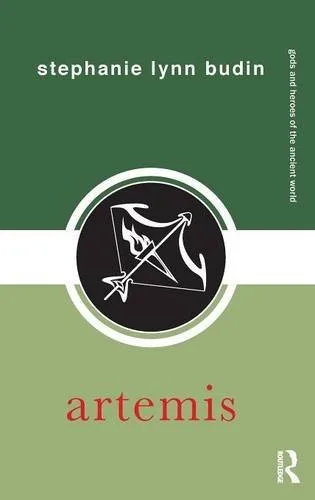
Stephanie Lynn Budin’s Artemis offers a rigorous, if sometimes dense, examination of the goddess, situating her firmly within the complex religious landscape of ancient Greece. The strength of the book lies in its detailed cataloging of epigraphic and archaeological evidence, particularly in the section discussing the cult at Brauron, which vividly illustrates Artemis's role in rites of passage for young girls. However, the prose can occasionally feel overly academic, making it a challenging read for those not already steeped in classical scholarship. The chapter on Artemis’s chthonic associations, while informative, could benefit from clearer connections to her more widely recognized Olympian aspects. Ultimately, Budin provides a valuable, albeit specialized, resource for understanding a pivotal figure in the Greek pantheon.
📝 Description
83
Stephanie Lynn Budin's 2018 book Artemis examines the Greek goddess beyond her common portrayal.
Published in 2018, Artemis by Stephanie Lynn Budin offers a scholarly look at the ancient Greek goddess. The book moves past simple mythology to consider her many roles and religious importance in the Hellenic world. Budin's research investigates her imagery, worship practices, and how she developed as a divine figure.
This study is for academics focused on classical religion, fans of mythology, and anyone interested in ancient Greek life. It is especially useful for those wanting a deeper grasp of polytheistic systems and the historical growth of particular gods, going beyond basic introductions. Budin's work continues a scholarly tradition of studying Greek religion, building on earlier research by scholars like Walter Burkert and Marcel Detienne. It engages with recent academic shifts in understanding ancient religious practices, favoring more detailed readings of cult and belief, particularly in the post-Hellenistic era.
This book fits within the scholarly study of ancient Greek religion, engaging with traditions that focus on the historical realities of pagan worship. It acknowledges and builds upon previous academic work, particularly the re-evaluation of religious practice in antiquity from the late 20th century onward. The research moves towards more detailed interpretations of cult and belief, especially concerning the post-Hellenistic period, providing a grounded perspective on a major deity within her historical and religious context.
💡 Why Read This Book?
• Understand Artemis beyond the myth: Learn about her specific cultic practices and regional variations, such as the rites at Brauron, offering a concrete look at ancient worship unlike general mythology books. • Explore the goddess's complex epithets: Discover the meanings behind titles like 'Potnia Theron' and how they reflect her diverse domains, providing specific symbolic keys not found in broad pantheon surveys. • Gain insight into ancient Greek religious structure: See how Artemis's worship fits into the broader framework of Hellenic polytheism, with concrete examples of her interactions with other deities and societal roles.
⭐ Reader Reviews
Honest opinions from readers who have explored this book.
❓ Frequently Asked Questions
What is the primary focus of Stephanie Lynn Budin's book 'Artemis'?
The book's primary focus is on the religious significance and multifaceted roles of the Greek goddess Artemis, examining her iconography, cult practices, and evolution as a deity within the Hellenic world, rather than just her mythological narratives.
When was Stephanie Lynn Budin's 'Artemis' first published?
Stephanie Lynn Budin's 'Artemis' was first published in 2018.
Who would benefit most from reading 'Artemis' by Stephanie Lynn Budin?
Scholars of classical religion, students of mythology, and individuals interested in ancient Greek culture and polytheistic traditions will find this book most beneficial due to its in-depth analysis and scholarly approach.
Does the book discuss specific cult sites dedicated to Artemis?
Yes, the book discusses specific cult sites, notably mentioning Brauron and Ephesus, and explores the religious practices and significance associated with Artemis at these locations.
What aspect of Artemis does the book explore beyond her role as huntress?
Beyond her role as huntress, the book explores Artemis as a protector of young girls, a goddess of childbirth, a chthonic deity, and a figure associated with wild animals and liminal spaces.
Is 'Artemis' by Budin an introductory text or an academic study?
The book is primarily an academic study, offering a detailed and scholarly examination of Artemis, suitable for those with some existing knowledge of classical religion or mythology.
🔮 Key Themes & Symbolism
Artemis as Potnia Theron
The book extensively explores the epithet 'Potnia Theron,' translating to 'Mistress of Animals.' This theme highlights Artemis's ancient connection to the wild, her role as a protector of fauna, and her position as a powerful, primal nature deity predating or existing alongside her Olympian persona. Budin examines iconography depicting her surrounded by animals and analyzes the significance of this dominion within the broader context of Greek religious thought and the human relationship with the natural world.
Rites of Passage and Brauron
A significant focus is placed on Artemis's role in rites of passage, particularly for young girls. The cult center at Brauron serves as a primary case study, detailing the ceremonies involving young girls (arktoi) who served Artemis before reaching marriageable age. This theme underscores Artemis's function as a guardian of female adolescence and a facilitator of transition into womanhood, revealing a crucial, often overlooked, aspect of her cultic importance.
Chthonic and Liminal Associations
Budin investigates Artemis's connections to the underworld (chthonic) and liminal spaces. This exploration moves beyond the typical portrayal of Artemis as a solely Olympian deity associated with the hunt and wilderness. It studies her presence in caves, her association with spirits, and her role in mediating between the worlds of the living and the dead, presenting a more complex, ancient, and powerful image of the goddess.
Regional Cults and Epithets
The work emphasizes the diversity of Artemis's worship across the Greek world. By examining various regional cults and the numerous epithets applied to her (e.g., Agrotera, Laphria, Phosphoros), Budin illustrates how her functions and attributes were adapted and interpreted differently in various city-states and sanctuaries. This highlights the dynamic nature of ancient religion and Artemis's adaptability as a deity.
💬 Memorable Quotes
Direct passages from the work, attributed to the author.
“The goddess of Brauron was not merely a distant Olympian, but an active participant in the lives of young girls transitioning toward womanhood.”
— This interpretation emphasizes Artemis's very tangible role in ancient Greek society, specifically concerning female initiation rites. It suggests her cult was deeply integrated into the social fabric, guiding girls through critical life stages.
“The epithet 'Potnia Theron' signifies an ancient authority over the animal kingdom, predating and informing later mythological narratives.”
— This highlights the deep historical roots of Artemis's association with animals. It suggests that her role as 'Mistress of Animals' is one of her oldest and most fundamental attributes, influencing how she was perceived throughout antiquity.
“Her presence in liminal spaces and connection to the chthonic realm reveal a darker, more mysterious facet of the goddess.”
— This interpretation focuses on the less commonly discussed aspects of Artemis, linking her to boundaries, transitions, and the underworld. It suggests a complexity and perhaps a primal power that transcends her more popular image.
“Understanding Artemis requires examining the diverse local manifestations of her cult, rather than a single, monolithic representation.”
— This emphasizes the importance of regional variations in the worship of Artemis. It cautions against a generalized view, advocating for the study of specific cult centers and local traditions to grasp the full scope of her significance.
💡 Key Ideas
Editorial paraphrase of the work's core concepts — not direct quotes.
Artemis's dominion extended beyond the hunt; she was intrinsically linked to the cycles of life, death, and the untamed aspects of nature.
This paraphrase highlights the complex nature of Artemis, moving beyond her common depiction as a huntress. It points to her deeper connections with fundamental natural processes and primal forces, suggesting a more ancient and profound origin for her worship.
🌙 Esoteric Significance
Tradition
Artemis aligns with the broader tradition of Hellenic polytheism, but her deep chthonic and liminal associations connect her to older, pre-Olympian earth-based and nature-based spiritualities that influenced later esoteric currents. Her role as a protector of thresholds (like maidenhood to womanhood) and her connection to wild spaces resonate with neo-pagan and witchcraft traditions seeking to reconnect with primal nature energies and archetypes.
Symbolism
The 'Potnia Theron' motif is central, symbolizing dominion over the wild and the untamed forces of nature, representing instinct and primal power. The Doe or Hind symbolizes gentleness, innocence, and vulnerability, particularly relating to her role protecting young girls, but also embodying swiftness and connection to the forest. Caves and liminal spaces symbolize transition, the underworld, and hidden knowledge, linking her to mysteries and the subconscious.
Modern Relevance
Contemporary neo-paganism and Dianic witchcraft traditions frequently invoke Artemis as a primary deity, drawn to her independence, connection to nature, and association with female power and rites of passage. Her symbolism is explored in modern goddess studies, feminist spirituality, and ecopsychology, where her archetype offers insights into reclaiming wildness, understanding ecological interconnectedness, and navigating personal transformations.
👥 Who Should Read This Book
• Scholars of Classical Religion: Those researching ancient Greek cultic practices, religious syncretism, and the evolution of deities will find Budin's detailed analysis of epigraphic and archaeological evidence invaluable. • Enthusiasts of Goddess Studies: Individuals interested in the archetype of the goddess, particularly in her wild, protective, and transitional aspects, will appreciate the depth beyond standard mythological portrayals. • Comparative Mythologists: Readers seeking to understand how a specific deity's worship varied across regions and time periods, and how different aspects (huntress, protector, chthonic) were emphasized, will gain significant insight.
📜 Historical Context
Published in 2018, Stephanie Lynn Budin's 'Artemis' emerges within a rich academic tradition of classical religious studies. It builds upon decades of scholarship that moved beyond purely mythological accounts to analyze archaeological and epigraphic evidence of ancient cultic practices. The late 20th century saw scholars like Walter Burkert emphasizing the ritualistic and social functions of religion, a perspective Budin engages with. Her work also reflects the ongoing scholarly interest in gender and religion in antiquity, exploring Artemis's specific roles concerning women and girls. While not facing overt censorship, academic works on ancient religion often navigate complex theoretical frameworks and compete for attention within established university curricula. Budin's detailed examination of specific cult sites, like Brauron, contributes to a more nuanced understanding of polytheistic diversity, contrasting with earlier, more generalized encyclopedic approaches to Greek deities.
📔 Journal Prompts
The symbolism of the Doe in relation to Artemis's protective roles.
Reflecting on the 'Potnia Theron' archetype and its connection to natural dominion.
The significance of rites of passage at Brauron for understanding Artemis's cult.
Exploring the chthonic associations of Artemis in personal spiritual practice.
How the epithets of Artemis reveal the dynamic nature of ancient religious belief.
🗂️ Glossary
Potnia Theron
An ancient Greek epithet for Artemis, meaning 'Mistress of Animals.' It signifies her deep connection to and dominion over the wild animal kingdom, representing a primal aspect of the goddess.
Brauron
An important sanctuary and deme in Attica, Greece, dedicated to Artemis. It was famous for its cultic rituals involving young girls (arktoi) who served the goddess before reaching puberty.
Arktos (plural: Arktoi)
Greek for 'bear.' In the context of Artemis's cult, particularly at Brauron, it refers to the young girls who ritually 'played the bear' as part of their service to the goddess.
Chthonic
Relating to the underworld or the earth; deities associated with the earth, fertility, and the dead are described as chthonic. Artemis possessed chthonic associations alongside her Olympian roles.
Liminal Space
A transitional or in-between place or state. In religious contexts, liminal spaces are often associated with rituals, mystery cults, and passages between different states of being (e.g., maidenhood to womanhood).
Epithet
An adjective or descriptive phrase expressing a quality or characteristic of a person or thing. Greek deities like Artemis had numerous epithets reflecting their diverse functions and attributes.
Hellenic
Relating to ancient Greece, its people, language, or culture. Hellenic religion refers to the polytheistic system of ancient Greece.
🔮 Readers Also Liked
Browse all →







More Free Witchcraft & Paganism Books
View all →