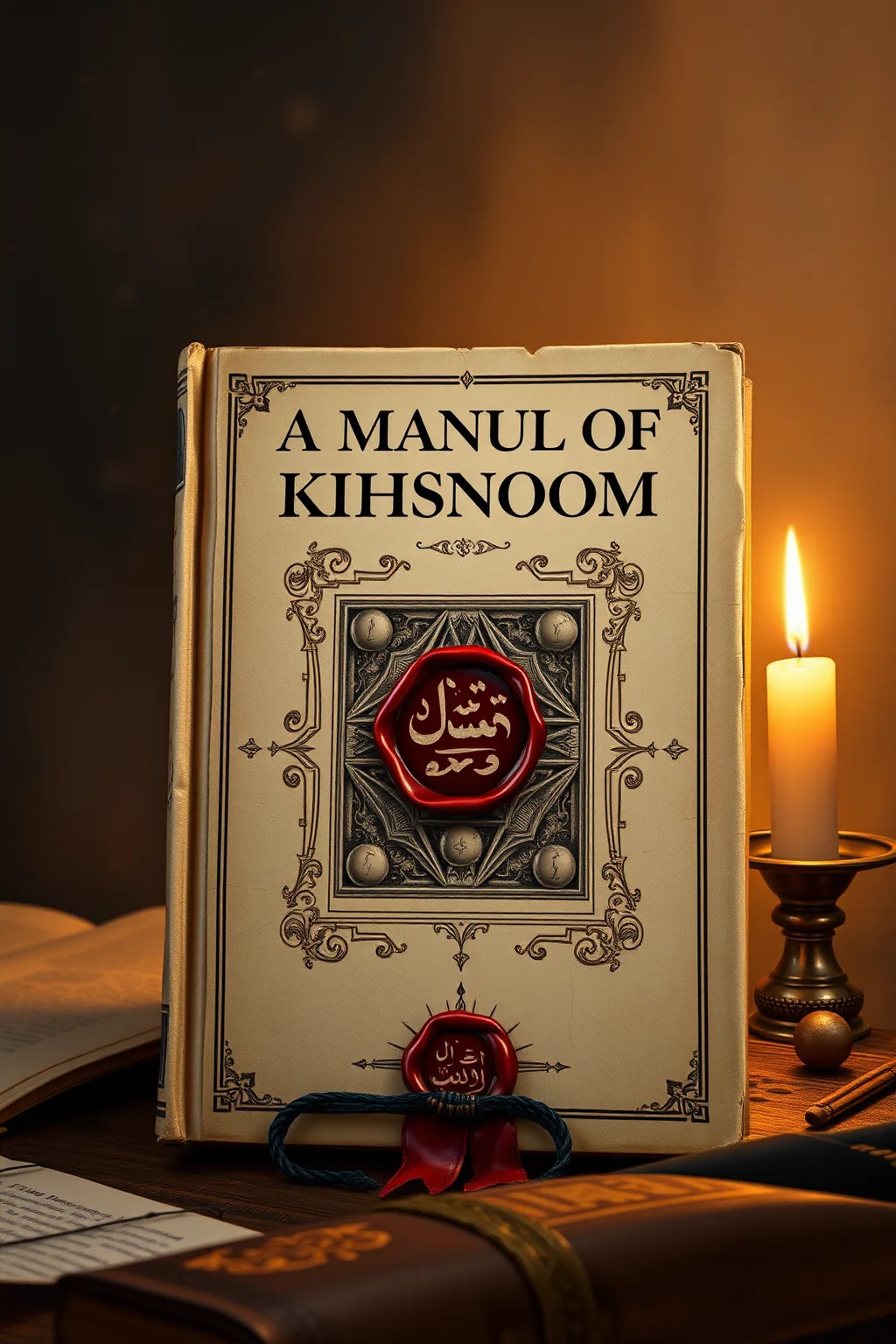
A Manual of Khsnoom
 76
76

A Manual of Khsnoom



Cassian Rothmann (Senior Critic, Ancient Wisdom) — 'A Manual of Khsnoom' stands as a monumental testament to the enduring power of Zoroastrian occult traditions. This is not an introductory primer but a deep dive for the serious student, offering a rare glimpse into a sophisticated system of cosmology and spiritual practice. The authors have rendered complex concepts with clarity, preserving the sanctity and depth of the original teachings. Its strength lies in its comprehensive scope and its unwavering commitment to authentic esoteric transmission. Essential for anyone seeking to understand the foundational occult currents that have shaped global spiritual thought.
📝 Description
76
A Manual of Khsnoom compiles traditional Zoroastrian occult texts.
This volume collects scattered Zoroastrian occult knowledge, focusing on 'Khsnoom' as a system of spiritual insight. It details forgotten lore and the cosmic structure as understood within this tradition. The book presents esoteric practices alongside narratives that have persisted for ages. It aims to explain the divine forces and the underlying structure of reality for those seeking deep understanding. The material addresses the cosmology and spiritual outlook central to Zoroastrianism, offering a path to gnosis beyond mere religious adherence. It draws from ancient texts to reveal a unique perspective on existence.
This manual positions itself within the Zoroastrian tradition, a religion with ancient roots often associated with dualistic cosmology and early influences on Abrahamic faiths. The 'Khsnoom' as presented here represents a specific current of occult or esoteric interpretation within that framework. It aims to illuminate a particular understanding of divine powers and the hidden principles governing the universe, distinct from mainstream theological interpretations. The work seeks to connect the reader with a form of gnosis derived from these ancient teachings.
✍️ Author
The Zoroastrian Occult Knowledge
Eastern esotericism is a term used by some scholars that loosely encompasses religious beliefs and practices of the Eastern world said to be "esoteric", secret, or occult. Its demarcation as a field, however, is difficult, as it varies depending on the bou…
💡 Why Read This Book?
Uncover the secrets of one of the world's oldest wisdom traditions. 'A Manual of Khsnoom' offers a unique, comprehensive exploration of Zoroastrian cosmology, occultism, and spirituality. Ideal for seekers of hidden knowledge, scholars of comparative religion, and practitioners looking to enrich their understanding of ancient esoteric systems. This book provides a direct link to ancestral wisdom and a profound perspective on the nature of reality.
⭐ Reader Reviews
Honest opinions from readers who have explored this book.
❓ Frequently Asked Questions
What is Khsnoom?
Khsnoom is presented not as a rigid school of doctrine, but as a living tradition of esoteric knowledge. It emphasizes direct experience and understanding of cosmic principles and spiritual truths, rather than adherence to fixed philosophical pronouncements.
Who is 'The Zoroastrian Occult Knowledge'?
This pseudonym represents the collective effort of individuals dedicated to preserving and transmitting the authentic esoteric teachings of Zoroastrianism, drawing heavily on traditional texts and oral lineages.
Is this book suitable for beginners?
While comprehensive, the depth of the material may be best appreciated by those with a foundational interest in occult philosophy or comparative religion. However, earnest beginners will find a rich, albeit challenging, introduction.
What is the primary focus of the book?
The book's primary focus is to introduce readers to the complex cosmology, occult principles, spiritual practices, and mystical narratives of Zoroastrianism, presented through the lens of Khsnoom.
Does the book offer practical exercises?
While the book delves into the theoretical and spiritual framework, its emphasis is on understanding the esoteric principles. Practical application is often a natural progression for the dedicated reader after grasping the foundational knowledge.
🔮 Key Themes & Symbolism
Zoroastrian Cosmology and Creation
Explore the intricate structure of the Zoroastrian cosmos, exploring the divine emanations, the dualistic principles of Ahura Mazda and Angra Mainyu, and the celestial spheres. This section illuminates the ancient understanding of creation, the hierarchy of spiritual beings, and the cosmic battle between good and evil, providing a foundational blueprint for spiritual understanding and planetary alignment.
The Path of Spiritual Illumination
Uncover the esoteric paths and practices within Khsnoom designed for personal spiritual growth and the attainment of higher consciousness. This theme explores the role of righteous thought, word, and deed, the purification of the soul, and the methods for connecting with divine energies and achieving inner harmony, guiding the reader towards self-realization and union with the divine.
Symbolism and Sacred Narratives
Decode the wide range of symbolism embedded within Zoroastrian myths, rituals, and sacred texts. This theme examines the deeper meanings behind ancient stories, the significance of celestial bodies, the power of sacred fire, and the archetypal figures that represent cosmic forces, offering clear insights into the spiritual and occult dimensions of human existence.
💬 Memorable Quotes
Direct passages from the work, attributed to the author.
“Truth is the surest path to light.”
— This aphorism highlights the central tenet of Zoroastrianism, emphasizing that adherence to truth is not merely a moral imperative but the fundamental means of achieving spiritual enlightenment and divine connection.
“Wisdom blossoms in the quiet heart.”
— This poetic phrase points to the necessity of inner stillness and introspection for the cultivation of true wisdom, suggesting that profound understanding emerges from within rather than from external noise.
“Every soul carries a spark of the eternal fire.”
— This emphasizes the divine nature inherent in every individual, positing that within each person lies a fragment of the universal divine essence, awaiting recognition and activation.
“The veil between worlds is thin for the pure of spirit.”
— This suggests that spiritual purity and inner refinement act as catalysts, thinning the perceived boundaries between the material and spiritual realms, facilitating direct experience of higher realities.
💡 Key Ideas
Editorial paraphrase of the work's core concepts — not direct quotes.
The universe is a symphony of divine intention.
This quote suggests that existence is not chaotic but orchestrated by a higher, intelligent power. It invites contemplation of the underlying order and purpose within all phenomena.
🌙 Esoteric Significance
Tradition
This manual is deeply rooted in the esoteric tradition of Zoroastrianism, specifically through the lens of Khsnoom, which emphasizes a profound, experiential understanding of the faith's cosmology and spiritual principles. It offers insights into a lineage of knowledge that predates many other major world religions, focusing on the inherent divinity within creation and the path to spiritual liberation through alignment with cosmic order.
Symbolism
The book is rich with potent symbolism, central to which are the concepts of 'good' (Spenta Mainyu) and 'evil' (Angra Mainyu), the sacredness of fire as a purifier and symbol of divine presence, and the celestial hierarchy. It decodes the meanings behind ancient rituals, the cycles of creation and destruction, and the archetypal significance of key figures, providing a symbolic language for understanding the underlying spiritual forces at play in the universe.
Modern Relevance
In an age often characterized by spiritual searching and a desire for deeper meaning, 'A Manual of Khsnoom' offers a timeless framework for understanding existence. Its emphasis on individual responsibility, the cosmic struggle between forces of creation and destruction, and the inherent divinity within humanity resonates powerfully. The book provides a sophisticated philosophical and spiritual foundation for those seeking to integrate ancient wisdom into contemporary life and personal practice.
👥 Who Should Read This Book
This manual is an indispensable resource for seasoned scholars of comparative religion and occultism, offering rare insights into Zoroastrian esoteric traditions. It is equally valuable for spiritual seekers yearning for a deeper, more ancient wellspring of wisdom beyond conventional doctrines. Practitioners of various spiritual disciplines will find its cosmology and symbolic language enriching, while those new to the subject will discover a profound, albeit challenging, gateway into a foundational esoteric system. It caters to anyone seeking to understand the roots of spiritual thought and the hidden architecture of reality.
📜 Historical Context
Published in an era where interest in Eastern philosophies and esoteric traditions was burgeoning, 'A Manual of Khsnoom' emerged as a significant contribution to the Western understanding of Zoroastrianism's occult dimensions. Its publication by Zoroastrian societies underscores a commitment to disseminating this ancient knowledge. Written on the basis of traditional texts, it bridges the gap between historical religious practice and contemporary esoteric inquiry, offering a rare window into a lineage that profoundly influenced subsequent mystical thought, including Gnosticism and early Abrahamic religions. The book stands as a vital artifact, preserving a sophisticated spiritual worldview for a new generation of seekers.
📔 Journal Prompts
Reflect on the concept of dualism in your own life. Where do you see the interplay of opposing forces?
Consider the symbolism of 'sacred fire' in your personal journey. What does it represent for you?
How might the principles of righteous thought, word, and deed be applied more consciously in your daily actions?
Meditate on a cosmic principle from the book. How does this principle influence your perception of your place in the universe?
Explore a personal 'veil' between worlds you wish to thin. What spiritual practices might facilitate this?
🗂️ Glossary
Ahura Mazda
The supreme, benevolent deity in Zoroastrianism, representing the principle of uncreated light, wisdom, and goodness. He is the creator of the cosmos and the source of all that is good and true.
Angra Mainyu
The destructive spirit, the embodiment of evil, darkness, and deception in Zoroastrian cosmology. The eternal struggle between Ahura Mazda and Angra Mainyu forms the central tension of existence.
Fravashi
The spiritual essence or guardian spirit of an individual, a pre-existent spiritual prototype that guides and protects a soul throughout its earthly and spiritual journey.
Amesha Spentas
The 'Immortal Holy Ones' or divine emanations of Ahura Mazda, representing aspects of the divine nature such as good mind, truth, dominion, devotion, health, and immortality.
Daevar
The 'devils' or malevolent spirits that serve Angra Mainyu, actively opposing the forces of goodness and seeking to corrupt creation and humanity.
This book appears in 1 collection
🔮 Readers Also Liked
Browse all →








From the “Occultism” Collection
View all →







More Free Occult Philosophy Books
View all →