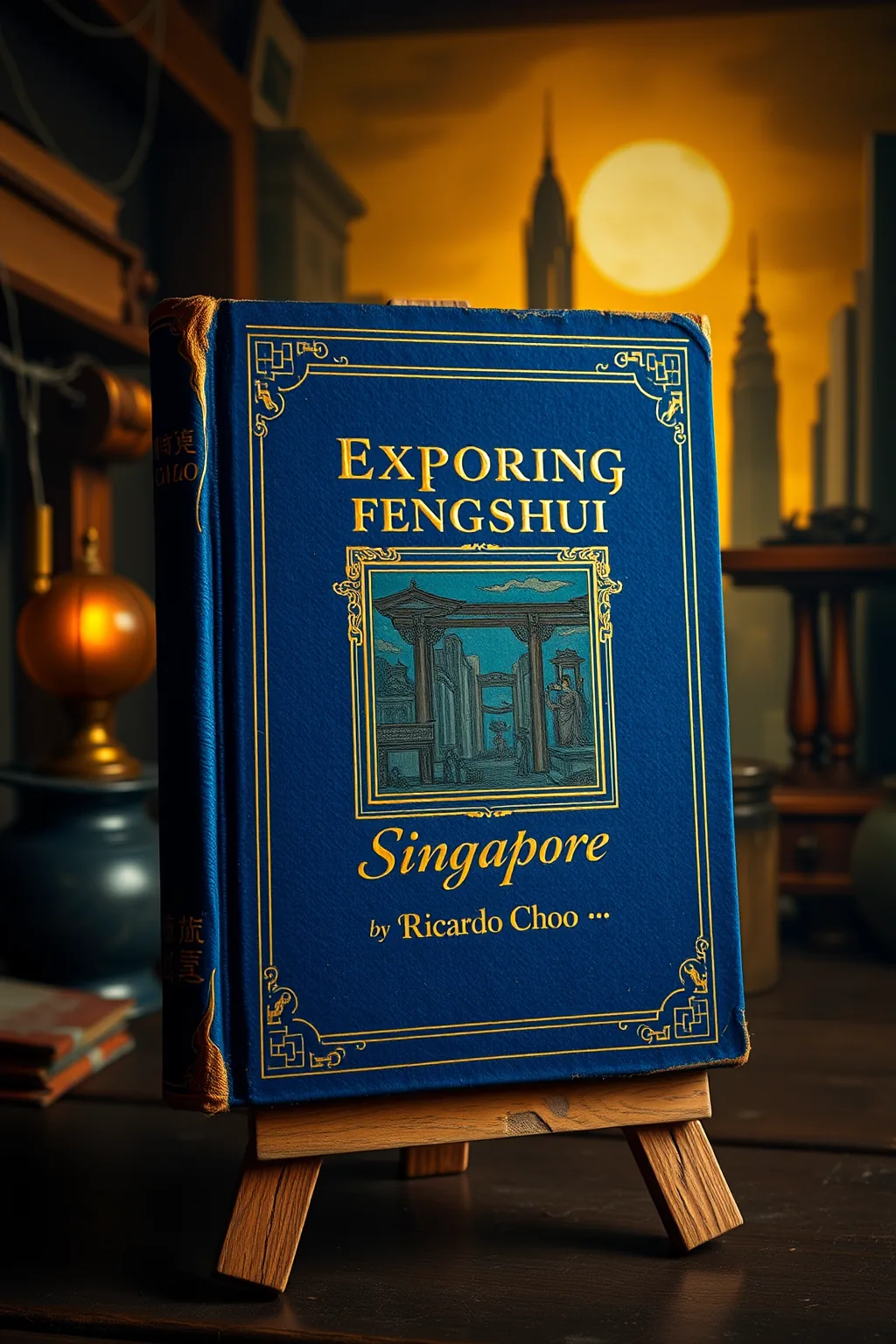
Exploring fengshui landmarks in Singapore
 61
61

Exploring fengshui landmarks in Singapore



Sophia Crane (Associate Editor) — A masterful unveiling of Singapore's energetic blueprint. Ricardo Choo guides us with an expert hand through the city's sacred geography, revealing how ancient Feng Shui principles resonate within its modern architecture. This work is a treasure trove of esoteric insights, illuminating the subtle interplay between form, energy, and human experience. Choo's ability to translate complex geomantic concepts into accessible, evocative prose makes this book indispensable for anyone seeking to understand the deeper spiritual dimensions of urban planning and personal space. It speaks directly to the soul of the Feng Shui practitioner and the curious mind alike, offering a fresh perspective on a timeless art.
📝 Description
61
Ricardo Choo's 2023 book maps Singapore's feng shui landmarks.
Ricardo Choo's "Exploring Feng Shui Landmarks in Singapore" examines the geomantic principles that inform the city's design and development. The book moves beyond simple architectural descriptions to investigate how specific locations and structures align with feng shui concepts. Choo details the symbolic meanings embedded in the urban environment, from modern high-rises to traditional places of worship. It serves as a guide to understanding the flow of energy and its perceived impact on prosperity and harmony within Singapore.
The research presents an approach for readers to discern these energetic patterns. It covers how elements like water, landforms, and building orientation are interpreted through the lens of feng shui. The work is intended for those interested in the practical and philosophical aspects of this practice, encouraging a more aware perception of the environment.
This work engages with the tradition of feng shui, an ancient Chinese practice concerned with the arrangement of space to achieve harmony with the environment. It draws upon centuries of understanding concerning the flow of qi, or vital energy, and its connection to human well-being and fortune. By applying these principles to a contemporary urban setting like Singapore, Choo situates the esoteric art within a modern context, demonstrating its continued relevance in understanding the energetic relationships between people and their surroundings.
💡 Why Read This Book?
Unlock the hidden energetic pathways of Singapore. This book is essential for seekers of ancient wisdom, scholars of geomancy, and practitioners of Feng Shui. It offers a unique lens through which to view urban landscapes, revealing the profound influence of environmental energies on prosperity and harmony. Discover the secrets embedded in Singapore's iconic structures and natural formations, enriching your understanding of this powerful art.
⭐ Reader Reviews
Honest opinions from readers who have explored this book.
❓ Frequently Asked Questions
What is Feng Shui?
Feng Shui is an ancient Chinese metaphysical art of placement and environmental arrangement, aiming to harmonize individuals with their surroundings by optimizing the flow of Qi (life force energy).
How does this book apply Feng Shui to Singapore?
The book examines specific landmarks and architectural designs in Singapore, interpreting them through the principles of Feng Shui to understand their energetic impact on the city and its inhabitants.
Is this book suitable for beginners?
Yes, while offering depth for practitioners, the book provides foundational explanations that make it accessible and engaging for those new to Feng Shui concepts.
What is geomancy?
Geomancy is a form of divination that interprets patterns in the earth and landscape to predict future events or understand current conditions, closely related to Feng Shui's focus on environmental energy.
Can Feng Shui truly influence prosperity?
According to Feng Shui philosophy, by strategically arranging and optimizing the flow of Qi in one's environment, it is believed to attract positive influences that can foster prosperity, health, and well-being.
🔮 Key Themes & Symbolism
The Energetic Range of Singapore
This theme studies the concept of Singapore as a living, breathing entity shaped by invisible currents of Qi. It explores how natural topography, water bodies, and urban development interact to create a unique energetic signature. The book reveals how ancient geomantic principles are subtly applied, often unintentionally, in the city's design, influencing the collective well-being and prosperity of its inhabitants. Readers will learn to perceive the city not just through its physical structures but through its underlying energetic flow, understanding how specific locations can amplify or diminish positive energies.
Architectural Symbolism and Geomantic Resonance
Here, the focus shifts to the profound symbolism embedded within Singapore's architecture. The book examines how buildings, from historical temples to modern skyscrapers, embody specific geomantic intentions and resonate with the surrounding environment. It dissects the use of shapes, materials, and orientations to harness or deflect energy, providing an esoteric interpretation of iconic structures. This theme invites readers to look beyond aesthetics and appreciate the deeper, often hidden, metaphysical purpose behind architectural design, understanding it as a language of energetic influence.
The Intersection of Tradition and Modernity
This crucial theme explores how ancient Feng Shui practices are adapted and manifested within Singapore's hyper-modern cityscape. It investigates the delicate balance between preserving traditional geomantic wisdom and embracing contemporary urban planning. The book highlights instances where modern development either respects or clashes with natural energetic lines, offering insights into the ongoing dialogue between the past and the future. It demonstrates that even in a technologically advanced metropolis, the fundamental principles of harmony with nature remain profoundly relevant and influential.
💬 Memorable Quotes
Direct passages from the work, attributed to the author.
“Each structure, a whispered prayer to the earth, channeling fortune or guarding against ill.”
— This highlights the intentionality behind architecture in Feng Shui, viewing buildings as conduits for energetic influence, capable of both attracting positive outcomes and offering protection.
“Water, the dragon's breath, carving paths of prosperity through the concrete jungle.”
— This poetic phrase likens water to the powerful, life-giving energy of a dragon, emphasizing its role in shaping the landscape and facilitating wealth in an urban setting.
“To understand the pulse of a city is to read the whispers of its geomancy.”
— This emphasizes that true understanding of a place comes not just from observation, but from deciphering its underlying energetic patterns and influences.
“The harmony we seek is etched in the land, waiting for eyes to truly see.”
— This suggests that balance and well-being are inherent in the environment, requiring conscious perception and engagement to unlock their benefits.
💡 Key Ideas
Editorial paraphrase of the work's core concepts — not direct quotes.
The city breathes with a rhythm unseen, a symphony of Qi orchestrated by stone and sky.
This quote evokes the mystical essence of urban energy flow, suggesting that Singapore's vitality is a conscious, orchestrated force shaped by its physical elements.
🌙 Esoteric Significance
Tradition
This work is deeply rooted in the tradition of Chinese Feng Shui and Geomancy, an ancient metaphysical system focused on harmonizing individuals with their environment. It draws upon centuries of accumulated knowledge concerning the flow of Qi (life force energy), the interaction of the Five Elements, and the principles of Yin and Yang as they manifest in the physical landscape. The book explores how these principles, often considered esoteric, are actively at play within a modern urban setting, revealing a continuity of ancient wisdom.
Symbolism
Key symbols explored include the 'Dragon' representing flowing energy and prosperity, 'Water' as a conduit of wealth and life, and 'Mountains' as stabilizers and sources of support. Architectural forms themselves become potent symbols: sharp angles may represent conflict, while curves can signify gentleness and flow. The orientation of buildings, the placement of entrances, and the use of specific colors are all interpreted as symbolic gestures designed to influence the energetic atmosphere and attract auspicious outcomes for inhabitants.
Modern Relevance
In an era increasingly concerned with sustainability, well-being, and the psychological impact of our built environments, the esoteric principles of Feng Shui offer profound modern relevance. This book demonstrates that understanding and working with natural energetic flows can lead to more harmonious, productive, and healthy living and working spaces. It provides a framework for re-evaluating urban development, encouraging a more mindful approach to design that considers the subtle, yet powerful, influence of our surroundings on human experience and success.
👥 Who Should Read This Book
This book is a rich resource for a diverse audience. **Beginners** in Feng Shui will find clear explanations of fundamental concepts applied to relatable Singaporean landmarks. **Scholars** of East Asian studies, urban planning, and cultural geography will appreciate the unique interdisciplinary approach. **Seekers** of deeper meaning and spiritual connection to their environment will discover a new way to perceive the world around them. **Practitioners** of Feng Shui will find invaluable case studies and fresh interpretations of classic principles within a contemporary context, enhancing their understanding and application.
📜 Historical Context
Singapore's rapid transformation from a colonial trading post into a global metropolis is a evidence of strategic planning and ambition. This period of intense development, particularly from the mid-20th century onwards, has seen the landscape dramatically reshaped. "Exploring Feng Shui Landmarks in Singapore" emerges within this context, offering a counterpoint to purely materialistic or economic analyses. It provides a lens through which to understand the city's evolution through the ancient art of geomancy, a practice that has long influenced East Asian urban planning and philosophy. The book contextualizes modern architectural endeavors within a tradition that predates recorded history, suggesting that the city's success may also be attributed, in part, to an intuitive or deliberate alignment with natural energetic forces, a concept deeply rooted in the cultural fabric of its populace.
📔 Journal Prompts
Reflect on a landmark in your city. What invisible energies might be at play there, based on its location, form, and history?
How does the presence of water (rivers, lakes, coastlines) influence the perceived energy or atmosphere of a place you know?
Consider a building you frequent. What architectural features might be contributing to its specific energetic 'feel'?
In what ways can a modern city be seen as a geomantic organism, interacting with its natural surroundings?
How might incorporating principles of Feng Shui enhance your personal living or working space for greater harmony and prosperity?
🗂️ Glossary
Qi (Chi)
The vital life force or energy that flows through all things. In Feng Shui, its harmonious circulation is crucial for well-being and prosperity.
Geomancy
An ancient practice of interpreting the earth's energies and patterns to understand and influence human affairs and the environment.
Yin and Yang
The fundamental Taoist concept of complementary, interconnected opposites (e.g., dark/light, passive/active) whose balance is essential for harmony.
Five Elements (Wu Xing)
Wood, Fire, Earth, Metal, and Water – the fundamental forces in Chinese philosophy whose interactions (productive and destructive cycles) influence all phenomena.
Auspicious
Suggesting future success or good fortune; favorable; propitious. In Feng Shui, refers to energies or arrangements that promote positive outcomes.
This book appears in 4 collections
🔮 Readers Also Liked
Browse all →








From the “Geomancy” Collection
View all →








More Free Divination & Tarot Books
View all →