Vasus
The Vasus are a group of eight Vedic deities in Hinduism, personifying elemental forces and cosmic phenomena. They are often depicted as attendants to Indra, the king of the gods, and represent aspects of the material world such as earth, water, fire, air, and ether. Their worship is linked to prosperity and the natural order.
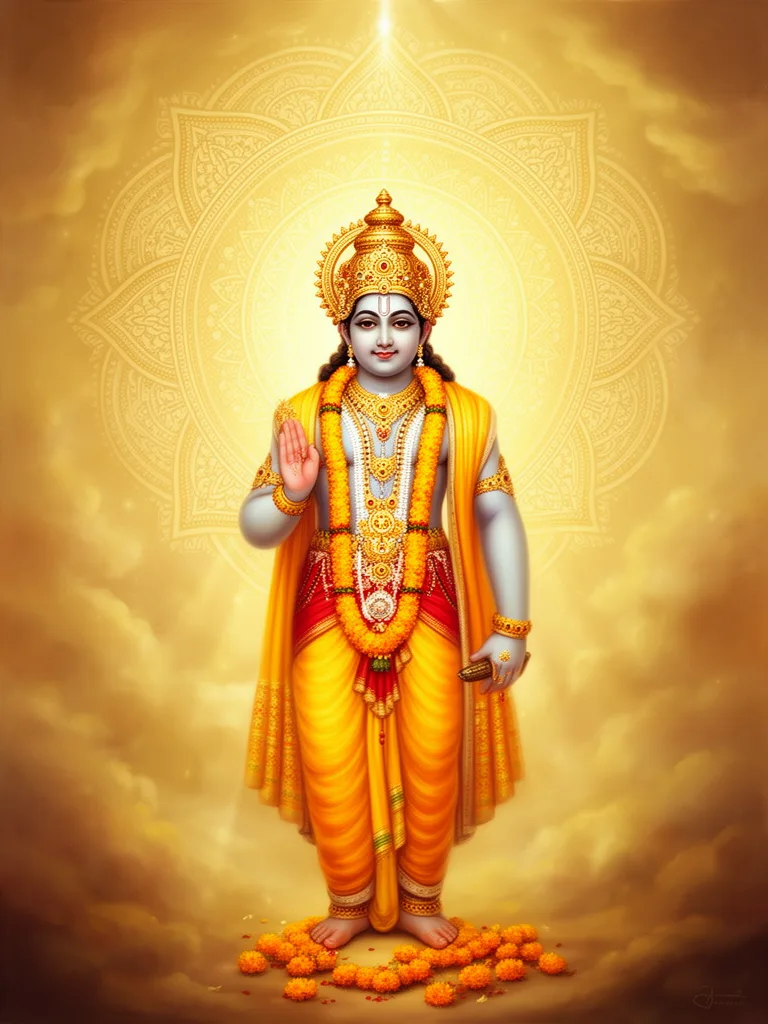
Where the word comes from
The Sanskrit term "Vasu" derives from the root "vas," meaning "to dwell" or "to shine." This etymology suggests beings who inhabit or illuminate the cosmos. The plural "Vasus" refers to these eight divine entities, first appearing in Vedic texts, signifying foundational cosmic principles.
In depth
The eight evil deities attendant upon Iiulra. Per.sonitied cosmic phenomena, as their names show.
How different paths see it
What it means today
Helena Blavatsky, in her characteristically direct manner, positions the Vasus not as mere "evil deities" but as "personified cosmic phenomena." This re-framing is crucial for a modern seeker. It moves us away from simplistic dualities of good and evil and toward a more nuanced apprehension of the divine as immanent in the fabric of existence. The names of the individual Vasus, such as Prithvi (earth), Agni (fire), and Vayu (air), are not arbitrary appellations but direct signifiers of the elemental forces that shape our world.
Mircea Eliade, in his exploration of the sacred and the profane, would likely see the Vasus as embodiments of the numinous within the mundane. They are the divine made manifest in the very substances and processes we experience daily. This is a far cry from the distant, transcendent deities of some theological systems. Instead, they invite a practice of recognition, a mindful awareness of the sacred energies at play in a glass of water, the warmth of a hearth, or the breath of wind.
Carl Jung’s concept of archetypes resonates here. The Vasus can be understood as primordial patterns of consciousness that correspond to fundamental forces of nature. They are the deep structures of reality as perceived and internalized by the human psyche. To acknowledge the Vasus is to acknowledge these deep, elemental patterns within ourselves and the universe. It is to understand that the forces of creation and sustenance are not external agents but intrinsic qualities of being.
In this light, Blavatsky’s initial, perhaps misleading, classification of them as "evil" might be interpreted as a reflection of the potent, untamed nature of these cosmic forces, which can be both destructive and life-giving. The modern reader is invited to see beyond this simplistic moral judgment and to appreciate the Vasus as essential, dynamic components of the cosmic dance, reminding us that the divine is not always gentle or easily controlled, but is often a force of profound, elemental power. This understanding encourages a more integrated, less fearful engagement with the world's inherent dynamism.
Related esoteric terms
No reflections yet. Be the first.
Share your interpretation, experience, or question.
