Thero
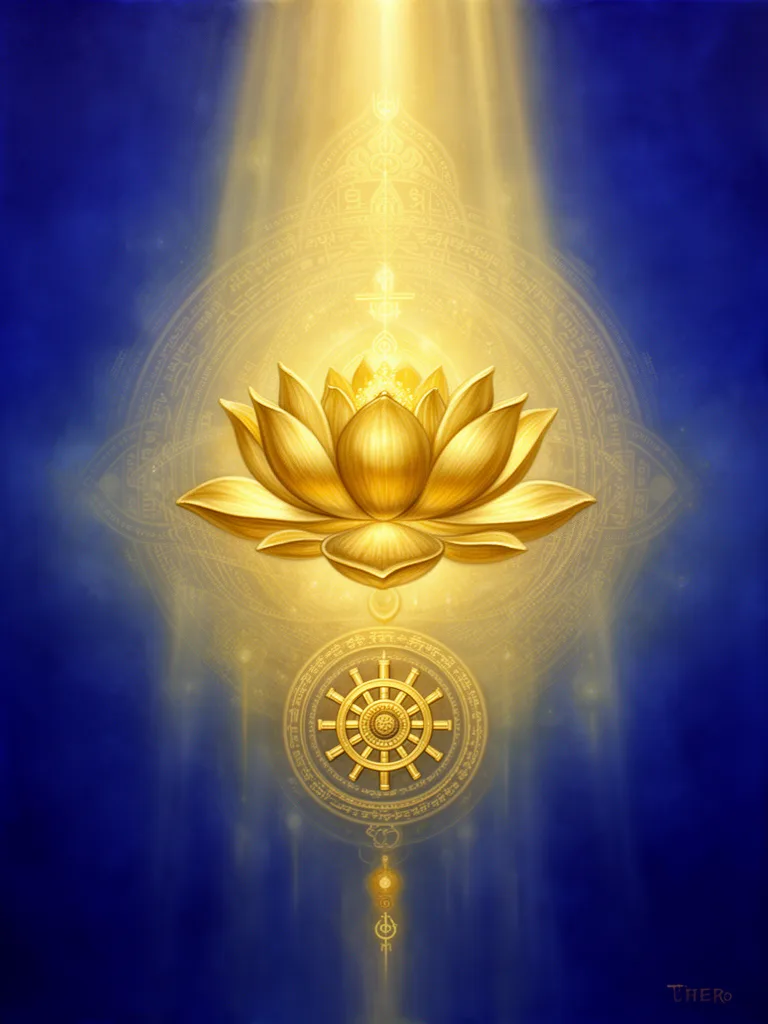
Thero refers to a Buddhist monk, particularly one adhering to the Theravada tradition. The term signifies a spiritual practitioner dedicated to preserving and embodying the Buddha's teachings, often through monastic discipline and meditation. It implies a life devoted to the path of liberation.
Where the word comes from
The term "Thero" originates from the Pali word "thera," meaning "elder" or "senior." In the Buddhist context, it specifically denotes a senior monk, recognized for his wisdom and adherence to the Vinaya, the monastic code. This designation signifies respect and accumulated spiritual experience.
In depth
A priest of Buddha. Thcrunnansc, also. Theurgia, or Theurgy (Gr.). A communication with, and means of bringing down to earth, planetary spirits and angels — the "gods of Liglit". Knowledge of the inner meaning of their hierarchies, and purity of life alone can lead to the acquisition of the powers necessary for communion with them. To arrive at such an exalted goal the aspirant must be absolutely wortiiy and unselfish. Theurgist. Tlie first .scliool of practical theurgy (from (r)to^, god. and V{)yoi\ work,) in tlie Cliristian period, was founded by lamblichus among certain Alexandrian Platonists. The priests, however, who were attached to the temples of Egypt, Assyria, Babylonia and Greece, and whose business it was to evoke the gods during the celebration of tlie Mysteries, were known by this name, or its equivalent in other tongues, from the earliest ai-eliaic period. Spirits (but not tliose of the d«'ad, the evocation of whicli was called Ntcromancg) were made visilile to the eyes of mortals. Thus a theurgist had to be a hierophant and an expert in the esoteric learning of the Sanctuaries of all great countries. The Neoplatonists of the school of lamblichus were called theurgists, for they performed the so-called "ceremonial magic'', and evoked the simulacra or the images of the ancient heroes, "gods", and daimonia ( <\i(unna, divine, spiritual entities). In the rare eases wlu-n tlie presence of a tangible and visil)Je "si)irit" w;is required, the tlieurgist had to furnish the weird ai>parition witli a i)ortion of his own flesh and blood — he had to perform the thcopaa, or the "creation of gods", by a mysterious process well known to the old, and perhaps some of the modern. Tiuitrikas and initiated Brahmans of India. Such is what is said in the Book of Evocations of the pagodas. It shows the jK-rfcet identity of rites 306 THEUSorilKAI. and wiviiionial between fluoldest liriiliiniiniitlniii-jiy jiiid that of tlie Alexandrian Platonists. The followiiipr is from /\/
How different paths see it
What it means today
Blavatsky's definition, while primarily focused on the Neoplatonic concept of theurgy, touches upon an underlying principle that resonates with the Buddhist Thero: the idea of communion with higher principles through purity of life and knowledge. While the Thero does not seek to "bring down" divine beings in the Western esoteric sense, their life is a profound practice of aligning with the Dharma, the cosmic order as revealed by the Buddha. Mircea Eliade, in his studies of shamanism and archaic religions, highlights the universal human impulse to bridge the sacred and the profane, to access deeper realities through disciplined practice. The Thero, in their monastic austerity, their meticulous observance of the Vinaya, and their dedication to Vipassanā meditation, are engaged in a similar, though distinct, endeavor. They are not invoking external powers but cultivating an inner luminosity, a clarity of mind that allows them to perceive the true nature of reality. This inner purification, this "purity of life," is the prerequisite for their spiritual insight, mirroring the theurgist's need for worthiness. The Thero's existence is a quiet assertion that the most potent "powers" are those of equanimity, compassion, and wisdom, attained through diligent effort and a profound reverence for the teachings. They are, in essence, living embodiments of the Buddha's legacy, their lives a continuous meditation on impermanence, suffering, and non-self. Their wisdom, honed over years of dedicated practice, serves as a beacon, guiding those who seek to understand the profound mysteries of existence not through arcane rituals, but through the transformative power of mindful living. The Thero's path is a quiet revolution of the self, a testament to the enduring strength of inner discipline.
Related esoteric terms
Books on this concept








No reflections yet. Be the first.
Share your interpretation, experience, or question.
