Siva
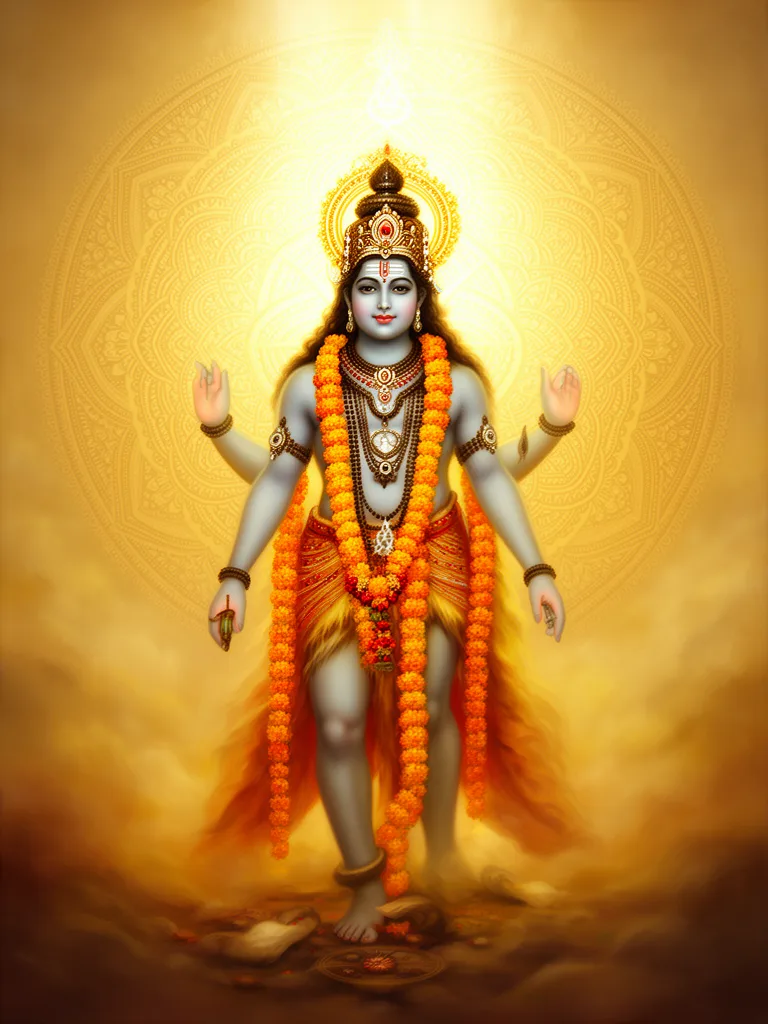
Shiva is a principal deity in Hinduism, part of the Trimurti as the destroyer and transformer. He represents cosmic cycles of creation, preservation, and dissolution, often depicted as an ascetic yogi or the cosmic dancer. His worship is central to Shaivism, a major Hindu tradition.
Where the word comes from
Sanskrit, "Shiva" (शिव) means "auspicious" or "benevolent." Its roots are debated, but it's often linked to the Proto-Indo-European *s(w)eH- meaning "to shine" or "to be bright." The term gained prominence in the Puranic period (c. 300-1200 CE) as the name of the great god.
In depth
The third person of the Iliiuiu Trinity (tiie Trimurti). I If is a god of the first ordi'i-, and in his eliaraeter of Destroyer liigher tlian Vishnu, the l^i'eserver. as he destroys only to regenerate on a higiier plane. He is born as Rudra, the Kumara, and is the patron of all the Yogis, being called, as such, Maha-Yogi, tiie great ascetic. His titles are siguiticant: Trilochana, "the three-eyed", Mahndf iv/. "the greal god". Sayfkora, etc., etc., etc.
How different paths see it
What it means today
The figure of Shiva, as rendered in Sanskrit scripture and devotional practice, is a profound exploration of cosmic and personal dissolution that paradoxically births renewal. He is the Great Ascetic, Maha-Yogi, patron of all ascetics, a god who shaves his head, smears his body with ash, and meditates in desolate cremation grounds. This imagery, as Mircea Eliade noted in "The Myth of the Eternal Return," speaks to a fundamental human encounter with the liminal, the spaces where the old order gives way. Shiva's third eye, often depicted as blazing with destructive energy, is not merely a symbol of wrath but of insight, the capacity to see beyond illusion and to incinerate ignorance.
His role as Destroyer in the Hindu Trimurti is not an endpoint but a necessary phase in the cyclical unfolding of existence. As Helena Blavatsky herself hints, he destroys "only to regenerate on a higher plane." This echoes Jung's concept of the shadow, the repressed aspects of the psyche that must be confronted and integrated, not banished, for wholeness. The dance of Shiva, the Nataraja, is a cosmic ballet of creation and destruction, each movement a step in the eternal rhythm of the universe. For the modern seeker, Shiva offers a potent archetype for confronting the necessary endings in life—the dissolution of ego, the shedding of attachments, the acceptance of impermanence—as pathways to deeper wisdom and spiritual rebirth. His austerity and detachment remind us that true power often lies not in accumulation but in renunciation, in the quietude found beyond the clamor of worldly desires.
RELATED_TERMS: Trimurti, Rudra, Nataraja, Yoga, Moksha, Samsara, Kali, Shakti ---
Related esoteric terms
Books on this concept







No reflections yet. Be the first.
Share your interpretation, experience, or question.
