Salamanders
Salamanders are elemental beings associated with fire in esoteric traditions, often seen as spirits or sprites inhabiting and embodying the fiery element. They represent the dynamic, transformative, and purifying aspects of fire, both in the physical and spiritual realms.
Where the word comes from
The term "Salamander" likely derives from a fusion of Greek salamandra and Latin salamandra, possibly with influences from Arabic salamandra or Persian samandar. Its widespread appearance across Indo-European languages suggests an ancient conceptual root, perhaps linked to fire-dwelling mythical creatures.
In depth
The Rosierueian name for the Elementals of Fire. The animal, as well as its name, is of most occult sifrnilieance. and is widely used in poetry. The name is almost identical in all lan^ruages. Thus, in Greek, Latin, French, Spanish, Italian, etc., it is Salamandra, in Persian Sfinmndd, and in Sanskrit Salamandala.
How different paths see it
What it means today
Blavatsky's inclusion of the salamander in her lexicon, drawing from Rosicrucian lore, invites us to consider the elemental forces that shape not only the external world but also our internal spiritual economy. The salamander, a creature of myth and folklore, is more than a fanciful beast; it is a symbol of fire's dual nature—destructive and generative. In the Hermetic tradition, the salamander is the elemental spirit of fire, a being whose very essence is the volatile, energetic principle of flame. This aligns with alchemical thought, where fire is the catalyst for transmutation, the force that breaks down the old to allow for the new. The alchemist, in seeking to refine base metals into gold, mirrors the spiritual aspirant who undergoes trials that purify the soul. The salamander, therefore, can be seen as an archetype of resilience, of the capacity to dwell within the inferno of experience without being consumed, but rather, by being refined. Its presence in poetry across cultures—from the ancient Greeks who believed it could extinguish fire to medieval bestiaries that depicted it as immune to flames—underscores its enduring power as a symbol of the incorruptible spirit. This elemental being reminds us that the most profound spiritual growth often occurs not in placid calm, but amidst the intense heat of transformation, where the self is tested and ultimately reborn. The salamander's enduring image across diverse traditions suggests a universal recognition of the profound, often paradoxical, relationship between destruction and creation, and the potential for the spirit to emerge incandescent from the crucible. What does it mean to be a salamander in the hearth of one's own life?
Related esoteric terms
Books on this concept


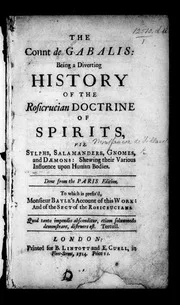
![[Comte de Gabalis. English]. The diverting history of the Count de Gabalis: containing, I. An account of the Rosicrucian doctrine of spirits, viz. sylphs, salamanders, gnomes, and d¶mons; ... To which is prefix'd, Monsieur Bayle's account of this work, ... 1714](/img/thumb/comte-de-gabalis-english-the-diverting-history-of-the-count-de-gabalis-containing-i-an-account-of-the-rosicrucian-doctrine-of-spirits-viz-sylphs-salamanders-gnomes-and-d-mons-to-which-is-prefix-d-mons.webp)


No reflections yet. Be the first.
Share your interpretation, experience, or question.
