Noom
Noom is an ancient Egyptian mythological figure, a divine sculptor who fashions a woman intended to disrupt human happiness. This creation story parallels themes of divine artistry and the introduction of sorrow or temptation into the human experience, akin to other creation narratives.
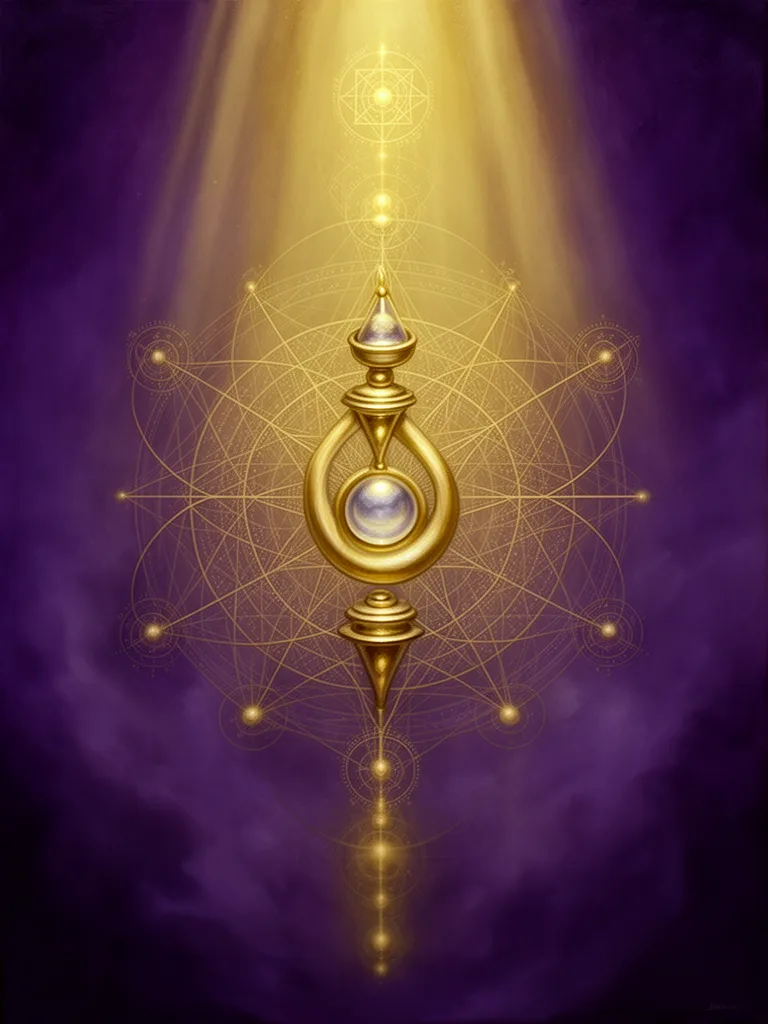
Where the word comes from
The term "Noom" appears in Egyptian mythology. Its precise linguistic roots are debated, but it is associated with the concept of divine creation or shaping. The narrative connects to early anthropomorphic interpretations of cosmic forces and their influence on humanity.
In depth
A celestial sculptor, in the Egyptian legends, who creates a beautiful girl whom he sends like another Pandora to Batoo (or "man"), whose happiness is thereafter destroyed. The "sculptor" or artist is the same as Jehovah, the architect of the world, and the girl is "Eve"."
How different paths see it
What it means today
The figure of Noom, the celestial sculptor, offers a fascinating lens through which to examine the ancient human impulse to understand the origins of suffering and imperfection. Blavatsky's comparison to Jehovah and Eve invites a cross-cultural dialogue on the archetypal narratives of creation and transgression. Mircea Eliade, in his seminal work "The Myth of the Eternal Return," explored how ancient cultures sought to comprehend cyclical time and the recurring patterns of cosmic order and disorder. Noom's creation, which disrupts pre-existing happiness, can be seen as a mythic articulation of the introduction of a new epoch, marked by challenges and the necessity of human agency.
This sculpted woman, akin to Pandora in Greek myth, represents not merely a force of destruction but also a catalyst for change, a catalyst that compels humanity to engage with its own limitations and the complexities of existence. Carl Jung's concept of the anima, the feminine archetype within the male psyche, might also offer a resonant interpretation. Noom's creation could symbolize the projection of a powerful, perhaps untamed, feminine energy that profoundly impacts the masculine principle, leading to unforeseen consequences. The act of sculpting implies a deliberate shaping, a divine artistry that imbues the creation with specific qualities and a purpose. This echoes the alchemical processes where base matter is transformed through skilled manipulation, though here the transformation leads to a disruption of primal bliss.
The narrative prompts contemplation on whether this disruption is an inherent flaw in the divine plan or a necessary step in the evolution of consciousness. As Henry Corbin explored in his work on the spiritual imagination, myths are not mere stories but vital conduits for understanding the soul's journey. Noom's creation, therefore, can be viewed as a profound symbolic representation of the challenges that arise when the spiritual essence encounters the material world, a perennial theme in esoteric thought. It compels us to consider the nature of divine will and its often inscrutable manifestations in the human drama.
RELATED_TERMS: Demiurge, Pandora, Eve, Maya, Anima, Gnosticism, Creation Myth, Archetype
Related esoteric terms
Books on this concept



No reflections yet. Be the first.
Share your interpretation, experience, or question.
