AMORC
AMORC is a modern Rosicrucian organization, founded in 1915, that teaches mystical philosophy and esoteric principles within the Western Esoteric Tradition. It offers initiatory degrees and promotes self-discovery through study and practical exercises.

Where the word comes from
The acronym AMORC is derived from the Latin "Antiquus Mysticusque Ordo Rosæ Crucis," meaning "Ancient and Mystical Order of the Rosy Cross." This name evokes a lineage tracing back to historical Rosicrucian movements, though its modern institutional form is a 20th-century creation.
In depth
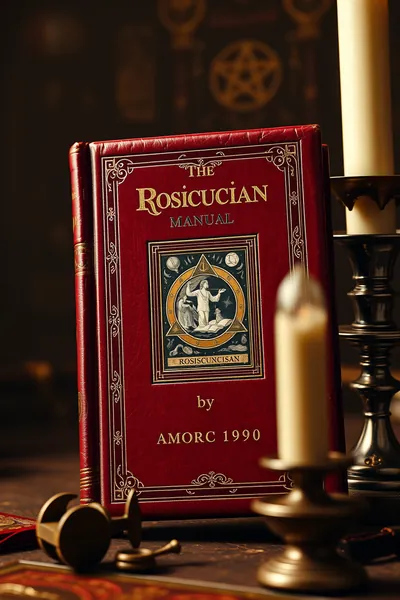
AMORC (standing for, among others, the Ancient Mystical Order of the Rosy Cross, Antiquus Mysticusque Ordo Rosae Crucis or the Ancient and Mystical Order Rosæ Crucis) is a Rosicrucian organization founded by Harvey Spencer Lewis in the United States in 1915. It has lodges, chapters and other affiliated bodies in several countries. It operates as a fraternal order in the mystical Western Esoteric Tradition. There are 12 grand lodges that represent the geographical regions and languages in which AMORC...
How different paths see it
What it means today
AMORC, the Ancient and Mystical Order of the Rosy Cross, stands as a contemporary embodiment of the Western Esoteric Tradition, particularly its Rosicrucian currents. Founded by Harvey Spencer Lewis in the early 20th century, it sought to revive and systematize the teachings attributed to the legendary Rose Cross brotherhood. Unlike the more elusive historical Rosicrucian manifestos, AMORC offers a tangible, initiatory structure, guiding seekers through degrees of study that explore Hermetic philosophy, alchemy, and ancient wisdom.
The organization's name itself, an acronym for its Latin designation, signals a deliberate connection to a perceived ancient lineage. This is a common strategy in esoteric orders, aiming to imbue their teachings with the authority and mystique of antiquity. Mircea Eliade, in his work on shamanism and the sacred, often discussed the human need for continuity with ancestral wisdom. AMORC, in its own way, fulfills this by providing a framework that echoes the mysteries of the past for the modern aspirant.
The curriculum of AMORC often involves exercises designed to cultivate intuition, concentration, and a deeper understanding of cosmic laws. This emphasis on practical application aligns with the alchemical ideal of transformation, not merely of metals, but of the self. Carl Jung's exploration of alchemy as a projection of the psyche's own developmental stages offers a psychological lens through which to view these practices. The symbolic language employed by AMORC, much like the iconography found in ancient temples or medieval grimoires, serves as a vehicle for accessing deeper layers of consciousness.
For the contemporary individual seeking a spiritual path outside mainstream religious dogma, AMORC offers a structured yet personal journey. It promises not just intellectual understanding but experiential knowledge, a "gnosis" that arises from dedicated practice and contemplation. The order's claim to ancient roots, while debated by historians, speaks to a persistent human yearning for connection to a timeless wisdom, a perennial philosophy that transcends epochs and cultures. It is a modern manifestation of an ancient impulse: to understand the universe by understanding oneself.
Related esoteric terms
Books on this concept





No reflections yet. Be the first.
Share your interpretation, experience, or question.
