Meru
Meru is a mythical sacred mountain at the center of the cosmos in Hindu, Buddhist, and Jain traditions. It serves as the axis mundi, connecting the earthly realm to the heavens and housing the abodes of gods and celestial beings.
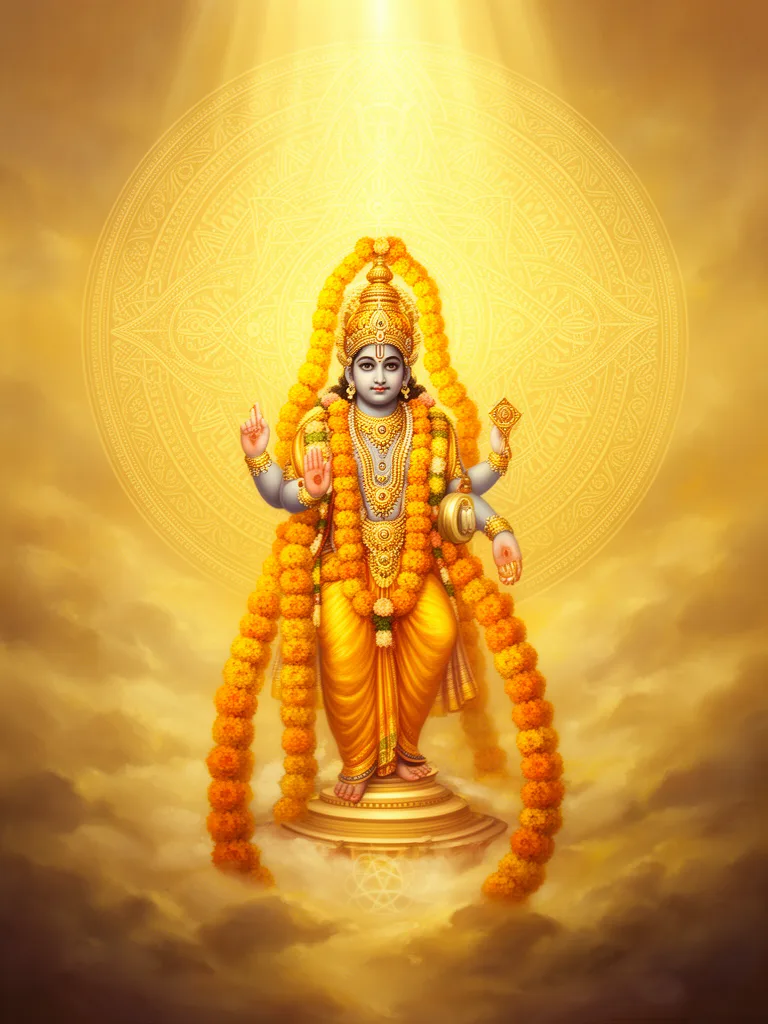
Where the word comes from
The name Meru originates from Sanskrit (मेरु). Its etymological roots are debated, but it is often associated with the concept of "axis" or "center." It first appears in ancient Vedic texts, signifying a cosmic mountain or pillar.
In depth
The name of an alleged mountain in the center (or "naval'') of the earth where Swarga, the Olympus of the Indians is placed. It contains the "cities" of the greatest gods and the abodes of various Devas. Geographically accepted, it is an unknown mountain north of the Himalayas. In tradition, Meru was the "Land of Bliss" of the earliest Vedic times. It is also referred to as Hemddri "the golden mountain", Ratnasanu, "jewel peak", Karnikdchala, "lotus mountain", and Amarddri and Dcva-parvata, "the mountain of the gods". The Occult teachings place it in the very center of the North Pole, pointing it out as the site of the first continent on our earth, after the solidification of the globe. Meshia and Mcshianc (Zend). The Adam and Eve of the Zoroastriaiis. in the early Persian sysitem; the first human couple. Mesmer, Frudrich Anton. The famous physician who rediscovered and a]>i)lied practically that magnetic fluid in man which was called animal magnetism and since then Mesmerism. He was born in Sehwaben, in 1734, and died in 1815. He was an initiated member of the Brotherhoods of the Fratrcs Lucis and of Lukshoor (or Luxor), or the Egyptian Branch of the latter. It was tlie Council of "Luxor" which selected him — according to the orders of the "Great Brotherhood" — to act in the XVIIIth century as their usual pioneer, sent in the last quarter of every century to enlighten a small portion of the Western nations in occult lore. It was St. Germain who supervised the development of events in this case ; and later Cagliostro was comniiss^ioned to help, but having made a series of mistakes, more or less fatal, he was n caUcd. Of these three men who were at first regarded as quacks, Mesimer is already vindicated. The justification of the two others will follow in the next century. Mesmer founded the "Order of Universal Harmony" in 1783, ill which prL'suiuably only animal magnetism was tauy:lit. but which iu reality expounded the tenets of Hippocrates, the methods of the ancie
How different paths see it
What it means today
The mountain Meru, a concept woven into the fabric of Hindu, Buddhist, and Jain cosmologies, offers a potent metaphor for the seeker's journey toward inner coherence. It is not merely a geographical marker on an ancient map but the very axis mundi, the cosmic pillar around which existence revolves. Mircea Eliade, in his seminal work "The Myth of the Eternal Return," explored the universal archetype of the sacred center, the axis mundi, which Meru so perfectly embodies. This "center of the world" is where the vertical and horizontal dimensions of the cosmos meet, a place of ultimate reality and stability, anchoring the ephemeral to the eternal.
In the bustling, often disorienting landscape of modern life, where constant flux can erode our sense of grounding, the idea of Meru resonates deeply. It suggests an internal geography, a spiritual summit to which we can aspire. The descriptions of Meru as Hemadri, the golden mountain, or Ratnasanu, the jewel peak, evoke not material wealth but the luminescence of spiritual attainment, the multifaceted brilliance of enlightenment. This celestial mountain is where the gods reside, a reminder that the divine is not distant but accessible, residing at the heart of creation, and by extension, at the core of our own being.
The practice associated with such cosmic mountains, though often symbolic, involves a turning inward, a journey of ascent. It mirrors the contemplative practices found across traditions, from the yogi's meditation on the Sahasrara chakra, the crown chakra, often depicted as a lotus at the apex of the head, to the Sufi's ascent through the stations of the soul. Meru, therefore, serves as a powerful reminder that the search for meaning and belonging is not an outward expedition but an inward pilgrimage, a quest to discover the unshakeable center within ourselves. It is the promise of a stable point of reference, a sacred geography that exists not on any map, but within the very architecture of consciousness.
Related esoteric terms
Books on this concept







No reflections yet. Be the first.
Share your interpretation, experience, or question.
