Ahi
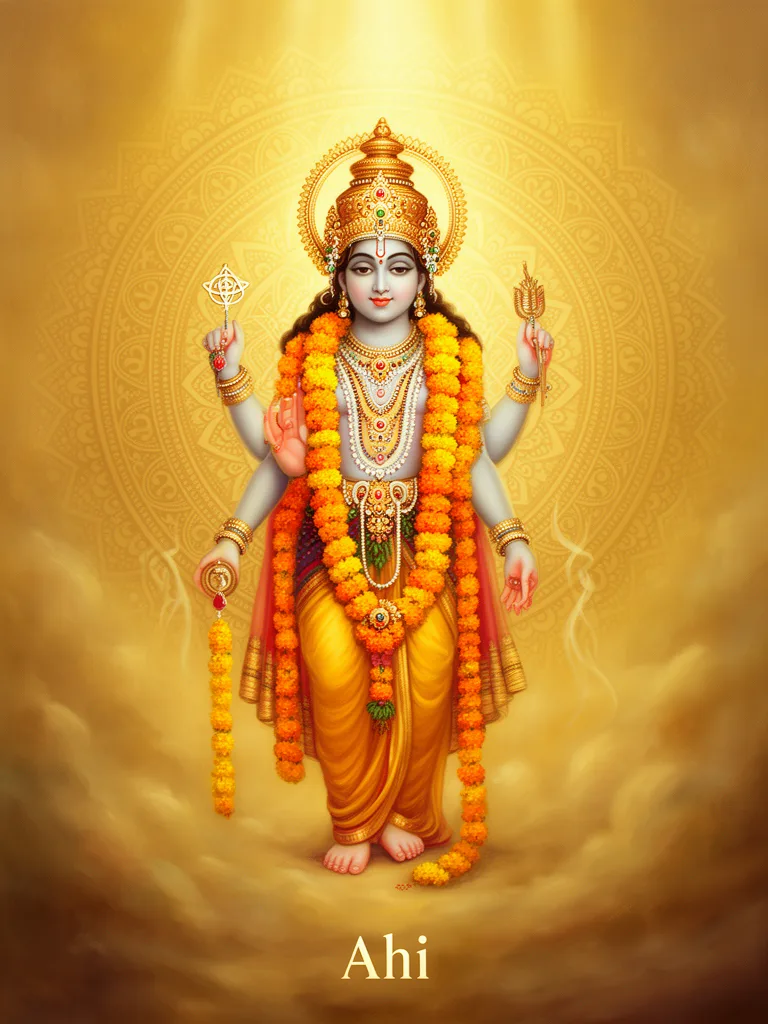
Ahi is a Sanskrit term meaning "serpent" or "dragon." In Vedic tradition, it often refers to Vritra, a cosmic serpent demon embodying drought and obstruction, whose defeat by Indra liberates the waters and brings forth life. It symbolizes primal forces and primordial chaos.
Where the word comes from
The Sanskrit word "ahi" derives from the Proto-Indo-European root h₁egʷʰis, meaning "serpent." This root also gives rise to words like the Greek ophis and the Latin *anguis. The term has ancient roots in Vedic literature, appearing in the Rigveda.
In depth
A serpent. A name of Vi-itra, the Vedie demon of drought.
How different paths see it
What it means today
The ahi, a term resonating with the primal hiss of existence, invites us to consider the serpentine forces that both bind and liberate. In the Vedic imagination, the ahi is Vritra, the great serpent of drought, a cosmic adversary whose immolation by Indra is not an act of gratuitous violence but the necessary sundering of primordial stagnation. Mircea Eliade, in his exploration of cosmic myths, highlights how such figures embody the chaotic forces that precede order, the formless potential that must be overcome for creation to flourish. Vritra’s defeat releases the celestial waters, a potent image for the flow of divine grace or vital energy that is obstructed by inertia, by the very denseness of being that resists transformation.
This serpentine archetype, however, is not solely a figure of terror. In later Hindu thought, the serpent becomes the Kundalini, the coiled power at the base of the spine, a reservoir of untapped spiritual energy. This is the ahi within, the primordial force that, when awakened, can ascend through the chakras, leading to profound states of consciousness and liberation. This duality—the external obstruction and the internal potential—is a hallmark of esoteric symbolism. The ahi, therefore, speaks to the necessity of confronting the stagnant, the binding, the seemingly insurmountable obstacles, both in the external world and within the labyrinth of our own psyche, to allow for the vital currents of consciousness to flow freely. It is in the struggle with the dragon, as Carl Jung might suggest, that we find the treasure.
RELATED_TERMS: Vritra, Naga, Kundalini, Chaos, Primordial Serpent, Indra, Cosmic Order
Related esoteric terms
Books on this concept





No reflections yet. Be the first.
Share your interpretation, experience, or question.
