Logi
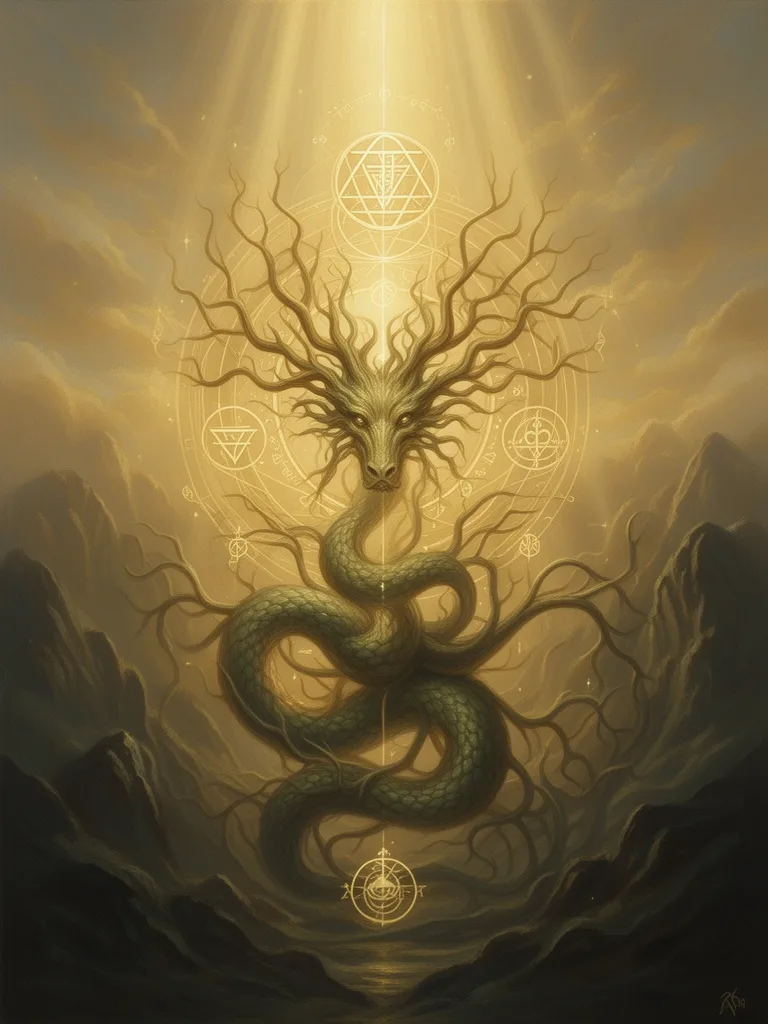
Logi, meaning "flame" in a lost ancient tongue, represents primordial cosmic fire and destructive, creative elemental forces. Blavatsky associates them with giant beings responsible for cataclysms, symbolizing the volatile, transformative power inherent in the universe.
Where the word comes from
The term "Logi" is presented by Blavatsky without a clear linguistic source, suggesting an esoteric or lost language. It is associated with "flame," evoking primordial fire, a concept found in many Indo-European roots related to light and burning.
In depth
Lit., "flame". This giant with his sons and kindred, made themselves finally known as the authors of every cataclysm and conflagration in heaven or on earth, by letting mortals perceive them in the midst of tlaraes. Tliese giant-fiends were all enemies of man trying to destroy his work wherever they found it. A symbol of the cosmic elements.
How different paths see it
What it means today
Blavatsky's rendering of "Logi" as "flame" and as titanic entities orchestrating cataclysms offers a potent, if unsettling, lens through which to view the raw, untamed energies that shape our reality. This is not the gentle flicker of a hearth fire, but the conflagration of stars, the fury of volcanoes, the elemental churn that precedes and follows epochs of existence. Mircea Eliade, in his profound explorations of the sacred and the profane, often highlighted the numinous power of fire as a symbol of cosmic creation and destruction, a primal force that both purifies and consumes. The Logi, in this light, become personifications of this terrifying yet generative power, the very engine of cosmic change.
To understand Logi is to confront the universe not as a static edifice but as a dynamic, often violent, process. It speaks to a time before ordered laws, before the gentle unfolding of biological life, a period of elemental chaos where fire was the dominant, shaping hand. This resonates with the alchemical understanding of fire as a transformative agent, the ignis philosophicus, capable of reducing base matter to its essential principles, thereby allowing for a new creation. It is the heat that melts the frozen forms, allowing for the emergence of something novel.
In a modern context, where we often seek control and predictability, the concept of Logi serves as a potent reminder of the vast, indifferent forces that lie beyond our immediate grasp. It challenges our anthropocentric view, urging us to acknowledge the elemental powers that continue to operate, shaping planets and stars, and indeed, our own internal landscapes. The "enemies of man trying to destroy his work" can be interpreted not as malevolent entities, but as the impersonal, relentless processes of entropy and change that are inherent to all phenomena. Our "work," our creations, are always subject to this cosmic flame, a truth that can be both humbling and liberating. It suggests that true wisdom lies not in resisting these forces, but in understanding their nature and our place within their ceaseless dance. The Logi, in their fiery essence, invite us to embrace the transformative potential of dissolution, recognizing that endings are often the fertile ground for new beginnings.
RELATED_TERMS: Prana, Chaos, Elemental Spirits, Cosmic Fire, Alchemy, Yang, Agni, Shiva
Related esoteric terms
Books on this concept






No reflections yet. Be the first.
Share your interpretation, experience, or question.
