Lakh
Lakh is a unit of measurement representing one hundred thousand (100,000). It is commonly used in South Asia, particularly in India, for counting large numbers of currency, population figures, or any quantifiable item.
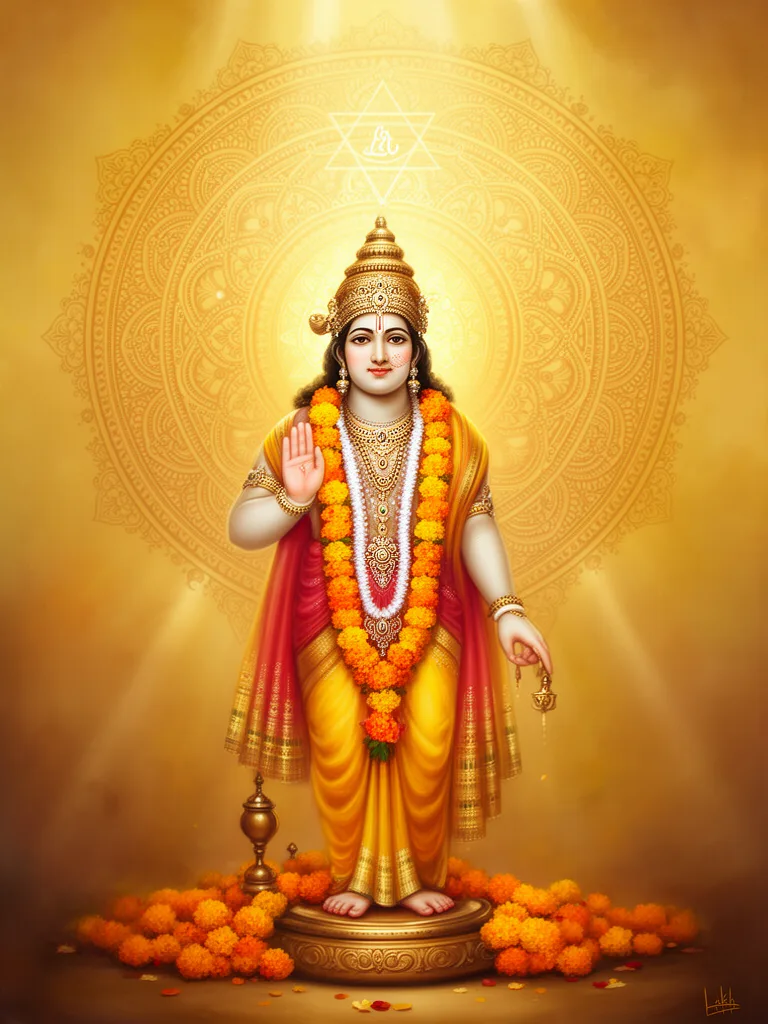
Where the word comes from
The term "lakh" derives from the Sanskrit word lakṣa (लक्ष), meaning "aim" or "target," but also signifying a large, indefinite number, specifically one hundred thousand. Its usage is deeply embedded in the numerical systems of India and surrounding regions, appearing in historical texts and contemporary discourse.
In depth
100.000 of units, either in specie or anything else.
How different paths see it
What it means today
The humble "lakh," a mere hundred thousand, offers a fascinating lens through which to view our relationship with magnitude. In a world increasingly dominated by the abstract language of billions and trillions, the lakh grounds us in a tangible, yet still considerable, scale. It is the number of grains of rice in a market stall, the population of a bustling town, the potential earnings from a successful venture. This unit, so commonplace in India and its diaspora, invites contemplation on how different cultures conceptualize and interact with large numbers.
Mircea Eliade, in his exploration of sacred time and space, often highlighted how the archaic mind perceived the world not as a continuous, homogenous expanse, but as a series of discrete, significant quantities. The lakh, while modern in its application, echoes this ancient sensibility. It is a unit that, while large, remains comprehensible, a stepping stone towards the truly ineffable. It suggests a worldview where vastness is not necessarily terrifying or incomprehensible, but a measurable aspect of existence.
Consider the spiritual implications. While not explicitly a spiritual term in its everyday use, the concept of a lakh can resonate with the idea of countless divine names, innumerable stars in the firmament, or the vast cycles of creation and dissolution described in Hindu cosmology. It’s a number that, while finite, feels substantial enough to hint at the infinite, much like a single dewdrop reflecting the entire sky. It bridges the gap between the individual and the immeasurable, a numerical metaphor for the profound.
The very persistence of the lakh in modern usage, alongside international numerical systems, speaks to the resilience of cultural frameworks. It is a reminder that our understanding of quantity is not solely dictated by globalized conventions but is also shaped by deeply ingrained linguistic and cultural habits. The lakh, therefore, is more than just a number; it is a cultural artifact, a marker of a specific way of perceiving and quantifying the world around us. It encourages us to question the assumed universality of numerical scales and to appreciate the subtle ways in which language shapes our apprehension of reality.
Related esoteric terms
Books on this concept








No reflections yet. Be the first.
Share your interpretation, experience, or question.
