Henry Corbin
Henry Corbin was a French philosopher and scholar whose work revitalized the study of Islamic philosophy and mysticism, particularly the concept of the "imaginal" realm. He connected these traditions to Western esoteric thought, exploring spiritual cosmology and the creative imagination.
Where the word comes from
The name "Corbin" is of French origin, derived from the Old French "corbin," meaning "raven." This etymology is not directly related to his philosophical work but points to a lineage. His academic career began in the early 20th century, significantly shaping the study of Islamic thought in the West.
In depth
Henry Corbin (14 April 1903 – 7 October 1978) was a French philosopher, theologian, and Iranologist, professor of Islamic studies at the École pratique des hautes études. He was influential in extending the modern study of traditional Islamic philosophy from early falsafa to later and "mystical" figures such as Suhrawardi, Ibn Arabi, and Mulla Sadra Shirazi. With works such as Histoire de la philosophie islamique (1964), he challenged the common European view that philosophy in the Islamic world...
How different paths see it
What it means today
Henry Corbin, a figure of profound intellectual generosity, acted as a vital conduit, bringing the luminous currents of Islamic philosophy and mysticism into the broader intellectual conversation of the 20th century. His scholarship was not merely academic; it was an act of spiritual archaeology, unearthing treasures of thought that had been obscured by historical and cultural divides. He championed the concept of the mundus imaginalis, a term that itself evokes a shimmering, potent space. This is not the fleeting fancy of daydreams, but a sophisticated ontological category, a cosmic intermediary realm where divine realities are clothed in symbolic form and can be apprehended by the soul.
Corbin’s engagement with figures like Ibn Arabi and Suhrawardi was transformative. He saw in their intricate cosmologies not abstract theological systems but living maps of spiritual experience, charting the soul's journey from the sensible world to the divine presence. This resonates deeply with the Hermetic axiom "As above, so below," but Corbin expanded this to include an internal cosmos, an imaginal geography that mirrors and interacts with the external. For the modern seeker, often adrift in a sea of secularism and material reductionism, Corbin offers a powerful corrective. He reminds us that the imagination is not a mere psychological faculty but a faculty of perception, capable of discerning spiritual truths. The practice he implicitly advocates is one of conscious imaginative engagement, cultivating the inner eye to perceive the subtle realities that interpenetrate our own. This is a path that requires discipline, a willingness to explore the symbolic language of dreams, visions, and myth, and to recognize the profound creative power that resides within the human psyche, a power that can shape our experience of reality. His work, therefore, is an invitation to see the world not as a static object of observation but as a dynamic, living manifestation of spirit, accessible through the disciplined cultivation of our inner vision.
RELATED_TERMS: Imaginal, Sophia Perennis, Active Imagination, Gnosis, Spiritual Cosmology, Theurgy, Symbolism, Inner Vision
Related esoteric terms
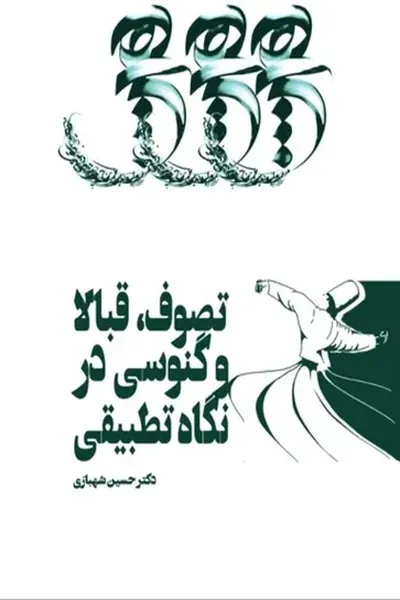
Books on this concept





No reflections yet. Be the first.
Share your interpretation, experience, or question.
