Playing card
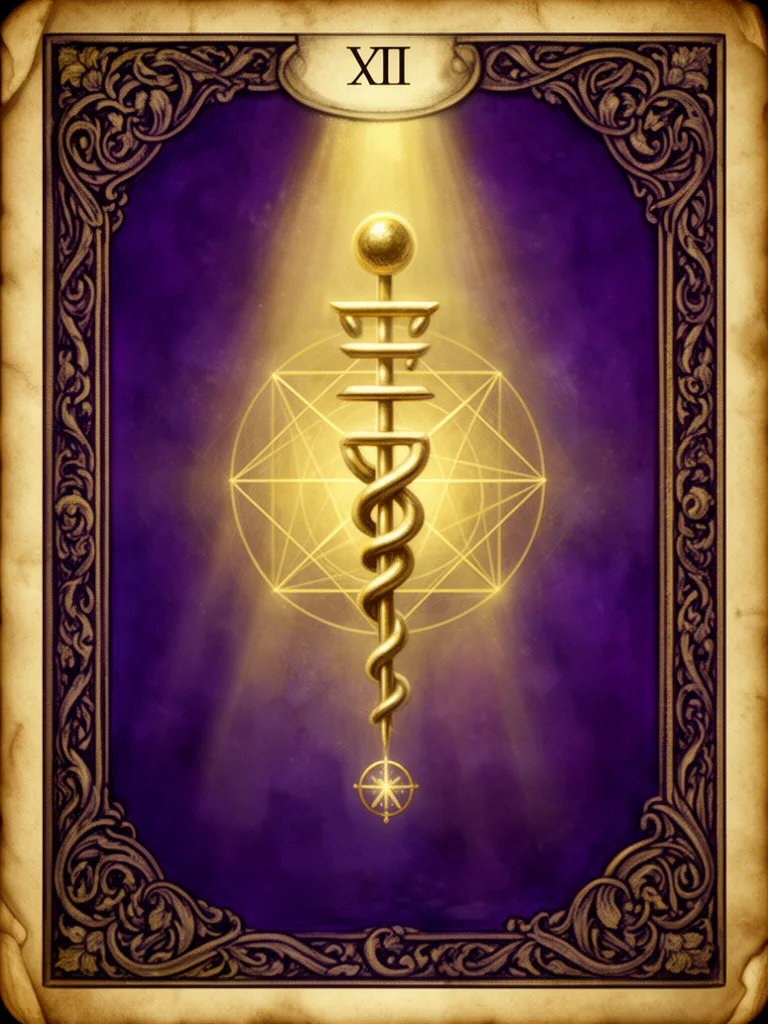
A playing card is a small, marked piece of cardstock or similar material used for games, divination, or as a symbolic tool. Each card represents archetypal forces, cosmic principles, or stages of human experience, offering a visual language for understanding the unseen.
Where the word comes from
The term "playing card" emerged in the late 14th century, likely from the Old French "carte de jeu," meaning "game card." Its roots trace to the Latin "charta," meaning "papyrus leaf" or "paper," reflecting the material's origin. The concept of marked cards for games or divination is ancient.
In depth
A playing card is a piece of specially prepared card stock, heavy paper, thin cardboard, plastic-coated paper, cotton-paper blend, or thin plastic that is marked with distinguishing motifs. Often the front (face) and back of each card has a finish to make handling easier. They are most commonly used for playing card games, and are also used in magic tricks, cardistry, card throwing, and card houses; cards may also be collected. Playing cards are typically palm-sized for convenient handling, and usually...
How different paths see it
What it means today
The humble playing card, so often relegated to the ephemeral realm of parlor games or the more dubious territory of fortune-telling, harbors a profound, ancient wisdom. Blavatsky's definition, though focused on the material, hints at the transformative potential within these marked surfaces. In the Hermetic tradition, and particularly through the lineage of the Tarot, these cards become far more than mere instruments for amusement. They are a visual scripture, a coded language of the soul's journey.
Consider the Fool, that archetypal figure stepping off the precipice with a bindle and a dog. He is not merely a random card; he is the primal spark of possibility, the unmanifest potential before the great Work begins. He is the innocent, the wanderer, the one who embodies the very essence of faith before knowledge. This is not a passive prophecy, but an active invitation to recognize that same nascent potential within oneself. Each card, from the High Priestess guarding her sacred mysteries to the Emperor establishing order, acts as a symbolic anchor, a point of contemplation in the vast ocean of existence.
Scholars like Mircea Eliade have illuminated how cultures across time have utilized symbolic systems to orient themselves within the cosmos. Playing cards, in their most developed forms, serve this very purpose. They are a microcosm, a universe in miniature, reflecting the macrocosm. The alchemical stages, the astrological influences, the very archetypes that Carl Jung identified as shaping the human psyche, all find a visual echo in the carefully crafted imagery of a well-designed deck. They are not about predicting a fixed future, but about illuminating the present forces at play, offering a framework for understanding the dynamics of one's own inner and outer world.
The practice of engaging with these cards, whether through games or divination, becomes a form of active meditation. It is a dialogue with the unconscious, a way to bring hidden patterns into conscious awareness. The seemingly random shuffle and draw are, in a deeper sense, a reflection of the confluence of forces that shape our lives, a tangible manifestation of the unseen currents that guide our path. They offer a portable sanctuary of meaning, a way to engage with the profound mysteries of existence in a manner that is both accessible and deeply resonant. The playing card, in essence, is a key, not to a locked door, but to a deeper understanding of the room we already inhabit.
Related esoteric terms
Books on this concept






No reflections yet. Be the first.
Share your interpretation, experience, or question.
