Dik
Dik, from Sanskrit, signifies space or vacuity, often interpreted as the boundless ether or the all-pervading emptiness from which all phenomena arise. It represents the primordial void, a concept central to understanding cosmic origins and the nature of reality in certain Hindu philosophical schools.
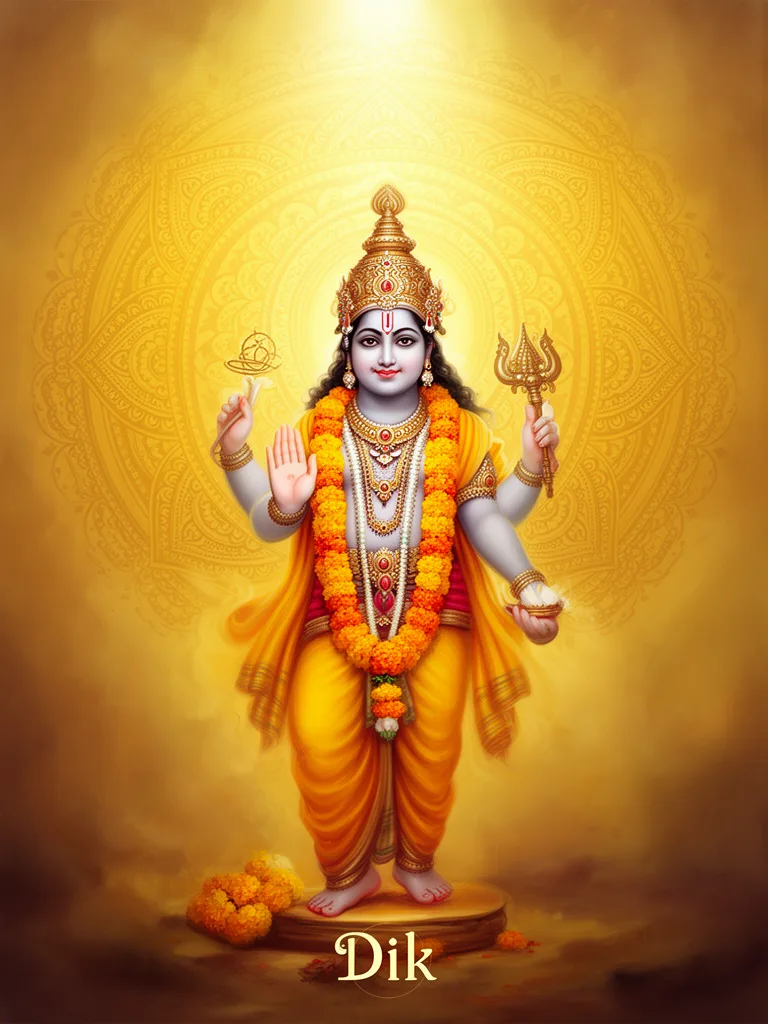
Where the word comes from
The Sanskrit term "Dik" (दिक्) originates from the Proto-Indo-European root *deik-, meaning "to show" or "to point." In its spatial sense, it evolved to signify direction, and subsequently, the entire expanse of space. Its usage in ancient texts points to a conceptualization of space as fundamental and all-encompassing.
In depth
Space, Vacuity. Diktamnon (Gr.), or Dictamnus ( Dittdin/). A cui-ious iilanti>osstssing vfi'\(tecult and mystical projx'rties and well-known from ancient times. It was sacred to the ]\Ioon-Goddcsses, Luna. Astarte, Diana. The Cretan name of Diana was Diktynna, and as such the goddess wore a wreath made of this magic plant. The Diktamnon is an evergreen shrub whose contact, as claimed in Occultism, develops and at the same time cures somnambulism. ]\Iixed with Verbena it will produce clairvoyance and ecstasy. Pharmacy attributes to the Diktamnon strongly .sedative and quieting properties. It grows in abundance on Mount Dictc, in Crete, and enters into many nuKjical performances resortrd to b}the Cretans even to this day.
How different paths see it
What it means today
Blavatsky's definition, while referencing the Greek Dictamnos and its supposed mystical properties, points us toward a more fundamental understanding of "Dik" in its Sanskrit context. The association with space, vacuity, and the primordial void is a concept that resonates deeply across spiritual traditions, echoing Mircea Eliade's observations on the sacredness of cosmic origins and the primal emptiness that precedes creation. In Hindu philosophy, particularly within Vedanta, Dik is not simply the absence of matter but a dynamic, all-pervading substance, akin to Akasha, the ether that fills all space and is the substratum for all forms. It is the boundless expanse that allows for differentiation, the canvas upon which the divine drama of existence unfolds.
This concept of primordial emptiness, far from being nihilistic, is often understood as pregnant with possibility. It is the unmanifest, the potentiality before actualization. Think of the deep silence before a symphony begins, a silence that holds within it every note yet to be played. This is the essence of Dik as a spiritual principle. It invites a contemplation of the vastness within and without, encouraging a release from the confines of perceived limitations. The practice, then, becomes one of cultivating an inner space, a mental and spiritual vacuity that allows for greater receptivity to insight and a deeper connection to the universal consciousness. It is in this boundless space that the individual self can begin to perceive its non-dual nature, its inherent oneness with the all-pervading reality. The challenge for the modern seeker is to move beyond the intellectual understanding of emptiness and to experience it as a living, breathing presence.
RELATED_TERMS: Akasha, Brahman, Shunyata, Void, Emptiness, Space, Ether, Unmanifest
Related esoteric terms
Books on this concept







No reflections yet. Be the first.
Share your interpretation, experience, or question.
