Denys Turner
Denys Turner is a contemporary British philosopher and theologian known for his work on the nature of God, the problem of evil, and the intersection of philosophy and mysticism, particularly within Christian traditions. He explores how abstract theological concepts can be understood through lived experience and philosophical inquiry.
Where the word comes from
The name "Denys" originates from the Greek Dionysios, meaning "devoted to Dionysus." "Turner" is an English occupational surname, derived from the Old English "turnere," referring to a potter or someone who worked on a lathe. The philosopher's full name thus carries echoes of ancient devotion and common English lineage.
In depth
Denys Alan Turner (born 5 August 1942) is a British philosopher and theologian.
How different paths see it
What it means today
In the vast, often bewildering expanse of theological and philosophical discourse, Denys Turner emerges as a singular voice, one that doesn't shy away from the most intractable questions concerning the divine. His work, while rooted in the rich soil of Christian thought, possesses a universality that resonates with any seeker grappling with the ineffable. He reminds us that the contemplation of God is not merely an exercise in abstract logic, but a profound existential engagement, one that often leads us to the very edge of our understanding, where language falters and silence speaks volumes.
Turner's engagement with figures like Pseudo-Dionysius the Areopagite, a foundational figure in apophatic theology, is particularly illuminating. Pseudo-Dionysius, writing in the late 5th or early 6th century, posited that God is best approached not by affirming what God is, but by negating what God is not. This via negativa, this "way of negation," is not an act of despair but a sophisticated epistemological strategy, acknowledging that any positive description of the divine will inevitably fall short of its infinite reality. Turner unpacks this ancient wisdom, demonstrating its enduring relevance in a world often saturated with simplistic certainties. He shows how this tradition, far from being a mere intellectual game, is intrinsically linked to a transformative spiritual practice, a stripping away of conceptual idols to make room for a more direct, albeit ineffable, encounter with the divine.
His exploration of the "problem of evil" is equally incisive. Rather than offering facile solutions, Turner grapples with the profound theological and philosophical tension between an all-powerful, all-good God and the undeniable reality of suffering in the world. This is not a theoretical puzzle to be solved, but a deeply human cry that echoes through the ages. By examining the ways in which theologians and mystics have wrestled with this paradox, Turner offers not comfort in the form of easy answers, but a profound respect for the complexity of existence and the courage required to face its darkest aspects without abandoning the quest for meaning. His work invites us to consider that the deepest truths may lie not in the clarity of our pronouncements, but in the honest acknowledgment of our limitations and the persistent, often silent, yearning for that which transcends our grasp.
RELATED_TERMS: Apophatic theology, Divine transcendence, Meister Eckhart, Pseudo-Dionysius the Areopagite, Problem of evil, Theology of suffering, Ineffability, Mystical theology
Related esoteric terms
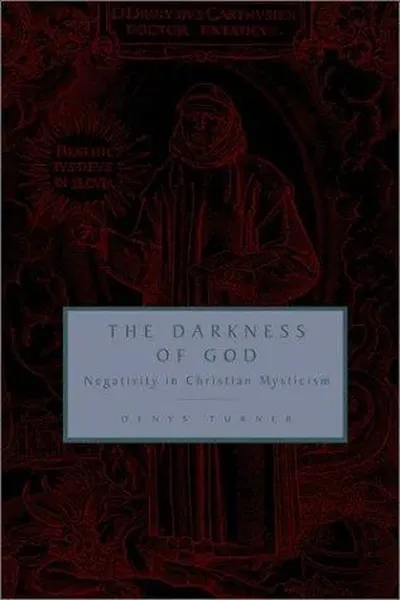
Books on this concept


No reflections yet. Be the first.
Share your interpretation, experience, or question.
