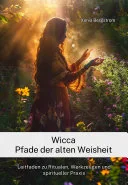
Wicca Pfade der alten Weisheit
 76
76

Wicca Pfade der alten Weisheit
Xenia Bergstrom's "Wicca: Pfade der alten Weisheit" offers a clear, if somewhat conventional, entry point into Wiccan practice. The author's strength lies in her systematic approach to explaining rituals and tools, making the subject accessible to newcomers. For instance, the section detailing the use of an athame, explaining its purpose in directing energy rather than causing harm, is particularly well-handled. However, the work occasionally feels like it treads familiar ground, lacking a distinct new perspective on established Wiccan lore. While it meticulously outlines the Sabbats and Esbats, it could benefit from a deeper exploration of the philosophical underpinnings that differentiate various Wiccan traditions. The book provides a solid, foundational understanding, but seasoned practitioners may find it lacks novel insights. It serves its purpose as a guide for the uninitiated, presenting the essential framework of Wiccan belief and practice with commendable clarity.
📝 Description
76
### What It Is
Wicca: Pfade der alten Weisheit (Wicca: Paths of Ancient Wisdom) by Xenia Bergstrom offers an introduction to the Wiccan religion. Published in 2024, it functions as a guide for individuals seeking to understand and practice Wicca. The text aims to present the foundational elements of this spiritual path, blending historical perspectives with contemporary application. It covers essential rituals, the tools used in practice, and the overall spiritual philosophy that underpins Wiccan beliefs and actions. The work emphasizes connection to natural cycles and seasonal observances, a core aspect of Wiccan observance.
### Who It's For
This book is primarily intended for those new to Wicca or those curious about esoteric traditions. It serves as a foundational text for beginners who wish to explore the religion in a structured manner. Individuals interested in nature-based spirituality, paganism, or comparative religion will find its explanations of rituals and beliefs informative. It is also suitable for practitioners of other spiritual paths who seek to understand a different worldview. The language and structure suggest an audience eager for clear, step-by-step guidance rather than advanced theological debate.
### Historical Context
Bergstrom's work emerges in the 21st century, a period where Wicca has moved from its more secretive origins, influenced by figures like Gerald Gardner in the mid-20th century, into broader public discourse. While Gardnerian Wicca established many foundational practices, contemporary works like this one often reflect a more diverse and evolving landscape of Wiccan traditions. The book implicitly engages with the legacy of early 20th-century occult revival movements that sought to reconnect with pre-Christian European spiritualities, a lineage that includes the foundational research of figures like Margaret Murray. Bergstrom's approach likely synthesizes these historical roots with modern interpretations.
### Key Concepts
The core of "Wicca: Pfade der alten Weisheit" revolves around understanding Wicca as a spiritual practice rooted in nature worship and the acknowledgment of divine forces often represented as the God and Goddess. Key concepts include the Wheel of the Year, which marks the eight seasonal festivals (Sabbats) such as Samhain and Beltane, and the lunar cycles (Esbats) that guide ritual timing. Rituals themselves are presented as a means of focusing intention and connecting with these energies, often involving tools like athames, wands, and chalices. The book also likely touches upon the Wiccan Rede, a set of ethical guidelines, and the concept of the Threefold Law, which posits that whatever energy one sends out returns threefold.
💡 Why Read This Book?
• Gain a structured understanding of the Wheel of the Year, including specific Sabbat observances like Beltane and Samhain, as detailed in Bergstrom's guide, allowing for practical application of seasonal cycles. • Learn the symbolic meaning and practical use of core Wiccan ritual tools, such as the athame and wand, as explained in the text, enhancing your ability to perform meaningful ceremonies. • Grasp the ethical framework of Wicca, particularly the principles behind the Wiccan Rede, as presented in the book, offering a foundation for responsible spiritual engagement.
⭐ Reader Reviews
Honest opinions from readers who have explored this book.
❓ Frequently Asked Questions
What is the main focus of "Wicca: Pfade der alten Weisheit"?
The book focuses on introducing Wicca as a spiritual path, guiding readers through its fundamental rituals, tools, and the underlying philosophy, with an emphasis on connecting with natural cycles.
Is this book suitable for absolute beginners to Wicca?
Yes, "Wicca: Pfade der alten Weisheit" is designed as a comprehensive guide for beginners, offering step-by-step explanations of core concepts and practices.
Does the book discuss the history of Wicca?
The book touches upon the historical context and lineage of Wicca, referencing its connection to older wisdom traditions and its development into modern practice.
What are some key concepts explained in the book?
Key concepts include the Wheel of the Year (Sabbats), Esbats (lunar cycles), the roles of the God and Goddess, ritual tools, and ethical principles like the Wiccan Rede.
What is the significance of the "Pfade der alten Weisheit" title?
The title, translating to "Paths of Ancient Wisdom," highlights the book's aim to connect modern Wiccan practice with older, nature-based spiritual traditions and ancestral knowledge.
When was "Wicca: Pfade der alten Weisheit" first published?
The book was first published on May 15, 2024, making it a contemporary resource on Wiccan practices and philosophy.
🔮 Key Themes & Symbolism
The Wheel of the Year
Bergstrom meticulously details the eight major festivals that constitute the Wheel of the Year, a central concept in Wiccan cosmology. These Sabbats, such as Yule, Imbolc, and Lughnasadh, mark the solar cycle and are presented not merely as dates but as opportunities for specific rituals and spiritual reflection. The book emphasizes how observing these festivals connects practitioners to the Earth's rhythms and ancient agricultural societies, fostering a deeper relationship with the divine in its manifest, seasonal forms. Understanding these cyclical patterns is crucial for aligning personal spiritual practice with the broader energetic flows of nature.
Ritual Tools and Their Purpose
The text provides a thorough examination of the essential tools used in Wiccan ritual, explaining their symbolic significance and practical application. Items like the athame (ritual knife), wand, chalice, and pentacle are discussed in detail. Bergstrom clarifies that these are not merely decorative objects but are consecrated instruments used to focus intent, invoke energies, and delineate sacred space. The proper handling and consecration of these tools are presented as vital for effective ritual work, ensuring that practices are performed with reverence and precision, channeling spiritual power appropriately.
The God and Goddess Archetypes
A fundamental aspect of Wicca explored in this work is the veneration of dual divinity, often represented as the Horned God and the Triple Goddess. Bergstrom explains these figures not as anthropomorphic deities in the Abrahamic sense, but as powerful archetypes representing the divine masculine and feminine principles inherent in the universe. The cyclical relationship between these two, mirroring the cycles of life, death, and rebirth found in nature, is central to Wiccan theology. This understanding informs the rituals and meditations, offering practitioners a framework for exploring balance and polarity within themselves and the cosmos.
Ethical Practice and the Rede
Central to Wiccan life is the ethical guideline known as the Wiccan Rede, often summarized by the phrase 'An it harm none, do what ye will.' Bergstrom elaborates on this principle, presenting it as a sophisticated ethical code that encourages personal responsibility and mindful action. The concept of the Threefold Law, which suggests that actions return to the sender threefold, is also likely discussed as a reinforcing principle. This emphasis on ethics underscores that Wicca is not merely about ritual but about living in accordance with natural law and personal integrity.
💬 Memorable Quotes
“Rituals are not mere performances, but intentional acts that shape our reality and connect us to the sacred.”
— This statement highlights the active, transformative power attributed to Wiccan ritual. It suggests that ceremonies are practical tools for manifesting change and deepening spiritual connection, rather than simply symbolic gestures.
“The Wheel of the Year turns, reminding us of life's inherent cycles of growth, decay, and rebirth.”
— This paraphrased concept emphasizes the book's focus on nature-based spirituality. It frames the turning of the seasons not just as a natural phenomenon but as a profound spiritual lesson about existence.
“Understanding the tools of the craft is key to focusing your will and directing energy effectively.”
— This interpretation underscores the practical aspect of Wiccan tools. It suggests that learning to use items like the athame and wand is essential for channeling spiritual power purposefully in ritual.
“The divine manifests in myriad forms, both masculine and feminine, reflecting the balance of the cosmos.”
— This paraphrased concept points to the Wiccan understanding of divinity as a dualistic force, embodying both God and Goddess archetypes. It links this duality to the natural balance observed in the universe.
“Living by the Rede means acting with conscious intent, ensuring your actions align with harmony and respect.”
— This interpretation focuses on the ethical dimension of Wicca. It suggests that the Wiccan Rede is a call to mindful living, where actions are considered for their impact on oneself and the wider world.
🌙 Esoteric Significance
Tradition
This work fits within the broad spectrum of modern Western Esotericism, specifically within the Neopagan and specifically Wiccan traditions. It draws upon the lineage established by Gerald Gardner and subsequent developments, blending elements often associated with folk magic, nature worship, and ceremonial practices. While not strictly Hermetic or Kabbalistic, it shares with these traditions an emphasis on symbolism, ritual efficacy, and the exploration of hidden knowledge. Bergstrom's approach likely synthesizes these influences into a cohesive system accessible to contemporary practitioners, departing from stricter, older forms by emphasizing personal interpretation and accessibility.
Symbolism
Key symbols in "Wicca: Pfade der alten Weisheit" likely include the Pentacle, representing the five elements (Earth, Air, Fire, Water, Spirit) and often used for protection or invocation. The Athame, a ritual knife, symbolizes focused will and directing energy, distinct from its use as a cutting tool. The Wheel of the Year itself is a powerful symbol, representing the cyclical nature of life, death, and rebirth, and the interconnectedness of all things through the seasons. These symbols function as focal points for meditation and ritual, facilitating a deeper connection to the divine and natural forces.
Modern Relevance
Contemporary thinkers and practitioners in fields like ecopsychology and deep ecology find resonance in Wicca's nature-centric worldview, as presented in works like Bergstrom's. Modern Wiccan covens and solitary practitioners continue to draw upon foundational texts that explain core principles, adapting them to current social and environmental concerns. The emphasis on personal experience and ethical responsibility also aligns with modern spiritual seeking, making the path accessible to individuals disillusioned with more dogmatic religious structures. Schools of comparative religion and occult studies also utilize such texts to understand the evolution and diversity of contemporary spiritual movements.
👥 Who Should Read This Book
• Aspiring practitioners of Wicca seeking a clear, foundational guide to rituals, ethics, and core beliefs, presented in a structured, step-by-step format. • Students of comparative religion or mythology interested in understanding contemporary Neopagan traditions and their roots in ancient nature-based spiritualities. • Individuals exploring nature-based spirituality or earth-centered religions who wish to learn about the Wheel of the Year and its significance in ritual practice.
📜 Historical Context
Xenia Bergstrom's "Wicca: Pfade der alten Weisheit" emerges in an era far removed from the initial public emergence of Wicca in the 1950s, largely spearheaded by Gerald Gardner. Gardner's work, influenced by folklore studies like Margaret Murray's controversial theories on witchcraft, sought to reconstruct or revive perceived ancient pagan traditions. Bergstrom's 2024 publication benefits from decades of Wiccan evolution, including the rise of Dianic Wicca and other feminist interpretations, as well as the ongoing academic and popular interest in Neopaganism. Unlike the early days, where Wicca faced skepticism and occasional legal challenges, contemporary works like Bergstrom's can engage more openly with comparative religious studies and existing pagan communities. The book implicitly responds to a landscape shaped by figures like Doreen Valiente, who played a significant role in shaping early Wiccan liturgy, and contrasts with the more esoteric, ritual-focused traditions that dominated earlier scholarship.
📔 Journal Prompts
Reflect on the cyclical nature of the Wheel of the Year and its personal resonance.
Consider the symbolic meaning of the Athame and its role in your personal intentions.
Analyze the core tenets of the Wiccan Rede in the context of modern ethical dilemmas.
Explore the archetypal representations of the God and Goddess in your own life experiences.
Meditate on the purpose and potential of ritual tools discussed in the book.
🗂️ Glossary
Athame
A ritual knife, typically double-edged, used for directing energy, casting circles, and invoking spirits. It is not used for cutting physical objects and is often consecrated for magical work.
Sabbat
One of the eight major seasonal festivals celebrated in Wicca, marking significant points in the solar year such as the solstices, equinoxes, and cross-quarter days (e.g., Samhain, Beltane).
Esbat
A ritual celebrated in Wicca that typically corresponds with the phases of the moon, particularly the full moon, often used for working magic or honoring the Goddess.
Wiccan Rede
A central ethical code in Wicca, often summarized by the phrase 'An it harm none, do what ye will.' It emphasizes personal responsibility and freedom within a framework of non-harm.
God and Goddess
The dualistic divine principle central to many Wiccan traditions, representing the divine masculine (often horned) and divine feminine (often triple-formed) archetypes that govern the cycles of nature.
Wheel of the Year
A Wiccan calendar and cosmological model representing the cycle of seasons and the eight major festivals (Sabbats), symbolizing the continuous flow of life, death, and rebirth.
Coven
A group of Wiccans, traditionally numbering thirteen, who gather to practice their religion together. Practices can vary significantly between different covens and traditions.