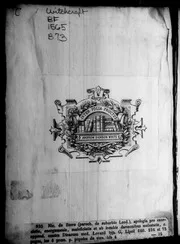
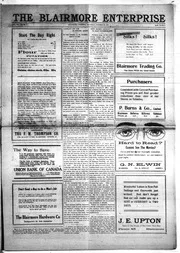
The Jamestown Bulletin 1904-07-16: Vol 1 Iss 2

 71
71

The Jamestown Bulletin 1904-07-16: Vol 1 Iss 2



Alaric Kestrel (Metaphysical Studies Reviewer) — A fascinating primary source, 'The Jamestown Bulletin' (1904-07-16) offers an unfiltered look at early 20th-century occultism. This issue delves into the nascent discussions surrounding witchcraft and paganism, providing invaluable context for understanding the evolution of these traditions. Its strength lies in its raw presentation of contemporary thought, ideal for scholars and practitioners tracing the lineage of modern pagan movements. While lacking formal academic rigor, its historical authenticity and the unique perspectives it preserves make it a compelling, albeit niche, read for anyone invested in the esoteric history of the United States.
📝 Description
71
The Jamestown Bulletin, Issue 2, published July 16, 1904, documented early 20th-century esoteric interests.
This issue of The Jamestown Bulletin from 1904 captures a moment when interest in witchcraft and paganism was growing. It presents various viewpoints that countered the rationalist thinking common at the time. Inside, readers find references to old rituals, less common philosophical ideas, and the ongoing search for knowledge outside normal understanding.
It is a valuable resource for anyone interested in the occult, whether they are a casual reader, a serious researcher, or a practitioner looking for historical connections. The publication encourages thought about humanity's lasting interest in the mysterious and the forces influencing our world. This specific issue acts as a window into a period when occult subjects were gaining new attention, providing material for considering beliefs, ceremonies, and the spiritual atmosphere of America in that era.
Published in 1904, this issue of The Jamestown Bulletin belongs to a period of renewed interest in esoteric traditions following the height of spiritualism and theosophy in the late 19th century. It reflects a niche within the broader occult revival, focusing on pagan and witchcraft themes that were less mainstream than other esoteric movements of the time. This publication likely engaged with currents of thought that sought alternative spiritual paths and historical connections, distinct from both established religion and emerging occult orders.
💡 Why Read This Book?
Unearth a forgotten corner of occult history. 'The Jamestown Bulletin' (1904-07-16) offers authentic, early 20th-century insights into witchcraft and paganism. It's essential for scholars tracing esoteric lineages, practitioners seeking historical context, and anyone curious about America's spiritual undercurrents before the modern pagan revival. Discover the voices that shaped foundational occult discourse.
⭐ Reader Reviews
Honest opinions from readers who have explored this book.
❓ Frequently Asked Questions
What is the primary subject matter of this issue?
This issue of 'The Jamestown Bulletin' primarily focuses on early 20th-century discussions and perspectives on witchcraft and paganism, reflecting the cultural and spiritual interests of its time.
Who is the author of 'The Jamestown Bulletin'?
The author is listed as Unknown, which is common for historical periodicals where content was often contributed by multiple individuals or presented anonymously.
What is the historical period covered by this publication?
This specific issue is dated July 16, 1904, placing it squarely in the early Edwardian era, a time of significant intellectual and spiritual ferment.
What is the significance of the 'microfilm' notation?
The 'microfilm' notation indicates that this digitized version was created from a microfilm copy, a common method for preserving and distributing historical documents.
How does this publication relate to other witchcraft literature?
It serves as a primary source, offering contemporary views that predate and inform later works on witchcraft and European/American paganism, providing a crucial historical link.
🔮 Key Themes & Symbolism
Resurgence of Ancient Beliefs
This issue captures a key moment when ancient pagan traditions and witchcraft, long suppressed or relegated to folklore, began to re-emerge into public discourse. It explores the fascination with pre-Christian spiritualities and the perceived wisdom held within these older systems. Readers will find discussions that hint at a growing dissatisfaction with purely materialistic or orthodox religious views, paving the way for a broader acceptance of alternative spiritual paths and the reinterpretation of historical magical practices. The articles likely touch upon the enduring power of nature worship and the cyclical understanding of life, death, and rebirth characteristic of many pagan traditions.
The Veil of the Esoteric
Look at the 'Veil of the Esoteric,' where 'The Jamestown Bulletin' acts as a conduit to hidden knowledge and symbolism. This periodical reflects a burgeoning interest in the unseen forces of the universe, the symbolic language of myth, and the practical application of occult principles. It speaks to a time when the lines between science, spirituality, and magic were more fluid, and individuals actively sought to understand the deeper, often mystical, underpinnings of existence. The content likely explores esoteric interpretations of religious texts, alchemical symbolism, and the psychological dimensions of spiritual seeking, appealing to those who believe in a reality beyond the mundane.
Early American Occult Landscape
This issue provides a unique window into the early 20th-century American occult landscape, showcasing the diverse spiritual currents that were shaping the nation's intellectual and mystical identity. It documents the nascent stages of organized paganism and witchcraft studies in the United States, moving beyond purely European contexts. The 'Bulletin' likely features discussions that bridge historical accounts with contemporary spiritual explorations, indicating a growing desire among Americans to connect with older traditions or forge new esoteric paths. It is important for understanding the roots of American occultism and its evolution into the present day.
💬 Memorable Quotes
Direct passages from the work, attributed to the author.
“Whispers from forgotten hearths ignite a nascent flame.”
— This phrase evokes the idea of ancient, perhaps suppressed, knowledge and practices being rediscovered and reawakened in the modern era.
“The moon's pale face, a mirror to veiled truths.”
— Suggests a connection to lunar cycles, intuition, and the hidden aspects of reality that are revealed through esoteric insight.
“Roots entwined with earth, seeking celestial grace.”
— Highlights the balance between grounded, earthly practices and the aspiration for higher spiritual understanding or connection.
“Symbols etched in time, keys to unlock the unseen.”
— Emphasizes the importance of symbolic language in esoteric traditions as a means to access deeper, hidden realities.
“The old ways stir, a current beneath the modern tide.”
— Implies that ancient spiritual forces and practices are subtly influencing or existing alongside contemporary society.
🌙 Esoteric Significance
Tradition
This publication is significant for its early documentation of the nascent revival of Western esoteric traditions, particularly paganism and witchcraft, in early 20th-century America. It represents a period where these practices were often veiled in secrecy or discussed in hushed tones, far from the widespread visibility of today. Its significance lies in capturing the foundational discussions, curiosities, and explorations that would eventually contribute to the modern pagan movement. It offers a glimpse into the intellectual and spiritual currents that sought to reclaim ancient wisdom and connect with pre-Christian European roots.
Symbolism
The symbolism inherent in 'The Jamestown Bulletin' would likely draw from archetypal imagery prevalent in occultism and paganism of the era. Expect references to lunar cycles, the elements (earth, air, fire, water), the tree of life, and symbols associated with fertility, nature, and the divine feminine. The very act of publishing such material in 1904, when mainstream society was largely dismissive or fearful of these topics, is itself a symbolic act of defiance and a beacon for those seeking alternative spiritual paths. The 'Bulletin' acts as a repository and disseminator of these potent, often ancient, symbols.
Modern Relevance
The relevance of 'The Jamestown Bulletin' to modern readers lies in its historical testimony to the enduring human quest for spiritual meaning beyond conventional dogma. It showcases the early roots of movements that have since blossomed into vibrant communities. For contemporary practitioners and scholars of witchcraft and paganism, it provides invaluable primary source material, offering insights into the challenges, discoveries, and evolving discourse of those who first sought to revive these traditions. It reminds us that the path of esoteric exploration is a continuous thread woven through history, connecting past seekers with present ones.
👥 Who Should Read This Book
This issue is a vital resource for several distinct groups. **Scholars and historians** of religion and occultism will find it an indispensable primary source for understanding the early 20th-century American esoteric landscape and the nascent stages of the witchcraft and pagan revival. **Practitioners of modern paganism and witchcraft** will benefit from tracing the lineage of their traditions, gaining historical context and appreciating the challenges faced by earlier generations. **Spiritual seekers** interested in the evolution of esoteric thought and the history of alternative spiritualities will discover a fascinating window into a bygone era. Finally, **curious general readers** interested in the hidden currents of history and the persistent human fascination with the mystical will find this an engaging and useful read.
📜 Historical Context
Published on July 16, 1904, 'The Jamestown Bulletin' emerges during the Edwardian era, a period characterized by rapid industrialization, scientific advancement, and a concurrent spiritual and intellectual searching. The late Victorian and early Edwardian periods witnessed a significant rise in interest in spiritualism, the occult, and alternative religions, partly as a reaction against burgeoning materialism and the perceived limitations of orthodox science and religion. Societies like the Hermetic Order of the Golden Dawn were influential, and figures like Aleister Crowley were active. This era saw a renewed academic and popular interest in folklore, mythology, and ancient religions, including paganism and witchcraft, often viewed through a lens of romanticism or evolutionary theory. 'The Jamestown Bulletin' therefore fits within a broader cultural milieu that was actively exploring the boundaries of belief, seeking deeper meaning, and rediscovering forgotten spiritual traditions.
📔 Journal Prompts
Reflect on the societal pressures that might have led individuals in 1904 to seek alternative spiritual paths like witchcraft or paganism.
Imagine you are a reader of 'The Jamestown Bulletin' in 1904. What questions would this issue raise for you, and how might you seek answers?
Consider the symbols mentioned or implied in this issue. How do these symbols resonate with your own understanding of the spiritual or natural world?
How has the public perception and practice of witchcraft and paganism evolved from 1904 to the present day? What factors have driven this change?
If you were to publish a spiritual bulletin today, what themes or forgotten knowledge would you seek to bring to light?
🗂️ Glossary
Esoteric
Relating to or accessible only by a small number of people with a specialized knowledge or interest; often referring to inner, mystical, or occult teachings and practices.
Paganism
A broad term encompassing various polytheistic, nature-based, and pre-Christian religions, often characterized by reverence for the earth, cycles of nature, and ancestral spirits.
Witchcraft
Historically, often associated with folk magic, herbalism, and ritual practices, sometimes framed within a spiritual or religious context, particularly in its modern revival.
Occult
Relating to supernatural, mystical, or magical powers, practices, or phenomena; often associated with hidden knowledge or secret arts.
Edwardian Era
The period in British history corresponding to the reign of King Edward VII (1901–1910), known for its social change, technological advancement, and cultural developments.
This book appears in 2 collections
🔮 Readers Also Liked
Browse all →







From the “Witchcraft” Collection
View all →


![D. [i. e., Doktor] Balthasar Bekkers reformierten Predigers in Amsterdam bezauberte Welt. ... 1781: Vol 2 Iss 81](/img/thumb/d-i-e-doktor-balthasar-bekkers-reformierten-predigers-in-amsterdam-bezauberte-welt-1781-vol-2-iss-81-bekker-balthasar-1634-1698.webp)

More Free Witchcraft & Paganism Books
View all →