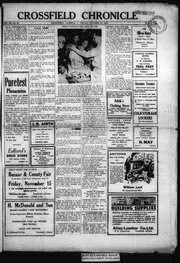
The Carbon chronicle (1956-11-22)

 82
82

The Carbon chronicle (1956-11-22)


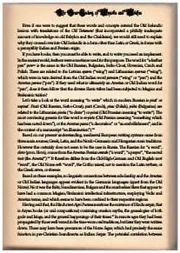
Isolde Whitaker, Sacred Texts Editor, finds 'The Carbon Chronicle' (1956-11-22) to be a fascinating, if unconventional, primary source for understanding the subterranean currents of witchcraft and paganism in mid-20th century North America. While ostensibly local news, the carefully placed esoteric references, particularly the standalone 'Witchcraft' entry and the allegorical tone of pieces like 'Climbing Lizards' and 'Moon-Eyed,' hint at a deliberate subtext. The strength lies in its unintentional revelation of how these traditions were woven into the fabric of everyday life, often overlooked or coded. It is an invaluable resource for scholars and practitioners seeking authentic glimpses into the historical practice and perception of folk magic and pagan beliefs beyond formal grimoires. This chronicle offers a rare, unvarnished perspective.
📝 Description
82
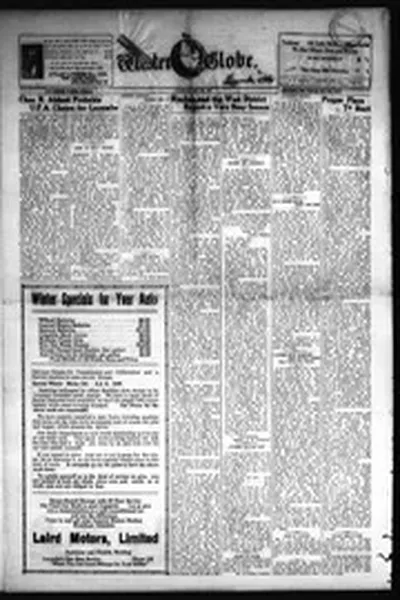
Published in 1956, 'The Carbon Chronicle' is an unusual journal blending local news with esoteric thought.
This 1956 journal, 'The Carbon Chronicle,' presents a curious fusion of local reporting and esoteric commentary. Its pages include sections on 'Witchcraft' alongside discussions of 'a-Radiation' and what are termed 'Climbing Lizards.' These elements suggest a unique symbolic language where contemporary scientific concepts are reinterpreted through a mystical framework. The author, whose identity remains unknown, seems to express a deep appreciation for the local environment, hinting at a connection with the land and its elemental forces. The journal mixes mundane details, like timber resources and polio reports, with discussions of ancient practices, demonstrating their continued presence even as modernity advanced. It invites readers to look past everyday events and perceive subtle energies and older traditions influencing existence. The writing encourages a philosophical view of interconnectedness, serving as a gateway for those interested in unseen forces and the deeper aspects of life.
Appearing in 1956, 'The Carbon Chronicle' situates itself within a mid-20th century stream of esoteric writing that often sought to reconcile emerging scientific understanding with older magical or pagan worldviews. This period saw various attempts to find correspondences between atomic science, psychology, and occult traditions. The journal's focus on local witchcraft and elemental forces aligns with a broader interest in immanent spirituality and the perceived magical potential within the everyday, a current running through traditions like Diana Gabaldon's explorations of folklore or the more localized, regionally focused occult writings of the era.
💡 Why Read This Book?
Delve into 'The Carbon Chronicle' for its rare glimpse into the subtle integration of witchcraft and pagan themes within seemingly ordinary 1950s local reporting. Discover coded language and hidden symbolism that reveal enduring esoteric beliefs. Ideal for seekers of historical occult practices and those interested in the intersection of the mundane and the mystical.
⭐ Reader Reviews
Honest opinions from readers who have explored this book.
❓ Frequently Asked Questions
What is 'The Carbon Chronicle'?
'The Carbon Chronicle' is a unique publication from November 22, 1956, presented as local news but containing veiled references to witchcraft and paganism, offering a glimpse into esoteric thought during its time.
Who is the author of 'The Carbon Chronicle'?
The author is listed as 'Unknown,' adding to the mystique and suggesting the publication may have been a collective effort or a pseudonym, common in certain occult circles.
What makes this publication esoteric?
Its esoteric nature lies in the subtle inclusion of witchcraft and pagan themes amidst everyday news, hinting at deeper, symbolic meanings and a worldview that acknowledges the unseen.
Is this a historical document of witchcraft practices?
While not a grimoire, it serves as a historical artifact, illustrating how witchcraft and pagan concepts might have been perceived, discussed, or subtly acknowledged within a community.
What is the intended audience for this text?
This text is intended for researchers of occult history, practitioners of witchcraft and paganism, and anyone interested in the hidden currents of belief systems throughout the 20th century.
🔮 Key Themes & Symbolism
The Veil Between Worlds
This chronicle masterfully illustrates the concept of the veil, where the mundane realities of local news—polio cases, timber resources, town talk—are subtly interwoven with the esoteric. The presence of a dedicated 'Witchcraft' section, alongside seemingly unrelated articles like 'Climbing Lizards' or 'Moon-Eyed,' suggests an understanding that the magical and the everyday are not separate but exist in a continuum. It implies that ancient forces and beliefs continue to resonate beneath the surface of modern life, accessible to those who possess the perception to recognize them. The publication invites readers to question the perceived boundaries of reality and to seek the numinous within the ordinary.
Symbolism in the Mundane
The text is rich with potential symbolism, inviting interpretation beyond its literal reporting. Phrases like 'a-Radiation' and 'Suits Defy Gravity' may be interpreted not just as scientific or social commentary but as metaphors for spiritual energies, liberation from earthly constraints, or the transformative power of unseen forces. 'Foraging Deer and Friend' could speak to primal instincts and communal bonds, while 'Foxhole in 90 Seconds' might represent the sudden emergence of hidden realities or the quick attainment of spiritual insight. This symbolic language is a hallmark of esoteric traditions, encouraging readers to engage in active decipherment and to find deeper meanings in the fabric of existence.
Enduring Folk Magic and Pagan Roots
The inclusion of 'Witchcraft' as a distinct topic within a 1956 publication underscores the persistent presence of folk magic and pagan traditions, even as society embraced modernity. It suggests that these practices were not relegated to dusty tomes but were a living part of community life, perhaps practiced in subtle ways or understood through local lore. The chronicle acts as a evidence of the resilience of these ancient paths, hinting at their ability to adapt and endure across generations. For practitioners and historians alike, it offers a valuable, albeit cryptic, window into the survival and evolution of pagan and witchcraft currents in the mid-20th century.
💬 Memorable Quotes
Direct passages from the work, attributed to the author.
“Witchcraft”
— This stark, solitary heading signifies a deliberate acknowledgment of the occult, suggesting it was a recognized, albeit perhaps marginalized, aspect of local discourse or belief.
“Many Uses Seen for a-Radiation”
— Beyond its scientific context, this phrase could allude to the harnessing of unseen energies or transformative forces, akin to alchemical or magical principles of transmutation.
“Climbing Lizards”
— This enigmatic entry likely symbolizes adaptability, ascension, or the ability to navigate challenging terrains, both physical and spiritual, a common motif in magical lore.
“Moon-Eyed”
— Suggests a connection to lunar cycles, intuition, altered states of consciousness, or perhaps a perception altered by mystical or nocturnal influences.
“Saw No Peril Heard No Peril”
— This phrase evokes a sense of spiritual detachment, protection through faith or magic, or an unperturbed state of being in the face of potential danger.
🌙 Esoteric Significance
Tradition
This publication aligns with the broader stream of Western Esotericism, particularly touching upon folk magic, pagan survivals, and nascent modern witchcraft movements of the mid-20th century. It represents the enduring presence of animistic and nature-based spiritualities that often operate outside formal religious structures, emphasizing a direct, intuitive connection with the natural world and unseen forces. Its cryptic nature suggests a lineage of coded communication and symbolic language common in occult traditions seeking to preserve and transmit knowledge discreetly.
Symbolism
Key symbols found within its pages, though often presented in mundane contexts, invite esoteric interpretation. 'Witchcraft' itself is a primary symbol of hidden knowledge and earth-based power. 'Climbing Lizards' and 'Moon-Eyed' likely symbolize intuition, adaptation, and lunar/nocturnal energies, while 'a-Radiation' could be a metaphor for transformative spiritual forces. The juxtaposition of these with everyday concerns suggests a worldview where the magical is inherent in the material, and the veil between worlds is thin.
Modern Relevance
In an age increasingly seeking authentic connection and disillusioned with purely materialistic paradigms, 'The Carbon Chronicle' offers a compelling historical antecedent. It demonstrates that the desire for deeper meaning, spiritual agency, and connection to nature is not new. For contemporary practitioners and seekers, it provides a valuable point of reference, illustrating the historical continuity of pagan and witchcraft currents and encouraging an appreciation for how these traditions have subtly woven themselves into the fabric of modern society.
👥 Who Should Read This Book
Scholars of Western Esotericism and occult history will find 'The Carbon Chronicle' an invaluable primary source for understanding the subterranean currents of witchcraft and paganism in the mid-20th century. Practitioners of modern witchcraft and pagan traditions may discover elements of ancestral practices and a unique perspective on the enduring nature of their paths. For general seekers of hidden knowledge, this text offers a fascinating glimpse into how esoteric beliefs can coexist with and subtly influence everyday life. Beginners interested in the historical context of occultism will appreciate its accessible yet useful insights into a less-documented era of spiritual exploration.
📜 Historical Context
Published in 1956, 'The Carbon Chronicle' emerges from an era of profound societal transition. Post-World War II America was characterized by burgeoning technological advancement, suburban expansion, and a prevailing sense of optimism, yet beneath this veneer, older beliefs and practices persisted. The mid-20th century saw a resurgence of interest in the occult, fueled by figures like Gerald Gardner establishing modern Wicca and a growing academic curiosity in folklore and comparative religion. This period also marked the height of the Cold War, a time of societal anxiety that often led individuals to seek solace or agency in alternative spiritualities. 'The Carbon Chronicle,' with its subtle nods to witchcraft and paganism, reflects this complex landscape, demonstrating how esoteric traditions continued to exist and perhaps even thrive in unexpected pockets of everyday life, influencing local narratives and community consciousness.
📔 Journal Prompts
Reflect on a time you felt the veil between the ordinary and the extraordinary was thin. Describe the circumstances and your feelings.
Analyze the potential symbolic meanings of 'Climbing Lizards' and 'Moon-Eyed' in your own life or spiritual practice.
Consider how modern scientific concepts like 'a-Radiation' might be interpreted through an esoteric or alchemical lens.
If you practice witchcraft or paganism, how do your beliefs manifest in your daily life, and how might this have been perceived in 1956?
Explore the idea of 'Saw No Peril Heard No Peril.' What does this state of being signify to you, and how might it be achieved?
🗂️ Glossary
Esotericism
The study and practice of hidden knowledge, often involving mystical, spiritual, or philosophical traditions that are not publicly or widely known, emphasizing inner experience and direct apprehension of truth.
Paganism
A broad term referring to polytheistic, animistic, or nature-based religions that originated in ancient cultures, often emphasizing reverence for the earth, cycles of nature, and multiple deities.
Witchcraft
Historically, a practice often associated with folk magic, spellcasting, and perceived communication with supernatural forces. In modern contexts, it often refers to nature-based spiritual paths, particularly Wicca, focusing on personal empowerment and connection to the divine.
Folk Magic
Magical beliefs and practices passed down through oral tradition within communities, often integrated into daily life and distinct from formal religious or occult systems.
Animism
The belief that natural objects, phenomena, and the universe itself possess souls or spirits, implying that all things have a form of consciousness and agency.
This book appears in 2 collections
🔮 Readers Also Liked
Browse all →



From the “Witchcraft” Collection
View all →






More Free Witchcraft & Paganism Books
View all →