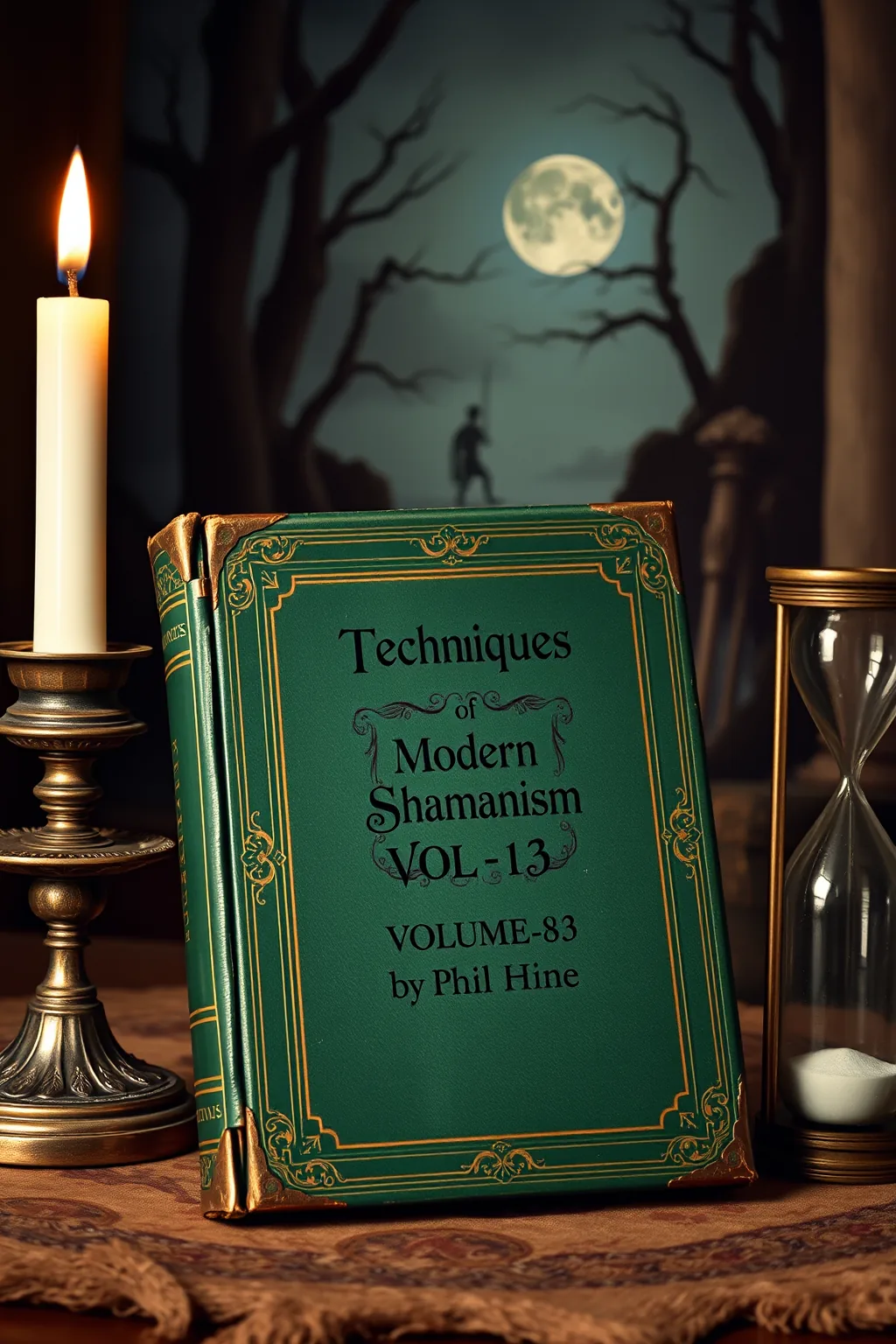
Techniques of Modern Shamanism VOL 1-3 by Phil Hine
 75
75

Techniques of Modern Shamanism VOL 1-3 by Phil Hine



Sophia Crane (Associate Editor) — Phil Hine's 'Techniques of Modern Shamanism' is a vital compendium for any serious practitioner of contemporary pagan and witchcraft traditions. Hine offers a rare blend of academic rigor and practical application, demystifying complex shamanic concepts without sacrificing their inherent power. The trilogy’s strength lies in its sequential progression, building from fundamental sensory awareness to the more intricate explorations of altered states and group facilitation. This work is an indispensable resource for those seeking to integrate authentic shamanic practices into their magical or spiritual path, providing clear, actionable techniques to deepen one's connection to the spirit world and enhance personal efficacy. Its accessible yet profound approach makes it a cornerstone for both aspiring and seasoned practitioners.
📝 Description
75
Phil Hine published 'Techniques of Modern Shamanism' Volumes 1-3, a practical guide to altered states.
Phil Hine's three volumes, 'Techniques of Modern Shamanism', present practical methods for engaging with altered states of consciousness. The work begins with exercises designed to sharpen sensory perception, encouraging readers to notice subtle energies and unseen phenomena within everyday life. This focus on acute awareness serves as a basis for further exploration. The books then move into methods for inducing and working with trance states. These sections address the personal transformations that can arise from such experiences. Hine also includes practical advice on leading group sessions aimed at facilitating shared altered states. The author's approach aims to make shamanic principles accessible for contemporary practitioners. The trilogy emphasizes direct experience and personal application of these techniques.
This work fits within the modern pagan and witchcraft revival, drawing inspiration from indigenous shamanic practices but reinterpreting them for a Western, secular context. It is part of a broader trend in esoteric circles that seeks to reclaim and adapt animistic and ecstatic traditions. Unlike purely academic studies, Hine's books focus on direct experiential training, aiming to equip practitioners with tools for personal spiritual development. The emphasis is on the practical application of techniques rather than theoretical debate.
✍️ Author
Phil Hine is a collection of practical ex
This is a list of episodes for Perry Mason, an American legal drama series that aired on CBS television for nine seasons (September 21, 1957 – May 22, 1966). The title character, portrayed by Raymond Burr, is a fictional Los Angeles criminal defense lawyer…
💡 Why Read This Book?
This essential trilogy offers a direct, practical path to expanding consciousness and deepening your connection to the unseen realms. Ideal for witches, pagans, and spiritual seekers, it provides actionable techniques for enhancing sensory perception and exploring trance states. Discover how to perceive the extraordinary within the ordinary and unlock your innate shamanic potential, transforming your magical practice and personal understanding of reality.
⭐ Reader Reviews
Honest opinions from readers who have explored this book.
❓ Frequently Asked Questions
What is the core philosophy behind 'Techniques of Modern Shamanism'?
The core philosophy centers on enhancing ordinary awareness to perceive the extraordinary. It emphasizes practical, sensory-based exercises to bridge the gap between the mundane and the spiritual, empowering individuals to access deeper levels of consciousness and connection to the natural world.
Are these techniques suitable for beginners?
Yes, the initial volumes are designed to build a strong foundation through basic sensory exercises, making them highly accessible for beginners eager to explore shamanic principles.
What distinguishes 'Modern Shamanism' from traditional forms?
Modern Shamanism, as presented by Hine, adapts ancient practices for contemporary life, focusing on accessible techniques and psychological understanding rather than solely relying on strict lineage or cultural context. It’s about the core principles of altered states and spirit connection.
Can these techniques be practiced alone or do they require a group?
The techniques are designed for both solo practice and group work. Early exercises focus on individual sensory development, while later sections explore group dynamics for facilitating trance states, offering versatility for different practitioners.
What kind of 'extra-ordinary' experiences can one expect?
One can expect heightened sensory perception, vivid inner imagery, altered states of consciousness, a deeper connection to nature and spirit guides, and profound shifts in personal perspective and understanding of reality.
🔮 Key Themes & Symbolism
Sensory Enhancement and Expanded Perception
This theme looks at the foundational aspect of Hine's work: the deliberate cultivation of heightened sensory awareness. It explores how by consciously focusing on and refining our engagement with the five senses, we can begin to perceive subtle energies, hidden patterns, and the deeper currents of reality that are often obscured by ordinary perception. This involves practical exercises designed to break down habitual filters and open the mind and body to a richer, more nuanced experience of the world, transforming the mundane into a range of subtle magic and potent symbolism.
The Nature and Induction of Trance States
Central to shamanic practice is the ability to enter altered states of consciousness. This theme examines the various methods and psychological landscapes involved in inducing trance, from simple meditation techniques to more immersive practices. It explores how these states facilitate direct connection with the spirit world, offer useful insights, and enable personal transformation. Hine provides practical guidance on navigating these liminal spaces safely and effectively, emphasizing the psychological underpinnings that support conscious journeying beyond the ordinary waking consciousness.
Group Dynamics and Facilitation in Shamanic Work
Recognizing the communal aspect of many spiritual traditions, this theme addresses the dynamics involved when individuals engage in shamanic practices together. It offers insights into how to create supportive environments for group trance work, the roles of facilitators and participants, and the ethical considerations involved. Hine outlines practical strategies for fostering collective consciousness and shared spiritual experience, demonstrating how group energy can amplify personal journeys and contribute to a deeper sense of connection and community among practitioners.
💬 Memorable Quotes
Direct passages from the work, attributed to the author.
“The extraordinary lies within the ordinary.”
— This philosophical cornerstone suggests that magic and spiritual depth are not separate from everyday life, but rather accessible through a shift in perspective and awareness. It empowers the reader to find the sacred in the mundane.
“Attune to the subtle energies that combine reality.”
— This speaks to the core of shamanic perception, urging practitioners to develop sensitivity to the unseen forces and energetic connections that bind the universe together, moving beyond a purely materialist worldview.
“Trance is a gateway, not an escape.”
— This clarifies the purpose of altered states in shamanism, emphasizing their function as tools for insight, healing, and connection, rather than as a means of avoiding reality. It highlights the active and purposeful nature of shamanic journeying.
“Awareness is the first step to transformation.”
— This foundational principle underscores the importance of mindful observation and present-moment consciousness. By increasing our awareness, we unlock the potential for profound personal change and spiritual growth.
💡 Key Ideas
Editorial paraphrase of the work's core concepts — not direct quotes.
Extend your perceptions beyond the ordinary.
This quote is an invitation to actively engage with the world on a deeper, more subtle level, encouraging the reader to look beyond surface appearances and embrace the hidden potentials of their senses.
🌙 Esoteric Significance
Tradition
This work draws heavily from animistic and shamanic traditions, reinterpreting their core principles for a modern, Western audience. It bridges the gap between ancient indigenous practices and contemporary witchcraft and paganism, emphasizing a direct, experiential relationship with the spirit world and the natural environment. The focus is on universal archetypes and energetic principles rather than strict adherence to specific cultural lineages, making it a foundational text for eclectic modern spiritual paths.
Symbolism
Hine's work encourages an understanding of symbolism not just as static icons, but as living energies and gateways to deeper consciousness. The exercises themselves become symbolic acts, transforming sensory input into spiritual understanding. Concepts like the 'veil' between worlds, the 'spirit' inherent in all things, and the journey into 'trance' serve as potent symbols for the transformative process, inviting readers to interpret their own experiences through a rich symbolic language.
Modern Relevance
In an age often characterized by disconnection from nature and a deficit of direct spiritual experience, 'Techniques of Modern Shamanism' offers a powerful antidote. Its emphasis on practical, sensory-based exercises empowers individuals to reconnect with their innate spiritual capacities and the living world around them. The techniques are adaptable, providing tools for psychological well-being, enhanced creativity, and a deeper sense of purpose, making shamanic principles relevant and accessible for contemporary seekers of meaning and empowerment.
👥 Who Should Read This Book
This trilogy is an essential read for aspiring and seasoned practitioners within witchcraft, paganism, and general esoteric studies. Beginners seeking a grounded introduction to expanding consciousness and exploring altered states will find the foundational exercises invaluable. Experienced practitioners looking to deepen their sensory awareness, refine their trance work, or understand group facilitation techniques will discover practical, actionable insights. Spiritual seekers yearning for a more direct, experiential connection to the unseen realms will find this work a potent guide to self-discovery and empowerment.
📜 Historical Context
Published in an era increasingly marked by a return to nature-based spiritualities and a growing disillusionment with purely materialistic worldviews, Phil Hine's 'Techniques of Modern Shamanism' emerged as a vital text within the burgeoning neo-pagan and witchcraft revival of the late 20th and early 21st centuries. This period saw a significant interest in reclaiming ancient practices and finding relevance in indigenous wisdom traditions, albeit often adapted for Western contexts. Hine’s work distinguished itself by offering a practical, accessible, and explained approach to shamanism, moving it from the field of esoteric study into the hands of everyday practitioners. It resonated with a generation seeking authentic spiritual experience and personal empowerment outside of established religious structures, contributing significantly to the discourse on contemporary magical and spiritual development.
📔 Journal Prompts
Describe a common object in detail, focusing on sensory input beyond sight. What hidden qualities emerge?
During a sensory exercise, what unexpected thoughts or feelings arose? How did you navigate them?
Explore the sensation of stillness. What does it feel like in your body and mind? What insights does it offer?
If you were to guide someone into a mild trance state, what initial steps would you take to create a safe and receptive atmosphere?
Reflect on a moment when you felt a strong connection to nature. What senses were most engaged, and what did this connection signify?
🗂️ Glossary
Altered State of Consciousness
A mental state distinct from ordinary waking consciousness, characterized by shifts in perception, thought, emotion, and memory. Often induced through meditation, trance, or other focused practices.
Sensory Awareness
The practice of consciously paying attention to and engaging with sensory input from the external environment and one's own body, often with the goal of deepening perception and connection.
Trance
A state of focused consciousness where awareness is directed inward or towards specific spiritual or visionary experiences, often characterized by dissociation from ordinary reality and heightened receptivity to subtle energies.
Spirit World
In shamanic and animistic contexts, the non-physical realm inhabited by spirits, ancestors, deities, and other sentient energies that can be interacted with through altered states of consciousness.
Liminal Space
A transitional state or place, often associated with altered states of consciousness, where boundaries blur and profound transformation or insight can occur. It is the 'in-between' realm.
This book appears in 2 collections
🔮 Readers Also Liked
Browse all →






From the “Witchcraft” Collection
View all →






More Free Witchcraft & Paganism Books
View all →![A Witch of the Hills, v. 2 [of 2]](/img/thumb/a-witch-of-the-hills-v-2-of-2-warden-florence.webp)