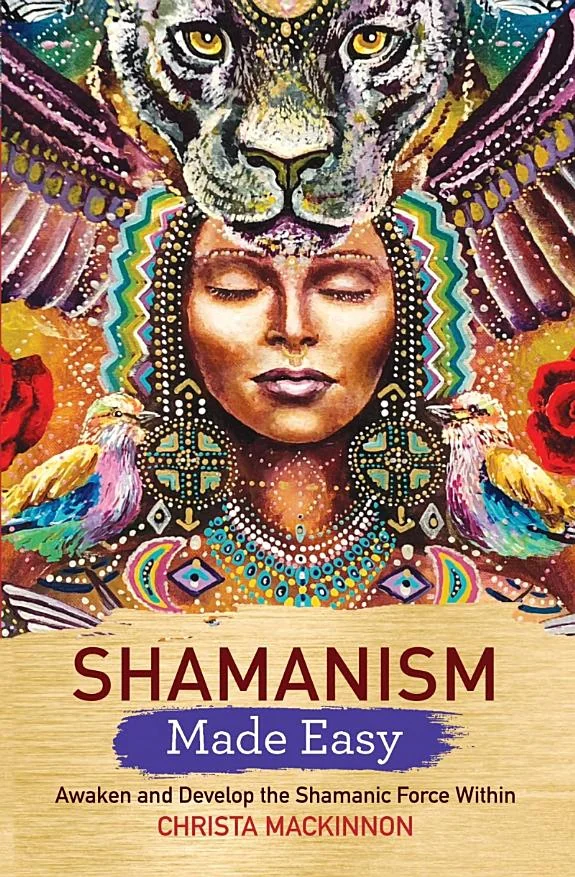
Shamanism Made Easy
 72
72

Shamanism Made Easy
Christa Mackinnon's "Shamanism Made Easy" attempts to demystify a complex and ancient spiritual practice, largely succeeding through a clear, psychotherapist-informed lens. The book's strength lies in its structured approach, breaking down shamanic concepts into digestible parts for the uninitiated. Mackinnon’s background is evident in her emphasis on healing and wholeness, framing shamanic work as a complementary path to psychological well-being. A particularly insightful section discusses the crucial role of intention and energetic boundaries, a vital but often overlooked aspect for newcomers. However, the title's promise of ease might slightly undersell the deep commitment and potential challenges inherent in genuine shamanic practice. While comprehensive for an introduction, it occasionally simplifies nuanced aspects of cross-cultural shamanic traditions. Despite this, the work serves as a commendable and grounded starting point for exploring this profound lineage.
📝 Description
72
Christa Mackinnon's Shamanism Made Easy (2010) simplifies ancient spirit connection techniques.
This book serves as a straightforward introduction to shamanism, a practice with roots stretching back to prehistory. It defines shamanism as a worldview and a method for engaging with spiritual energies, explaining how these practices have historically fostered community health and individual healing. The text clarifies the shaman's role as a spiritual intermediary, often called to their path by unseen forces and acting as a bridge between the material world and the spirit dimensions.
Designed for those new to shamanic traditions who find other texts daunting, this guide offers practical techniques for personal spiritual growth and healing. It also provides a lens for understanding indigenous wisdom systems. Readers with backgrounds in psychotherapy or comparative spirituality will find its approach relevant. The book requires no prior knowledge, making it suitable for absolute beginners. It details core concepts like spirit allies, the structure of the spirit world (Upper, Middle, and Lower Worlds), and the use of altered states of consciousness.
Shamanism is one of humanity's oldest spiritual systems, predating recorded history and appearing in diverse forms across cultures. Mackinnon positions it not as a single religion but as a universal set of techniques for interacting with the spirit world. This approach emphasizes shamanism's adaptability and its persistent role in human spiritual and psychological development throughout different societies and eras. The book highlights its foundational place in understanding human spiritual traditions.
💡 Why Read This Book?
• Understand the foundational principles of shamanism, including the concept of the shaman as an intermediary between worlds, as presented in Chapter 1, "What Is Shamanism?", allowing for a clear grasp of its core function. • Learn about the shamanic journey technique, a specific method for accessing spirit realms discussed in Chapter 3, "The Shamanic Journey", providing a practical skill for spiritual exploration. • Gain insight into the historical prevalence of shamanism, recognizing its presence in all regions of the world since antiquity, as detailed in the historical context sections, fostering an appreciation for its global and enduring nature.
⭐ Reader Reviews
Honest opinions from readers who have explored this book.
❓ Frequently Asked Questions
What is the primary purpose of shamanic practices as described in Shamanism Made Easy?
The book explains that shamanic practices are primarily aimed at achieving healing and wholeness, both for individuals and their communities. Shamans act as intermediaries, working with spirit energies to safeguard well-being.
Who is Christa Mackinnon and what is her background?
Christa Mackinnon is the author of Shamanism Made Easy. She is a trained psychotherapist, which influences her approach to presenting shamanic concepts with an emphasis on psychological and spiritual integration.
When was Shamanism Made Easy first published?
Shamanism Made Easy by Christa Mackinnon was first published on November 20, 2018. This date places it within contemporary discussions of esoteric and spiritual practices.
Does the book require prior knowledge of shamanism?
No, the book is designed as an introductory guide. It aims to make shamanism accessible to those with no prior experience, explaining its core concepts and practices in a clear manner.
What are the 'spirit energies' mentioned in the book?
The book refers to 'spirit energies' as the forces and entities encountered in non-ordinary reality. These are understood as aspects of the spiritual world with which shamans interact for healing and guidance.
What does it mean for a shaman to be 'called by spirit'?
Being 'called by spirit' implies that an individual is chosen or compelled by spiritual forces to undertake the path of a shaman. This is often seen as a profound and life-altering initiation.
🔮 Key Themes & Symbolism
Spirit Intermediaries
The text emphasizes the shaman's role as a bridge between the physical world and the spirit realms. This intermediary function is crucial for accessing spiritual guidance, healing energies, and maintaining balance within a community. Mackinnon clarifies that this role is often not a choice but a calling, as shamans are 'called by spirit' to their path, undertaking a life-changing journey to serve others.
Healing and Wholeness
A central theme is the application of shamanic practices for achieving personal and communal healing. The book presents shamanism as a potent wisdom tradition capable of restoring balance and well-being. Mackinnon, drawing from her psychotherapeutic background, frames these ancient techniques as tools that can address psychological, emotional, and spiritual fragmentation, leading to a greater sense of wholeness.
Connection to Spirit Energies
The book explains shamanism as a practice centered on establishing and maintaining a connection with spirit energies. This involves learning to perceive, interact with, and work alongside these non-physical forces. The goal is often to enlist their aid for the benefit of the community and its people, fostering a reciprocal relationship between the human and spirit worlds.
Ancient Wisdom Traditions
Shamanism Made Easy positions shamanism as one of the oldest and most enduring wisdom traditions known to humanity. It highlights the global prevalence of shamanic practices, found in all regions of the world, underscoring its deep roots in human history and its persistent relevance across diverse cultures and time periods.
💬 Memorable Quotes
Direct passages from the work, attributed to the author.
“Shamans are intermediaries between worlds and are usually 'called by spirit' to start this life-changing path.”
— This highlights the unique role of the shaman as a conduit between different realities and emphasizes the often involuntary, spiritual nature of their vocation, suggesting a profound personal transformation.
“An introductory guide to one of the oldest and most enduring wisdom traditions, and how its powerful practices can help you find healing and wholeness.”
— This expresses the book's objective: to provide an accessible introduction to shamanism, presenting its practices as potent tools for achieving comprehensive healing and a sense of complete well-being.
“A trained psychotherapist, Christa Mackinnon wa”
— This fragment points to the author's professional background, suggesting that her approach to shamanism is informed by psychological principles, likely offering a grounded and integrated perspective on spiritual practices.
“connect with spirit energies and work with them to guard the wellbeing of our community and its people”
— This emphasizes the communal and protective aspects of shamanism, framing the engagement with spirit not as a solitary pursuit but as a service dedicated to the health and safety of a collective.
💡 Key Ideas
Editorial paraphrase of the work's core concepts — not direct quotes.
Shamanism is an ancient tradition, found in all regions of the world, in which we connect with spirit energies and work with them to guard the wellbeing of our community and its people.
This quote succinctly defines shamanism's core elements: its ancient, global nature, the practice of engaging with spirit energies, and its altruistic purpose of community protection and well-being.
🌙 Esoteric Significance
Tradition
Shamanism is not a singular, codified tradition like Hermeticism or Kabbalah, but rather a set of practices found across a vast array of indigenous cultures. Mackinnon's work engages with shamanism as a universal spiritual technology, focusing on its functional aspects – connecting with spirits, journeying, and healing – rather than aligning it strictly with any one Western esoteric lineage. It represents a departure from formalized Western esoteric systems by emphasizing direct experience and relationship with diverse spirit domains.
Symbolism
While the book is introductory, it touches upon the symbolic language inherent in shamanic work. The concept of the 'spirit world,' often conceptualized as Upper, Middle, and Lower Worlds, serves as a symbolic map for navigating non-ordinary reality. Spirit allies, whether animal spirits or other entities, function as powerful symbols of inner resources, guidance, and protection, representing archetypal energies and wisdom accessible through shamanic practice.
Modern Relevance
Contemporary thinkers and practitioners in fields like ecopsychology, depth psychology, and consciousness studies increasingly draw upon shamanic principles. Mackinnon's work contributes to this by making accessible the core concepts of spirit connection and healing, relevant to modern anxieties about disconnection from nature and self. It informs current trends in somatic healing and trauma-informed care, which often explore non-ordinary states and relational healing with unseen forces.
👥 Who Should Read This Book
• Individuals new to spiritual or esoteric studies seeking a grounded introduction to ancient healing practices, offering a clear overview of shamanic principles. • Those interested in comparative religion or anthropology wanting to understand the global prevalence and function of shamanism beyond academic texts. • People experiencing personal challenges or seeking deeper self-understanding who are open to exploring alternative methods for healing and spiritual growth.
📜 Historical Context
Published in 2018, Christa Mackinnon's "Shamanism Made Easy" emerged during a period of renewed interest in indigenous spiritual practices and alternative healing modalities. Shamanism, recognized as a practice existing across continents for millennia, found itself increasingly explored within academic circles (e.g., by scholars like Michael Harner) and popular spiritual movements. The book arrives after decades of anthropological study and cross-cultural shamanism movements, such as those inspired by the Foundation for Shamanic Studies, founded in 1979. While not directly engaging with specific contemporary thinkers or facing overt censorship, its accessible format counters the sometimes dense, academic tone of earlier works on the subject. It positions itself as a bridge for modern individuals seeking connection to these ancient traditions, diverging from purely academic ethnography and focusing on practical application.
📔 Journal Prompts
Reflect on the concept of being 'called by spirit' and its implications for personal destiny.
Consider the role of intermediaries between worlds and how this applies to modern life.
Explore the potential for healing and wholeness through connection with 'spirit energies'.
Analyze the historical endurance of shamanism across diverse global cultures.
Contemplate the balance between individual healing and community well-being in shamanic practice.
🗂️ Glossary
Shaman
An individual who acts as an intermediary between the visible world and the spirit world, often possessing the ability to heal and guide their community through spiritual means.
Spirit Energies
The forces, entities, and intelligences encountered in non-ordinary reality, which shamans interact with for knowledge, healing, and maintaining balance.
Intermediary
One who acts as a go-between or mediator, in this context, a person who facilitates communication or passage between the physical and spiritual realms.
Wholeness
A state of being complete, integrated, and healthy, encompassing physical, emotional, mental, and spiritual aspects of an individual or community.
Wisdom Tradition
A system of knowledge, beliefs, and practices passed down through generations, often encompassing spiritual, ethical, and practical guidance for living.
Called by Spirit
The experience of being chosen or compelled by spiritual forces to undertake the path of a shaman, often involving significant personal transformation.
Community Well-being
The overall health, safety, and harmonious functioning of a group of people, which shamanic practices aim to support and protect.
This book appears in 1 collection
🔮 Readers Also Liked
Browse all →







From the “Paganism” Collection
View all →





More Free Witchcraft & Paganism Books
View all →