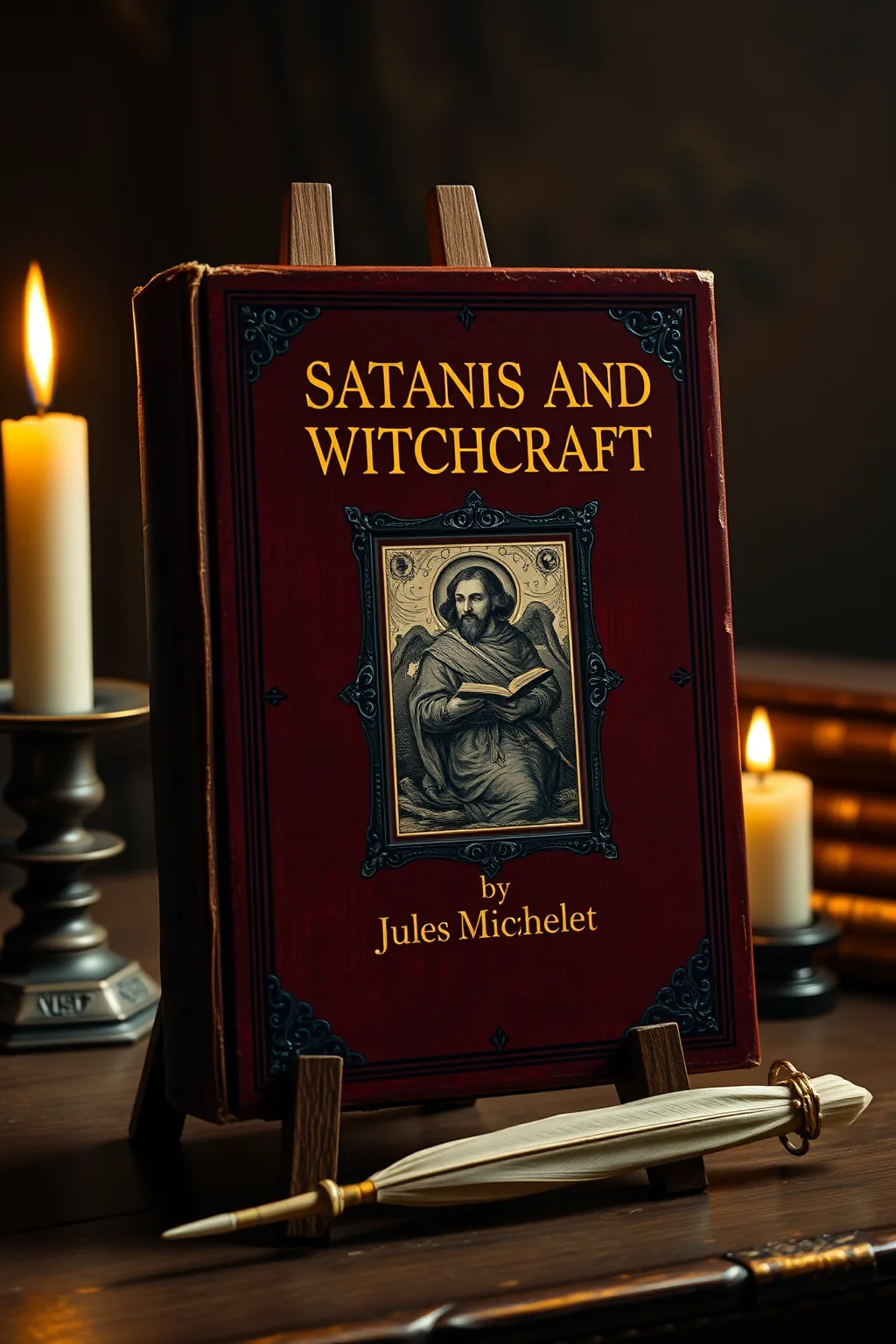
Satanism and Witchcraft: A Study in Medieval Superstition
 73
73

Satanism and Witchcraft: A Study in Medieval Superstition



Evander Ashcroft (Alchemy & Hermeticism Editor) — Jules Michelet's 'Satanism and Witchcraft' remains a foundational text for understanding the historical construction of diabolical belief. Eschewing simplistic explanations, Michelet offers a nuanced psychological and sociological lens, revealing how superstition served as both a societal control mechanism and a mirror to repressed desires. His work illuminates the symbolic landscape of medieval heresy, presenting a compelling argument for the witch as a figure of rebellion against oppressive dogma. This book is indispensable for scholars of occult history, practitioners seeking to understand the roots of modern witchcraft's relationship with historical narratives, and anyone fascinated by the enduring power of collective fear and forbidden knowledge.
📝 Description
73
Jules Michelet published 'Satanism and Witchcraft' in 1862, examining medieval beliefs.
Michelet's 1862 study reconstructs medieval Europe's fervent beliefs in sorcery and demonic influence. He argues that these superstitions were not simply ignorance but reflected deep psychological and social anxieties of the time. The book examines how the perceived threat of Satan and the practice of witchcraft became central to the era's worldview, intertwined with religious fervor and political power.
Michelet analyzes the symbolic language used to describe heresy and the secret rituals associated with witchcraft. He shows how societal fears were often projected onto marginalized individuals, turning them into symbols of defiance and forbidden power. The work offers insight into the collective psyche of medieval society and its enduring fascination with the occult, even in its most terrifying forms.
This study engages with the historical roots of beliefs often categorized as esoteric. Michelet's analysis of the medieval mindset, its fears, and its symbolic systems touches upon themes relevant to understanding the historical development of occult traditions. It places the perceived practice of magic and devil worship within a specific historical and psychological framework, showing how such beliefs functioned within a society, a perspective valuable for those interested in the historical underpinnings of esoteric thought.
💡 Why Read This Book?
Uncover the psychological roots of medieval diabolism. Michelet's 'Satanism and Witchcraft' offers a compelling exploration of how fear, faith, and societal anxieties coalesced into the widespread belief in witchcraft. It's an essential read for scholars, practitioners, and seekers of hidden histories who wish to understand the archetypal forces at play in the evolution of occult beliefs and the complex relationship between power, religion, and the marginalized.
⭐ Reader Reviews
Honest opinions from readers who have explored this book.
❓ Frequently Asked Questions
What is the primary focus of Michelet's study?
Michelet's primary focus is on the psychological and societal forces that fueled the medieval belief in Satanism and witchcraft, examining how these beliefs reflected the anxieties and desires of the era.
Is this book a historical account or a theoretical interpretation?
It is largely a theoretical interpretation that draws upon historical evidence to explore the deeper, often subconscious, motivations behind medieval superstitions concerning the devil and witches.
Does Michelet present Satan as a literal entity in this book?
Michelet treats Satan more as a symbolic representation of rebellion, societal dissent, and the darker aspects of human nature, rather than a literal theological figure in this specific study.
What is the intended audience for this work?
The book is intended for scholars of history and religion, as well as anyone interested in the psychology of belief, folklore, and the historical roots of occult studies.
How does this book relate to modern witchcraft or Satanism?
It provides crucial historical context for understanding the evolution of these concepts, revealing how historical narratives and societal fears shaped their perception and practice.
🔮 Key Themes & Symbolism
The Archetype of Rebellion
Michelet studies the symbolic figure of the witch and the devil as manifestations of societal rebellion against rigid dogma and oppressive structures. He posits that these figures represented repressed desires, forbidden knowledge, and the antithesis of established religious authority. This theme explores how the perceived 'other' became a vessel for collective anxieties and aspirations, offering a potent, albeit dangerous, form of liberation from the constraints of medieval life. The allure of the forbidden, the pact with the infernal, and the secret rites all serve as potent symbols of this enduring human drive for freedom, even at a perceived spiritual cost.
Psychology of Fear and Faith
This book masterfully dissects the intricate interplay between fear and faith that permeated medieval society. Michelet illuminates how widespread anxieties about sin, damnation, and the omnipresent threat of the devil were amplified by religious fervor and societal pressures. He reveals how the belief in witchcraft became a mechanism for explaining misfortune, enforcing social conformity, and channeling collective guilt. The intense emotional field of the era, where spiritual salvation and eternal torment were tangible realities, created fertile ground for superstitions that shaped daily life and the perception of the supernatural.
The Unconscious Field of Superstition
Michelet's exploration transcends a simple historical recounting, venturing into the deeper, often unconscious, currents that drive human belief systems. He argues that the widespread obsession with Satanism and witchcraft was not solely based on rational evidence but on profound psychological needs and collective archetypes. The rituals, symbols, and accusations surrounding these phenomena reveal a hidden language of the human psyche, reflecting primal fears, desires, and the enduring quest for meaning in a world often perceived as hostile or mysterious. This theme invites readers to consider how shared myths and anxieties shape our understanding of the world.
💬 Memorable Quotes
Direct passages from the work, attributed to the author.
“Witchcraft was the revolt of nature against the Church.”
— Here, Michelet frames witchcraft not as literal diabolism but as a symbolic outcry of the natural world and its primal forces against the restrictive doctrines of organized religion.
“Fear is the mother of superstition.”
— This poignant observation highlights Michelet's core argument: that deeply ingrained fears—of death, damnation, and the unknown—were the primary catalysts for the widespread belief in supernatural threats.
“The Sabbath was the festival of the oppressed.”
— Michelet interprets the legendary witches' Sabbaths not as literal demonic gatherings but as symbolic representations of freedom, rebellion, and communal solidarity for those marginalized by society.
💡 Key Ideas
Editorial paraphrase of the work's core concepts — not direct quotes.
The Devil is the great rebel of God.
This quote captures Michelet's view of Satan as a symbol of defiance against divine authority, representing the spirit of opposition and the allure of forbidden power.
The people saw in the witch the embodiment of their suppressed desires.
This quote points to the psychological projection at play, suggesting that accused witches became scapegoats onto whom society projected its own forbidden impulses and longings.
🌙 Esoteric Significance
Tradition
Michelet's work, while historical, resonates deeply with esoteric traditions by exploring the symbolic underpinnings of belief and the human psyche's engagement with archetypal forces. It aligns with Gnostic traditions that often viewed established religious authority as oppressive and explored hidden knowledge, and with Hermeticism in its search for symbolic meaning within seemingly irrational phenomena. The book's focus on the 'revolt of nature' and suppressed desires touches upon animistic and pagan worldviews that celebrated primal energies often demonized by orthodox religions.
Symbolism
The core symbolism in Michelet's study revolves around the Devil as a representation of rebellion, forbidden knowledge, and the shadow self. Witchcraft itself symbolizes the 'other,' the marginalized, and the untamed forces of nature and human desire. The rituals, often depicted as inversions of Christian sacraments, represent a rejection of established order and an embrace of primal energies. The pact with the devil symbolizes a profound, often desperate, seeking of power or liberation from societal constraints, revealing a collection of symbolic meaning tied to fear, desire, and societal control.
Modern Relevance
In contemporary times, Michelet's study remains profoundly relevant for understanding the enduring human fascination with the occult and the psychological mechanisms behind fear-based belief systems. It offers insights into how societal anxieties can be projected onto marginalized groups, a phenomenon still observable today. For practitioners of modern witchcraft or Satanism, it provides a critical historical lens to deconstruct the narratives surrounding their traditions, understanding the evolution of their symbolism and the societal forces that shaped their perception. It encourages a deeper examination of the shadow aspects of the psyche and the archetypal nature of rebellion and the forbidden.
👥 Who Should Read This Book
This important work is important for a diverse readership. **Scholars of history, religious studies, and cultural anthropology** will find Michelet's nuanced interpretation of medieval belief systems indispensable for academic research. **Seekers of esoteric knowledge and practitioners of witchcraft or occult arts** will gain profound historical context, understanding the roots and symbolic evolution of their practices and the societal forces that shaped them. **Psychology enthusiasts and those interested in folklore** will appreciate the deep dive into the collective unconscious, fear, and the construction of belief. Even **general readers** drawn to the mysteries of the past will find a compelling, if sometimes unsettling, exploration of the human psyche under the shadow of superstition.
📜 Historical Context
Jules Michelet penned 'Satanism and Witchcraft' during a period of significant intellectual and social upheaval in 19th-century France. His work emerged from the Romantic era's fascination with the medieval past, often viewed through a lens of heightened emotion, individualism, and a critique of rationalism. Michelet, a prominent historian, was deeply interested in the 'people' and the collective psyche. His interpretation of medieval superstition was influenced by contemporary psychological theories and a desire to understand the deep-seated, often irrational, forces that shaped history. This context is crucial for understanding his symbolic and psychological approach, which sought to uncover the 'spirit' of the age rather than merely cataloging events, offering a unique perspective on the era of the great witch hunts.
📔 Journal Prompts
How does Michelet's portrayal of the Devil as a 'great rebel' resonate with archetypes of rebellion in other mythologies or personal experiences?
Reflect on a time when societal fear or anxiety led to the marginalization or demonization of a group or idea. How does this parallel Michelet's observations?
Consider the concept of 'forbidden knowledge.' What are its perceived dangers and attractions, and how has this concept evolved since the medieval period?
Michelet suggests witchcraft was a 'revolt of nature.' What aspects of nature or primal forces do you feel are suppressed or demonized in modern society?
Explore the relationship between power structures (religious, political, social) and the creation or suppression of 'superstition' or 'heresy.' How does this dynamic play out today?
🗂️ Glossary
Diabolism
The worship or invocation of the devil. In Michelet's context, it refers to the medieval belief in active, organized pacts with Satan by individuals accused of witchcraft.
Heresy
An opinion or belief contrary to orthodox religious doctrine. In medieval times, heresy was often associated with witchcraft and seen as a serious threat to the spiritual and social order.
Archetype
A recurring symbol, character, or pattern of circumstances found in the literature, art, or mythology of a universal human experience. Michelet uses this to describe the symbolic roles of the Devil and the witch.
Collective Unconscious
A concept originating from Carl Jung, referring to a part of the unconscious mind derived from ancestral memory and experience, common to all humankind. Michelet explores similar underlying psychological currents.
Sabbath (Witches')
In folklore and witch trials, the nocturnal meeting of witches, often described as a diabolical assembly characterized by blasphemy, orgies, and pacts with the devil. Michelet interprets this symbolically.
This book appears in 2 collections
🔮 Readers Also Liked
Browse all →








More by Jules Michelet
All books →




From the “Witchcraft” Collection
View all →







More Free Witchcraft & Paganism Books
View all →