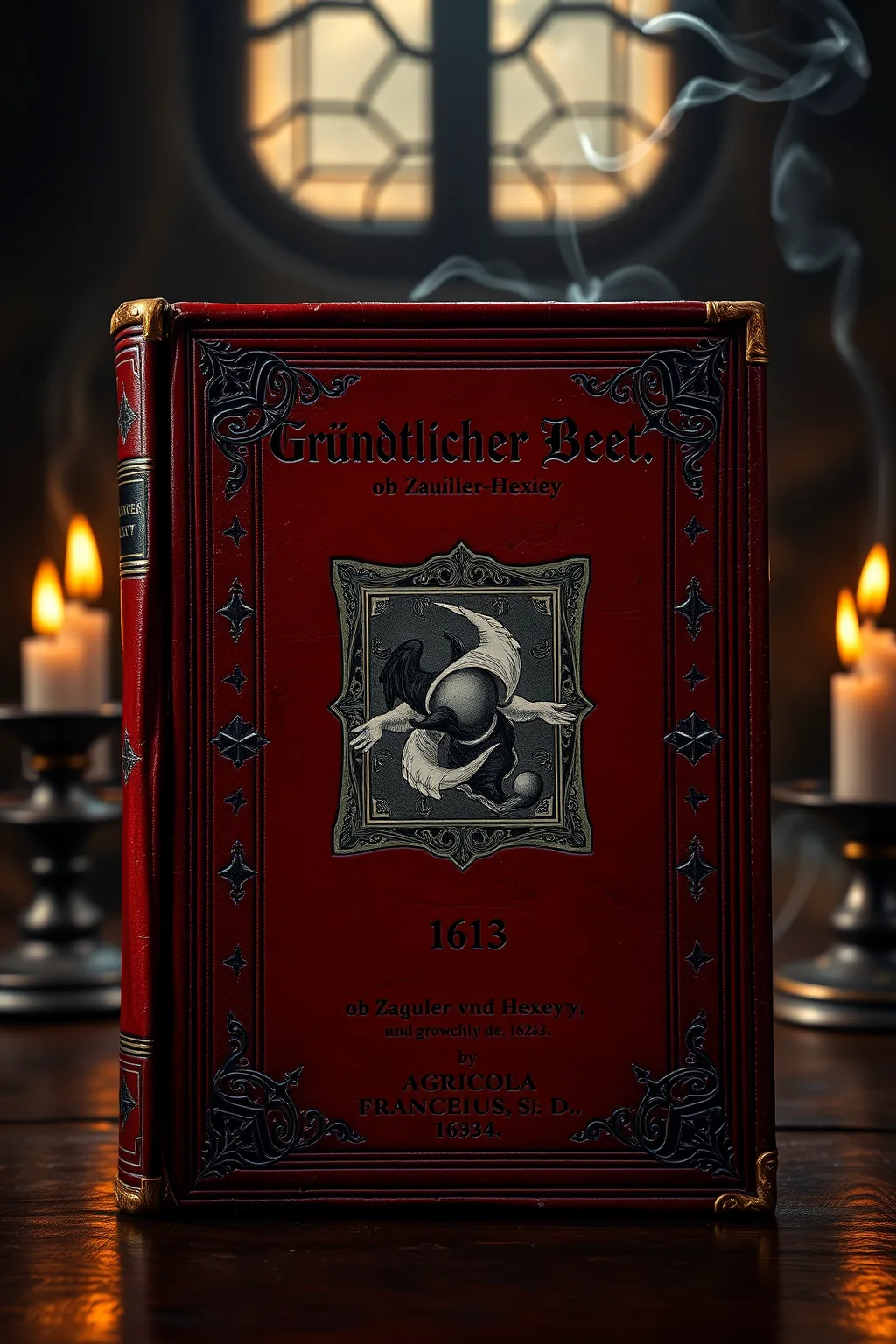
Gründtlicher Bericht, ob Zauber- vnd Hexerey die argste vnd grewlichste sünd auff Erden sey. 1613: Iss 13
 82
82

Gründtlicher Bericht, ob Zauber- vnd Hexerey die argste vnd grewlichste sünd auff Erden sey. 1613: Iss 13



Ophelia Vance, Mystical Literature Reviewer — Franciscus Agricola's 'Gründtlicher Bericht' is a foundational text for understanding early modern European theological debates surrounding sorcery. Agricola offers a nuanced, though historically grounded, perspective that challenges simplistic condemnations of magic. His meticulous examination of scripture and philosophical arguments provides invaluable insight into the intellectual landscape of the 16th and 17th centuries. This work is particularly vital for scholars and practitioners interested in the historical intersection of religion, law, and occult practices. Its strength lies in its rigorous argumentation and its willingness to engage with complex moral and theological questions, making it a cornerstone for understanding the evolution of witchcraft discourse.
📝 Description
82
In 1613, Franciscus Agricola questioned if magic and witchcraft were the worst sins on Earth in his 'Gründtlicher Bericht'.
Franciscus Agricola's 1613 text, 'Gründtlicher Bericht, ob Zauber-vnd Hexerey die argste vnd grewlichste sünd auff Erden sey', directly addresses the question of whether sorcery and witchcraft constitute the most grievous sins. Agricola, writing in the early 17th century, examined contemporary beliefs and theological arguments surrounding these practices. He sought to understand the rationale behind classifying magic as a supreme offense.
The book dissects various interpretations of sin, morality, and the societal fears that often accompanied accusations of witchcraft. Agricola's work is not simply a condemnation or defense, but an analytical inquiry into the perceptions and anxieties of his era. It provides insight into the interplay between religious doctrine, philosophical thought, and the social climate that contributed to the persecution of individuals accused of practicing magic.
Published in 1613, Agricola's 'Gründtlicher Bericht' engages with a period of intense scrutiny and debate regarding magic and its perceived threat. This work emerges from a tradition where the boundaries between natural philosophy, theology, and occult practices were constantly negotiated. It reflects an intellectual environment grappling with the definition and condemnation of forbidden arts, situated within early modern European discussions on demonology and heresy.
💡 Why Read This Book?
Unearth the historical debates surrounding magic and sin, challenging long-held beliefs. Explore the theological and philosophical underpinnings of early modern perceptions of witchcraft. Ideal for scholars of esotericism, history buffs, and those curious about the darker chapters of human belief.
⭐ Reader Reviews
Honest opinions from readers who have explored this book.
❓ Frequently Asked Questions
What is the central question addressed by Agricola?
Agricola's core inquiry is whether magic and witchcraft are indeed the most grievous sins on Earth, a question he addresses through theological and philosophical analysis.
What historical period does this book belong to?
This work was published in 1613, placing it firmly within the early modern period, a time of significant religious upheaval and intense scrutiny of occult practices.
Who was Franciscus Agricola?
Franciscus Agricola (d. 1624) was a scholar and theologian whose work engaged with the complex moral and spiritual questions of his era, particularly concerning magic and its place in society.
What is the 'Esoteric Library' designation 'Iss 13' referring to?
'Iss 13' indicates that this is the 13th issue in the Esoteric Library's curated series focused on Witchcraft & Paganism, suggesting it's part of a larger collection of related texts.
Where can I find more works by or about Franciscus Agricola?
The 'Original notes' mention previous and next issues, suggesting a thematic or chronological series within the Esoteric Library, which may contain related content or further references.
🔮 Key Themes & Symbolism
Theological Calculus of Sin
This work meticulously dissects the concept of sin within a 17th-century theological framework. Agricola grapples with the hierarchy of transgressions, questioning whether the perceived 'dark arts' of magic and witchcraft truly occupy the apex of moral depravity as often proclaimed. He probes the definitions of sin, divine judgment, and the role of intent and consequence, inviting readers to consider the theological arguments that shaped societal condemnation and persecution of those accused of sorcery.
Perception vs. Reality: The Nature of Witchcraft
Agricola's 'Gründtlicher Bericht' explores the often-blurred lines between societal perception and the actual nature of witchcraft. The text questions whether the fear and condemnation of witchcraft were based on empirical evidence or on deeply ingrained societal anxieties and religious dogma. It explores how beliefs about malevolent magical forces were constructed and perpetuated, and whether these beliefs accurately reflected any underlying esoteric realities or were primarily products of their time.
Reason, Faith, and the Occult
This treatise stands as a evidence of the intellectual ferment of the early modern period, where reason and faith often clashed in the interpretation of the occult. Agricola navigates the complex relationship between empirical observation, scriptural authority, and the burgeoning philosophical discourse surrounding magic. The book encourages a critical examination of how these forces interacted to define and judge practices deemed outside the field of accepted religious and scientific understanding, offering a window into the intellectual struggle to comprehend the unexplained.
💬 Memorable Quotes
Direct passages from the work, attributed to the author.
“Is it truly the ultimate evil, or merely the most feared?”
— This question probes the distinction between the perceived severity of witchcraft and its actual moral standing, suggesting a potential disconnect between societal reaction and theological truth.
“Where does human law diverge from divine decree?”
— This prompts contemplation on the potential for human legal systems to misinterpret or overreach divine commandments when addressing perceived transgressions like witchcraft.
“The weight of sin is measured not just by deed, but by intent.”
— This suggests that Agricola might be exploring the nuances of moral culpability, implying that the motive behind an action is as crucial as the action itself in determining its sinful nature.
“To understand the forbidden is to begin to unravel its mystique.”
— This implies that by intellectually engaging with and analyzing forbidden practices like witchcraft, one can clarify them and gain a deeper, albeit potentially dangerous, understanding.
💡 Key Ideas
Editorial paraphrase of the work's core concepts — not direct quotes.
The shadow of accusation often eclipses the light of truth.
This quote highlights the power of public opinion and fear in overshadowing factual evidence or reasoned judgment when it comes to accusations of sorcery.
🌙 Esoteric Significance
Tradition
This text is crucial for understanding the historical development of Western esotericism, particularly within the Christian context. It reflects the theological and philosophical debates that sought to reconcile or condemn occult practices with established religious doctrine. Its significance lies in clear how early modern thinkers grappled with concepts of divine power, human agency, and the perceived influence of unseen forces, laying groundwork for later, more formalized esoteric traditions that would explore magic and spirituality.
Symbolism
While not overtly symbolic in its presentation, the text's discourse on 'magic' and 'witchcraft' carries immense symbolic weight. These terms represented the unknown, the forbidden, and the feared inversion of divine order. The very act of debating whether these were the 'gravest sins' symbolizes the societal struggle to define moral boundaries and control perceived threats to religious and social stability. The 'sin' itself becomes a symbol of transgression against established norms.
Modern Relevance
In an age where the lines between belief, skepticism, and misinformation are increasingly blurred, Agricola's work offers profound lessons. His analytical approach to challenging deeply held convictions about 'evil' and 'sin' appeals to contemporary discussions on critical thinking and the dangers of mass hysteria. For modern practitioners and scholars of esoteric traditions, understanding these historical debates is vital for contextualizing their own paths and for recognizing the enduring human fascination with the power and mystery of the unseen.
👥 Who Should Read This Book
This meticulously researched treatise is indispensable for several audiences. Scholars of religious history, theology, and early modern European studies will find it a vital primary source for understanding the intellectual climate surrounding witchcraft accusations. Practitioners of Wicca, neopaganism, and other esoteric traditions will gain crucial historical context for the evolution of their crafts and the societal forces that shaped their perception. Seekers of hidden knowledge and those fascinated by the historical interplay of faith, fear, and the occult will find it an clear exploration. Even the general reader with a curiosity for the darker, more complex aspects of human belief systems will discover a compelling and thought-provoking narrative.
📜 Historical Context
Published in 1613, 'Gründtlicher Bericht' emerges from a Europe steeped in religious fervor and profound societal anxieties. The preceding century witnessed the Reformation, shattering religious unity and intensifying debates over heresy and divine authority. Concurrently, the fear of witchcraft reached a fever pitch across much of the continent, fueled by demonological treatises, popular superstition, and the judicial machinery established to prosecute perceived practitioners. This era saw the confluence of theological interpretation, legal proceedings, and the widespread belief in supernatural malevolence. Agricola's work, therefore, is not an isolated musing but a critical intervention within a charged intellectual and social climate, reflecting the urgent need to define, categorize, and ultimately condemn or understand the perceived threats to spiritual and societal order. Its digitized form makes this important dialogue accessible to modern scholars and enthusiasts seeking to grasp the roots of occult beliefs and their societal impact.
📔 Journal Prompts
Reflect on the historical perception of witchcraft as a 'grave sin.' How does this compare to modern societal views on similar perceived transgressions?
Analyze Agricola's arguments. What rhetorical or philosophical strategies does he employ to question the severity of witchcraft as a sin?
Consider the role of fear and societal anxiety in shaping beliefs about magic and the occult. How might this historical dynamic manifest in contemporary culture?
If you were a theologian or philosopher in 1613, what arguments would you use to support or refute Agricola's central thesis?
Explore the concept of 'hidden knowledge' in relation to witchcraft. What does it mean to possess forbidden knowledge, and what are the potential consequences?
🗂️ Glossary
Zauber
A German term broadly encompassing magic, sorcery, or enchantment, often used to describe practices perceived as supernatural or beyond the ordinary.
Hexerey
A German term specifically referring to witchcraft, often implying malevolent intent, pacts with demonic forces, or the malevolent manipulation of natural laws.
Sünd
The German word for 'sin,' referring to any transgression against divine law or moral principles, a central concept in Christian theology.
Gründtlicher Bericht
A German phrase meaning 'Thorough Report' or 'Detailed Account,' indicating the author's intention to provide a comprehensive and well-reasoned examination of the subject.
Grewlichste
The superlative form of 'grewlich,' meaning 'most gruesome,' 'most horrible,' or 'most abominable,' emphasizing the extreme nature of the sin being discussed.
This book appears in 2 collections
🔮 Readers Also Liked
Browse all →





More by AGRICOLA, Franciscus, d. 1624.
All books →
From the “Witchcraft” Collection
View all →







More Free Witchcraft & Paganism Books
View all →