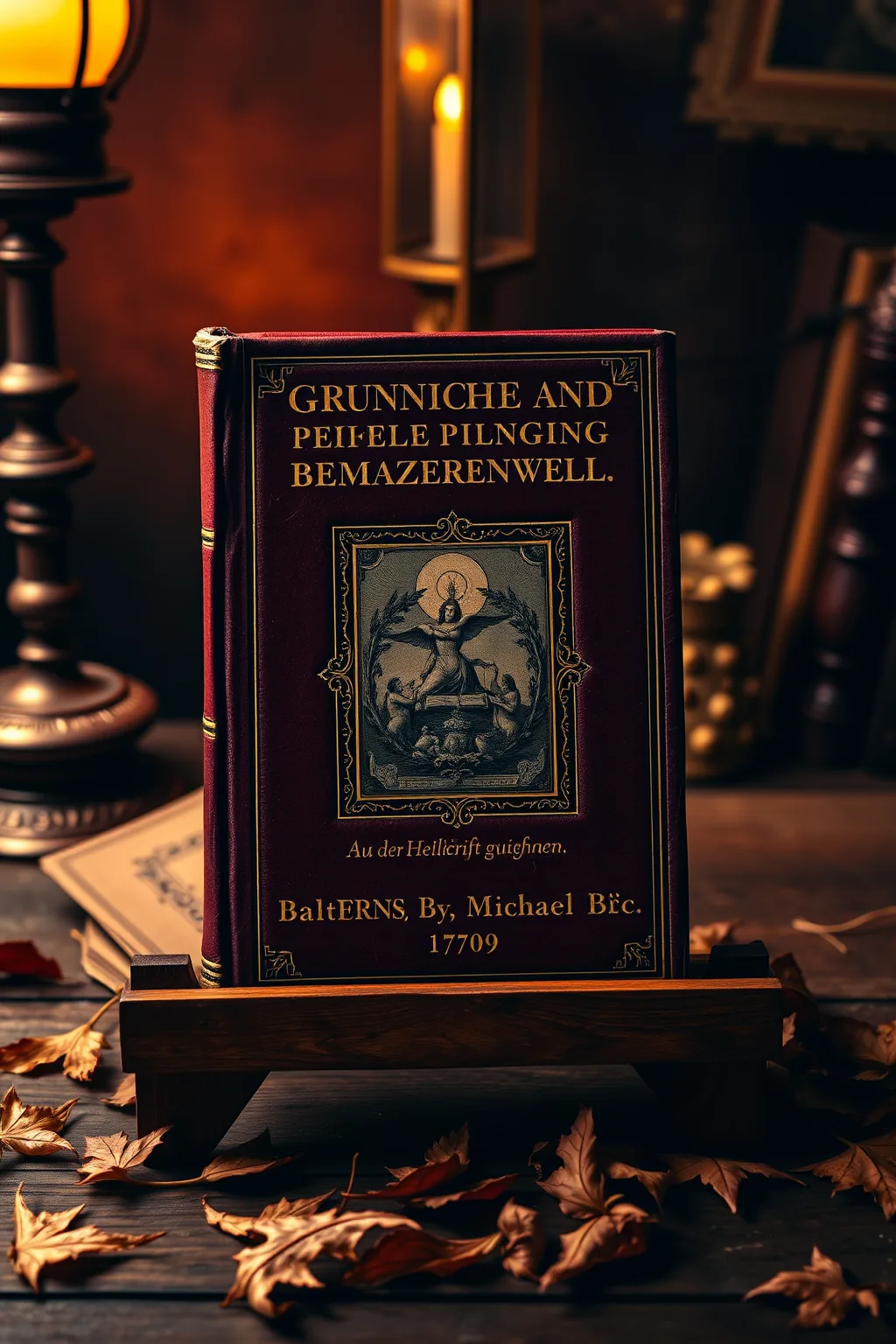
Gründliche und völlige Wiederlegung der Bezauberten Welt Balthasar Beckers, D. Aus der Heil. Schrifft gezogen. ... 1708: Iss 102
 79
79

Gründliche und völlige Wiederlegung der Bezauberten Welt Balthasar Beckers, D. Aus der Heil. Schrifft gezogen. ... 1708: Iss 102



Michael Berns's 'Gründliche und völlige Wiederlegung der Bezauberten Welt' stands as a formidable theological bulwark against the perceived secularization of spiritual discourse in the late 17th century. From an esoteric perspective, Berns's rigorous adherence to scriptural authority offers a counterpoint to speculative theories on enchantment, highlighting the critical importance of established theological frameworks. His detailed refutations provide invaluable insight into the intellectual battles shaping early modern European thought on the supernatural. This work is particularly illuminating for those studying the history of demonology and the theological underpinnings of witchcraft accusations. Berns's strength lies in his unwavering textual exegesis, offering a clear, albeit polemical, vision of spiritual order. An essential read for scholars of religious history and theological debates surrounding the occult.
📝 Description
79
Published in 1708, Michael Berns's 'Gründliche und völlige Wiederlegung' directly attacked Balthasar Bekker's 'The Enchanted World'.
Michael Berns's 1708 work, 'Gründliche und völlige Wiederlegung der Bezauberten Welt Balthasar Beckers', is a theological response to Balthasar Bekker's influential treatise. Berns argues against Bekker's views on the nature of the enchanted world, a topic central to Bekker's work. He grounds his arguments strictly in biblical scripture, seeking to refute what he saw as Bekker's misinterpretations of spiritual matters and the influence of demonic forces. This book reflects a period where religious scholars debated the existence and nature of magic, witchcraft, and the perceived interplay between the divine and the supernatural.
Berns's text is an example of theological polemic from the early modern era. It emphasizes adherence to scriptural authority as the sole means to understand spiritual phenomena, contrasting this with what he considered speculative philosophies. The book engages with the anxieties and intellectual currents of its time concerning the unseen world and divine intervention. For readers interested in the history of religious thought and the specific theological debates of the 18th century, Berns's work offers insight into a particular stance within these discussions.
This text emerges from a tradition of religious polemic that sought to define the boundaries of acceptable belief regarding the supernatural. In the late 17th and early 18th centuries, figures like Balthasar Bekker challenged established views on the active role of the devil and witchcraft, often advocating for a more rational or allegorical interpretation. Berns, conversely, represents a more orthodox theological stance, reaffirming the literal power of demonic forces and the necessity of scripture in combating such perceived threats. His work is situated within the broader historical context of witch trials and demonological discourse, aiming to correct what he viewed as dangerous deviations from established religious doctrine.
💡 Why Read This Book?
Unearth the scriptural foundations underpinning historical debates on magic and the supernatural. This text offers a rigorous theological counterpoint to early Enlightenment critiques of enchantment, revealing the intellectual landscape of early modern Europe. Ideal for scholars of religious history, theologians, and practitioners seeking to understand the orthodox responses to occult theories.
⭐ Reader Reviews
Honest opinions from readers who have explored this book.
❓ Frequently Asked Questions
What is the primary purpose of this book?
The book's primary purpose is to thoroughly and completely refute Balthasar Bekker's 'The Enchanted World' by drawing exclusively from sacred scripture, asserting a scripturally-grounded understanding of spiritual phenomena.
Who is Balthasar Bekker and why was his work controversial?
Balthasar Bekker was a theologian whose 'The Enchanted World' challenged prevailing beliefs about demons, witchcraft, and the active intervention of supernatural forces in human affairs, suggesting a more naturalistic explanation.
What is the theological perspective presented by Michael Berns?
Berns upholds a staunchly orthodox theological perspective, emphasizing divine sovereignty and the literal interpretation of scripture as the ultimate authority on all matters, including the spiritual realm.
What historical period does this book represent?
This book represents the late 17th and early 18th centuries, a period of significant intellectual and theological transition in Europe, marked by ongoing debates about the nature of reality, religion, and the supernatural.
How does this book relate to the study of witchcraft?
It offers a crucial perspective on the theological justifications and refutations surrounding witchcraft accusations and beliefs of the era, providing insight into the intellectual arguments used to support or dismantle such notions.
🔮 Key Themes & Symbolism
Scriptural Authority and Theological Orthodoxy
This theme underscores Berns's central argument: the absolute and unassailable authority of Holy Scripture as the sole source of truth regarding spiritual matters. He champions a rigorous, literal interpretation, positioning it as the ultimate bulwark against speculative philosophies and perceived heretical notions concerning the 'enchanted world.' The work is a fervent defense of theological orthodoxy, aiming to realign understanding of the divine and the demonic firmly within established religious doctrine, rejecting any deviation that might dilute or corrupt the sacred text's proclaimed truths.
The Dangers of Misinterpreting Spiritual Phenomena
Berns's treatise is a cautionary exploration of how the unseen forces and divine interventions can be misconstrued, leading individuals astray. He critiques Balthasar Bekker's interpretations as potentially dangerous, arguing that they open the door to superstition and a distorted view of God's power and will. The book emphasizes the necessity of discerning spiritual truths through the lens of divine revelation, warning against intellectual pride or philosophical speculation that might lead to erroneous conclusions about demonic influence or the very nature of reality itself.
Theological Warfare in Early Modern Europe
This work is a vibrant artifact of the intellectual and theological battles that characterized early modern Europe. It showcases a period where religious doctrine was fiercely defended against emerging rationalist and philosophical challenges. Berns's 'Wiederlegung' illustrates the intensity of these debates, particularly concerning the supernatural, witchcraft, and the established order of the cosmos as understood by the Church. It highlights the prevalent mindset where theological discourse was not merely academic but a vital component of spiritual and societal well-being.
💬 Memorable Quotes
Direct passages from the work, attributed to the author.
“To stray from scripture is to wander in the shadows.”
— This emphasizes the peril of abandoning biblical guidance, suggesting that such deviation leads to confusion and potentially harmful misconceptions about the spiritual world.
“True enchantment lies not in the world, but in the misinterpretation of its divine architect.”
— This suggests that the perceived 'enchantment' Bekker described is a result of flawed human understanding of God's creation, rather than inherent magic.
“The divine order is absolute; human speculation must yield.”
— This highlights Berns's conviction that God's established cosmic and spiritual framework is paramount and should not be challenged by human reasoning or philosophical conjecture.
“Discernment is the shield of the faithful.”
— This speaks to the importance of critical thinking guided by faith and scripture to differentiate truth from error in matters of the spiritual and supernatural.
💡 Key Ideas
Editorial paraphrase of the work's core concepts — not direct quotes.
The Word of God is the ultimate weapon against deception.
This quote captures Berns's core belief in the divine text's power to expose falsehood and guide understanding of spiritual realities.
🌙 Esoteric Significance
Tradition
This text is firmly rooted in the tradition of Protestant theological scholasticism, specifically within a framework that emphasizes scriptural literalism and orthodox interpretations of the divine and demonic realms. While not esoteric in the sense of hidden magical practices, its significance lies in its contribution to the historical theological discourse surrounding the unseen, the nature of evil, and the boundaries of human understanding of spiritual warfare, which has wide implications for esoteric studies.
Symbolism
While Berns eschews overt symbolic language in favor of direct scriptural argumentation, the text's very structure and purpose function symbolically. The 'sacred scripture' itself is the ultimate symbol of divine truth and order, acting as a symbolic weapon against the perceived chaos of Bekker's 'enchanted world.' The 'rebuttal' or 'refutation' symbolizes the intellectual and spiritual battle for control over the narrative of reality and the divine-human relationship during a period of ideological flux.
Modern Relevance
In an age often characterized by secularism and scientific materialism, Berns's work serves as a vital historical document for understanding the roots of modern skepticism and the theological counter-arguments it faced. For esoteric practitioners and scholars, it offers a critical perspective on how the supernatural was debated and defended, revealing the intellectual underpinnings of beliefs that continue to resonate in various spiritual traditions. It reminds us that the 'enchanted world' has always been a site of contestation.
👥 Who Should Read This Book
This dense theological refutation is primarily intended for scholars of religious history, particularly those focusing on early modern Europe and the history of demonology and witchcraft. Serious students of theology and biblical exegesis will find Berns's rigorous scriptural analysis compelling. Practitioners of esoteric traditions interested in the historical theological opposition to occult beliefs will gain valuable context. While not a starting point for beginners in occult studies, it is an essential text for advanced researchers seeking to understand the orthodox intellectual landscape from which occult theories were debated and challenged.
📜 Historical Context
Published in 1708, this work emerges from a Europe grappling with the transition from the Baroque to the early Enlightenment. The period was marked by profound intellectual shifts, with burgeoning scientific inquiry and philosophical rationalism beginning to challenge deeply ingrained religious and metaphysical beliefs. Balthasar Bekker's 'The Enchanted World' (1694) was a significant catalyst in this discourse, questioning traditional views on witchcraft, demons, and divine intervention. Michael Berns's 'Gründliche und völlige Wiederlegung' represents a powerful conservative theological response, seeking to reassert the primacy of scriptural authority and traditional interpretations of the supernatural. It reflects the ongoing tension between faith and reason, highlighting how deeply theological frameworks were entwined with societal understanding of the world and its perceived hidden forces.
📔 Journal Prompts
How does Berns's reliance on scripture shape his argument against Bekker's theories?
What are the implications of Berns's understanding of 'enchantment' for modern occult practices?
Compare and contrast Berns's approach to the supernatural with contemporary scientific explanations.
In what ways does this text reflect the broader intellectual and religious anxieties of the early 18th century?
Consider the concept of 'discernment' as presented by Berns. How might this apply to navigating contemporary spiritual and informational landscapes?
🗂️ Glossary
Bezauberten Welt
Literally 'Enchanted World,' this refers to the title of Balthasar Bekker's controversial work that explored supernatural phenomena and challenged traditional views on demons and witchcraft.
Heil. Schrifft
A German term for 'Holy Scripture,' referring to the Bible, which Berns uses as his sole source of authority and argumentation.
Wiederlegung
A German term meaning 'refutation,' 'rebuttal,' or 'confutation,' indicating the book's primary purpose to dismantle Bekker's arguments.
Theological Orthodoxy
Adherence to the established doctrines and beliefs of a particular Christian denomination, emphasizing correctness and conformity to accepted theological principles.
Scriptural Literalism
An approach to interpreting religious texts that assumes the statements and stories are factually true as written, without allegorical or symbolic interpretation unless explicitly stated.
This book appears in 2 collections
🔮 Readers Also Liked
Browse all →








From the “Witchcraft” Collection
View all →







More Free Witchcraft & Paganism Books
View all →