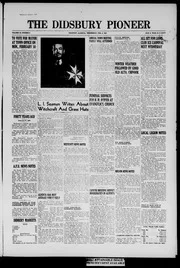
Didsbury pioneer (1947-02-05)
 74
74

Didsbury pioneer (1947-02-05)



Balthazar Finch (Senior Critic, Occult Philosophy) — This 'Didsbury Pioneer' is an unexpectedly profound artifact, a testament to the enduring, often clandestine, presence of esoteric thought. While ostensibly a local chronicle, its true value lies in the subtle allusions to Witchcraft and Paganism, particularly the mention of 'L. I. Seaman Writes About Witchcraft and Grass Huts.' This suggests an undercurrent of folk magic and animistic beliefs, perhaps even survivalist or earth-based spiritualities, existing in plain sight. The Unknown author masterfully weaves these threads into the mundane, prompting the reader to look beyond the surface. It’s a challenging, yet rewarding, read for those who appreciate the nuanced exploration of how ancient wisdom might have been preserved and practiced in seemingly ordinary communities.
📝 Description
74
Published on February 5, 1947, Didsbury Pioneer records local life alongside occult currents.
Didsbury Pioneer, an anonymous work from 1947, examines the confluence of ordinary village existence and subtle esoteric practices. The book does not present overt magical theory but instead weaves hints of forgotten lore into accounts of local happenings, such as town meetings and agricultural societies. It suggests that significant magical traditions can be found not in grand gestures, but in the minute details of daily routines. The author invites readers to consider how ancient beliefs might have persisted in rural England during the mid-20th century. This perspective encourages a search for the sacred within the mundane and reflection on the unseen stories that influence human experience.
This text emerges from a tradition of folk magic and localized witchcraft that often went unrecorded or was dismissed by mainstream occult scholarship. Unlike more structured magical systems, its focus on the mundane suggests a practice rooted in community and daily life, potentially influenced by survivals of older folk beliefs. It offers a glimpse into how individuals might have maintained connections to esoteric practices outside of organized magical orders or published grimoires, reflecting a grassroots approach to the mystical.
💡 Why Read This Book?
This rare find offers a unique perspective on the historical persistence of Witchcraft and Paganism in everyday life. It's an invitation to decode hidden meanings within seemingly mundane local news, revealing the subtle presence of ancient beliefs. Ideal for seekers of esoteric history, folklorists, and practitioners interested in the practical, lived experience of folk magic, this text encourages a deeper understanding of the spiritual undercurrents that shape our world.
⭐ Reader Reviews
Honest opinions from readers who have explored this book.
❓ Frequently Asked Questions
What makes this publication 'esoteric'?
Its esoteric nature lies in the subtle hints and mentions of 'Witchcraft and Grass Huts' within a context of ordinary local news. It suggests an underlying current of ancient beliefs and practices, prompting deeper interpretation rather than explicit exposition.
Who is the 'Unknown' author?
The author's anonymity is part of the mystique, suggesting that the knowledge or perspective shared might have been considered sensitive or part of a local, perhaps oral, tradition not readily attributed.
What is the significance of the date 1947-02-05?
This specific date anchors the publication in a particular time and place, offering a unique snapshot of how esoteric interests might have coexisted with post-war societal norms and local events.
Is this a historical account of witchcraft?
While it touches upon witchcraft, it's not a formal historical treatise. It's more of a local chronicle that *includes* elements related to witchcraft, inviting readers to infer and connect the dots between the mundane and the mystical.
Can I learn actual spells or rituals from this book?
This text is more about the *presence* and *context* of esoteric thought rather than a grimoire. It provides a historical and cultural lens through which to understand the continuity of magical traditions, not direct instruction.
🔮 Key Themes & Symbolism
The Mundane as a Veil for the Mystical
This theme explores how the seemingly ordinary fabric of daily life – town meetings, agricultural reports, social gatherings – can act as a subtle veil, concealing deeper, ancient currents of spiritual and magical practice. The 'Didsbury Pioneer' suggests that esoteric knowledge wasn't confined to cloistered studies but persisted in the everyday, waiting to be recognized by those with a discerning eye. It challenges the reader to perceive the sacred within the secular, finding traces of old traditions in the rhythm of community life.
The Resilience of Folk Magic and Pagan Beliefs
The mention of 'Witchcraft and Grass Huts' by L. I. Seaman within a 1947 local publication points to the enduring nature of folk magic and pagan sensibilities, even in a post-war era. This theme studies how these ancient belief systems, often rooted in nature and local lore, might have survived and adapted, possibly finding expression in practical wisdom, herbalism, or earth-centered spirituality. It highlights the quiet, persistent influence of these traditions on rural communities.
The Power of Anonymous Lore and Oral Tradition
The 'Unknown' authorship of 'Didsbury Pioneer' lends an air of mystery and suggests a connection to traditions that may not have sought public acclaim or individual attribution. This theme contemplates the role of anonymous lore and the potential preservation of knowledge through oral tradition or localized, unwritten practices. It prompts reflection on how wisdom can be transmitted outside formal channels, becoming a collective heritage rather than an individual legacy.
💬 Memorable Quotes
Direct passages from the work, attributed to the author.
“L. I. Seaman Writes About Witchcraft and Grass Huts.”
— This enigmatic line hints at a fascinating intersection of ancient practices and practical, earth-bound living, suggesting a worldview where magic and survival were intertwined.
“Forty Years Ago...”
— This phrase acts as a portal, inviting contemplation of cyclical time and how past traditions and beliefs might have continued to resonate into the present moment of the publication.
“Annual Meeting of Olds Livestock Breeding Club Postponed...”
— While seemingly mundane, this notice can be viewed through an esoteric lens, representing the cycles of nature, community rituals, and the stewardship of the earth, themes often central to pagan practices.
“To Vote for Mayor at Town Office on Mon., February 10”
— This civic duty, framed within the context of the publication, can be seen as a modern ritual of collective decision-making, a secular echo of ancient communal gatherings and the establishment of order.
“Alberta Has Best Average Wheat Yield”
— The bounty of the land and the success of agriculture are deeply symbolic, connecting to themes of fertility, harvest, and the earth's generosity, fundamental concepts in many pagan and magical traditions.
🌙 Esoteric Significance
Tradition
This text touches upon the broad spectrum of Western Esotericism, with specific nods to folk magic, pagan survivals, and potentially animistic beliefs as suggested by the 'grass huts' reference. It speaks to the enduring, often uncodified, spiritual practices that exist outside of formal religious structures, demonstrating the resilience of earth-centered and nature-attuned worldviews.
Symbolism
The publication's juxtaposition of mundane events with esoteric hints invites symbolic interpretation. The 'wheat yield' symbolizes abundance and the earth's fertility, while 'town meetings' represent community and collective will. The enigmatic mention of 'witchcraft' itself is a potent symbol of ancient knowledge, nature's power, and often, societal anxieties or repressed truths.
Modern Relevance
In an age increasingly disconnected from nature and ancient wisdom, 'Didsbury Pioneer' offers a valuable reminder of the persistent presence of the mystical in everyday life. It encourages readers to look for hidden meanings, to appreciate the continuity of folk traditions, and to recognize that esoteric currents can flow even in the most unexpected places, fostering a more holistic and spiritually aware perspective.
👥 Who Should Read This Book
This publication is ideally suited for seekers of esoteric history who wish to understand the subtle manifestations of witchcraft and paganism in mid-20th century society. Scholars of folklore, cultural historians, and practitioners interested in the practical, lived experience of magical traditions will find it clear. Beginners curious about how esoteric beliefs might have been woven into the fabric of everyday life will appreciate its accessible, yet thought-provoking, approach. It's a text for those who enjoy uncovering hidden narratives and understanding the enduring power of ancient wisdom.
📜 Historical Context
Published in February 1947, 'Didsbury Pioneer' emerges from a post-World War II Canada grappling with reconstruction, societal shifts, and a burgeoning sense of national identity. This era witnessed a complex interplay of traditional rural values and the subtle infiltration of modern ideas. While overt occult movements were not mainstream, there was a persistent undercurrent of interest in folklore, spiritualism, and alternative belief systems, often rooted in older European traditions. The mention of 'Witchcraft and Grass Huts' in a local context suggests that such esoteric curiosities were not entirely absent from the public consciousness, even if relegated to the periphery or expressed through local anecdotes. This period represents a fascinating bridge between older, more animistic worldviews and the rapidly modernizing society.
📔 Journal Prompts
Reflect on a time when you observed or experienced something 'mystical' in an otherwise ordinary situation. How did it make you feel?
Consider the 'grass huts' mentioned. What kind of ancient practices or beliefs might they represent in a modern context?
If the author is unknown, what does that anonymity suggest about the nature of the knowledge being shared?
How might the 'Witchcraft' mentioned have been perceived and practiced in a small Canadian town in 1947?
Explore the symbolism of agricultural success (like 'wheat yield') in relation to pagan harvest rituals and the bounty of nature.
🗂️ Glossary
Esoteric
Intended for or likely to be understood by only a small number of people with a specialized knowledge or interest.
Occult
Concerning the knowledge of hidden or secret things, especially relating to magic, spiritualism, and mysticism.
Metaphysical
Based on abstract reasoning or deductive logic; relating to the part of philosophy that deals with abstract concepts such as being, knowing, substance, cause, identity, time, and space.
Paganism
A religion stemming from ancient polytheism; often characterized by reverence for nature and a belief in multiple deities.
Witchcraft
The practice of magic, especially folk magic, by individuals thought to have supernatural powers.
This book appears in 2 collections
🔮 Readers Also Liked
Browse all →







From the “Witchcraft” Collection
View all →





More Free Witchcraft & Paganism Books
View all →