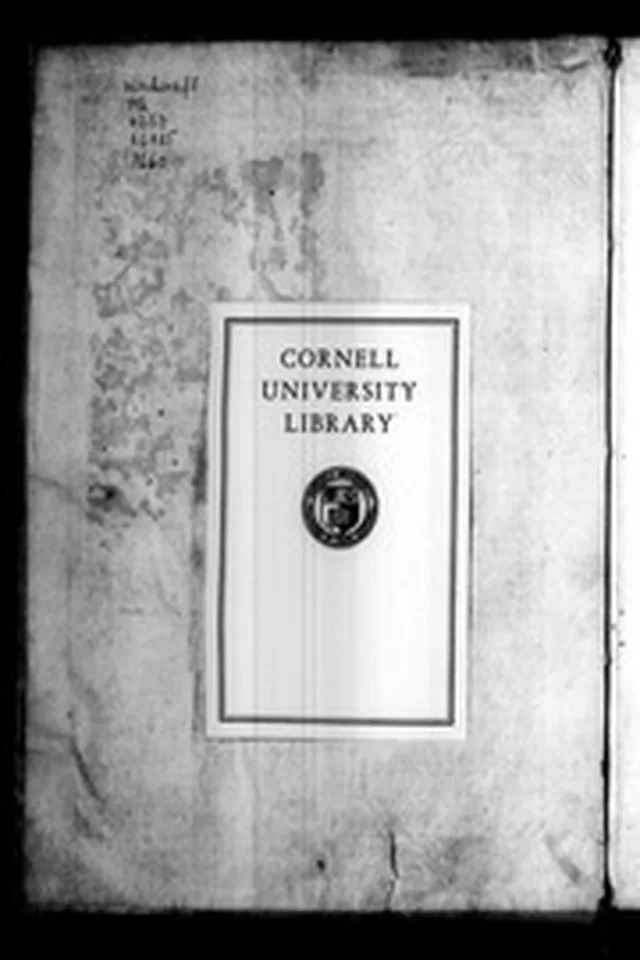
Cento avenimenti meravigliosi, stypendi, e rari Ne'qvali ... sono compresi distruggimenti di oracoli, insidie, maleficij, e tradimenti. 1660: Iss 51
 80
80

Cento avenimenti meravigliosi, stypendi, e rari Ne'qvali ... sono compresi distruggimenti di oracoli, insidie, maleficij, e tradimenti. 1660: Iss 51


Ophelia Vance, Mystical Literature Reviewer — Giovanni Felice Astolfi's 'Cento avenimenti meravigliosi' is a compelling compendium that transcends mere historical record, offering profound insights into the esoteric currents of the 17th century. Astolfi masterfully weaves together accounts of supernatural phenomena, occult practices, and societal intrigue, revealing a worldview deeply steeped in mysticism. The work's strength lies in its unflinching examination of themes like oracle destruction and maleficium, providing invaluable material for scholars of witchcraft and paganism. Its detailed narratives serve as a potent source for understanding the symbolic language and practical applications of ancient occult arts. This is an essential read for anyone seeking to deepen their understanding of historical esotericism and its enduring impact.
📝 Description
80
Giovanni Felice Astolfi compiled 'Cento avenimenti meravigliosi' in 1660, detailing destruction of oracles and acts of treachery.
Published in 1660, Giovanni Felice Astolfi's 'Cento avenimenti meravigliosi, stypendi, e rari' collects accounts of remarkable, unusual, and rare occurrences. The text specifically records the downfall of oracles, instances of insidious plots, the practice of maleficium, and acts of betrayal. Astolfi's work combines historical narratives with esoteric knowledge, showing a world where the separation between the ordinary and the supernatural was less distinct and where concealed information held significant power.
Astolfi's compilation functions as a record of events and an examination of unseen influences that guided human fate. It is a valuable resource for those interested in the occult foundations of historical happenings, the symbolic expression of magical practices, and the lasting impact of older beliefs. The book invites scholars, practitioners, and interested individuals to investigate the mysteries of a past era, marked by the traces of lost rites and deep spiritual movements.
This 1660 compilation fits within the tradition of Renaissance and early modern collections that sought to document and understand phenomena outside mainstream religious or scientific frameworks. Such works often blended historical accounts with folklore, eyewitness testimony, and occult interpretations. Astolfi's inclusion of maleficium and oracular destruction places the book alongside contemporary discussions and fears surrounding witchcraft, divination, and the perceived hidden forces influencing events. It reflects an interest in cataloging the unusual and the supernatural, which was common in esoteric circles seeking to map the hidden structures of reality.
💡 Why Read This Book?
Uncover lost wisdom and historical occult practices. 'Cento avenimenti meravigliosi' offers a rare window into 17th-century beliefs about magic, deception, and the supernatural. Ideal for seekers of hidden knowledge, scholars of witchcraft and paganism, and practitioners interested in historical esoteric traditions. Explore the origins of fascinating phenomena and expand your understanding of the mystical forces at play throughout history.
⭐ Reader Reviews
Honest opinions from readers who have explored this book.
❓ Frequently Asked Questions
What is the primary focus of this 1660 text?
The primary focus is a compilation of one hundred marvelous, extraordinary, and rare events, specifically including the destruction of oracles, insidious plots, malevolent sorcery (maleficium), and acts of betrayal, offering a glimpse into the esoteric and occult concerns of the era.
Who was Giovanni Felice Astolfi?
Giovanni Felice Astolfi was the compiler of this fascinating collection of historical and esoteric events, providing a unique lens through which to view the beliefs and anxieties of 17th-century Europe regarding the supernatural and hidden forces.
What does 'maleficium' refer to in this context?
'Maleficium' refers to harmful magic or witchcraft, often involving curses, hexes, or other malevolent supernatural actions intended to cause harm, misfortune, or illness to individuals or communities.
How does this book relate to witchcraft and paganism?
The book directly addresses themes central to witchcraft and paganism, such as the perceived power of sorcery, the destruction of established religious oracles, and the belief in supernatural interventions in human affairs, reflecting the historical anxieties and practices surrounding these subjects.
Is this a primary source document?
Yes, 'Cento avenimenti meravigliosi' is a primary source document from 1660, offering direct insight into the historical accounts and occult beliefs prevalent during that period, as compiled by Astolfi.
🔮 Key Themes & Symbolism
The Subversion of Sacred Authority
This theme explores the profound societal impact and symbolic significance of the 'distruggimenti di oracoli' – the destruction of oracles. In an era where divine pronouncements and prophetic guidance were central to spiritual and political life, their demise signified a seismic shift. It speaks to the erosion of established spiritual hierarchies, the rise of skepticism, or perhaps the emergence of alternative, more clandestine forms of divination and prophecy. Astolfi's accounts likely explore the mechanisms of these destructions, be they physical acts or symbolic deconstructions, and the subsequent void left in their wake, hinting at a reordering of the spiritual landscape and the potential for new, often darker, forms of knowledge to fill the vacuum.
The Shadow Play of Treachery and Deception
The pervasive presence of 'insidie, maleficij, e tradimenti' (insidious plots, malevolent sorcery, and betrayals) paints a vivid picture of a society deeply aware of hidden dangers and interpersonal duplicity. Astolfi's compilation goes beyond mere recounting of historical incidents; it probes the very nature of trust and vulnerability in a world where external malevolence and internal corruption were perceived as equally potent threats. The interplay between 'maleficium' and 'tradimenti' suggests that supernatural forces and human malice were often intertwined, creating a complex web of suspicion and fear. This theme invites contemplation on the psychological impact of such pervasive threats and the strategies, both mundane and arcane, employed for protection and retribution.
The Allure of the Arcane and the Unseen
'Cento avenimenti meravigliosi' is fundamentally an exploration of the extraordinary and the hidden dimensions of existence. The 'stypendi, e rari' – the stipend-like, or perhaps more accurately, the rare and exceptional – events captured within its pages speak to a fascination with phenomena that defied rational explanation. This theme looks at the collective consciousness's engagement with the mystical, the supernatural, and the occult. It highlights a period where the boundaries between the natural and the supernatural were fluid, and where individuals sought understanding and power through esoteric means. The book serves as a evidence of humanity's enduring quest to comprehend the unseen forces that shape our reality, from the subtle energies of magic to the grand narratives of destiny.
💬 Memorable Quotes
Direct passages from the work, attributed to the author.
“The oracle silenced, the whispers of deception begin.”
— This suggests that the downfall of established sources of divine wisdom creates a vacuum, allowing for more insidious and manipulative forms of influence and information to take root.
“Where light fades, the shadow sorcerer finds his power.”
— This evokes the idea that a decline in spiritual clarity or established religious authority provides fertile ground for darker, more hidden forms of magic and occult practices to flourish.
“A loyal heart can be ensnared by unseen chains.”
— This highlights the insidious nature of betrayal, suggesting that it can be orchestrated through subtle manipulation or even supernatural influence, making even the most devoted vulnerable.
“The rare event, a crack in the mundane facade.”
— This implies that extraordinary occurrences are not random, but rather moments that reveal the underlying mystical or supernatural forces operating beneath the surface of everyday reality.
“When gods fall silent, man seeks forbidden lore.”
— This speaks to the human drive to understand the unknown, suggesting that a lack of clear divine guidance or communication leads individuals to explore more secretive and potentially dangerous branches of occult knowledge.
🌙 Esoteric Significance
Tradition
This work is deeply rooted in the Western esoteric tradition, particularly those streams concerned with demonology, witchcraft, divination, and the interpretation of supernatural phenomena. It touches upon early modern anxieties about maleficium, a concept central to accusations of witchcraft, and the perceived power of ancient oracles, which were often viewed with suspicion or as remnants of pagan practices by Christian authorities. The compilation serves as a historical artifact of beliefs surrounding the manipulation of unseen forces, the subversion of divine authority, and the pervasive fear of hidden malevolence, all key concerns within esoteric circles seeking to understand and harness or ward off such energies.
Symbolism
The 'distruggimenti di oracoli' symbolize the dismantling of established channels of divine or prophetic communication, potentially representing the decline of paganism or the subversion of divinely sanctioned authority. 'Maleficium' itself is symbolic of the corrupting influence of dark forces, both external and internal, and the fear of spiritual or physical violation. Betrayal ('tradimenti') can symbolize the fall from grace, the shattering of trust, and the vulnerability of the human psyche to manipulation. The very act of compiling 'meravigliosi, stypendi, e rari' events highlights a fascination with the numinous, the extraordinary, and the symbolic language used to interpret the world beyond the purely material, inviting readers to decode deeper meanings.
Modern Relevance
In an age increasingly dominated by empirical data and secular viewpoints, Astolfi's 'Cento avenimenti meravigliosi' offers a vital counterpoint, reminding us of the enduring human fascination with mystery, the supernatural, and the darker aspects of existence. Its relevance lies in understanding the historical roots of contemporary occult practices and beliefs, the psychological impact of fear and deception, and the persistent human need to find meaning beyond the mundane. For practitioners, it provides historical context and potential inspiration for ritualistic understanding. For scholars, it is an invaluable primary source for the study of early modern esotericism, cultural anxieties, and the evolution of belief systems regarding magic and the divine.
👥 Who Should Read This Book
This text is a crucial acquisition for dedicated scholars of Western esotericism, witchcraft history, and early modern European culture, offering primary source material on beliefs and practices surrounding oracles, maleficium, and betrayal. Seekers of hidden knowledge will find a body of historical occult narratives, providing insights into the worldview of a past era. Practitioners of witchcraft and pagan traditions may find historical context for certain rituals or conceptual frameworks related to protection and understanding malevolent forces. While the language and subject matter may be challenging for absolute beginners, those with a burgeoning interest in historical occultism will discover a compelling and evocative glimpse into a world where the supernatural was an undeniable force.
📜 Historical Context
Published in 1660, 'Cento avenimenti meravigliosi' emerged during a period of significant societal and intellectual upheaval in Europe. The aftermath of religious wars, the burgeoning of the Scientific Revolution, and persistent anxieties surrounding witchcraft and the occult created a fertile ground for works that explored the extraordinary and the supernatural. This era was characterized by a complex interplay of rational inquiry and deeply ingrained mystical beliefs. While thinkers like Descartes were laying foundations for modern philosophy and science, popular belief in magic, demonic influence, and divine intervention remained potent. Astolfi's compilation reflects this cultural milieu, documenting events that would have resonated with a populace both fascinated by and fearful of the unseen forces believed to shape their lives, from the pronouncements of ancient oracles to the whispered incantations of sorcerers.
📔 Journal Prompts
Reflect on a time you felt betrayed; how did the experience alter your perception of trust, and what 'hidden chains' might have been at play?
Consider the concept of 'oracle destruction' in your own life or society. What established authorities or sources of 'truth' have been challenged or dismantled, and what has replaced them?
Astolfi describes 'maleficium.' How do you interpret the modern manifestations of perceived 'harmful magic' or negative energetic influence in contemporary society?
Imagine you are a collector in 1660. What kind of 'marvelous, rare, and extraordinary' events would you seek to document, and why?
How has the perception of the 'unseen' or 'supernatural' evolved from Astolfi's time to our own? What societal factors contribute to this shift?
🗂️ Glossary
Avenimenti
Italian for 'events' or 'happenings.' In this context, it refers to the extraordinary, marvelous, and rare occurrences compiled by Astolfi.
Stypendi
Likely derived from 'stipendio,' meaning 'stipend' or 'payment.' In this context, it suggests events that were unusual, perhaps even 'rewarding' in their strangeness or the knowledge they imparted.
Rari
Italian for 'rare.' Refers to events that were uncommon, exceptional, and out of the ordinary, highlighting their significance in Astolfi's collection.
Maleficij
Plural of 'maleficium,' referring to harmful magic, witchcraft, or malevolent supernatural actions intended to cause injury or misfortune.
Tradimenti
Italian for 'betrayals' or 'treacheries.' Denotes acts of disloyalty, deception, or perfidy, often with significant negative consequences.
This book appears in 2 collections
🔮 Readers Also Liked
Browse all →







From the “Witchcraft” Collection
View all →







More Free Witchcraft & Paganism Books
View all →