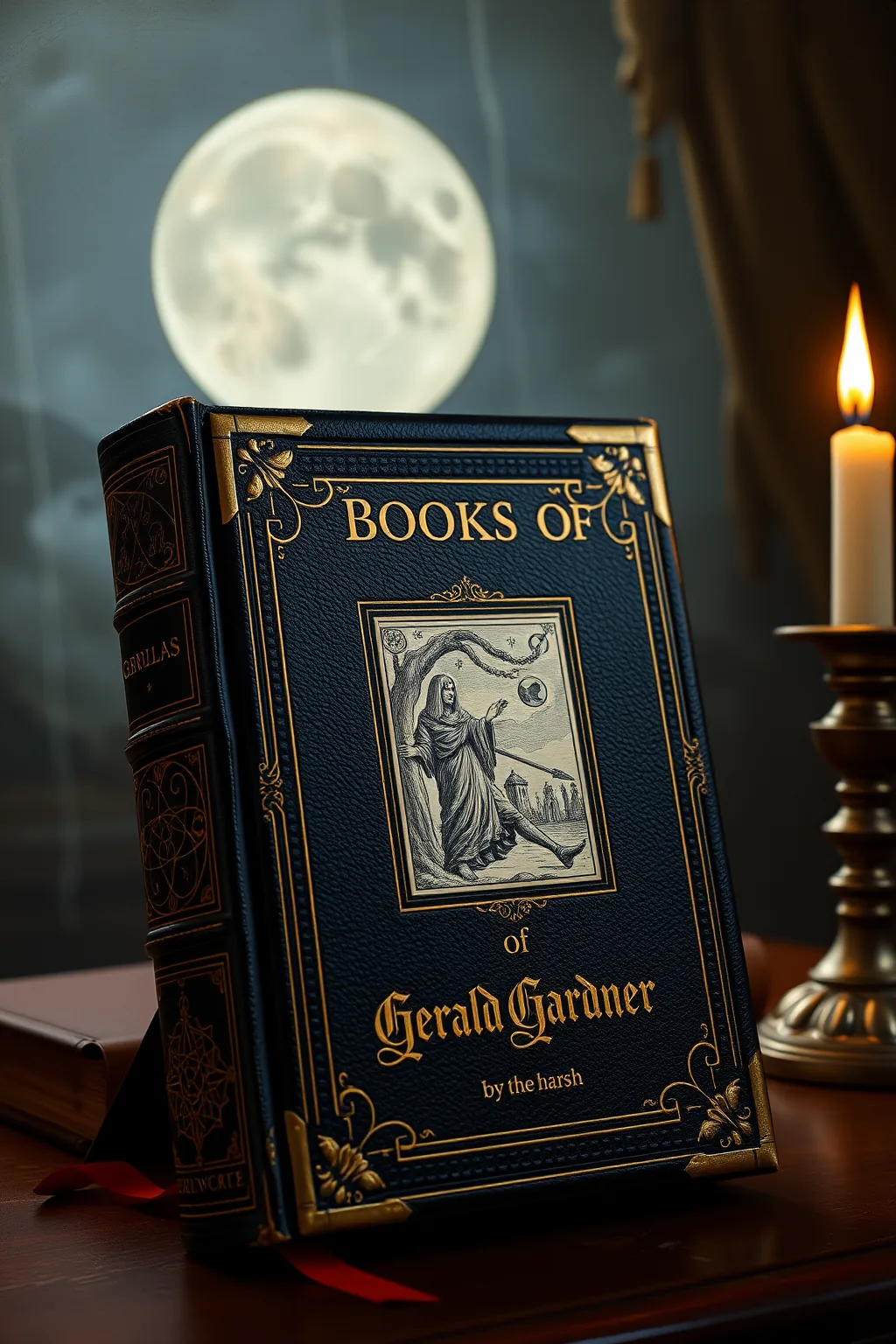
Books of Gerald Gardner
 81
81

Books of Gerald Gardner


Celeste Moreau (Divination & Symbolism Reviewer) — Gerald Gardner's collected works are foundational texts for any serious student of modern Witchcraft. His rigorous, yet deeply spiritual, approach to the Craft laid the groundwork for Wicca's resurgence. Within these pages lie the seeds of contemporary practice, from the structure of the Gardnerian Book of Shadows to the philosophical underpinnings of deity worship and ritual. Gardner offers not just instruction, but an invitation to a profound spiritual path, imbued with potent symbolism and a deep reverence for the natural world. Essential reading for practitioners seeking authentic roots and scholars investigating the evolution of Western esotericism.
📝 Description
81
Gerald Gardner's writings, published from the 1940s onward, are central to modern Wicca.
This collection gathers the significant works of Gerald Gardner, a key figure in the revival of Witchcraft. His books detail the rituals, beliefs, and symbolism that form the basis of modern Wicca. These texts are not simply historical accounts but practical guides to arcane practices and spiritual understanding. They cover spellcraft, invocation, and a deep connection to the natural world. The writings offer insight into a spiritual movement that began to take shape in the mid-20th century. For those interested in the origins and practice of this tradition, Gardner's books provide direct access to the foundational ideas.
Gardner's work emerged in the mid-20th century, a period of renewed interest in Western esotericism. He claimed to have discovered and revived an ancient witchcraft tradition, which he codified into what became known as Gardnerian Wicca. His writings synthesize elements from various occult sources, including ceremonial magic and folklore, to construct a distinct path. This tradition emphasizes a pantheistic worldview, reverence for nature, and the use of magic for personal and spiritual development.
💡 Why Read This Book?
Unlock the foundational texts of modern Witchcraft and gain direct access to the core teachings of Gerald Gardner. Essential for understanding Wicca's origins, this collection provides authentic ritual structures, potent symbolism, and a rich historical context. Ideal for practitioners seeking deep knowledge, scholars investigating esoteric traditions, and seekers drawn to the mysteries of the Craft.
⭐ Reader Reviews
Honest opinions from readers who have explored this book.
❓ Frequently Asked Questions
Who was Gerald Gardner and what is his significance?
Gerald Gardner was a pivotal figure in the mid-20th century who is widely credited with publicly re-establishing and popularizing the Craft of the Wise, leading to the development of modern Wicca and its various traditions.
What is the 'Book of Shadows'?
The Book of Shadows is a collection of magical texts, rituals, spells, and lore passed down within a coven or tradition. Gardner's own Book of Shadows is a foundational text for Gardnerian Wicca.
Are these books suitable for beginners?
While foundational, some texts can be dense. However, for the dedicated beginner willing to study, they offer unparalleled insight into the historical and ritualistic core of Wicca.
What is the relationship between Gardnerian Wicca and other pagan traditions?
Gardnerian Wicca is one of the earliest and most influential forms of modern Wicca. Its structure and rituals have informed many subsequent pagan and witchcraft traditions, though many variations now exist.
Can these texts be used for personal spiritual practice?
Absolutely. Gardner's works provide the historical and ritualistic framework for understanding and practicing Wicca. Many individuals draw inspiration and direct practice from these foundational texts.
🔮 Key Themes & Symbolism
The Gardnerian Book of Shadows
The central to Gardnerian Wicca, this text contains the sacred rituals, spells, invocations, and laws of the Craft as systematized by Gerald Gardner. It is a deeply symbolic and practical guide to the ancient mysteries, designed to be passed down through initiatory lineages. It reveals the structure of coven workings, the language of magic, and the profound relationship between the witch and the divine forces.
Witchcraft and Ancient Religion
Gardner's research and writings explore the historical continuity of witchcraft, linking modern practices to pre-Christian European paganism. He posited that witchcraft was a survival of an ancient fertility cult, a 'religion of the people' that persisted underground through centuries of persecution. This theme is crucial for understanding the perceived antiquity and legitimacy of the Craft.
The Power of Symbolism and Ritual
A central tenet of Gardner's work is the profound efficacy of symbolic action and ritual. His writings meticulously detail the symbolism inherent in tools, gestures, words, and the sacred landscape. These elements are not mere decoration but are seen as vital conduits for channeling spiritual energy, invoking deities, and transforming consciousness, offering a path to direct experience of the numinous.
💬 Memorable Quotes
Direct passages from the work, attributed to the author.
“Witchcraft works, and it is a good religion.”
— A direct assertion of the efficacy and spiritual validity of the Craft, challenging societal prejudices and asserting its power as a legitimate path.
“Love is the law, love under will.”
— A core tenet of Wicca, this phrase signifies that actions should be guided by compassion and ethical intent, tempered by personal responsibility and wisdom.
“Blessed be.”
— A ubiquitous greeting and farewell in Wicca, signifying a blessing, a wish for well-being, and a connection to the divine forces.
“An it harm none, do what ye will.”
— The Wiccan Rede's primary ethical guideline, emphasizing personal freedom and responsibility, while mandating that actions must not cause harm to oneself or others.
💡 Key Ideas
Editorial paraphrase of the work's core concepts — not direct quotes.
The old ways are the best ways.
This quote expresses Gardner's reverence for ancient traditions and his belief in their enduring wisdom and power, suggesting a return to primal spiritual sources.
🌙 Esoteric Significance
Tradition
Gardner's work is inextricably linked to the esoteric tradition of Western Ceremonial Magic and folk magic, synthesizing elements from Hermeticism, Qabalah, and pre-Christian European paganism. He revitalized the concept of the 'witch-cult,' positing an unbroken lineage of earth-based spirituality. His systematization of rituals and beliefs formed the basis of Gardnerian Wicca, a distinct initiatory tradition that profoundly influenced the broader Neo-Pagan landscape.
Symbolism
The symbolism within Gardner's texts is rich and complex, drawing from archetypal imagery and natural cycles. Key symbols include the athame (ritual knife), the wand (symbol of will and elemental air), the pentacle (representing the five elements and protection), and the Great Rite (representing the union of the divine masculine and feminine). These symbols are not merely decorative but are active agents in magical work, facilitating connection with the divine and the manipulation of spiritual energies.
Modern Relevance
Gardner's contributions remain highly relevant for understanding the foundations of modern Witchcraft and Wicca. His emphasis on the sacredness of nature, the concept of immanent divinity, and the empowering nature of ritual continues to resonate with millions. While many contemporary traditions have evolved, the core principles and symbolic language he codified provide an essential historical and philosophical anchor for practitioners and scholars alike, offering a framework for spiritual exploration.
👥 Who Should Read This Book
This collection is essential for anyone seeking to understand the origins and foundational principles of modern Wicca and Gardnerian Witchcraft. Aspiring practitioners will find direct ritualistic instruction and historical context. Scholars of religion and esotericism will gain invaluable insights into the development of Neo-Paganism. Seekers drawn to earth-based spirituality and ancient mysteries will discover a rich, potent tradition. Experienced practitioners may find it beneficial for deepening their understanding of the Craft's lineage and core tenets.
📜 Historical Context
Gerald Gardner's writings emerged during a fascinating post-war era in Britain, a time of shifting societal norms and burgeoning interest in alternative spiritualities. The mid-20th century saw a decline in traditional religious adherence and a growing curiosity for esoteric traditions, occultism, and pagan revivals. Gardner, a folklorist and amateur anthropologist, synthesized existing folklore, historical accounts of witch trials, and personal experiences to reconstruct and publicly present what he believed to be an ancient, unbroken tradition of witchcraft. His work, particularly the publication of 'Witchcraft Today' and the eventual revelation of his 'Book of Shadows', sparked a significant Wiccan renaissance, influencing the trajectory of modern Paganism and neo-pagan movements worldwide, challenging established religious paradigms.
📔 Journal Prompts
Reflect on the concept of 'love under will.' How does this principle guide your actions and intentions in your spiritual practice and daily life?
Explore the symbolism of a specific ritual tool mentioned in Gardner's work. How does its form and function connect to its esoteric meaning?
Consider the historical persecution of witches. How does this history inform your understanding of the resilience and secrecy of ancient magical traditions?
Gardner posited witchcraft as a survival of an ancient fertility cult. How does this perspective influence your connection to the cycles of nature and the divine feminine/masculine?
Write about your personal experience with the concept of 'immanent divinity' as suggested by Gardner's work. Where do you perceive the divine in the natural world?
🗂️ Glossary
Wiccan Rede
A set of ethical guidelines and principles central to Wiccan practice, famously including the maxim 'An it harm none, do what ye will.' It emphasizes personal freedom and responsibility within a framework of compassion and non-harm.
Coven
A traditional gathering of witches, typically consisting of thirteen members, led by a High Priestess and High Priest. Covens are the primary organizational structure for the practice and transmission of Wiccan traditions.
Initiation
A ritualistic process by which an individual is formally recognized and accepted into a spiritual tradition or coven. In Wicca, initiation often involves symbolic death and rebirth, marking a commitment to the Craft.
God and Goddess
The dualistic divine forces central to many Wiccan traditions, representing the masculine (God) and feminine (Goddess) aspects of the divine. They are often seen as embodying the cycles of life, death, and rebirth.
High Priestess
The female leader of a Wiccan coven, typically seen as embodying the divine feminine principle. She is responsible for leading rituals, teaching, and guiding the members of the coven.
This book appears in 2 collections
🔮 Readers Also Liked
Browse all →








From the “Witchcraft” Collection
View all →






More Free Witchcraft & Paganism Books
View all →