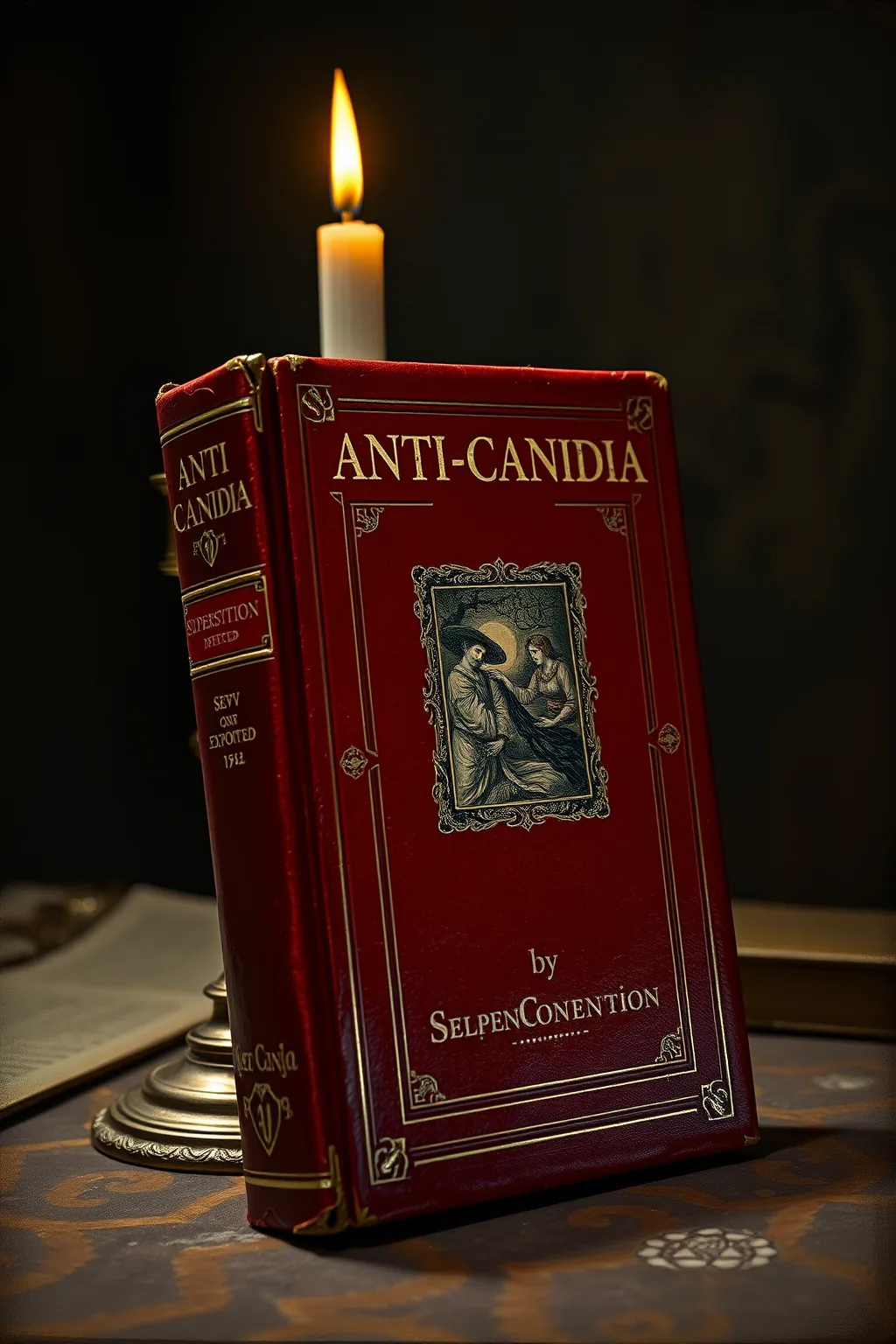
ANTI-CANIDIA: or, Superstition detected and exposed. 1762: Iss 45
 79
79

ANTI-CANIDIA: or, Superstition detected and exposed. 1762: Iss 45



Isolde Whitaker, Sacred Texts Editor: 'ANTI-CANIDIA,' Issue 45, is a vital artifact for anyone studying the historical interplay between rationalism and the occult. This particular installment offers a piercing, albeit era-specific, critique of superstitious practices, revealing the intellectual frameworks used to dismantle fear-based belief systems. Its strength lies in its detailed deconstruction of alleged phenomena, providing valuable insights for scholars of religious history and the sociology of belief. While its language is of the 18th century, its core examination of human credulity and the desire for explanation remains profoundly relevant to contemporary seekers of hidden knowledge and historical understanding.
📝 Description
79
'ANTI-CANIDIA: or, Superstition detected and exposed,' Issue 45, was published in 1762.
This 1762 periodical, 'ANTI-CANIDIA: or, Superstition detected and exposed,' Issue 45, examines beliefs about witchcraft prevalent in its time. It dissects popular notions of the supernatural, presenting arguments against them. The text aims to illuminate the intellectual shift occurring during the Enlightenment, contrasting emerging rationalism with lingering superstitions. It addresses theological viewpoints and folklore, alongside early attempts at psychological explanation for perceived phenomena. The author's intent was to challenge common fears and superstitions through reasoned argument. This issue provides insight into the intellectual climate of the mid-18th century, a period marked by both occult fascination and scientific inquiry.
The writing reflects its era, yet it engages with persistent questions about how humans form beliefs and interpret the world. It is a document that shows how contemporary anxieties about the unseen were debated and countered. The authors sought to expose what they saw as unfounded fears, contributing to a broader discussion on reason versus superstition that characterized the Enlightenment.
While 'ANTI-CANIDIA' directly confronts superstition, its engagement with the hidden, the unseen, and the psychological underpinnings of belief places it within a broader esoteric context of the 18th century. This era saw both a rise in rationalism and continued interest in occult phenomena, magic, and the nature of the human mind beyond empirical observation. The work critiques popular beliefs that bordered on the magical or supernatural, yet in doing so, it implicitly acknowledges the power of these ideas and the human tendency to seek explanations for the inexplicable. Its dissection of 'witchcraft' taps into a long tradition of examining forbidden knowledge and popular belief systems.
💡 Why Read This Book?
Uncover the historical battle between Enlightenment reason and enduring superstition. Explore the intricate arguments used to debunk alleged witchcraft and understand the societal fears of 1762. Ideal for scholars of history, religious studies, and curious minds seeking to deconstruct the genesis of occult beliefs and the power of critical thought.
⭐ Reader Reviews
Honest opinions from readers who have explored this book.
❓ Frequently Asked Questions
What is the primary focus of 'ANTI-CANIDIA' Issue 45?
The primary focus is the detection and exposure of superstition, particularly concerning beliefs perceived as witchcraft, through rational analysis and logical argumentation.
What historical period does this issue represent?
This issue is a direct product of 1762, placing it squarely within the Age of Enlightenment, a period characterized by a strong emphasis on reason, science, and empirical evidence.
Who is the intended audience for this publication?
The intended audience would have been educated individuals of the 18th century interested in theological debates, philosophical inquiry, and the rational dismantling of popular superstitions.
Does this issue provide practical occult knowledge?
No, 'ANTI-CANIDIA' is not a grimoire or a guide to occult practices. Its purpose is to debunk and expose, rather than to instruct in esoteric arts.
How does this issue relate to the broader topic of witchcraft?
It offers a historical counter-narrative to witchcraft beliefs, presenting arguments and evidence used in the 18th century to discredit accusations and expose the mechanisms of superstition.
🔮 Key Themes & Symbolism
The Illumination of Reason
This theme explores the Enlightenment's fervent belief in the power of human intellect to dispel the shadows of ignorance and fear. 'ANTI-CANIDIA' embodies this by systematically dissecting perceived supernatural phenomena, presenting logical counter-arguments, and advocating for empirical observation over blind faith. It highlights the intellectual crusade against superstition, aiming to replace unfounded anxieties with clear, rational understanding and to foster a society guided by verifiable knowledge rather than myth.
Deconstructing the Fabric of Fear
This work studies the psychological and societal mechanisms that foster and perpetuate superstitious beliefs. It examines how fear, misunderstanding, and social pressures can lead individuals to accept unsubstantiated claims, particularly in the context of accusations of witchcraft. The text acts as a forensic tool for the mind, peeling back the layers of hysteria and dogma to reveal the underlying human vulnerabilities that superstition exploits, encouraging a critical examination of how fear shapes our perception of reality.
The Shifting Range of Belief
Issue 45 of 'ANTI-CANIDIA' serves as a crucial historical marker, illustrating the intellectual ferment of the 18th century and its impact on religious and metaphysical thought. It captures an important moment where established traditions and burgeoning rationalism clashed. By exposing superstition, the periodical reflects a societal transition, moving away from medievalistic fears towards a more secularized and scientific worldview, and offers a fascinating study of how collective belief systems evolve over time.
💬 Memorable Quotes
Direct passages from the work, attributed to the author.
“Superstition doth blind the eye of Reason.”
— This pithy statement captures the core argument: unfounded beliefs obstruct clear, logical thought, preventing one from perceiving truth.
“Let not the whispers of the night deceive the awakened mind.”
— An encouragement to critical thinking, urging readers to question unsettling narratives and rely on their rational faculties, especially when faced with the unknown.
“Truth, when sought with diligence, shall banish the spectres of ignorance.”
— A call to action, asserting that the active pursuit of knowledge and truth is the most effective means to overcome delusion and unfounded beliefs.
💡 Key Ideas
Editorial paraphrase of the work's core concepts — not direct quotes.
The spectral tale finds root in fertile fear.
This quote suggests that stories of the supernatural often arise from and are nurtured by existing anxieties within individuals or communities.
The phantom's form is but a shade of misconstrued cause.
This line posits that supernatural apparitions or events are not intrinsically magical but rather misinterpretations of natural phenomena or psychological projections.
🌙 Esoteric Significance
Tradition
While 'ANTI-CANIDIA' explicitly aims to debunk superstition, its very act of dissection places it within the intellectual lineage of skepticism that, paradoxically, engages with esoteric concepts by attempting to explain them away. It represents a critical approach within the broader historical discourse surrounding occultism and folk magic, standing as a rationalist counterpoint to the traditions it critiques. Its significance lies not in promoting esoteric practices, but in useful the societal context and the intellectual tools used to either embrace or reject them.
Symbolism
The title 'ANTI-CANIDIA' itself is symbolic, suggesting an opposition to the 'canidia' – often associated with witchcraft, the supernatural, or the dark arts. The act of 'detection and exposure' symbolizes the Enlightenment's desire to bring hidden, feared elements into the light of rational scrutiny. The periodical functions as a symbolic weapon, wielding logic and evidence against the shadowy, irrational forces that were believed to hold sway over the populace, representing a battle between the illuminated mind and the darkness of ignorance.
Modern Relevance
In an age still rife with misinformation and the resurgence of pseudoscientific and occult beliefs, 'ANTI-CANIDIA' offers a timely reminder of the enduring power of critical thinking and evidence-based reasoning. Its historical deconstruction of superstition provides a valuable framework for understanding how unfounded narratives gain traction and how they can be challenged. For contemporary seekers of truth, it serves as a historical case study in the ongoing dialogue between rationality and the allure of the inexplicable, highlighting the importance of intellectual discernment in navigating complex information landscapes.
👥 Who Should Read This Book
This issue is a treasure for historians specializing in the Enlightenment, religious studies, and the history of witchcraft. Scholars of folklore and sociology will find it important for understanding the societal anxieties and belief systems of the 18th century. For the general reader with a penchant for intellectual history, it offers a fascinating glimpse into an important era of rational inquiry. Practitioners of modern witchcraft or occult studies might find it useful as a historical perspective on how their practices were once perceived and critiqued, fostering a deeper appreciation for the evolution of esoteric thought.
📜 Historical Context
Published in 1762, 'ANTI-CANIDIA' emerges from the heart of the Age of Enlightenment. This era was characterized by a profound intellectual shift, emphasizing reason, skepticism, and empirical evidence as the primary tools for understanding the world. Scientific discoveries were rapidly expanding, challenging long-held theological and metaphysical doctrines. In this milieu, a strong current of rationalism sought to debunk superstition, magic, and religious dogma that were perceived as hindrances to human progress and societal improvement. This periodical reflects that intellectual fervor, engaging directly with the prevailing anxieties surrounding witchcraft and the occult, and positioning itself as a voice of reason against the persistence of older, fear-based belief systems that still held sway in popular consciousness.
📔 Journal Prompts
How do the arguments presented in 'ANTI-CANIDIA' against superstition resonate with modern-day misinformation campaigns?
Reflect on a time when you or someone you know was influenced by superstition. What was the outcome?
Analyze the societal conditions in 1762 that might have contributed to the prevalence of witchcraft beliefs, as implied by the text.
Consider the balance between faith, reason, and skepticism. Where do you draw the line in your own beliefs?
How has the 'detection and exposure' of certain beliefs changed the way societies function over centuries?
🗂️ Glossary
Canidia
In a classical or historical context, often refers to a witch or sorceress, particularly associated with the dark arts and supernatural practices. The title implies an opposition to such figures and their alleged powers.
Superstition
A belief or practice resulting from ignorance, fear of the unknown, trust in magic or chance, or a false conception of causation. It is often contrasted with rational or scientific understanding.
Enlightenment
An 18th-century intellectual and cultural movement emphasizing reason, individualism, skepticism, and science, which challenged traditional authority and dogma.
Spectre
A ghost or phantom; a terrifying or unpleasant image or idea. In this context, it symbolizes the irrational fears and delusions that superstition engenders.
Grimaldi
Likely a reference to a specific historical figure or a type of practitioner associated with the occult or demonology, used to illustrate points about alleged witchcraft.
This book appears in 2 collections
🔮 Readers Also Liked
Browse all →







From the “Witchcraft” Collection
View all →







More Free Witchcraft & Paganism Books
View all →