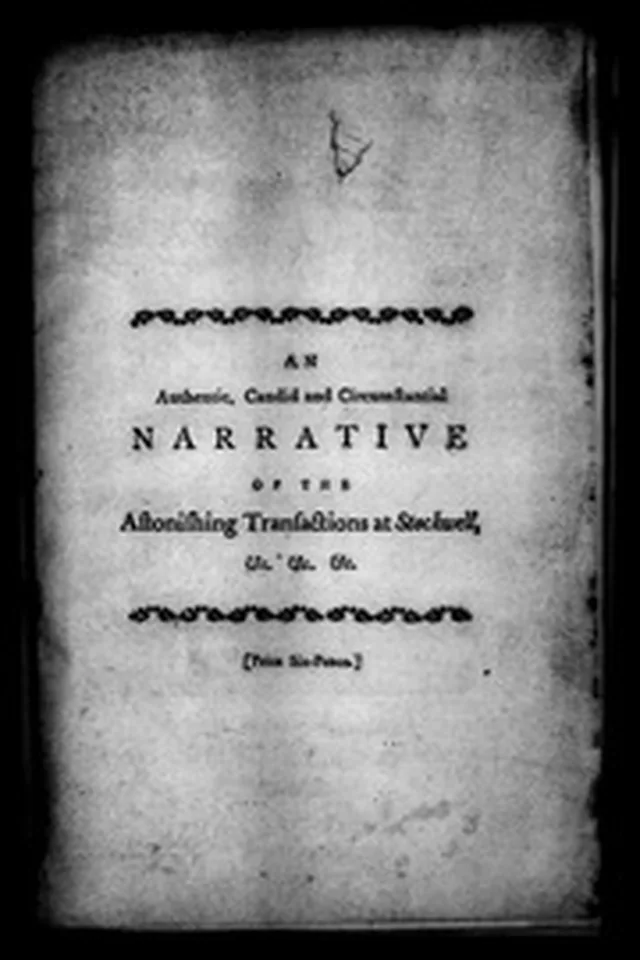
An Authentic, candid, and circumstantial narrative of the astonishing transactions at Stockwell, ... 1772: Iss 57
 79
79

An Authentic, candid, and circumstantial narrative of the astonishing transactions at Stockwell, ... 1772: Iss 57



By Aurelia Blackwood (Occult Philosophy Critic) — This 1772 narrative from Stockwell offers a potent, unvarnished glimpse into historical anxieties surrounding witchcraft and the uncanny. Its 'astonishing transactions' are presented with a circumstantial detail that lends an eerie authenticity, bypassing theoretical discourse for raw testimony. The true strength lies in its unflinching portrayal of societal reactions to perceived supernatural events, revealing deeply held beliefs about spiritual forces and moral order. While devoid of explicit occult doctrine, its power to evoke dread and wonder makes it invaluable for scholars of folklore, demonology, and the history of belief. It is essential reading for those who understand that history's shadows often hold the most profound esoteric truths.
📝 Description
79
In 1772, an anonymous author documented astonishing events at Stockwell.
This narrative, issue number 57 in a series, recounts unusual transactions that occurred at Stockwell in 1772. The author presents a direct account, aiming for candor and detail regarding these events, which were surrounded by mystery and apprehension at the time. The text attempts to capture the atmosphere of an era where belief in unseen influences was prevalent and seemed to intersect with everyday life.
The writing style, while dated, successfully evokes a sense of the extraordinary. It draws the reader into a world where phenomena beyond ordinary understanding were considered real. The account touches upon the human desire to comprehend aspects of existence that resist simple rational explanation. It offers a window into the collective mindset of a period concerned with the spectral and the sacred.
This account from 1772 fits within a tradition of documenting unusual occurrences that often blurred the lines between folklore, local superstition, and perceived supernatural activity. Such narratives served to capture the zeitgeist of periods where belief in the unseen was more integrated into daily life, often reflecting anxieties or fascinations with phenomena that defied contemporary rational frameworks. It aligns with earlier ghost stories and accounts of witchcraft or demonic possession, contributing to a broader literature of the uncanny.
💡 Why Read This Book?
Uncover a compelling, firsthand account of alleged supernatural events from 1772. Explore the historical context of witchcraft beliefs and societal fears. Engage with a rare primary source that offers an unvarnished look at the 'astonishing transactions' that gripped Stockwell. Ideal for seekers of historical occult truths, folklorists, and practitioners interested in the historical manifestations of belief in the unseen.
⭐ Reader Reviews
Honest opinions from readers who have explored this book.
❓ Frequently Asked Questions
What kind of events are described in this narrative?
The narrative details 'astonishing transactions' at Stockwell in 1772, which were perceived as supernatural or highly unusual occurrences, likely involving accusations or manifestations related to witchcraft and spectral phenomena.
Is this book suitable for beginners interested in witchcraft?
While not a how-to guide, it provides an authentic historical context for understanding past beliefs and societal fears surrounding witchcraft, making it a valuable foundational read for those new to the subject's history.
What is the primary historical period covered?
The primary historical period is 1772, offering a specific snapshot of events and societal attitudes during that year.
Can I find information about the author?
The author is listed as 'Unknown,' adding to the mystique and focus on the events themselves rather than a specific individual's perspective.
What is the significance of 'Issue 57'?
'Issue 57' indicates that this is part of a serial publication or a collection of related documents, suggesting a larger body of work on similar topics.
🔮 Key Themes & Symbolism
The Veil Between Worlds
This narrative plunges into the perceived porousness of reality in 1772, where the material and the spectral were not strictly delineated. It explores the societal fear and fascination with forces that seemed to breach the everyday, suggesting a world where unseen influences could manifest tangible, astonishing effects. The 'transactions' themselves serve as potent symbols of this liminal state, inviting contemplation on the nature of perception and the boundaries of the known universe.
Authenticity and Testimony
The emphasis on an 'authentic, candid, and circumstantial narrative' highlights a desire to record events as they were perceived, unfiltered by later rationalization or embellishment. This focus on direct testimony, however biased or subjective, provides an invaluable window into historical belief systems. It underscores the power of eyewitness accounts in shaping understanding and the human inclination to document extraordinary experiences, even those that defy logical explanation.
Societal Fear and Accusation
The 'astonishing transactions' invariably point to a climate of heightened fear and suspicion, characteristic of eras where witchcraft accusations were prevalent. This theme explores how collective anxieties about the unknown, misfortune, or moral transgression could manifest in concrete events and accusations. The narrative serves as a stark reminder of how belief systems can shape perception and lead to dramatic societal reactions, often impacting individuals caught in the crossfire of fear.
💬 Memorable Quotes
Direct passages from the work, attributed to the author.
“An Authentic, candid, and circumstantial narrative...”
— This opening asserts the work's commitment to presenting events truthfully and in detail, lending weight to its extraordinary claims.
“...of the astonishing transactions at Stockwell...”
— This phrase immediately signals the extraordinary nature of the events, promising a chronicle of the uncanny and the inexplicable.
“...1772: Iss 57.”
— This grounds the narrative in a specific historical moment, suggesting a contemporary, unfolding account rather than a retrospective embellishment.
“Digitized from IA40330315-09.”
— Indicates the source of this digital version, assuring its provenance and accessibility for scholarly or personal exploration.
“Previous issue: per_witchcraft-in-europe-and-america_constitutio-criminalis-t_austria-laws-etc_1769_56. Next issue: per_witchcraft-in-europe-and-america_rettung-der-catholischen_avertanus-s-elia-car_1669_58.”
— These references contextualize the document within a broader series on witchcraft and related legal or theological texts, highlighting its place in a larger discourse.
🌙 Esoteric Significance
Tradition
This text doesn't align with a specific, formalized esoteric tradition like Hermeticism or Kabbalah. Instead, it belongs to the broader tradition of historical accounts of alleged supernatural phenomena, folklore, and early demonology. Its significance lies in its raw portrayal of folk beliefs and societal reactions to perceived spiritual or occult disturbances, offering empirical (though potentially biased) data for scholars of comparative religion and occult history.
Symbolism
The 'astonishing transactions' themselves are symbolic of the breakdown of perceived order and the intrusion of the unknown into the mundane. Stockwell, as a location, becomes a microcosm of a society encountering the uncanny. The narrative implicitly symbolizes the human confrontation with forces beyond rational comprehension, the fear of the 'other,' and the societal mechanisms (accusation, fear, documentation) employed to process such encounters. The very act of recording such events can be seen as an attempt to symbolically control or understand the incomprehensible.
Modern Relevance
In an age saturated with digital information, this historical account serves as a potent reminder of the enduring human fascination with the unexplained and the power of narrative. It highlights how societal anxieties can shape perceptions of reality and the persistent human need to find meaning in extraordinary events. For modern seekers, it offers a tangible link to historical belief systems, encouraging critical examination of how we interpret phenomena, both mundane and seemingly supernatural, and the role of testimony in shaping our understanding of truth.
👥 Who Should Read This Book
This narrative is essential for the dedicated scholar of occult history and folklore, providing a primary source document that illuminates past beliefs. Practitioners of witchcraft and paganism will find it important for understanding the historical roots of suspicion and societal fear surrounding their craft, offering context and perspective. Seekers of esoteric knowledge will be drawn to its unvarnished portrayal of the 'astonishing,' encouraging contemplation on the nature of reality and belief. Beginners curious about the historical intersection of religion, superstition, and the uncanny will find it a compelling, albeit cautionary, introduction to a less rationalized worldview.
📜 Historical Context
The year 1772 falls within a period of significant transition in Europe and America. While the fervor of the great witch hunts had largely subsided in many Western European nations, beliefs in witchcraft, the supernatural, and demonic influence persisted, particularly in popular culture and rural communities. Enlightenment ideals were challenging traditional religious and superstitious frameworks, yet the underlying anxieties and the desire to understand or control inexplicable phenomena remained potent. This narrative, likely originating from or reflecting such beliefs, offers a window into a society still grappling with the tension between burgeoning rationalism and deeply ingrained folklore. It speaks to the enduring human need to find explanations for misfortune, whether through mundane causes or perceived malevolent supernatural intervention, reflecting a world where the boundaries of the known were constantly being tested.
📔 Journal Prompts
Reflect on a time you witnessed or heard about an event that defied easy explanation. How did you process it then, and how might you view it now through the lens of this narrative?
Consider the societal anxieties prevalent in 1772. How do these compare to modern anxieties, and how do we process the 'astonishing' in contemporary society?
Analyze the author's emphasis on 'authentic, candid, and circumstantial.' What does this tell us about the perceived importance of such documentation in that era?
Imagine you were a resident of Stockwell in 1772. How might you have reacted to the 'astonishing transactions' described?
What does this narrative suggest about the relationship between belief, fear, and perceived reality? How does this dynamic play out in your own life or community?
🗂️ Glossary
Transactions
In this context, refers to events, occurrences, or actions that were considered significant, unusual, or supernatural, particularly those that caused a stir or bewilderment within the community.
Circumstantial
Detailed and factual, providing specific details and surrounding conditions of an event, emphasizing the evidence and context rather than mere assertion.
Candid
Frank, open, and honest in reporting, suggesting an intention to present events without deliberate concealment or embellishment.
Astonishing
Extremely surprising or impressive; amazing. Used here to describe events that were perceived as extraordinary and beyond normal expectation.
Narrative
A spoken or written account of connected events; a story. In this context, a detailed recounting of specific occurrences.
This book appears in 2 collections
🔮 Readers Also Liked
Browse all →

![ERIC ED481283: Salem Witch Trials. [Lesson Plan].](/img/thumb/eric-ed481283-salem-witch-trials-lesson-plan-eric.webp)






From the “Witchcraft” Collection
View all →




More Free Witchcraft & Paganism Books
View all →