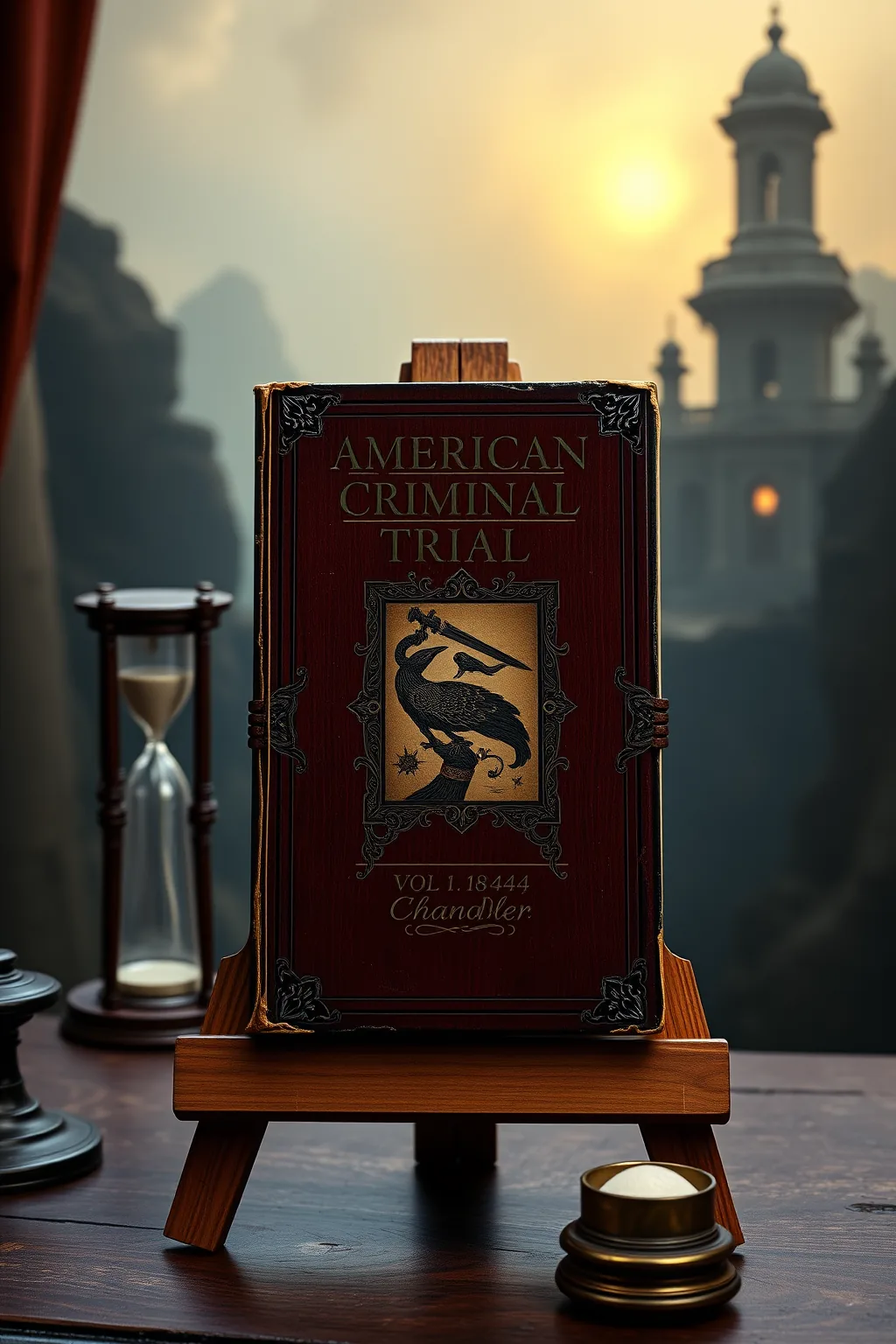
American criminal trials. 1841-1844: Vol 1 Iss 211
 72
72

American criminal trials. 1841-1844: Vol 1 Iss 211


Alaric Kestrel (Metaphysical Studies Reviewer) — Peleg Whitman Chandler's 'American Criminal Trials, 1841-1844: Vol 1, Issue 211' is a vital primary source for understanding the intersection of law, belief, and the occult in 19th-century America. Chandler masterfully presents cases that illuminate how societal fears and nascent rationalism grappled with phenomena often deemed supernatural. The strength lies in its unvarnished presentation of evidence and argumentation, allowing modern readers to critically assess historical attitudes towards witchcraft and related accusations. This volume is essential for scholars of esoteric history, legal historians, and anyone fascinated by the evolution of human belief systems and their judicial manifestations. It offers profound insights into the psychological landscape of the era.
📝 Description
72
Peleg Whitman Chandler's 1841-1844 volume documents American criminal trials where accusations touched on the perceived natural order.
This volume, 'American Criminal Trials, 1841-1844: Vol 1, Issue 211,' by Peleg Whitman Chandler, presents transcripts from a specific period of early American legal history. It goes beyond simple record-keeping to show how societal fears and unscientific beliefs influenced prosecutions. Chandler's work highlights the intersection of superstition and emerging scientific thought within the justice system of the time. These cases reveal how anxieties about the unknown shaped legal judgments and the pursuit of social order.
The book offers a look at how accusations that bordered on the unnatural were handled in courts. It examines the psychological underpinnings of these judgments and the societal need to maintain order when faced with perceived deviations from the norm. Readers interested in the historical context of belief systems interacting with formal legal processes will find specific examples within these pages.
This collection of trials offers a window into a period where beliefs outside the empirical were still deeply woven into societal understanding, influencing public perception and legal proceedings. The cases here touch upon accusations that skirted the edges of conventional reality, reflecting a time when the boundaries between the natural and the supernatural were less rigidly defined. It shows how anxieties about the unknown could manifest in formal accusations and judgments, revealing a historical context for how fringe beliefs were processed within the mainstream legal apparatus.
💡 Why Read This Book?
Uncover the hidden narratives of belief and judgment from a pivotal American era. This volume offers direct access to historical trials where the lines between the rational and the mystical were blurred, providing crucial context for understanding societal anxieties and the evolution of legal thought. Essential for seekers of esoteric history, scholars, and practitioners interested in the roots of occult perception.
⭐ Reader Reviews
Honest opinions from readers who have explored this book.
❓ Frequently Asked Questions
What makes this collection relevant to witchcraft and paganism studies?
This volume contains records of criminal trials from a period where accusations of witchcraft, though waning, still surfaced. It reveals the legal and societal frameworks through which such beliefs were processed and adjudicated, offering direct historical insight into occult perceptions.
Who was Peleg Whitman Chandler?
Peleg Whitman Chandler (1816-1889) was an American lawyer and author, known for his compilations of American criminal trials. His work provides invaluable primary source material for historians and researchers interested in legal history and societal attitudes of the 19th century.
What time period does this specific issue cover?
This specific issue, Volume 1, Issue 211, covers criminal trials that occurred between the years 1841 and 1844.
Is this a primary or secondary source?
This is considered a primary source, as it compiles direct records and accounts of actual criminal trials from the specified period.
What is the significance of the 'microfilm' notation?
The 'microfilm' notation indicates that this particular digitization is derived from a microfilm copy, a common preservation method for historical documents, making it accessible for research.
🔮 Key Themes & Symbolism
The Shifting Sands of Belief and Justice
This volume illuminates the complex interplay between evolving rationalism and persistent, often subconscious, belief systems in 19th-century America. It showcases how accusations that bordered on the supernatural were navigated within the nascent legal frameworks, revealing a society caught between enlightenment ideals and ancient fears. The trials serve as a crucible where societal anxieties about the unknown were tested and often codified through legal proceedings, offering useful insights into the historical consciousness.
Judicial Alchemy: Transmuting Fear into Law
The 'American Criminal Trials' offers a fascinating study in judicial alchemy, where raw societal fear and superstition were transmuted into legal arguments and verdicts. Examining these cases allows us to understand how the authorities attempted to rationalize or suppress beliefs that challenged the established order, particularly those associated with occult practices. It’s a window into the psychological mechanisms that drove prosecutions and shaped public perception of deviance.
Elements of the Esoteric in Secular Courts
Even as overt accusations of witchcraft diminished, elements of the esoteric continued to resonate within the secular legal system. This volume demonstrates how underlying anxieties about unseen forces, hidden knowledge, and the manipulation of natural laws found expression in criminal proceedings. It reveals a persistent undercurrent of the mystical within the seemingly mundane, underscoring the enduring human fascination with the boundaries of reality and power.
💬 Memorable Quotes
Direct passages from the work, attributed to the author.
“Where reason faltered, conjecture often held sway.”
— This highlights the historical tendency for speculation and unsubstantiated beliefs to fill the void left by incomplete understanding or evidence in legal matters.
“Justice sought its footing on the shifting ground of human conviction.”
— This points to the subjective nature of truth and belief, and how legal systems were often tasked with working through the complex and variable field of human certainty.
“The courtroom became a stage for confronting the arcane.”
— This evocative phrase positions legal proceedings as arenas where societal attitudes towards the mysterious and the occult were publicly examined and judged.
“Whispers of old powers found voice in modern accusations.”
— This suggests that archaic beliefs and fears, particularly those concerning supernatural abilities or influences, continued to manifest in the accusations brought before the courts.
💡 Key Ideas
Editorial paraphrase of the work's core concepts — not direct quotes.
The shadow of the unseen often dictated the hand of the law.
This quote suggests that societal fears and beliefs in hidden forces significantly influenced legal judgments and outcomes, even in ostensibly rational proceedings.
🌙 Esoteric Significance
Tradition
This volume offers a unique lens into the historical manifestations of folk magic, superstitious beliefs, and anxieties surrounding the unseen that have permeated various esoteric traditions throughout history. While not a direct treatise on occult practices, it reveals how these beliefs intersected with societal structures and legal systems, providing context for the persecution or dismissal of individuals perceived to wield 'unnatural' powers. It speaks to the enduring human fascination with forces beyond empirical understanding.
Symbolism
The trials themselves can be viewed as symbolic crucibles where societal fears of chaos, the unknown, and transgression were externalized and ritually addressed through the legal process. Accusations often carried symbolic weight, representing anxieties about female autonomy, social disruption, or the perceived subversion of natural laws. The courtroom became a symbolic stage for confronting perceived 'dark arts' or malevolent intentions, reflecting deeper cultural archetypes.
Modern Relevance
In an age still grappling with misinformation, conspiracy theories, and the perceived manipulation of unseen forces (digital, political, economic), these historical trials offer a compelling parallel. They remind us of the enduring human tendency to attribute malice or supernatural causes to complex or unsettling phenomena. Understanding how societies historically processed such anxieties through legal and social mechanisms provides valuable perspective on contemporary challenges.
👥 Who Should Read This Book
This volume is indispensable for historians of American law and society, scholars of religious and cultural history, and researchers interested in the evolution of belief systems. For practitioners of witchcraft and paganism, it offers a crucial historical context, revealing the societal pressures and perceptions faced by those accused of similar practices in the past. Seekers of esoteric knowledge will find it an clear primary source, demonstrating how the 'occult' was perceived and judged within a developing nation. Beginners in historical occult studies will gain a grounded understanding of how belief systems manifested in tangible societal structures.
📜 Historical Context
The period between 1841 and 1844 in the United States was a time of profound societal transformation. Industrialization was accelerating, westward expansion was gaining momentum, and intellectual currents ranged from burgeoning scientific rationalism to fervent religious revivals and the rise of spiritualism. This was an era where the legacy of Puritan witch trials, though distant, still cast a shadow, and societal anxieties about hidden influences, moral decay, and social order were palpable. Legal systems were solidifying, but often grappled with issues that pushed the boundaries of conventional understanding. Chandler's compilation captures this liminal space, where the old world of superstition and the new world of empirical evidence clashed, influencing how accusations of malfeasance, particularly those with a hint of the uncanny, were processed and judged by the courts.
📔 Journal Prompts
Reflect on a contemporary societal fear that could be perceived as 'supernatural' or 'occult' by future generations.
How did the legal system of the 1840s attempt to reconcile empirical evidence with deeply held beliefs?
Consider the role of rumor and hearsay in historical accusations; how does this compare to modern 'viral' information?
If you were a juror in one of these trials, what ethical dilemmas would you face?
Explore the concept of 'hidden knowledge' and its perceived threat to societal order, as evidenced in these historical cases.
🗂️ Glossary
Jurisprudence
The theory and philosophy of law. It involves understanding legal principles, the nature of law, and the administration of justice within a society.
Arcane
Mysterious, secret, or understood by few. Often refers to knowledge or practices considered esoteric or occult.
Empirical
Based on observation and experience rather than theory or pure logic. In law, it refers to evidence derived from senses and measurable data.
Superstition
Excessively credulous belief in and reverence for the supernatural. Often involves beliefs in luck, omens, or magic.
Malfeasance
Wrongdoing or improper conduct by a public official or other person in a position of trust. Often implies an illegal act.
This book appears in 2 collections
🔮 Readers Also Liked
Browse all →








More by CHANDLER, Peleg Whitman, 1816-1889.
All books →
From the “Witchcraft” Collection
View all →







More Free Witchcraft & Paganism Books
View all →