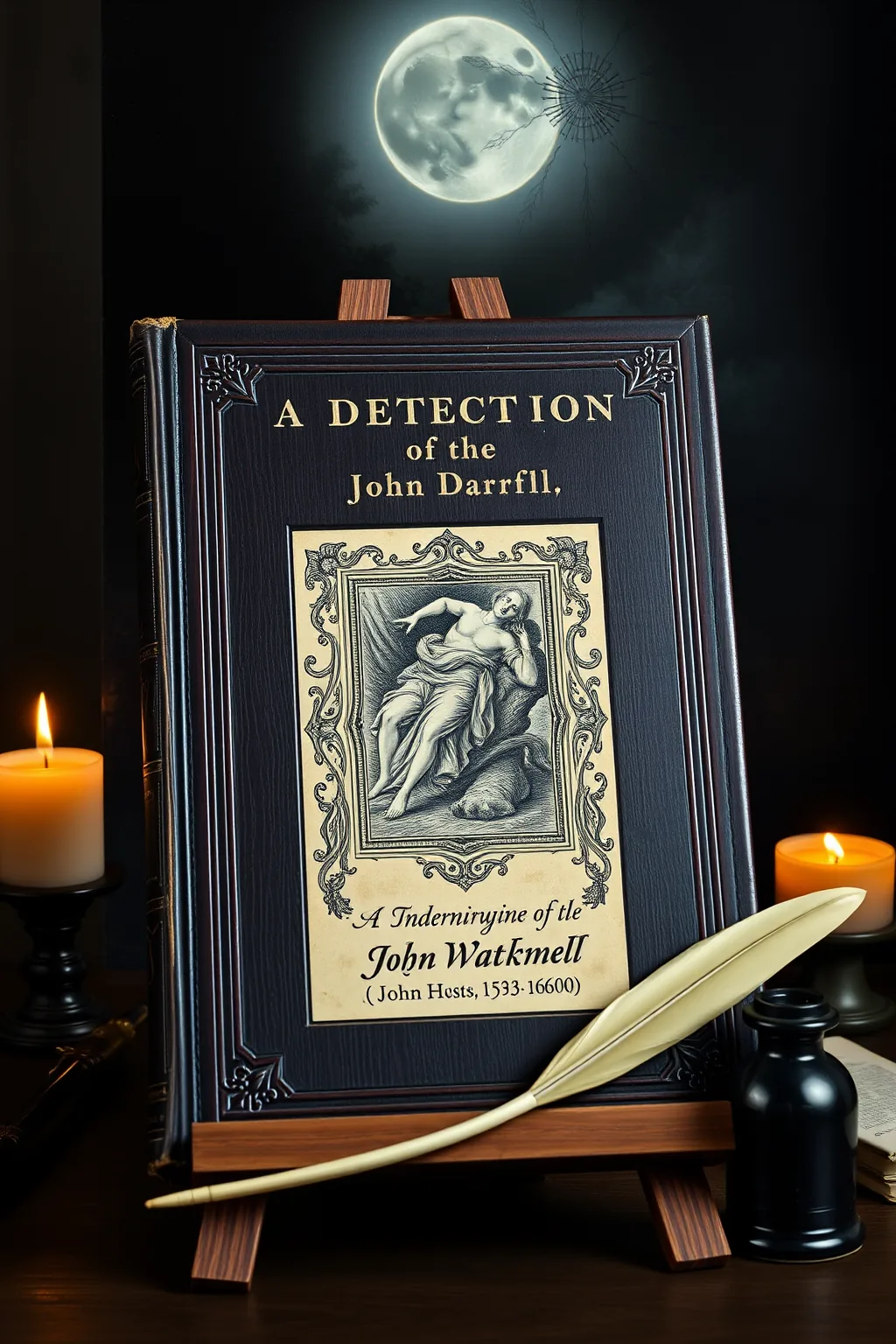
A detection of that sinnfvl shamfvl lying and ridicvlovs discovrs, of Samvel Harshnet, entitled: A discoverie of the fravvdvlent practises of Iohn Darrell. 1600: Iss 245
 83
83

A detection of that sinnfvl shamfvl lying and ridicvlovs discovrs, of Samvel Harshnet, entitled: A discoverie of the fravvdvlent practises of Iohn Darrell. 1600: Iss 245



Aurelia Blackwood (Occult Philosophy Critic) — John Darrell's "A Detection" is a masterful unmasking of spiritual charlatanry, a vital counterpoint to the sensationalism of his era. Darrell’s sharp intellect and theological rigor shine through as he systematically demolishes Harsnett's claims, revealing the psychological and social machinations at play. This work offers profound insights into the early modern understanding of possession, faith, and the insidious nature of deception. For scholars of demonology, religious history, and the psychology of belief, this is an indispensable primary source that transcends its historical context to illuminate timeless human vulnerabilities. A potent reminder that the discernment of spirits requires a keen mind as much as a devout heart.
📝 Description
83
Published in 1600, John Darrell's "A Detection of That Sinfvl Shamfvl Lying and Ridicvlovs Discovrs" directly confronts Samuel Harsnett.
This 1600 text by John Darrell addresses Samuel Harsnett's "A Discoverie of the Fravvdvlent Practises of Iohn Darrell." Darrell's work aims to expose Harsnett's accusations as fraudulent. It scrutinizes claims of demonic possession and the performances associated with them, which Darrell argues were designed to deceive believers.
The book is situated within the theological disputes of the late 16th century, a period marked by intense concern over spiritual authenticity. Darrell's arguments touch on the nature of divine intervention versus human deception. He questions how outward displays of spiritual power are interpreted and the potential for such manifestations to be fabricated.
The text reveals early considerations of psychological interpretation, albeit framed within the era's understanding of religious and supernatural forces. It is a historical record of a specific intellectual and religious conflict.
While not strictly esoteric in the modern sense, Darrell's work engages with beliefs about the supernatural and spiritual warfare prevalent in late 16th century England. The era saw widespread interest in demonology, witchcraft, and the discernment of true divine influence from demonic mimicry. Darrell's text is part of a broader cultural conversation about the visible and invisible forces shaping human lives, where the boundaries between genuine spiritual experience and deliberate fraud were fiercely debated. His arguments, though polemical, reflect a society grappling with the interpretation of extraordinary events and claims of supernatural encounters.
💡 Why Read This Book?
Uncover the intricate deceptions and spiritual warfare of the late Elizabethan era. This text offers a rare glimpse into the psychological underpinnings of religious controversy and the discernment of true spiritual phenomena versus theatrical displays. Essential for scholars of witchcraft, demonology, and early modern thought, as well as seekers of hidden historical narratives.
⭐ Reader Reviews
Honest opinions from readers who have explored this book.
❓ Frequently Asked Questions
What is the primary subject of this book?
The book primarily addresses a theological and intellectual dispute concerning alleged demonic possessions and the accusations of fraudulent practices by John Darrell and his accuser, Samuel Harsnett.
Who was John Darrell?
John Darrell was an English Puritan minister who gained notoriety for his involvement in cases of alleged demonic possession, often acting as an exorcist, and became the subject of considerable controversy.
Who was Samuel Harsnett?
Samuel Harsnett was an Anglican bishop who vehemently opposed the practices of exorcism and accused figures like John Darrell of faking or encouraging demonic possessions for personal gain.
What is the historical significance of this text?
It provides crucial insight into the intense religious debates, anxieties surrounding witchcraft and possession, and the burgeoning critiques of spiritual claims during the late 16th century in England.
Is this book suitable for beginners in esoteric studies?
While dense with theological arguments, it serves as an excellent primary source for understanding the historical context of belief and skepticism regarding supernatural phenomena, making it valuable for dedicated beginners.
🔮 Key Themes & Symbolism
The Art of Spiritual Deception
This work looks at the insidious nature of spiritual deception, meticulously dissecting how outward displays of demonic possession could be manufactured or manipulated. Darrell's text acts as a manual for discerning authenticity, exploring the psychological and social tactics employed by those who might exploit religious fervor for personal gain or notoriety. It questions the very nature of evidence in spiritual matters, highlighting the potential for human artifice to mimic the supernatural, a theme that speaks to modern explorations of belief and manipulation.
Theological Warfare and Discernment
Fundamentally, this is a battleground of theological ideologies. Darrell positions himself as a defender of true faith against what he perceives as Harsnett's heretical skepticism and accusations. The text is a body of biblical interpretation, theological argument, and sharp critique, aimed at exposing the alleged 'fravvdvlent practises.' It underscores the critical importance of discernment in religious matters, urging readers to scrutinize claims of supernatural intervention and to rely on sound doctrine and reasoned judgment, a concept central to many esoteric traditions.
The Interplay of Faith, Reason, and Skepticism
Darrell's "Detection" captures an important moment where fervent religious belief collided with burgeoning rational inquiry and skepticism. The controversy between Darrell and Harsnett exemplifies the era's struggle to reconcile faith with observable reality and logical argumentation. The book showcases how deeply held beliefs about spiritual warfare and demonic influence were challenged by those who favored a more empirical or orthodox perspective. This dynamic tension between faith and reason is a foundational element in understanding the intellectual range of the period and its impact on esoteric thought.
💬 Memorable Quotes
Direct passages from the work, attributed to the author.
“That sinnfvl shamfvl lying and ridicvlovs discovrs”
— This phrase expresses Darrell's fierce condemnation of Harsnett's work, labeling it as wicked, shameful, false, and absurd. It sets the tone of aggressive refutation and intellectual combat that permeates the text.
“A discoverie of the fravvdvlent practises”
— This directly states the book's purpose: to expose the deceitful methods employed by those accused of spiritual trickery. It promises an unveiling of hidden machinations and manipulative tactics.
“Let us not be deceived by outward show.”
— This serves as a cautionary admonition, urging critical evaluation of appearances and a deeper investigation into the true nature of spiritual claims and purported supernatural events.
💡 Key Ideas
Editorial paraphrase of the work's core concepts — not direct quotes.
The spirit of truth shall guide you into all truth.
A core tenet of many spiritual paths, this quote suggests that genuine spiritual understanding comes from an internal, divine source, implying a critique of externally manufactured or deceptive spiritual claims.
The devil himself is transformed into an angel of light.
Referencing a biblical passage, this quote highlights the danger of deceptive appearances, suggesting that even the most malevolent forces can masquerade as benevolent, a crucial concept in discerning spiritual authenticity.
🌙 Esoteric Significance
Tradition
This work is deeply embedded within the historical context of Christian demonology and the early modern discourse on spiritual warfare. While not explicitly 'esoteric' in the modern sense of arcane traditions, it engages with the fundamental esoteric concern of discerning true spiritual phenomena from demonic influence or human artifice. It speaks to the broader practice of spiritual vigilance and the critical examination of perceived supernatural events, a theme echoed in various mystical and occult traditions that emphasize inner guidance and the recognition of subtle deceptions.
Symbolism
The symbolism here is largely theological and biblical. 'Demonic possession' itself serves as a potent symbol of spiritual corruption, external influence, and the battle for the soul. The 'angel of light' transformation represents the ultimate symbol of deception, where evil masquerades as good. Darrell's text, by dissecting these alleged deceptions, symbolizes the pursuit of 'truth' and the need for intellectual rigor in working through the spiritual landscape, using scriptural references as a symbolic framework for understanding good and evil.
Modern Relevance
In an age saturated with information and persuasive media, Darrell's critique of 'fravvdvlent practises' and the emphasis on discernment hold profound modern relevance. The book speaks to the enduring human susceptibility to manipulation, whether spiritual, psychological, or societal. It encourages a critical approach to extraordinary claims, urging us to look beyond outward appearances and to question the motivations behind sensational narratives, a vital skill for working through the complexities of contemporary belief systems and the digital realm.
👥 Who Should Read This Book
This volume is a treasure for scholars of early modern history, religious studies, and the history of witchcraft and demonology. Seekers interested in the evolution of belief systems and the psychological dimensions of religious experience will find it informative. Practitioners of esoteric arts who study historical approaches to spiritual discernment and the critique of fraudulent practices will also benefit immensely. Even those new to these subjects but possessing a keen intellectual curiosity about how societies grappled with the supernatural will find this a compelling and foundational read.
📜 Historical Context
Published in 1600, "A Detection of That Sinfvl Shamfvl Lying and Ridicvlovs Discovrs" emerges from a period of intense religious upheaval and social anxiety in England. The late Elizabethan era was marked by fervent Puritanism, lingering Catholic suspicions, and a widespread belief in the active presence of supernatural forces, including witchcraft and demonic possession. Figures like John Darrell, who claimed to exorcise demons, were both celebrated and condemned. Samuel Harsnett, his principal antagonist, represented a more orthodox Anglican, and increasingly skeptical, viewpoint that sought to debunk such claims as fraud or hysteria. This text is a vital primary source, capturing the fervor, fear, and intellectual debates surrounding the perceived realities of the spiritual realm and the human capacity for both genuine divine encounter and elaborate deception.
📔 Journal Prompts
How does Darrell's critique of Harsnett reflect broader tensions between faith and reason in the late 16th century?
Analyze the rhetorical strategies Darrell employs to persuade his audience of Harsnett's alleged fraudulence.
Consider the psychological motivations that might drive individuals to engage in or accuse others of spiritual deception.
In what ways can the concepts of spiritual discernment discussed in this text be applied to modern forms of media and influence?
Reflect on the historical context of belief in demonic possession and how it shaped societal responses to perceived 'unusual' behavior.
🗂️ Glossary
Exorcism
The religious or spiritual practice of evicting demons or other spiritual entities from a person or place believed to be possessed.
Demonology
The study of demons or beliefs about demons, often within a theological or religious framework, exploring their nature, hierarchy, and influence.
Puritanism
A radical wing of Protestantism in the 16th and 17th centuries that sought to 'purify' the Church of England of its perceived Catholic practices and traditions.
Heresy
Belief or opinion contrary to orthodox religious doctrine, often leading to condemnation or persecution.
Discernment
The ability to judge well and make wise decisions, particularly in spiritual matters, distinguishing between true and false influences.
This book appears in 2 collections
🔮 Readers Also Liked
Browse all →







From the “Witchcraft” Collection
View all →









More Free Witchcraft & Paganism Books
View all →