The Theosophical Movement Vol-58,No-9,July 1988

 81
81

The Theosophical Movement Vol-58,No-9,July 1988


Ophelia Vance, Mystical Literature Reviewer — This July 1988 issue of 'The Theosophical Movement' is a potent distillation of Theosophical thought. It excels in its nuanced exploration of spiritual evolution and the hidden interconnectedness of all life. The articles offer profound insights into ancient wisdom traditions, presented with clarity and depth. Its strength lies in bridging abstract metaphysical concepts with practical application for the spiritual aspirant. Ideal for dedicated students of Theosophy and serious seekers of occult knowledge, this volume provides a valuable perspective on enduring spiritual principles, fostering a deeper understanding of the universal laws that govern existence and consciousness.
📝 Description
81
The July 1988 issue of The Theosophical Movement (Vol. 58, No. 9) examined the symbolic language of the cosmos.
This 1988 issue of The Theosophical Movement journal, Volume 58 Number 9, discusses ancient philosophies that informed the Theosophical movement. It presents discussions on hidden knowledge, the mechanics of karma and reincarnation, and the symbolic interpretations of the cosmos from a mystical viewpoint. The content is aimed at readers interested in spiritual truths, the study of esoteric traditions, and those on a path of personal spiritual development. The articles in this volume invite contemplation on the deeper questions of existence and the development of the human spirit. It seeks to shed light on the ongoing human pursuit of understanding the universe's structure and humanity's role within it. The aim is to encourage a thoughtful approach to these complex subjects.
This publication aligns with the broader Theosophical tradition, which emerged in the late 19th century and sought to synthesize Eastern and Western esoteric philosophies. The Theosophical Society, founded by Helena Blavatsky, H.P. Blavatsky, William Quan Judge, and others, aimed to promote universal brotherhood and the study of comparative religion, philosophy, and science. This particular issue from 1988 continues that tradition by examining core Theosophical concepts like karma, reincarnation, and cosmic symbolism, reflecting the ongoing discourse within the movement.
💡 Why Read This Book?
For seekers yearning to grasp the foundational tenets of Theosophy and its profound spiritual philosophy, this issue offers a direct conduit to the movement's intellectual and mystical heart. Scholars will find valuable historical context and thematic analysis, while practitioners can glean insights into the practical application of esoteric principles for personal growth and universal understanding. It's an opportunity to engage with timeless wisdom that continues to resonate with contemporary spiritual quests.
⭐ Reader Reviews
Honest opinions from readers who have explored this book.
❓ Frequently Asked Questions
What is Theosophy?
Theosophy, meaning 'divine wisdom', is a philosophical and religious movement that seeks to understand the underlying truths of all religions and philosophies, emphasizing spiritual evolution, reincarnation, and the interconnectedness of all beings.
Who founded Theosophy?
The Theosophical Society was founded in 1875 by Helena Blavatsky, Henry Steel Olcott, and William Quan Judge, aiming to form a nucleus of universal brotherhood, encourage the study of comparative religion, philosophy, and science, and investigate the unexplained laws of nature and the powers latent in humanity.
What is the significance of 'Vol. 58, No. 9, July 1988'?
This specific issue represents a snapshot of Theosophical discourse and exploration during that period, offering insights into the ongoing development and dissemination of its core teachings and philosophical inquiries.
Are the authors of this volume identified?
While the specific author for this particular issue is listed as 'Unknown,' 'The Theosophical Movement' journal historically featured contributions from leading Theosophists and scholars of esoteric subjects.
Is this book suitable for beginners?
While the depth of the material may be more accessible to those with some prior exposure, dedicated beginners with a sincere interest in spiritual philosophy and esoteric studies will find valuable foundational concepts within its pages.
🔮 Key Themes & Symbolism
Theosophical Doctrine and Evolution
This volume looks at the foundational doctrines of Theosophy, particularly focusing on the concepts of spiritual evolution and the cyclical nature of existence. It explores how humanity and the cosmos are engaged in a grand, unfolding process guided by divine law. Readers are invited to contemplate the intricate mechanisms of karma, reincarnation, and the journey of the soul through various planes of being. The discussions often touch upon the Seven Principles of Man and the stages of cosmic development, providing a framework for understanding one's place within this vast, interconnected set of life. The aim is to illuminate the path of self-realization and spiritual advancement.
Symbolism and Esoteric Interpretation
A significant aspect of Theosophical study involves the interpretation of ancient symbols and allegories that veil profound spiritual truths. This issue likely unpacks the hidden meanings within myths, religious texts, and universal archetypes. It emphasizes that symbols are not mere decorations but potent keys to unlocking deeper levels of consciousness and understanding the subtle forces at play in the universe. Through deciphering these symbolic languages, readers are encouraged to perceive the underlying unity of all spiritual traditions and to recognize the universal wisdom encoded within human culture. This theme fosters a more profound engagement with sacred narratives and the spiritual heritage of humanity.
The Quest for Universal Brotherhood
Central to Theosophical philosophy is the ideal of Universal Brotherhood, transcending all divisions of race, creed, sex, caste, or color. This volume likely explores the practical and philosophical implications of this core tenet. It examines how the understanding of our shared divine origin and interconnected destiny can foster compassion, empathy, and a sense of global unity. The articles may discuss efforts to promote this ideal through study, service, and the cultivation of inner harmony. It's a call to action, urging readers to embody the principles of selfless service and mutual respect as vital steps in the collective spiritual evolution of humanity.
💬 Memorable Quotes
Direct passages from the work, attributed to the author.
“Karma is not punishment, but the echo of our choices returning to guide our evolution.”
— This highlights the understanding of karma as a natural law of cause and effect, emphasizing its role as a teacher and a mechanism for spiritual growth rather than a punitive force.
“The inner eye sees truths the outer senses can only dream of.”
— This emphasizes the importance of intuition, inner perception, and spiritual insight over reliance solely on physical senses for understanding reality and accessing higher knowledge.
“Each soul is a spark of the Divine, seeking to reclaim its incandescent source.”
— This speaks to the inherent divinity within every individual, framing life as a journey of remembrance and return to the primordial spiritual essence.
“The Great White Brotherhood guides the unfolding destinies of humanity.”
— This refers to the Theosophical concept of enlightened masters or adepts who, from higher planes, assist in the spiritual evolution of the planet and its inhabitants.
💡 Key Ideas
Editorial paraphrase of the work's core concepts — not direct quotes.
The universe is a thought of God, and we are but whispers within that divine mind.
This quote expresses the pantheistic and idealistic view central to Theosophy, suggesting that reality originates from a divine consciousness and that individual existence is intrinsically linked to this cosmic mind.
🌙 Esoteric Significance
Tradition
This volume is deeply rooted in the Theosophical tradition, founded by Helena Blavatsky. It draws heavily from esoteric interpretations of Eastern religions (Buddhism, Hinduism), Hermeticism, Neoplatonism, and Gnosticism. Its significance lies in synthesizing these ancient streams of wisdom into a coherent, modern philosophy that addresses the spiritual, intellectual, and scientific questions of its time, aiming to reveal the underlying unity of all spiritual paths.
Symbolism
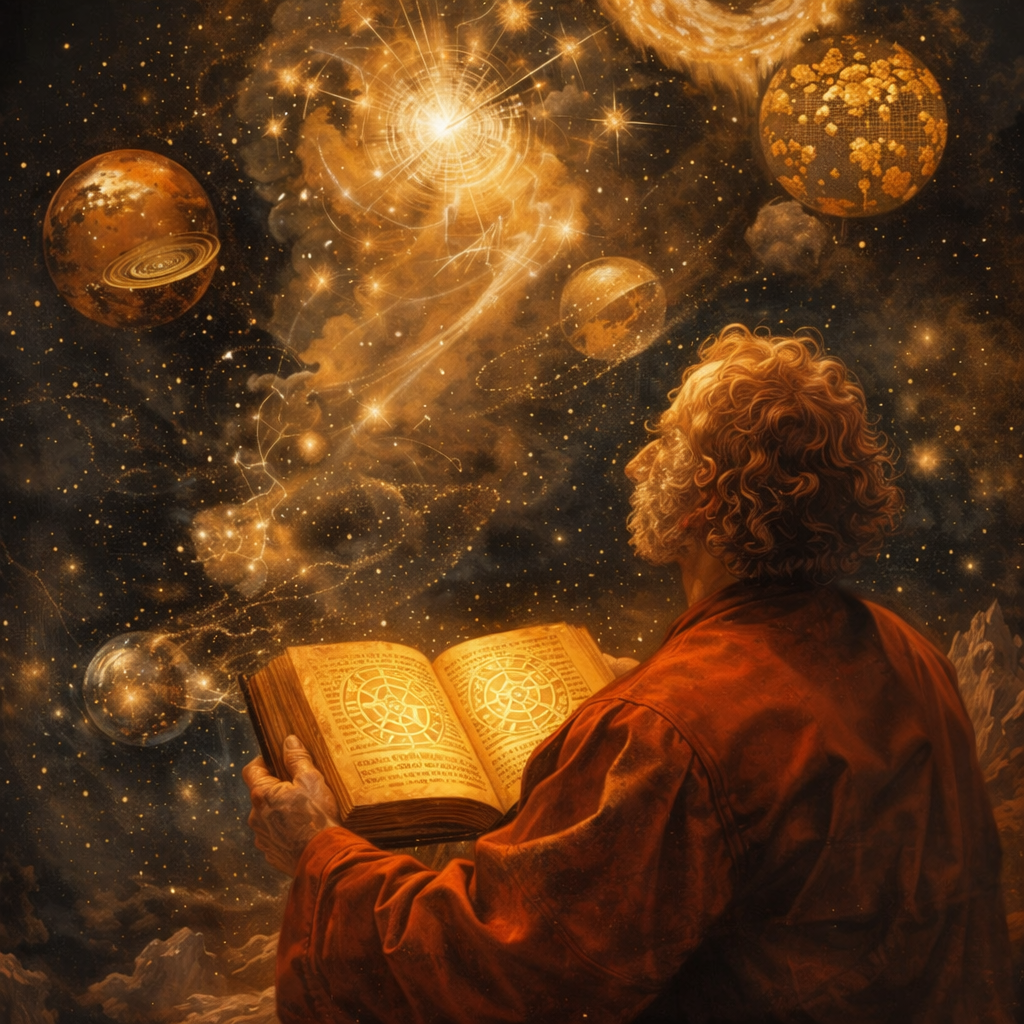
The esoteric significance of this issue is amplified through its exploration of profound symbolism. Key symbols likely include the Caduceus, the Eye of Providence, the Lotus, and geometric patterns, all interpreted as keys to understanding cosmic laws, spiritual hierarchies, and the stages of human evolution. These symbols serve as a visual language for complex metaphysical concepts, guiding the initiate towards a deeper, intuitive comprehension of the divine order and the subtle energies that permeate existence.
Modern Relevance
Despite its publication date, the themes explored in this issue remain remarkably relevant. In an era increasingly defined by global interconnectedness, existential questions, and a search for meaning, the Theosophical emphasis on universal brotherhood, the cyclical nature of existence, and the potential for spiritual awakening offers valuable perspectives. Its insights into consciousness, karma, and the underlying unity of life provide a robust framework for navigating contemporary challenges and fostering personal and collective transformation.
👥 Who Should Read This Book
This issue is a treasure for dedicated seekers of esoteric knowledge and spiritual truth. Students of Theosophy, both long-standing members and newcomers, will find it an invaluable resource for deepening their understanding of core doctrines and current discussions within the movement. Scholars of comparative religion and philosophy will appreciate its nuanced analyses and historical context. Practitioners looking to integrate mystical principles into their lives will discover useful insights into consciousness, karma, and the path of self-realization. It is for those who approach spiritual study with an open mind and a sincere desire to explore the deeper mysteries of existence.
📜 Historical Context
Published in July 1988, this issue of 'The Theosophical Movement' emerged during a period of renewed interest in spirituality, New Age philosophies, and comparative religion, following the counter-cultural shifts of the preceding decades. The Theosophical Society, though established in the late 19th century, continued to be a significant intellectual and spiritual force, influencing various esoteric and philosophical movements. The 1980s saw a globalizing world grappling with technological advancements alongside a resurgence of interest in ancient wisdom and mystical traditions. This journal issue would have contributed to ongoing dialogues about consciousness, interconnectedness, and the human potential for spiritual awakening, resonating with a readership seeking deeper meaning beyond materialist paradigms.
📔 Journal Prompts
Reflect on a personal experience where you felt a profound interconnectedness with the universe. How did this experience alter your perception?
Consider the concept of karma: how do your daily choices and actions align with or diverge from a principle of positive causality?
Explore a personal symbol that holds deep meaning for you. What spiritual or psychological truths does it represent?
In what ways can the ideal of 'universal brotherhood' be actively practiced in your immediate community and on a global scale?
Journal about a time you experienced intuition or inner knowing that superseded rational thought. What was the nature of that knowledge and its impact?
🗂️ Glossary
Theosophy
A system of esoteric philosophy and religious doctrine that seeks to understand the divine wisdom underlying all religions and philosophies, emphasizing spiritual evolution and the interconnectedness of all life.
Karma
The spiritual principle of cause and effect where intent and actions of an individual influence their future. It's a natural law of spiritual consequence, not divine judgment.
Reincarnation
The philosophical or religious concept that the non-physical essence of a living being begins a new life in a different physical form or body after biological death.
Esoteric
Intended for or likely to be understood by only a small number of people with a specialized knowledge or interest; relating to or dealing with secret or mysterious knowledge.
Anthroposophy
A spiritual philosophy founded by Rudolf Steiner, stemming from Theosophy, that seeks to understand the spiritual nature of humanity and the universe through a combination of spiritual perception and intellectual inquiry.
This book appears in 2 collections
🔮 Readers Also Liked
Browse all →







From the “Theosophy” Collection
View all →


More Free Theosophy & Anthroposophy Books
View all →