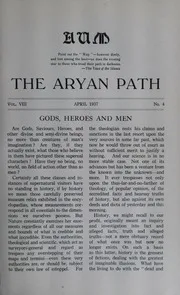
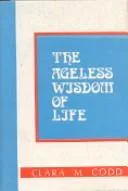
The ageless wisdom of life
 71
71

The ageless wisdom of life
Clara M. Codd's "The Ageless Wisdom of Life" presents a coherent distillation of perennialist thought, particularly as filtered through the Theosophical lens. Its strength lies in its systematic presentation of complex metaphysical ideas, making them digestible for a Western audience unfamiliar with Sanskrit terms or Eastern philosophical frameworks. Codd's prose, while academic, avoids unnecessary jargon, focusing instead on clarity. A notable passage involves her explanation of the "Law of Cause and Effect" (Karma), which she elucidates not as simple retribution but as a fundamental principle of cosmic order and individual responsibility, a concept that resonates even outside esoteric circles.
However, the book's primary limitation is its inherent reliance on Theosophical terminology and presuppositions. For readers without prior exposure to figures like H.P. Blavatsky or Annie Besant, certain references might remain opaque, requiring supplementary reading. Despite this, Codd’s work serves as a valuable exposition of these ideas. "The Ageless Wisdom of Life" offers a structured entry point into a vast spiritual cosmology, grounded in intellectual rigor.
📝 Description
71
Clara M. Codd's 1987 book examines the unifying principles across spiritual traditions.
Clara M. Codd's "The Ageless Wisdom of Life" is not a simple historical account but an active engagement with the core principles that shape existence across diverse spiritual paths. Published in 1987, it aims to reveal the universal truths that link various mystical traditions, functioning as a guide for those who seek to grasp the fundamental unity of spiritual experience. The book is for serious spiritual seekers who desire more than surface-level religious doctrines or materialistic explanations. It will appeal to individuals who value both rigorous thought and intuitive understanding, making Codd's exposition particularly satisfying.
This work is also beneficial for students of comparative religion and philosophy. It aids in identifying the shared threads within global wisdom traditions, moving beyond their outward expressions. The book emerged during a time of revived interest in esoteric thought, building on the legacy of figures like Helena Blavatsky and the Theosophical Society. Codd's contribution offers a clearer presentation of complex spiritual ideas for a dedicated readership.
Published in 1987, "The Ageless Wisdom of Life" speaks to a renewed interest in esoteric thought following the cultural shifts of the 1960s and 70s. While academic circles often overlooked these subjects, a committed readership continued to engage with Theosophy, influenced by figures like Helena Blavatsky. Codd's book continues this lineage, focusing on the synthesis of Eastern and Western mystical ideas that characterized Theosophy. It presents complex spiritual concepts in a more approachable manner for those interested in the deeper currents of spiritual traditions.
💡 Why Read This Book?
• Gain a structured understanding of the "Ageless Wisdom" as articulated by Clara M. Codd, moving beyond superficial spiritual trends to grasp core metaphysical principles discussed in her work. • Explore the concept of Karma not merely as fate but as a dynamic law of cause and effect, as explained in the book's detailed examination of cosmic principles. • Connect with the historical lineage of Theosophy, understanding how Codd's 1987 publication fits within the broader intellectual currents of esoteric thought and its continued relevance.
⭐ Reader Reviews
Honest opinions from readers who have explored this book.
❓ Frequently Asked Questions
What is the "Ageless Wisdom" as presented by Clara M. Codd?
The "Ageless Wisdom" refers to a universal, perennial body of spiritual knowledge believed to be the source of all true religions and philosophies. Codd's work explores this perennial philosophy, emphasizing its underlying unity and applicability to human life.
When was "The Ageless Wisdom of Life" first published?
Clara M. Codd's "The Ageless Wisdom of Life" was first published in 1987, placing it within a period of significant interest in esoteric and spiritual philosophy.
Does the book require prior knowledge of Theosophy?
While prior knowledge of Theosophy can enhance understanding, Codd's work is structured to be accessible. She explains core concepts clearly, making it suitable for those new to these ideas but willing to engage with metaphysical principles.
What kind of spiritual path does Clara M. Codd advocate?
Codd advocates for a path of conscious evolution, self-understanding, and the recognition of universal spiritual laws. Her approach emphasizes intellectual inquiry coupled with inner spiritual development, drawing from the perennial wisdom tradition.
How does "The Ageless Wisdom of Life" relate to other esoteric traditions?
The book seeks to identify common threads and universal principles across various esoteric and religious traditions, presenting them as facets of a single, overarching "Ageless Wisdom." It highlights unity rather than division among spiritual paths.
What is the significance of the "Law of Cause and Effect" in Codd's work?
Codd explains the Law of Cause and Effect (Karma) as a fundamental principle of cosmic order and ethical responsibility, not merely as a simplistic system of reward and punishment, but as a mechanism for soul evolution.
🔮 Key Themes & Symbolism
The Perennial Philosophy
Codd posits that beneath the diverse exoteric forms of world religions and philosophies lies a single, unified "Ageless Wisdom." This book meticulously unpacks this concept, arguing for an underlying spiritual reality that informs all genuine traditions. It’s not about syncretism for its own sake, but about recognizing the shared core truths concerning the nature of existence, consciousness, and the divine. The work emphasizes that this wisdom is not a product of any single culture or era but is eternally present, awaiting recognition by the earnest seeker.
Cosmic Law and Evolution
A central theme is the operation of universal laws, most notably the Law of Cause and Effect (Karma). Codd presents Karma not as a fatalistic doctrine but as a principle of ethical and spiritual accountability that drives individual and collective evolution. The book explores how understanding and aligning oneself with these cosmic laws are essential for spiritual progress, facilitating a conscious participation in the grand unfolding of existence rather than a passive experience of it.
The Nature of Consciousness
The work examines the complex nature of consciousness, distinguishing between the personal, finite mind and the universal, divine consciousness. Codd illuminates the potential for individuals to expand their awareness and realize their inherent connection to this greater reality. This exploration is crucial for understanding the esoteric path, which aims at the transformation and elevation of consciousness through disciplined study and inner practice.
Unity of Life
Integral to Codd's message is the profound interconnectedness of all beings and phenomena. The "Ageless Wisdom" reveals that separation is largely an illusion of the material plane. By understanding this unity, individuals can cultivate compassion, ethical action, and a sense of responsibility towards the whole. This perspective challenges anthropocentrism and encourages a holistic worldview, recognizing the divine spark within all forms of life.
💬 Memorable Quotes
Direct passages from the work, attributed to the author.
“The same spiritual truths lie at the heart of all great religions.”
— This statement expresses Codd's core thesis: that despite superficial differences in ritual and doctrine, the fundamental insights into the divine and the human condition are remarkably consistent across diverse spiritual traditions.
“We are evolving souls, not merely bodies.”
— This highlights the esoteric view of humanity as spiritual beings on a journey of development. It contrasts the transient physical form with the eternal, evolving nature of the soul, emphasizing purpose and growth.
“Understanding the Law of Cause and Effect is key to spiritual freedom.”
— This emphasizes the practical application of metaphysical principles. By comprehending Karma, one can consciously shape their destiny and work towards liberation, rather than being subject to unconscious reactions.
“The outer world is a reflection of the inner.”
— This concept suggests that external circumstances and events are manifestations of one's internal state of consciousness, beliefs, and actions, pointing towards the power of inner transformation.
“True wisdom comes from inner realization, not just intellectual knowledge.”
— This distinguishes between academic learning and spiritual gnosis. Codd stresses that profound understanding and transformation arise from direct experience and inner awakening, not solely from acquiring information.
🌙 Esoteric Significance
Tradition
This work firmly resides within the Theosophical tradition, drawing heavily on the teachings and framework established by Helena Blavatsky and her successors. Codd's approach is characteristic of Theosophy's attempt to synthesize Eastern (particularly Indian) and Western esoteric philosophies, presenting a cohesive cosmology and path of evolution. It departs from purely Western Hermeticism or Kabbalah by integrating concepts like Karma and Reincarnation as fundamental drivers of spiritual development, presented within a scientific-metaphysical lens.
Symbolism
While "The Ageless Wisdom of Life" is more conceptual than symbolic, it frequently invokes the idea of the "Spiritual Hierarchy" or "Masters," figures within the Theosophical tradition believed to guide humanity's evolution. Another implicit symbol is the "Lotus," representing the unfolding of consciousness – the spiritual heart opening to the divine light, often associated with purity and spiritual attainment in Eastern traditions, which appeals to Codd's emphasis on inner development.
Modern Relevance
Codd's work continues to be relevant for contemporary esoteric practitioners and students of comparative spirituality. Thinkers and groups focusing on perennial philosophy, consciousness studies, and holistic approaches to life often draw from the foundational ideas presented in texts like this. Its clear articulation of concepts like Karma and the unity of existence provides a robust framework for those engaged in modern spiritual inquiry, finding echoes in contemporary New Age thought and integral philosophy.
👥 Who Should Read This Book
• Students of comparative religion and philosophy seeking to understand the common metaphysical underpinnings of global wisdom traditions, particularly those interested in the Theosophical perspective. • Individuals starting a serious spiritual quest who desire a structured intellectual framework to complement their inner development and explore universal spiritual laws. • Readers drawn to the perennial philosophy and seeking a clear, systematic exposition of concepts such as Karma, the nature of consciousness, and the unity of existence, as presented by an established esoteric author.
📜 Historical Context
Clara M. Codd's "The Ageless Wisdom of Life," published in 1987, emerged during a period when esoteric philosophy, particularly Theosophy, was experiencing a resurgence of interest outside mainstream academia. The intellectual range of the late 20th century saw a continued engagement with the synthesized spiritual systems pioneered by figures like Helena Blavatsky and the Theosophical Society in the late 19th century. Codd's work can be seen as a continuation of this lineage, aiming to present complex metaphysical concepts in a more accessible manner for a Western audience. While academic circles might have focused on comparative religion or philosophy of religion, esoteric groups and independent scholars actively explored texts that synthesized Eastern and Western mystical traditions. Codd's publication contributed to this ongoing dialogue, offering a structured exposition of perennialist ideas, a concept championed by thinkers like Aldous Huxley, who had earlier explored the common threads in world religions.
📔 Journal Prompts
Reflect on the concept of the "Ageless Wisdom" and how its principles might manifest in your daily life.
Consider the "Law of Cause and Effect" as a framework for understanding recent challenges and successes.
Examine the distinction between personal consciousness and universal consciousness in your own experience.
Identify one aspect of "Unity of Life" that challenges your current perspective.
How does the idea of "evolving souls" influence your view of personal responsibility and long-term goals?
🗂️ Glossary
Ageless Wisdom
The perennial philosophy or universal spiritual knowledge believed to be the underlying truth of all religions and esoteric traditions, accessible to humanity throughout history.
Karma
The universal Law of Cause and Effect, governing the consequences of actions and shaping the cycle of birth, death, and rebirth for individual souls. It is a principle of ethical responsibility and spiritual evolution.
Perennial Philosophy
The concept that there is a single, eternal spiritual truth or wisdom underlying the diverse exoteric forms of world religions and mystical traditions.
Spiritual Hierarchy
In Theosophy, a council of enlightened beings or "Masters" who guide the spiritual evolution of humanity from higher planes of existence.
Consciousness
The state or quality of awareness, or of being aware of an external object or something within oneself. Codd explores its various levels, from personal to universal.
Esoteric
Relating to or dealing with the occult or mysteries. Esoteric knowledge is typically intended for or understood by a small number of people with specialized knowledge or interest.
Theosophy
A spiritual philosophy founded in the late 19th century by Helena Blavatsky, seeking to synthesize Eastern and Western religions, philosophies, and sciences, and to uncover the universal truths underlying them.
🔮 Readers Also Liked
Browse all →






More by Clara M. Codd
All books →
More Free Theosophy & Anthroposophy Books
View all →