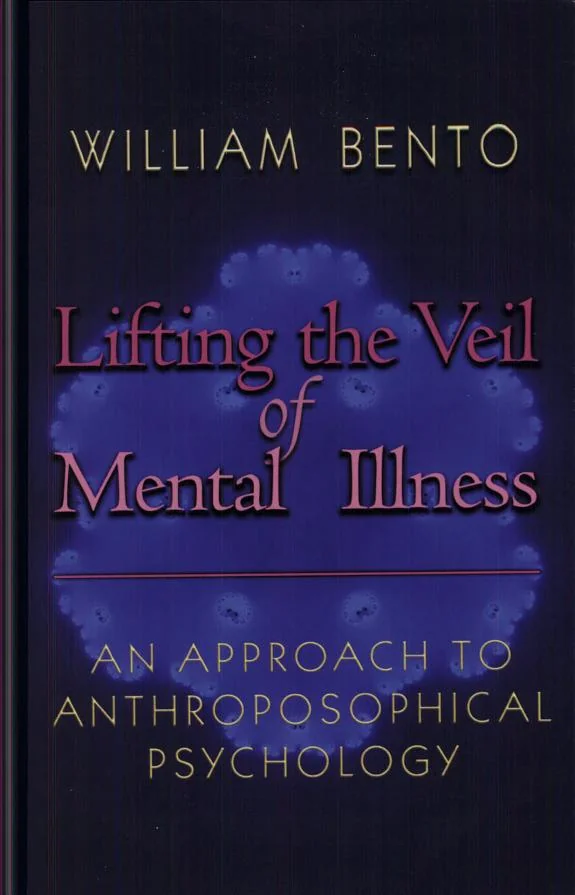
Lifting the Veil of Mental Illness
 71
71

Lifting the Veil of Mental Illness
William Bento's "Lifting the Veil of Mental Illness" challenges the prevailing reductionist paradigm in psychology with a bold anthroposophical framework. The book distinguishes itself by centering the soul (psyche) as the locus of both health and illness, a perspective notably absent in much contemporary therapeutic discourse. Bento's explication of psychosophy, drawing directly from Rudolf Steiner's extensive body of work, provides a compelling alternative for understanding psychological distress not as mere biochemical imbalance but as a soul-spiritual condition. A particular strength lies in its holistic viewpoint, urging readers to consider the interconnectedness of body, soul, and spirit. However, the book's reliance on anthroposophical terminology might present a barrier for readers unfamiliar with Steiner's specific concepts, requiring a dedicated effort to grasp the underlying philosophy. Bento's interpretation of soul imbalances as a core element of what modern society labels mental illness is a significant and memorable takeaway. Ultimately, it offers a contemplative, spiritually informed approach to psychological well-being.
📝 Description
71
William Bento's 2004 book argues mental illness stems from soul imbalances, not just chemical ones.
William Bento's "Lifting the Veil of Mental Illness", published in 2004, presents a viewpoint that contrasts with standard psychological practices. The book suggests that mental and emotional problems arise from discord within the human soul, a perspective often overlooked by current psychology, which tends to favor pharmaceutical treatments. Bento advocates for a psychosophical understanding of individuals, considering the interplay of body, soul, and spirit.
This work is for those looking for different ways to comprehend mental and emotional health. It will resonate with readers who are not satisfied with explanations that focus solely on material causes for psychological distress and who are interested in anthroposophy and the ideas of Rudolf Steiner. Those who seek a comprehensive view that includes spiritual and soul aspects in psychological well-being will find value here. The book emerged when drug-based mental health treatments were gaining significant ground, and Bento's spiritual-scientific viewpoint offered a unique challenge to prevailing reductionist models.
This book is situated within the tradition of anthroposophy, as articulated by Rudolf Steiner. Anthroposophy views the human being as a composite of physical, soul, and spiritual components. Bento applies these principles to mental and emotional states, proposing that disturbances conventionally labeled as mental illness are expressions of disharmony in the soul and spirit. This perspective contrasts with materialistic or purely biological models of psychology, emphasizing an inner, spiritual causality for psychological conditions.
💡 Why Read This Book?
• Understand the concept of psychosophy, as developed from Rudolf Steiner's work, to view mental distress as soul imbalance rather than solely a biological issue. • Gain insight into the anthroposophical understanding of the human being as a composite of body, soul, and spirit, offering a multidimensional approach to healing. • Explore the critique of pharmaceutical dominance in mental health treatment, as presented in Bento's 2004 publication, and consider alternative, soul-centered therapeutic avenues.
⭐ Reader Reviews
Honest opinions from readers who have explored this book.
❓ Frequently Asked Questions
What is psychosophy according to William Bento?
Psychosophy, as presented by William Bento, is the experiential study of the human soul. It views mental and emotional disturbances not as diseases of the brain but as imbalances or disturbances within the soul's complex nature, influenced by body and spirit.
How does Bento's approach differ from mainstream psychology?
Bento's psychosophy contrasts with mainstream psychology by acknowledging and centering the soul and spirit, which are often overlooked. It critiques the reliance on pharmaceutical treatments, advocating instead for a holistic understanding and engagement with the soul's condition.
What is the historical basis for William Bento's ideas?
Bento's work is fundamentally based on the spiritual scientific research of Rudolf Steiner, the founder of anthroposophy. He applies Steiner's insights into the human being's threefold (body, soul, spirit) constitution to the understanding of psychological states.
Is this book suitable for someone new to anthroposophy?
While the book introduces anthroposophical concepts, readers unfamiliar with Rudolf Steiner's work may find it beneficial to have some background knowledge. Bento builds upon established anthroposophical principles regarding the soul and spirit.
What does 'lifting the veil' signify in the book's title?
The title 'Lifting the Veil of Mental Illness' suggests revealing the deeper, soul-spiritual causes behind conditions typically labeled as mental illness. It implies uncovering hidden dynamics that conventional approaches might not address.
When was 'Lifting the Veil of Mental Illness' first published?
The book 'Lifting the Veil of Mental Illness' by William Bento was first published in 2004, positioning it within discussions about alternative psychological and spiritual approaches to well-being.
🔮 Key Themes & Symbolism
Psychosophy and Soul Imbalance
The core of Bento's argument is that what we term mental illness represents a disturbance or imbalance within the human soul. Unlike mechanistic psychological models, psychosophy posits that the soul is a dynamic entity, susceptible to disharmonies that manifest in thoughts, emotions, and behaviors. Bento encourages an experiential understanding of these soul states, moving beyond abstract diagnostic categories to grasp the lived reality of inner disturbance and its potential for transformation.
Body, Soul, and Spirit Integration
Bento draws heavily from Rudolf Steiner's model of the human being as a threefold entity encompassing physical body, soul, and spirit. He argues that psychological well-being depends on the harmonious interplay of these elements. Mental illness, from this perspective, can arise from disharmony between these levels, such as the soul being overwhelmed by physical conditions or disconnected from its spiritual source. Healing, therefore, necessitates addressing all three aspects.
Critique of Pharmaceutical Dominance
A significant theme is Bento's critique of the increasing reliance on pharmaceutical interventions for mental health issues. He suggests that these medications often address symptoms without healing the underlying soul imbalance, potentially masking deeper problems or creating dependency. This perspective advocates for therapies that engage with the soul's own capacities for healing and integration, rather than solely suppressing perceived malfunctions.
Experiential and Humanistic Understanding
In contrast to abstract clinical diagnoses, Bento champions an experiential and humanistic approach to mental and emotional conditions. He emphasizes understanding the individual's subjective experience and the unique narrative of their soul's journey. This method seeks to foster empathy and connection, treating psychological distress as a profoundly human experience that requires compassionate engagement and spiritual insight, rather than mere clinical management.
💬 Memorable Quotes
Direct passages from the work, attributed to the author.
“Mental illnesses are too often seen only in abstract terms.”
— This opening statement highlights Bento's core critique of conventional psychology. It suggests that by reducing complex human experiences to diagnostic labels, we lose sight of the individual's lived reality and the deeper, perhaps spiritual, origins of their suffering.
“Mainstream psychology... seldom acknowledges the psyche or soul.”
— This points to a perceived deficiency in modern psychological frameworks. Bento implies that by omitting the soul, psychology misses a fundamental aspect of human existence, leading to incomplete diagnoses and treatments that fail to address the whole person.
“William Bento views imbalances of the human soul in an experiential and human way.”
— This captures Bento's approach, emphasizing direct experience and a non-reductive, humanistic perspective. It contrasts with purely theoretical or biological models, suggesting that understanding psychological states requires engaging with the person's subjective reality.
“Basing his views on the work of Rudolf Steiner, Bento looks not only at the human body, soul, and spirit...”
— This grounds Bento's philosophy in anthroposophy. It signifies a holistic model where the physical, psychological, and spiritual dimensions are intrinsically linked and must be considered together for a comprehensive understanding of human health and illness.
“...but also at the way the whole environment affects the human being.”
— This suggests an ecological or systemic view within Bento's psychosophy. It acknowledges that external factors—social, cultural, and perhaps even cosmic—play a role in shaping the inner life and contribute to or alleviate soul imbalances.
🌙 Esoteric Significance
Tradition
This work firmly belongs to the tradition of Anthroposophy, founded by Rudolf Steiner in the early 20th century. Anthroposophy presents itself as a spiritual scientific path seeking to understand the cosmos and humanity through methods of spiritual perception. Bento's psychosophy extends this lineage by applying Steiner's model of the human being (body, soul, spirit) specifically to the understanding and treatment of psychological disturbances, offering a spiritually informed alternative to conventional psychology.
Symbolism
Within Bento's psychosophical framework, the 'veil' itself is a potent symbol, representing the obscuring of the soul's true nature and spiritual connections by material conditions or psychic disturbances. The tripartite model of body, soul, and spirit functions symbolically as well, representing distinct but interconnected domains of human experience. Imbalances within or between these realms are seen as the root of suffering, with 'lifting the veil' symbolizing the process of spiritual insight and healing.
Modern Relevance
Bento's work finds resonance today among practitioners and thinkers in fields like anthroposophical psychology, biodynamic agriculture, and Waldorf education, all inspired by Rudolf Steiner. His critique of over-reliance on pharmaceuticals and his emphasis on the soul's experiential reality align with growing contemporary interests in holistic health, mindfulness, and the integration of spiritual or contemplative practices into mental well-being, though often from less explicitly anthroposophical starting points.
👥 Who Should Read This Book
• Individuals exploring anthroposophy and the spiritual science of Rudolf Steiner, seeking to understand its application to psychological health and illness. • Therapists and counselors interested in alternative frameworks that integrate soul and spirit, moving beyond purely biomedical or cognitive models of mental well-being. • Readers questioning the efficacy or completeness of conventional psychiatric approaches, looking for a more holistic, humanistic, and spiritually informed perspective on psychological distress.
📜 Historical Context
William Bento's "Lifting the Veil of Mental Illness" was published in 2004, a period marked by the increasing consolidation of psychiatric power under pharmaceutical influence. The Diagnostic and Statistical Manual of Mental Disorders (DSM) had become the standard diagnostic tool, emphasizing symptom clusters and often overlooking deeper existential or spiritual dimensions of distress. Mainstream psychology, while diverse, largely operated within empirical, cognitive, or psychodynamic frameworks that often treated the soul or spirit as extraneous. Bento's work, deeply rooted in the spiritual science of Rudolf Steiner and anthroposophy, offered a direct challenge to this reductionist trend. Anthroposophy, originating in the early 20th century, posited a spiritual understanding of humanity and the cosmos, contrasting sharply with the materialist philosophies prevalent in Western science. While figures like Carl Jung had explored spiritual dimensions in psychology, Bento's direct engagement with Steiner positioned his work within a more specific, esoteric lineage, appealing to a niche audience seeking comprehensive spiritual answers to psychological suffering.
📔 Journal Prompts
The threefold human constitution: Body, Soul, and Spirit.
Experiential understanding of soul imbalances.
Critique of abstract symptom classification.
The role of the environment in soul-harmony.
Psychosophy as a path to self-knowledge.
🗂️ Glossary
Anthroposophy
A spiritual philosophy founded by Rudolf Steiner, seeking to understand the spiritual nature of the human being and the cosmos through methods of spiritual perception and scientific inquiry.
Psychosophy
Coined by William Bento, this term refers to the study and understanding of the human soul (psyche) and its experiences, particularly in relation to mental and emotional well-being.
Soul (Psyche)
In Bento's framework, the soul is the intermediary realm between the physical body and the spiritual self, encompassing feelings, desires, consciousness, and the subjective experience of life.
Spirit
The highest aspect of the human being in anthroposophical thought, representing the divine or eternal core, the source of true individuality and spiritual insight.
Rudolf Steiner
The Austrian philosopher, esotericist, and social reformer who founded anthroposophy and the Waldorf education system, whose work forms the basis for Bento's approach.
Experiential Understanding
A method of learning and knowing that emphasizes direct personal experience and inner perception rather than purely abstract or theoretical knowledge.
Veil
In this context, the 'veil' symbolizes the obscuring of deeper truths about mental illness and the soul's condition by conventional, materialistic perspectives or symptomatic treatments.
This book appears in 1 collection
🔮 Readers Also Liked
Browse all →






From the “Anthroposophy” Collection
View all →




More Free Theosophy & Anthroposophy Books
View all →