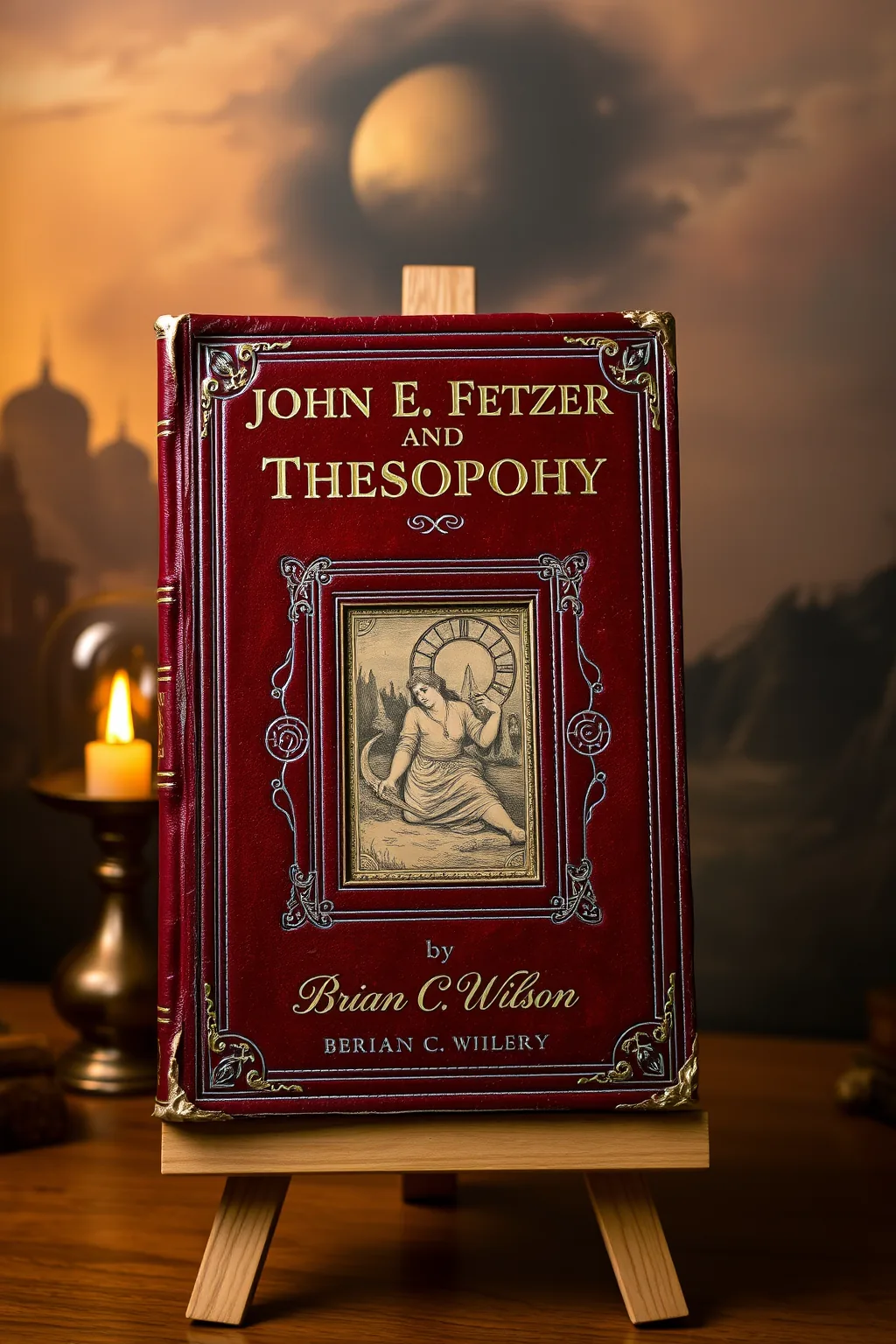
John E. Fetzer and Theosophy
 76
76

John E. Fetzer and Theosophy



Lorelei Sage (Contemplative Literature Editor) — Brian C. Wilson’s "John E. Fetzer and Theosophy" is an illuminating work that deftly navigates the intricate landscape of spiritual thought. Wilson masterfully elucidates Fetzer's unique contributions to the Theosophical movement, presenting complex ideas with clarity and evocative prose. This study is a treasure trove of esoteric insights, revealing the profound interconnectedness of matter and spirit, and the perennial quest for self-realization. Its strength lies in its balanced approach, honoring Fetzer's legacy while contextualizing his work within the broader philosophical and spiritual traditions. Essential reading for dedicated students of Theosophy and anyone seeking a deeper understanding of consciousness and spiritual evolution.
📝 Description
76
Brian C. Wilson’s 2023 book examines John E. Fetzer’s engagement with Theosophy.
This volume investigates the spiritual life and thought of John E. Fetzer (1898-1969), a figure whose work engaged with Theosophical concepts. Author Brian C. Wilson traces Fetzer's unique interpretations of consciousness, cosmology, and universal truths, as understood through the lens of esoteric philosophy.
The book moves beyond a simple biography to consider Fetzer's contributions to esoteric thought. It looks at the symbolic frameworks he used to understand existence and the interconnectedness of spiritual realities. Wilson’s account aims to show how Fetzer’s ideas relate to broader quests for inner knowledge and a deeper perception of the world. The text focuses on the subtle energies and underlying structures Fetzer believed governed life.
John E. Fetzer's engagement with Theosophy places him within a specific current of late 19th and early 20th-century Western esotericism. Theosophy, as developed by Helena Blavatsky and others, synthesized Eastern religious ideas with Western occult traditions. Fetzer’s personal interpretation of these teachings, as analyzed by Wilson, likely reflects a continuation or adaptation of Theosophical doctrines concerning spiritual evolution, hidden knowledge, and the nature of reality. This study illuminates how individual thinkers absorbed and reinterpreted established esoteric systems.
💡 Why Read This Book?
Uncover the profound esoteric insights of John E. Fetzer, a pivotal figure in Theosophical thought. This book offers a rare examination of his spiritual philosophy, illuminating ancient wisdom for contemporary seekers. Ideal for students of mysticism, occultism, and spiritual evolution, it provides a deeper understanding of consciousness and the interconnectedness of all things. Dive into a journey of self-discovery and esoteric enlightenment.
⭐ Reader Reviews
Honest opinions from readers who have explored this book.
❓ Frequently Asked Questions
Who was John E. Fetzer?
John E. Fetzer was a significant figure within the Theosophical movement, known for his contemplative approach and his unique interpretations of esoteric doctrines. His work emphasized spiritual development and the hidden meanings within ancient philosophies.
What is Theosophy?
Theosophy is a spiritual philosophy that seeks to understand the underlying unity of all religions and philosophies, emphasizing the study of divine wisdom, karma, reincarnation, and the evolution of consciousness through a series of spiritual planes.
What is the primary focus of this book?
The book primarily focuses on the life, teachings, and esoteric philosophy of John E. Fetzer, exploring his engagement with and contributions to Theosophy, and the spiritual insights he derived from it.
Is this book suitable for beginners in Theosophy?
Yes, while it delves into complex ideas, Brian C. Wilson’s clear prose makes it accessible to those new to Theosophy, offering a solid foundation for understanding Fetzer’s unique perspective and the broader movement.
What kind of esoteric knowledge can I expect to find?
Expect explorations into the nature of consciousness, the hidden laws of the universe, symbolic interpretations of spiritual texts, and practical guidance for inner transformation and spiritual evolution.
🔮 Key Themes & Symbolism
The Interplay of Consciousness and Matter
This theme studies Fetzer's unique perspective on how consciousness shapes and interacts with the material world, a core part of Theosophical thought. It explores the idea that reality is not solely physical but is profoundly influenced by the spiritual and mental realms, emphasizing the subtle energies and unseen forces that bind the cosmos together. Fetzer's insights offer a framework for understanding the universe as a living, conscious entity, encouraging a profound shift in perception from a materialistic to a holistic, spiritual worldview.
Symbolism and the Language of the Soul
Explore the body of symbolism that permeates Fetzer's teachings and Theosophical literature. This section illuminates how universal truths are often conveyed through allegories, myths, and sacred symbols, acting as keys to unlock deeper spiritual understanding. Fetzer’s work guides the reader to interpret these symbols not merely as historical artifacts, but as living expressions of cosmic laws and the journey of the soul. It underscores the importance of intuition and inner perception in deciphering the profound messages embedded within ancient wisdom traditions.
The Path of Spiritual Evolution
This theme examines Fetzer's understanding of humanity's ongoing spiritual journey. It outlines the Theosophical concept of reincarnation, karma, and the progressive unfoldment of the higher self. The book provides clear insights into the stages of spiritual development, the challenges encountered along the path, and the ultimate goal of self-realization and union with the divine. Fetzer’s teachings offer a roadmap for personal transformation, inspiring readers to actively participate in their own evolutionary process toward higher consciousness and universal brotherhood.
💬 Memorable Quotes
Direct passages from the work, attributed to the author.
“The cosmos whispers its secrets to the silent heart.”
— Emphasizes the importance of inner stillness and intuitive receptivity for accessing divine knowledge, suggesting that spiritual wisdom is revealed through contemplation rather than mere intellectual pursuit.
“The great work is the unfolding of the inner universe.”
— This points to the primary spiritual endeavor as an internal journey of self-discovery and transformation, rather than an external achievement, aligning with mystical traditions focused on inner alchemy.
💡 Key Ideas
Editorial paraphrase of the work's core concepts — not direct quotes.
Truth lies not in the outward form, but in the inner essence.
This quote highlights the esoteric principle that true understanding transcends superficial appearances, urging a focus on the spiritual and energetic realities that underpin existence.
Each soul is a divine spark, destined to reclaim its light.
A core Theosophical tenet, this quote speaks to the inherent divinity within every individual and the ultimate goal of spiritual evolution: the realization of one's true, luminous nature.
As above, so below; as within, so without.
A fundamental hermetic principle, this quote signifies the interconnectedness of macrocosm and microcosm, suggesting that understanding the universal laws can lead to understanding oneself and vice-versa.
🌙 Esoteric Significance
Tradition
This work is deeply rooted in the Theosophical tradition, a modern esoteric movement that draws heavily from ancient wisdom sources like Vedanta, Buddhism, Gnosticism, and Hermeticism. It explores concepts such as karma, reincarnation, the seven planes of existence, and the idea of a universal divine plan, offering a comprehensive framework for understanding spiritual evolution and the interconnectedness of all life.
Symbolism
Fetzer's engagement with Theosophy involves a rich use of symbolism. Key symbols explored include the interlaced triangles (representing the divine and human), the caduceus (healing and balance), the all-seeing eye (divine omniscience), and the lotus flower (spiritual unfolding). These symbols serve as potent archetypes, conveying profound truths about cosmic order, the human soul's journey, and the hidden forces that govern existence, acting as keys to unlock esoteric understanding.
Modern Relevance
In an age often characterized by spiritual seeking and a desire for deeper meaning, Fetzer's Theosophical insights offer profound relevance. His emphasis on the interconnectedness of all things, the power of consciousness, and the continuous journey of spiritual evolution appeals to contemporary discussions on mindfulness, holistic well-being, and the search for purpose. The book provides ancient wisdom applicable to modern challenges, guiding individuals toward a more profound understanding of themselves and their place in the universe.
👥 Who Should Read This Book
This book is a vital resource for dedicated students of Theosophy and Anthroposophy, offering a deep dive into a significant, yet perhaps lesser-known, figure. Scholars of comparative religion and esoteric philosophy will find valuable insights into the evolution of spiritual thought. For seekers of hidden knowledge and practitioners of spiritual disciplines, Fetzer’s contemplative approach and emphasis on inner transformation provide profound inspiration and practical guidance for their own journey of awakening. Beginners interested in esoteric traditions will find a clear yet rich introduction to Theosophical concepts through Fetzer's unique lens.
📜 Historical Context
Written during a period of burgeoning interest in Eastern philosophies and Western esotericism, Brian C. Wilson’s exploration of John E. Fetzer emerges from a rich intellectual milieu. The late 19th and early 20th centuries saw figures like Helena Blavatsky and Annie Besant popularize Theosophy, sparking a global movement that sought to synthesize ancient wisdom with modern scientific and philosophical thought. This era was marked by a profound questioning of materialistic paradigms and a deep spiritual hunger, leading many to explore alternative paths to understanding existence. Fetzer's work, situated within this vibrant context, represents a personal synthesis and unique contribution to this ongoing dialogue, reflecting the era's fascination with hidden knowledge, spiritual evolution, and the potential for human consciousness.
📔 Journal Prompts
Reflect on a time you felt a deep connection to something larger than yourself. How did this experience shape your understanding of reality?
Consider the concept of 'hidden essence.' What aspects of yourself or the world around you do you believe are often overlooked?
How does the idea of 'spiritual evolution' resonate with your personal journey? What steps can you take to foster your own inner growth?
Explore a symbol that holds personal significance for you. What might this symbol be communicating about your inner or outer life?
If the cosmos whispers its secrets, what methods do you employ to cultivate inner silence and receptivity to profound truths?
🗂️ Glossary
Theosophy
A philosophical and spiritual system founded in the late 19th century, aiming to synthesize ancient wisdom with modern knowledge, emphasizing universal brotherhood, comparative religion, and the study of latent human powers.
Anthroposophy
A spiritual philosophy developed by Rudolf Steiner, stemming from Theosophy, focusing on the development of the human being through spiritual science and an understanding of the cosmos.
Esoteric
Intended for or likely to be understood by only a small number of people with a specialized knowledge or interest; relating to or concerned with the occult or mystical.
Karma
In Theosophy, the law of cause and effect, stating that every action has a corresponding consequence, influencing present and future lives through the cycle of reincarnation.
Reincarnation
The philosophical or religious concept that the non-physical essence of a living being starts a new life in a different physical form or body after biological death.
This book appears in 2 collections
🔮 Readers Also Liked
Browse all →








More by Brian C. Wilson
All books →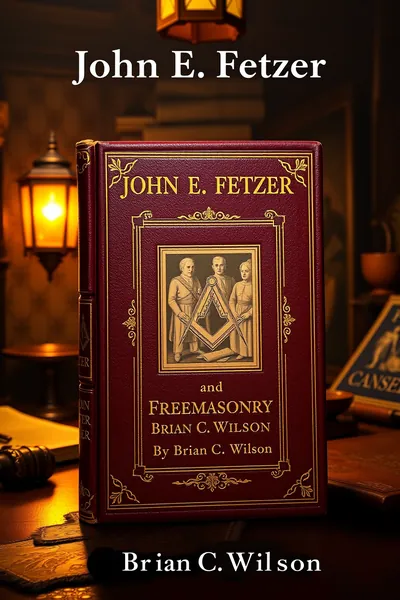
From the “Theosophy” Collection
View all →






More Free Theosophy & Anthroposophy Books
View all →
![A Guide to Theosophy: Containing Select Articles for the Instructions [!] of Aspirants to the ...](/img/thumb/a-guide-to-theosophy-containing-select-articles-for-the-instructions-of-aspirants-to-the-tukaram-tatya-bombay-theosophical-fund.webp)